
OTC Medication Safety Checker
Check for Medication Interactions
Enter your current medications to check for potential interactions with hidden ingredients in over-the-counter products.
Every year, millions of Americans reach for over-the-counter meds without a second thought. A pain reliever for a headache. A sleep aid after a rough night. A weight loss pill that promises quick results. But what if the bottle you’re holding doesn’t tell you the whole story? What if it contains something you didn’t ask for - something that could send you to the hospital?
What’s Really in Your OTC Pills?
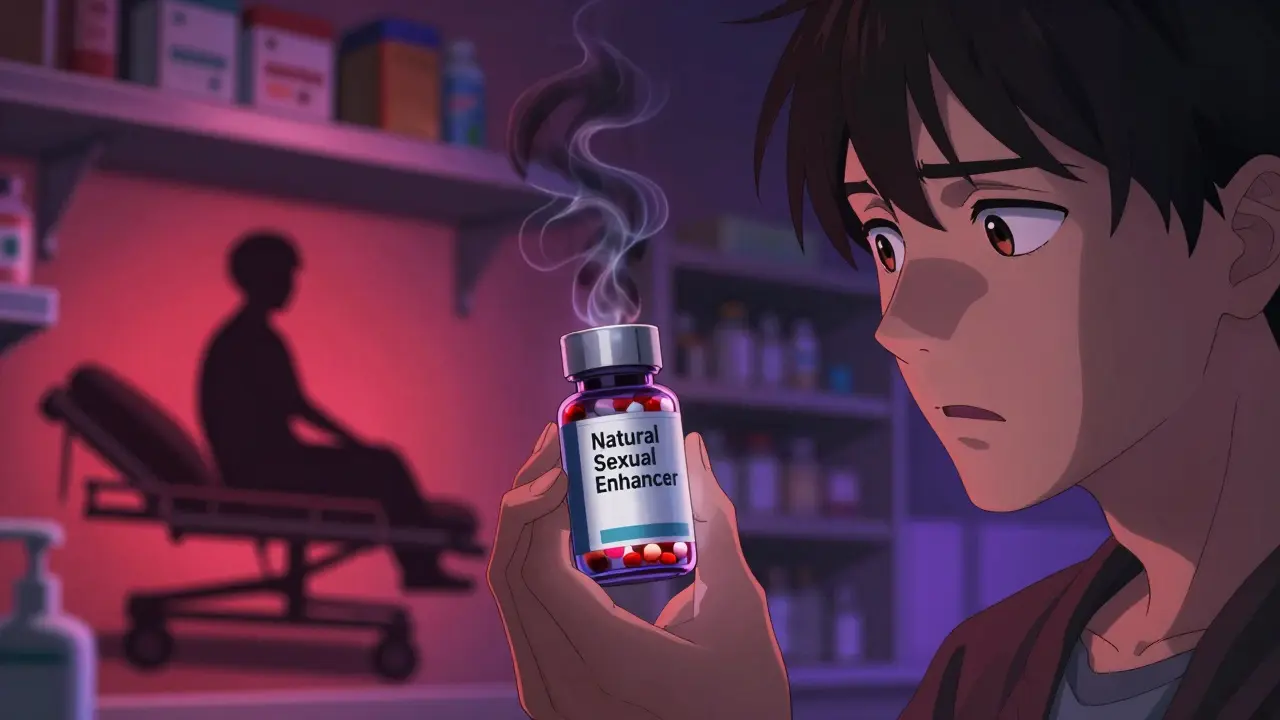
You might assume that if it’s sold on a shelf at CVS or Amazon, it’s safe. That’s not true. The supplement industry in the U.S. is worth over $44 billion, and most of it operates with almost no oversight. Unlike prescription drugs, dietary supplements don’t need FDA approval before hitting the market. The burden of proof falls on the consumer - not the manufacturer. A 2022 study by researcher Pieter Cohen found that between 2007 and 2021, over 1,000 supplement products contained hidden pharmaceutical ingredients. These weren’t mistakes. They were deliberate. Companies added prescription drugs like sildenafil (the active ingredient in Viagra) or sibutramine (a banned appetite suppressant) to make their products work faster - and make more money. These aren’t just theoretical risks. In one case, a man bought a "natural" sexual enhancement pill online. He ended up in the ER with a painful, hours-long erection - a condition called priapism - that required emergency treatment to prevent permanent damage. The pill? It contained tadalafil, the same drug in Cialis. No warning. No dosage info. Just a hidden drug with potentially deadly consequences.The Most Dangerous Hidden Ingredients
Some of the most common hidden ingredients are so dangerous they’ve been banned for years - yet they still show up in products today.- Sibutramine: Banned in 2010 after a major study showed it increased heart attack and stroke risk by 16%. Still found in weight loss supplements. One product tested in 2020 had enough sibutramine to cause a dangerous spike in blood pressure - 180/110 - in a healthy 32-year-old.
- Phenolphthalein: A laxative pulled from the market in 1999 because it damages DNA and may cause cancer. Still appears in "detox" and weight loss teas.
- Sildenafil and Tadalafil: Found in 289 products marketed as "natural" sexual enhancers. These drugs lower blood pressure. If you’re already on heart medication, combining them can cause your blood pressure to crash - sometimes fatally.
- Diphenhydramine: The active ingredient in Benadryl. Often found in sleep aids. But when taken in high doses - like in the "Benadryl challenge" that went viral on TikTok - it causes hallucinations, seizures, and even death.
Why This Is So Dangerous
The real danger isn’t just the hidden drugs - it’s what happens when they mix with what you’re already taking. Let’s say you’re on blood pressure medication. You take a "natural" weight loss pill that contains sibutramine. Sibutramine raises your blood pressure. Your body’s already fighting to keep it under control. Now it’s being pushed even higher. You might not feel anything until you collapse. Or you take ibuprofen for your arthritis. That’s fine - unless your "joint pain relief" supplement secretly contains naproxen, another NSAID. Now you’re doubling your dose without knowing it. The American College of Gastroenterology says NSAID overuse causes 100,000 hospitalizations and 16,500 deaths every year in the U.S. Hidden ingredients make that number worse. Even something as simple as acetaminophen (Tylenol) becomes risky. Many cold and flu meds contain it. So do sleep aids. Take two different OTC products? You might accidentally hit 4,000 mg - the maximum safe daily dose. Go over that, and you risk liver failure. No symptoms at first. Then sudden, irreversible damage.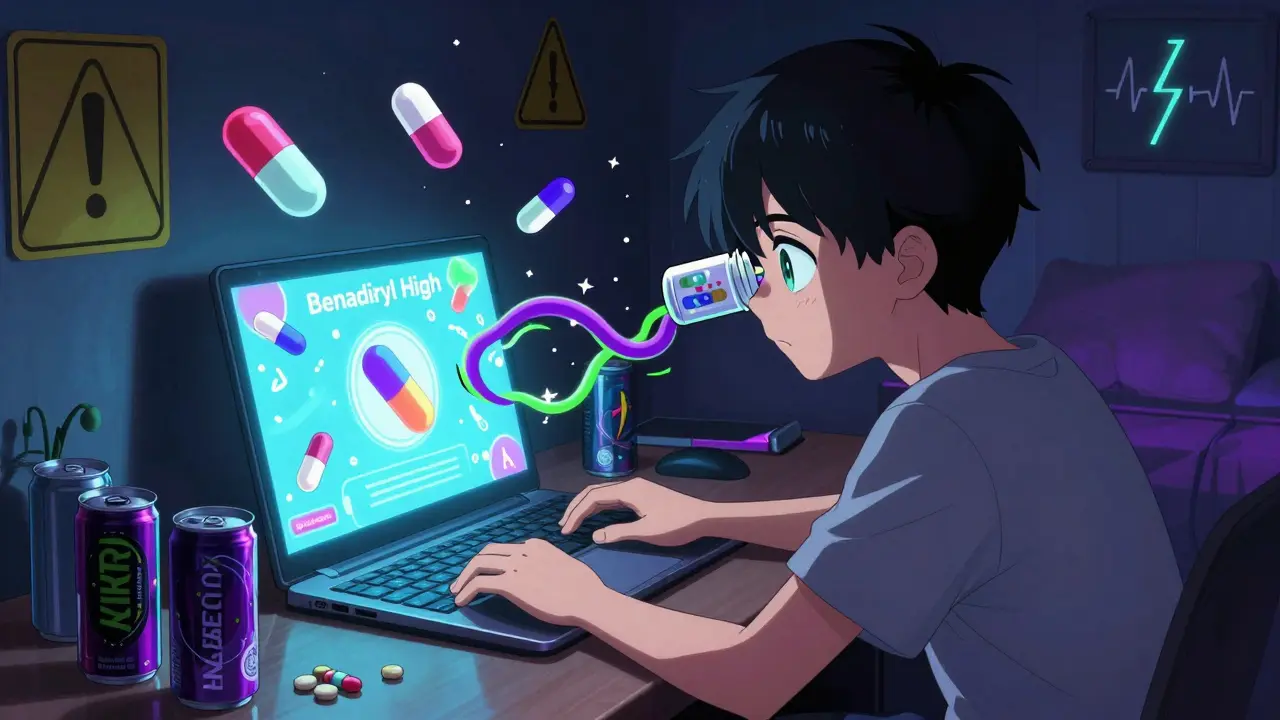
Who’s Most at Risk?
It’s not just the elderly - though they’re the most vulnerable. The average senior takes nearly five prescription medications and several supplements. That’s a recipe for disaster when hidden drugs get mixed in. Teens are another high-risk group. The "Benadryl challenge" wasn’t an isolated incident. Social media is full of trends encouraging kids to overdose on OTC meds for a high. At least three teenagers died from it in 2021 alone. UW Health reported cases of extreme confusion, seizures, and heart rhythm problems from these overdoses. Even healthy adults aren’t safe. One Reddit user shared how a "natural" fat burner spiked his blood pressure to 180/110. He didn’t know what was in it - until he sent it to a lab. It contained sibutramine. He was lucky he didn’t have a stroke.How to Protect Yourself
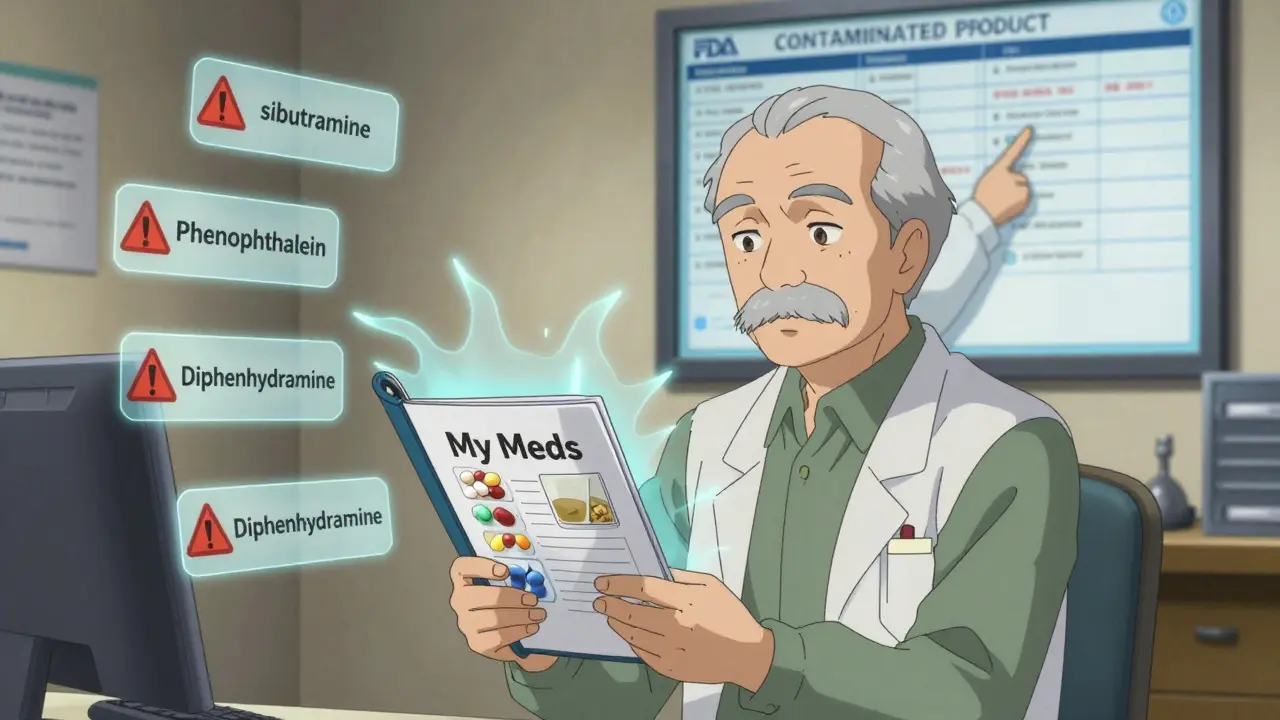
You don’t have to live in fear. But you do need to be smart.- Check the FDA’s Health Fraud Product Database. Type in the product name or brand. If it’s on the list, don’t buy it. If it’s not on the list? That doesn’t mean it’s safe - but it’s a good first step.
- Look for third-party seals. USP, NSF International, or ConsumerLab.com test supplements for what’s actually in them. These aren’t perfect, but they’re better than nothing.
- Use the 5-5-5 Rule. Before buying any OTC product: spend 5 minutes Googling it, 5 minutes checking the FDA database, and 5 minutes asking your pharmacist. Pharmacists see these cases all the time. They know what to watch for.
- Never trust "all-natural" claims. If a weight loss or sexual enhancement product says "all-natural," it’s almost certainly lying. Studies show 87% of sexual enhancers and 73% of weight loss pills contain hidden drugs.
- Keep a full medication list. Write down every pill, powder, and drop you take - including vitamins and herbal teas. Show it to every doctor, nurse, and pharmacist. A 2021 study found 63% of supplement-related hospitalizations happened because patients didn’t tell their providers what they were taking.
The Bigger Problem
The FDA only has 17 full-time staff members assigned to oversee the entire supplement industry. That’s less than one person per 10,000 products on the market. Meanwhile, the industry spends billions on marketing, and e-commerce makes it easy to sell dangerous products directly to consumers without ever stepping into a pharmacy. Only 0.3% of adverse events are reported to the FDA. That means for every one case that makes it into the system, there are 300 that don’t. We’re flying blind. Congress is trying to fix this. The 2023 OTC Medication Safety Act would force companies to report bad reactions and give the FDA more power to pull dangerous products. But until then, the burden is on you.Final Warning
OTC doesn’t mean harmless. Just because you don’t need a prescription doesn’t mean it’s safe. The biggest risks aren’t the ones you see - they’re the ones you can’t see. If you’ve ever taken a supplement that made you feel weird - faster heartbeat, nausea, dizziness, sudden sweating - stop taking it. Save the bottle. Contact your doctor. Report it to the FDA. You might save your own life - or someone else’s.Don’t assume safety. Don’t trust marketing. Don’t let convenience kill you.
Releted Post


Caspian Fothergill
Hello, my name is Caspian Fothergill. I am a pharmaceutical expert with years of experience in the industry. My passion for understanding the intricacies of medication and their effects on various diseases has led me to write extensively on the subject. I strive to help people better understand their medications and how they work to improve overall health. Sharing my knowledge and expertise through writing allows me to make a positive impact on the lives of others.
So I bought that 'natural energy booster' last month because it had coconut oil and green tea extract on the label. Turned out it had hidden caffeine and yohimbine. My heart felt like it was trying to escape my chest for three hours. Now I check every single product on the FDA database before I even open the bottle. Don't be like me. Save your ticker.
Also, why do we still let companies get away with this? It's not 'natural' if it's a prescription drug in disguise.
OTC means 'oh this could kill you'
Actually, the real issue isn't the hidden ingredients-it's that people think they can self-diagnose and self-treat with pills bought off Amazon. The FDA doesn't regulate supplements because they're not drugs. They're 'dietary supplements.' That's a loophole, not a failure. If you want regulation, stop buying the junk. Simple as that.
Also, the 'Benadryl challenge' was just kids being stupid. Blame TikTok, not the pill.
And yes, I've read the 2022 Cohen study. Twice.
It's not surprising. The supplement industry is a charlatan's paradise. A 2019 meta-analysis in JAMA Internal Medicine showed 78% of products labeled 'natural' contained non-native compounds. The fact that this is still news reveals the intellectual poverty of American consumer culture.
Hey, I'm a pharmacist and I see this every single day. People come in with bottles of 'miracle weight loss tea' and say, 'It made me feel amazing!'-until they have a panic attack and their BP hits 190/105. Here's the thing: if you're taking something that says 'boosts energy' or 'burns fat fast' and you're not a bodybuilder on a steroid cycle, you're playing Russian roulette.
Use the 5-5-5 Rule. Seriously. Five minutes on Google, five minutes on the FDA site, five minutes with your pharmacist. I don't charge for that advice. I just want you alive.
And if you're using 'detox' teas? Stop. Your liver detoxes itself. You don't need a laxative with carcinogens in it. Drink water. Eat veggies. Sleep. It's not sexy, but it works.
Also, if you're taking more than one sleep aid? That's how people end up in the ER with delirium. Benadryl isn't a party trick. It's a sedative. One pill is fine. Ten? That's not a high. That's an emergency.
And for the love of god, write down everything you take. I had a guy come in last week who thought 'just a multivitamin' didn't count. He was on warfarin. The vitamin had vitamin K. He almost bled out. Your body doesn't care what you call it. It only cares what's in it.
I used to buy every new supplement that promised quick results. I thought if it was on Amazon, it was safe. I was wrong. Now I only buy things with USP or NSF labels. It’s not perfect, but it’s better than guessing. I also keep a notebook of everything I take-even the herbal teas. My doctor says it’s the most helpful thing I’ve ever done for my health.
It’s scary how little we know about what’s in these pills. But knowledge is power. And power means staying alive.
Isn't it ironic that we seek chemical solutions to our existential unease? The body is a temple, yet we fill it with synthetic ghosts disguised as miracles. We are not merely consumers-we are victims of a capitalist illusion that sells salvation in pill form. The hidden ingredients? They are metaphors. The real poison is our surrender to convenience.
What is safety, if not a myth sold to us by those who profit from our fear?
Okay, but have you considered that maybe the FDA is just too slow? 🤔 We need blockchain-based supplement tracking! 🔒📱 And maybe AI that scans labels in real time! 🤖💊
Also, I’ve been taking ‘Turmeric + Black Pepper’ for 3 years and I’ve never felt better. 🌿❤️
But I did once get a weird headache after a ‘natural’ sleep aid… maybe it had melatonin? Or maybe it was just my aura? 🌌
Y’all, I’m so proud of how many of you are taking this seriously. Seriously. This is exactly the kind of awareness we need. 🙌
Don’t let fear paralyze you-let it empower you. Start small. One product at a time. Check the label. Google it. Talk to your pharmacist. You don’t have to be perfect. You just have to start.
And if you’ve ever felt weird after taking something? That’s your body screaming. Listen. Save the bottle. Report it. You might be the one who stops the next tragedy.
I’ve been there. I took a ‘fat burner’ that made me shake like a leaf. Turned out it had clenbuterol. I didn’t know what that was. Now I do. And I tell everyone. You’re not alone. We’re in this together. 💪❤️
My grandma took a ‘joint pain relief’ supplement for months. Said it worked better than her prescription. Then she ended up in the hospital with liver failure. Turns out the bottle had hidden naproxen and acetaminophen. She didn’t know. Neither did her doctor.
Now I make sure everyone in my family writes down every pill they take-even the ones they think are ‘harmless.’
It’s not paranoia. It’s love.
Look, I get it. You want to feel better. But you’re not a lab rat for Chinese supplement factories. This isn’t ‘freedom.’ It’s corporate colonialism disguised as wellness. The FDA’s underfunded? That’s because Congress is bought and paid for by Big Supplement.
And you know who suffers? Americans. Real Americans. Not the CEOs living in Malibu.
Stop buying the crap. Stop enabling the scam. And if you’re still buying ‘natural’ weight loss pills? You’re part of the problem. 🇺🇸
Wait, I just checked the bottle I bought last week. It says 'USP Verified.' But I just looked it up on the FDA database-and it's on the list. So… what's the point of USP if the FDA still catches these? 😅
Also, I just told my mom about this. She’s 72. She takes 8 supplements. I’m going to make her throw them all out. She’s gonna hate me. Worth it.