
Side Effect Reporting Impact Calculator
How Underreporting Affects Safety Monitoring
The article explains that only 5% to 10% of actual adverse events are reported. This calculator shows how many actual cases might exist based on reported side effects.
Key Insight: The FDA estimates that only 5-10% of adverse events are reported. That means for every reported side effect, there could be 10-20 actual cases.
Enter reported cases and click calculate to see estimated actual adverse events.
When a new drug or medical device hits the market, it’s easy to assume it’s been thoroughly tested and is completely safe. But the truth is, post-market surveillance is where the real safety story begins. Clinical trials involve hundreds or maybe a few thousand people. That’s not enough to catch every possible side effect. What happens when millions of people start using the product? That’s when the hidden risks start to show up - and that’s exactly what post-market surveillance is designed to find.
Why Clinical Trials Aren’t Enough
Before a drug or device gets approved, it goes through clinical trials. These are tightly controlled studies. Participants are carefully selected - usually healthy adults, no major other illnesses, no pregnancy, no other medications. But real life? It’s messy. People take multiple drugs. Elderly patients have kidney problems. Pregnant women need treatment. Kids use adult dosages by accident. And some side effects don’t show up until someone’s been taking the drug for five years. Take the case of Vioxx. It was approved in 1999 for arthritis pain. By 2004, studies showed it doubled the risk of heart attacks and strokes in long-term users. That risk didn’t show up in the original trials because they lasted only a few months. By the time the danger was clear, over 20 million people had taken it. That’s why regulators now know: pre-market testing is just the first step.How Side Effects Actually Get Found
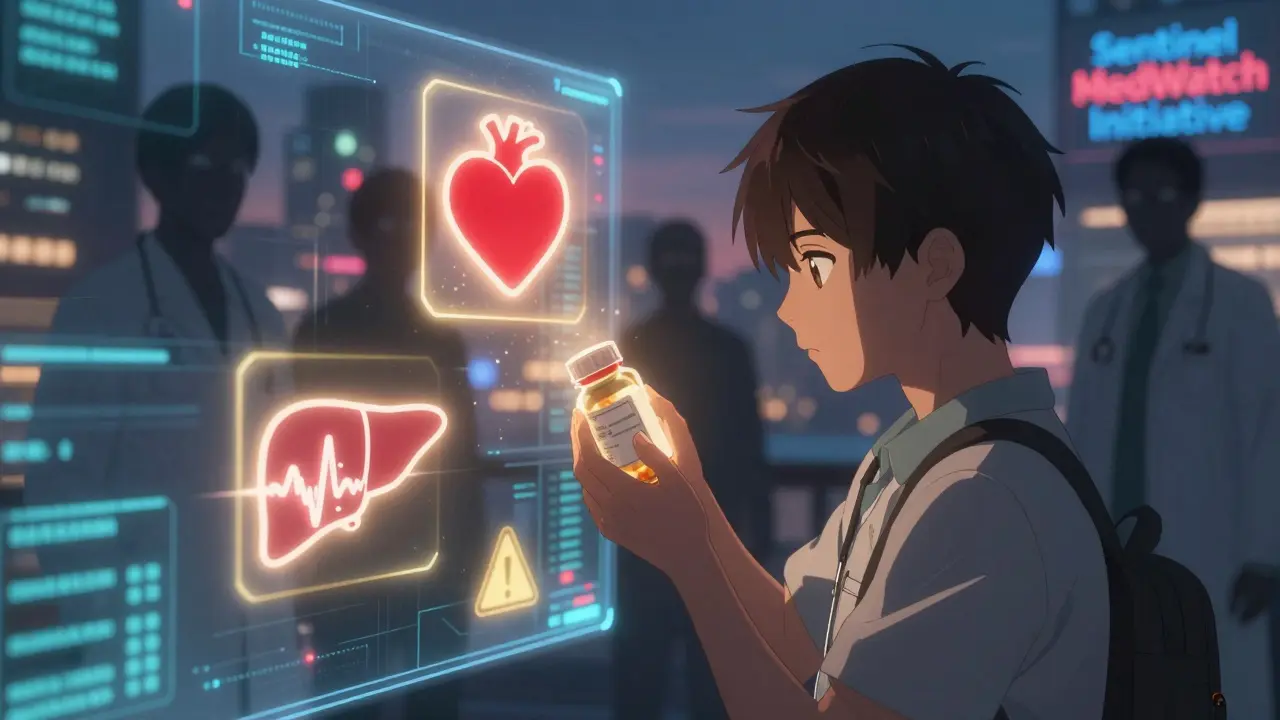
There are several ways side effects show up after approval. The most common? People report them. In the U.S., the FDA runs MedWatch, a system where doctors, pharmacists, and even patients can report unexpected reactions. A rash after taking a new blood pressure pill? A strange dizziness after using a new insulin pump? These reports pile up. The system doesn’t require proof - just suspicion. In 2023, over 1.2 million reports came in through MedWatch alone. But here’s the catch: experts estimate only 5% to 10% of actual adverse events are ever reported. Most people don’t know how to report. Many doctors are too busy. And some think, “It’s probably just a coincidence.” That’s why smarter systems are being used now. The FDA’s Sentinel Initiative scans electronic health records from over 300 million Americans. It looks for patterns - like a spike in liver damage cases among users of a certain diabetes drug. It doesn’t wait for someone to file a report. It finds the signal in the noise. For medical devices, it’s even trickier. A pacemaker might fail because of a loose wire. A hip implant might wear out faster than expected. These aren’t drug reactions - they’re mechanical or design flaws. That’s why the EU’s Medical Device Regulation (MDR) requires manufacturers to run Post-Market Clinical Follow-up (PMCF) studies. They actively track patients over time, not just wait for complaints.What Happens When a Problem Is Found?
Finding a side effect isn’t the end - it’s the start of action. Once a pattern emerges, regulators dig deeper. If a drug is linked to a rare but serious condition - like liver failure in 1 out of 5,000 users - the FDA might require a new warning label. Or force a black box warning - the strongest possible alert. Sometimes, they limit who can use it. A drug might be pulled from the market for pregnant women but stay available for others. For devices, the response can be more drastic. In 2023, over 55% of Class I recalls - the most serious type - were triggered by post-market data. One example: a glucose monitor that gave falsely low readings. Patients didn’t know they were in danger until dozens ended up in the ER with diabetic ketoacidosis. The manufacturer issued a recall, updated the software, and added a new alert system. These aren’t just bureaucratic steps. They save lives. In 2022, a survey by the American Medical Association found that 78% of physicians believe PMS systems have stopped dangerous products from staying on the market.
The Hidden Gaps in the System
Despite all the tools, the system still has big holes. One major problem? Underreporting. A 2021 Johns Hopkins study found only 12% of patients even knew about MedWatch. Most think side effects are just “bad luck.” They don’t realize their report could help someone else. Another issue? Delayed action. Between 2009 and 2019, the FDA required over 700 post-approval studies to check long-term safety. Only 29% were completed on time. The average delay? Over three years. That’s three years of people being exposed to unknown risks. And then there’s the global gap. In low- and middle-income countries, only 28% have functional pharmacovigilance systems. That means drugs approved in the U.S. or EU might be used safely in wealthy nations but cause unexpected harm elsewhere - and no one’s watching.What’s Changing Now?
The system is getting smarter. In 2024, the FDA updated its Real-World Evidence Framework to include patient-generated data - like data from smartwatches or home blood pressure monitors. AI tools now scan social media and online forums for mentions of side effects. One company, Oracle Health, says its AI detects safety signals 40% faster than traditional methods. The EU’s MDR, which fully took effect in 2024, forced manufacturers to create detailed PMS plans. These aren’t paperwork exercises - they’re living documents. Companies must now track every device sold, log every complaint, and update their safety reports at least once a year. For high-risk implants, updates are required every six months. But it’s not easy. A 2023 survey by Emergo by UL found that 63% of device companies struggled with the new rules. Many didn’t have enough staff or budget. One quality assurance manager on Reddit said, “The new MDR PMS requirements have doubled our department’s workload without corresponding budget increases, leading to staff burnout.”
What You Can Do
You don’t need to be a doctor or a regulator to help. If you notice something unusual after starting a new medication or using a medical device - something your doctor didn’t warn you about - report it. In the U.S., go to fda.gov/medwatch. Fill out the form. Even if you’re not sure it’s connected, report it. That’s how patterns are found. If you’re using a device like a CPAP machine or insulin pump, check the manufacturer’s website. Most now have direct reporting portals. Patients who report side effects aren’t just complaining - they’re helping. One cardiologist in Boston reported a severe skin reaction to a new anticoagulant. Months later, the FDA issued a safety alert. Dozens of other patients were warned before they got sick.The Bottom Line
Approval doesn’t mean perfection. It means the product passed a basic safety test. Real-world use is the true test. Post-market surveillance isn’t a backup plan - it’s the most important layer of patient protection we have. It’s how we learn what we didn’t know. How we fix what we missed. How we keep people safe after the hype fades and the medicine becomes part of everyday life.Every report matters. Every pattern counts. And every time someone speaks up, another life might be saved.
What is post-market surveillance?
Post-market surveillance (PMS) is the ongoing monitoring of drugs and medical devices after they’ve been approved and sold to the public. It tracks side effects, malfunctions, and unexpected risks that weren’t visible during clinical trials, which typically involve only a few thousand patients. PMS relies on reports from doctors, patients, electronic health records, and data analysis to detect problems that could affect millions of users.
How are side effects reported after a drug is approved?
Side effects are reported through systems like the FDA’s MedWatch in the U.S. or EudraVigilance in Europe. Healthcare providers, patients, and manufacturers can submit reports online or by phone. These reports are collected, analyzed for patterns, and used to determine if a drug’s risks outweigh its benefits. In the U.S., over 1.2 million reports were filed in 2023 alone.
Why are only a few side effects reported?
Studies show that only 5% to 10% of actual adverse events are reported. Many patients don’t know how or where to report. Some assume their symptom is unrelated. Doctors are often too busy. And some reports get dismissed as coincidental. This underreporting creates blind spots, which is why regulators now use electronic health records and AI to find hidden patterns.
What’s the difference between drug and device post-market surveillance?
Drugs mainly cause biological reactions, so surveillance focuses on adverse drug reactions (ADRs) reported by users. Devices, however, can fail mechanically - a pacemaker wire breaks, a joint implant wears out, or software glitches. For devices, the EU requires active follow-up studies (PMCF), where patients are tracked over time. Drug companies rely more on passive reporting, though both now use electronic data mining.
Can post-market surveillance prevent recalls?
Yes. In fact, over 55% of Class I medical device recalls - the most serious type - are triggered by post-market data. For example, a glucose monitor that gave dangerously low readings was pulled after dozens of patients had emergency hospital visits. Reports from users and hospitals flagged the issue before widespread harm occurred.
Do I need to report a side effect if I’m not sure it’s related?
Yes. Even if you’re unsure, report it. Regulators look for patterns - one report might mean nothing, but 10 similar reports from different people can reveal a hidden risk. The FDA’s MedWatch system is designed for suspicion, not proof. Your report could help prevent harm to others.
Is post-market surveillance the same worldwide?
No. The U.S. relies heavily on passive reporting (MedWatch) and active systems like Sentinel. The EU requires mandatory, detailed PMS plans under the MDR, including clinical follow-up for devices. In low-income countries, only 28% have functional systems. This creates global safety gaps - a drug safe in the U.S. might cause unexpected harm elsewhere.
Releted Post



Caspian Fothergill
Hello, my name is Caspian Fothergill. I am a pharmaceutical expert with years of experience in the industry. My passion for understanding the intricacies of medication and their effects on various diseases has led me to write extensively on the subject. I strive to help people better understand their medications and how they work to improve overall health. Sharing my knowledge and expertise through writing allows me to make a positive impact on the lives of others.
Man, I had no idea so few side effects actually get reported. I took that one blood pressure med for six months and got this weird rash-thought it was just dry skin. Never even thought to report it. Now I feel kinda guilty. Like, what if someone else got hurt because I didn’t say anything? Gonna check out MedWatch tonight. Maybe I’ll finally do something useful for once.
Of course the system is broken. You think the FDA actually cares about people? They’re just another arm of Big Pharma. They approve drugs based on lobbying, not science. And now they want us to report side effects like good little citizens? Ha. It’s all theater. The real problem? Profit. Always profit. Nobody gets fired for a few dead patients-only for missing quarterly targets.
I work in a clinic, and honestly? Most patients don’t report because they’re scared. They think if they say ‘my leg went numb after this pill,’ the doctor will think they’re crazy or blame them for ‘not following instructions.’ And honestly? A lot of providers don’t even know how to help them report. We need better education-not just for patients, but for frontline staff too. A simple handout at the pharmacy could change everything. Small things matter.
It is imperative to underscore the critical role of post-market surveillance as an indispensable component of public health infrastructure. The transition from controlled clinical environments to real-world populations introduces variables that cannot be fully anticipated in pre-approval trials. Consequently, the integrity of pharmacovigilance systems must be maintained with rigorous diligence, adequate funding, and transparent reporting mechanisms to ensure the continued safety of the patient population.
So let me get this straight-we’re supposed to trust a system that takes THREE YEARS to act on known dangers? And you call that ‘safety’? Meanwhile, your ‘smart’ AI is scanning Reddit for complaints while people are still dying. This isn’t innovation. It’s damage control with a fancy logo. And don’t even get me started on how they’re using ‘real-world data’ while ignoring the fact that 70% of patients in poor countries are basically guinea pigs. Wake up, people. This isn’t science. It’s capitalism with a stethoscope.
Just wanted to add-my cousin’s kid had a reaction to a vaccine, and the doc said ‘it’s probably unrelated.’ We reported it anyway. Six months later, the FDA updated the warning label. Turns out three other kids had the same thing. We didn’t do anything heroic. We just didn’t shut up. If you think your report doesn’t matter? You’re wrong. Just… report it. Even if you’re tired. Even if you’re mad. Even if you think it’s ‘just one time.’
in india we dont even have proper system for reporting side effects. most people dont know what medwatch is. doctors dont care. patients dont trust. and when something goes wrong? they just say ‘god’s will’. but honestly? i think the real problem is we dont teach people how to think about medicine. we just give them pills and say ‘take it’. no one explains what side effects mean. or how to spot them. or that reporting helps others. its sad.
Here’s the truth: PMS isn’t broken-it’s under-resourced. We have AI that can detect signals faster than humans, but we’re still relying on overworked nurses to manually log reports. The EU’s MDR? Brilliant framework. But if companies are drowning in paperwork because they can’t hire staff? That’s not compliance-it’s chaos. We need to invest in infrastructure, not just regulations. And we need to stop treating patient reports as ‘noise’ and start treating them as data. Because every report? It’s someone’s story. And stories save lives.