
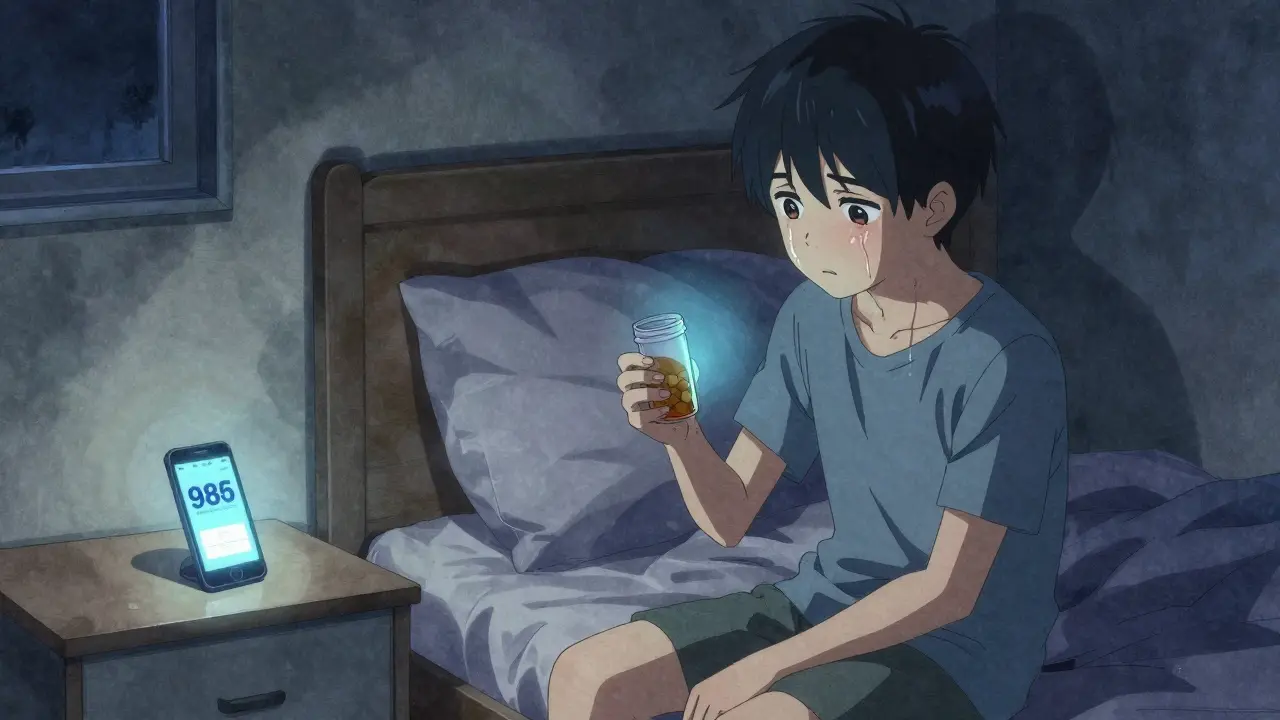
When someone takes too many pills on purpose, it’s not just a medical emergency-it’s a cry for help. Intentional overdose is one of the most common ways people attempt suicide in the U.S., especially among teens and middle-aged adults. Unlike accidental overdoses tied to addiction, these are deliberate acts driven by unbearable emotional pain. The good news? We know how to stop them. The bad news? The systems meant to help are stretched thin, underfunded, and failing too many people.
Why Intentional Overdose Happens
People don’t take an overdose because they want to die. They take it because they can’t see another way out. Depression, trauma, isolation, financial stress, or untreated mental illness can make life feel unbearable. Prescription painkillers, sleep aids, antidepressants, or even common pain relievers like acetaminophen become tools in a moment of crisis. Why? Because they’re easy to get. A medicine cabinet is more accessible than a therapist’s office. In 2024, about 2.7% of teens aged 12-17 attempted suicide, with overdose being one of the top methods. Among adults, over 14 million reported serious suicidal thoughts last year. That’s more than the population of New York City. And yet, 1 in 4 adults with a mental illness didn’t get the care they needed. When you’re in pain, you don’t need a pamphlet-you need someone to answer the phone.How It Works: The Reality of an Overdose Attempt
Many assume an intentional overdose is quick and painless. It’s not. Acetaminophen overdoses can cause liver failure over days. Opioids can shut down breathing slowly, leaving the person conscious but unable to move. Even if they survive, organ damage, brain injury, or long-term health problems are common. And the emotional toll? Survivors often feel more alone, more guilty, more hopeless than before. The substances most often used? Prescription opioids, benzodiazepines, and over-the-counter medications. Why? Accessibility. A 16-year-old can grab a bottle of sleeping pills from their parent’s nightstand. A 50-year-old might have leftover painkillers from a past injury. There’s no barrier-no background check, no waiting period. That’s why prevention isn’t just about treatment. It’s about limiting access.The Lifeline That Saved 4.7 Million People in One Year
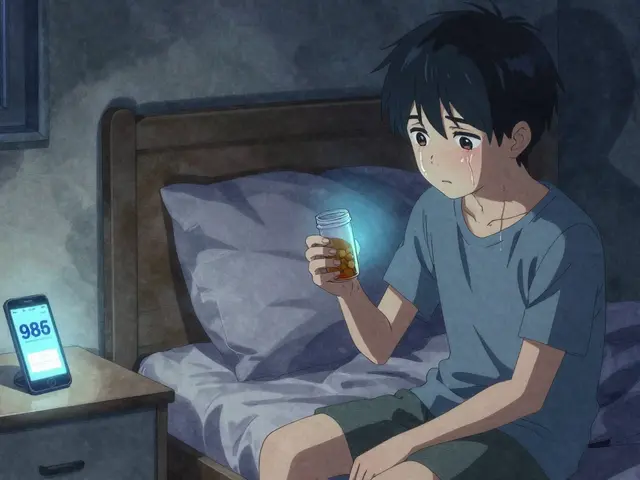
In July 2022, the federal government launched the 988 Suicide & Crisis Lifeline. You can call, text, or chat. It’s free. It’s confidential. And in 2024, it handled 4.7 million contacts-a 32% jump from the year before. That’s 4.7 million people who reached out when things felt hopeless. One Reddit user, ‘AnxietySurvivor89,’ wrote: “I called 988 after taking too many pills. The counselor stayed on the line until EMS arrived 18 minutes later. That probably saved my life.” But here’s the dark side: wait times have grown. In 2022, the average call wait was 2.4 minutes. By 2024, it was 5.7 minutes. Some centers lost staff. Some centers shut down. The system is overloaded. And when you’re in crisis, five extra minutes can mean the difference between life and death.
What Else Is Out There?
The 988 Lifeline isn’t the only option. Crisis Text Line (text HOME to 741741) handled over 3.2 million conversations in 2024, with responses in under a minute. It’s anonymous. It works on any phone. No judgment. No waiting. SAMHSA’s National Helpline (1-800-662-4357) connects people to local treatment centers. It’s not a crisis line-but it can get you into therapy, detox, or peer support. In 2024, it answered over 550,000 calls. For teens, school-based programs are making a difference. A 2024 study found that schools with mental health check-ins and peer support groups reduced suicide attempts by 22%. But only 1 in 5 schools have a full-time counselor. Rural areas? Even worse. Suicide rates there are 25% higher than in cities-and access to help is 40% lower.The System Is Broken-But It Can Be Fixed
The CDC says we’ve made progress. Overdose deaths dropped by nearly 27% from 2023 to 2024. That’s over 27,000 lives saved in one year. But experts warn: this progress is fragile. Why? Funding cuts. In 2025, Congress proposed slashing $1.07 billion from SAMHSA’s budget. That’s money that pays for crisis counselors, outreach workers, mobile units, and community programs. Without it, wait times will get longer. Staff will quit. Centers will close. The CDC recommends one mental health provider for every 250 people at risk. Right now? It’s one provider for every 320 people. That gap is growing. And when you’re in crisis, you don’t need statistics-you need someone who answers when you call.
What You Can Do Right Now
If you’re struggling:- Call or text 988-it’s available 24/7, no matter where you are.
- Text HOME to 741741 for the Crisis Text Line.
- Call 1-800-662-HELP (4357) to find local treatment.
- Reach out to someone-even if it’s just a text saying, “I’m not okay.”
- Ask directly: “Are you thinking about killing yourself?” No judgment. Just care.
- Remove access to pills, guns, or other lethal means. Lock them up. Give them to a friend.
- Stay with them until help arrives. Don’t leave them alone.
- Call 988 for guidance. They’ll tell you what to do.
Why This Matters More Than You Think
Every intentional overdose is a sign that someone didn’t feel seen. That someone believed no one cared. That the system failed them. But here’s the truth: suicide is preventable. We know what works. We have the tools. We just need the will to fund them. We need schools to hire counselors. We need clinics to hire more therapists. We need 988 to have enough staff to answer every call. The drop in overdose deaths proves it’s possible. But if funding cuts go through, we’ll lose that progress. And the next person who reaches out might not get through.What’s Next?
If you’re reading this and you’re not okay, please reach out. You’re not alone. If you’re reading this and you’re okay, please share this. Tell your friends. Tell your family. Tell your coworkers. Because the next life saved might depend on someone knowing where to call. You don’t have to be a hero. You just have to care enough to act.Is intentional overdose the same as an accidental overdose?
No. Intentional overdose is a suicide attempt-someone takes drugs on purpose to end their life. Accidental overdose happens when someone takes too much of a substance without intending to die, often due to addiction, misunderstanding dosage, or mixing drugs. The CDC tracks them separately: intentional overdoses use ICD-10 codes X60-X64; accidental ones use X40-X44. But both require urgent help.
Can I call 988 even if I’m not sure I want to die?
Yes. 988 is for anyone in emotional distress. You don’t need to be suicidal to call. If you’re overwhelmed, hopeless, or just need to talk, counselors are trained to listen without judgment. You don’t have to be at your worst to deserve support.
What if I’m under 18 and I don’t want my parents to know?
You can call 988 or text 741741 anonymously. Counselors won’t contact your parents unless they believe you’re in immediate danger. Many teens have used these services without their families knowing. Your privacy is protected by federal law.
Why are overdose deaths going down if suicide rates are still high?
The drop in overdose deaths since 2023 is mostly due to fewer accidental overdoses from illicit drugs like fentanyl. But intentional overdoses-those tied to suicide-haven’t declined as much. Experts say the decline in overall numbers masks a persistent crisis in mental health. Without better access to care, suicide attempts via overdose remain a major threat.
How can I help someone who’s thinking about suicide?
Ask them directly: “Are you thinking about killing yourself?” Don’t be afraid to say the words. Then listen. Don’t try to fix it. Just be there. Remove access to pills or weapons if you can. Call 988 with them. Stay with them until help arrives. You don’t need to be a therapist-you just need to care enough to stay.
Is there help for families after a suicide attempt?
Yes. SAMHSA’s National Helpline (1-800-662-4357) can connect families to counseling, support groups, and trauma resources. The American Foundation for Suicide Prevention also offers free peer support for loved ones. Healing after a suicide attempt isn’t just about the person who tried-it’s about rebuilding trust, safety, and hope for everyone affected.
Releted Post

Caspian Fothergill
Hello, my name is Caspian Fothergill. I am a pharmaceutical expert with years of experience in the industry. My passion for understanding the intricacies of medication and their effects on various diseases has led me to write extensively on the subject. I strive to help people better understand their medications and how they work to improve overall health. Sharing my knowledge and expertise through writing allows me to make a positive impact on the lives of others.
Just wanted to say the 988 lifeline saved my sister last winter. She texted them after a panic attack turned into a full breakdown. The counselor didn't panic, didn't judge-just stayed on the line until her roommate got home. No drama. No BS. Just human connection when it mattered most.
These services work. They’re not perfect, but they’re the best thing we’ve got right now.
People act like suicide is some dark secret you gotta whisper about. Nah. It’s a public health crisis wearing a hoodie and scrolling through Instagram at 3 a.m. We treat broken bones like emergencies. Why do we treat broken minds like inconveniences?
988 isn’t a Band-Aid-it’s the EMTs showing up when no one else will.
Over-the-counter meds are the most common tools in overdoses. That’s wild. A bottle of Tylenol costs less than a coffee. But a therapist? You need insurance, a waiting list, and a miracle.
Fix access. Not just awareness.
My mom tried to take pills after my dad died. I didn’t know until two days later. If 988 had been easier to find, maybe she’d have reached out before it got that bad.
Sharing this info isn’t just helpful-it’s necessary.
They say funding cuts are coming. I’ve seen what happens when they cut mental health budgets. Clinics close. Staff leave. People vanish into the cracks.
It’s not politics. It’s people dying because we decided their pain wasn’t worth the cost.
If you’re reading this and you’re not okay-call 988. Not tomorrow. Not when you feel stronger. Now.
Someone on the other end is trained to sit with you. You don’t have to be brave. Just dial.
So many people think suicide is selfish. Nah. It’s the opposite. It’s when you’re so exhausted from carrying the weight of the world alone that you forget you’re allowed to put it down.
988 is the hand that helps you set it down. No judgment. Just presence.
India has 1.4 billion people and 1200 mental health professionals. The U.S. has 330 million and 250k. Who’s really failing here?
Stop pretending this is an American problem. It’s a global collapse of empathy. And no, your ‘positive vibes’ won’t fix it.
They say suicide rates are still high. I say the system is designed to fail people who don’t have privilege.
You think a rich kid with insurance and a private therapist has the same odds as a kid in rural Alabama with a parent who says ‘pray it away’?
That’s not a crisis. That’s a caste system.
988 is a trap. The government doesn’t want people to get help. They want people to call so they can track them, label them, then use it against them in custody battles or insurance denials.
I know. I’ve seen the paperwork. It’s all connected. You think this is about care? It’s about control.
Let’s be real-no one cares until it’s their kid. Then suddenly it’s ‘we need to fix this!’
But when it’s the homeless guy on the corner or the kid in foster care? Nah. That’s just statistics.
And now they’re cutting funding because it’s ‘too expensive’? What’s more expensive? A therapist or a funeral?
Wake up. This isn’t about policy. It’s about who we decide is worth saving.
As someone who works in crisis response, I see the gaps daily. We have the tools. We have the data. We have the trained professionals.
The problem isn’t lack of knowledge. It’s lack of political will.
Every dollar cut from SAMHSA is a life we could have saved. Not a ‘maybe.’ Not a ‘someday.’ A life.
If you’re reading this and you’re not in crisis, please-call your rep. Demand funding. Not because it’s noble. Because it’s basic human decency.
My cousin tried to overdose last year. He didn’t call 988. He texted me. I didn’t know what to say. So I just sat with him. Didn’t fix it. Didn’t preach. Just stayed.
That’s all he needed.
Maybe we don’t need more systems. Maybe we just need more people willing to sit in the dark with someone.
Why do people always blame the system? It’s not the system. It’s weak people who give up too easy.
My grandpa worked three jobs and never complained. He didn’t have therapists. He had grit.
You want help? Get up. Get to work. Stop whining.
Life isn’t fair. Get used to it.
Have you considered that 988 might be a covert surveillance operation? The metadata collected from calls is shared with DHS, ICE, and insurance companies. There are documents. I’ve seen them. The system is designed to identify ‘high-risk individuals’ for preemptive intervention-meaning detention, forced medication, or loss of parental rights.
It’s not about care. It’s about population control. The CDC’s numbers are manipulated. The ‘drop’ in deaths? They reclassified intentional overdoses as ‘accidental’ to make the stats look better.
Don’t trust the narrative. Ask questions. Demand transparency. The truth is buried under layers of bureaucratic obfuscation.