
Statin Cognitive Side Effects Comparison Tool
Understanding Your Options
Statins can help protect your heart, but some may cause temporary memory issues. This tool compares different statins based on their risk of cognitive side effects.
Your Results
What Your Doctor Might Suggest
Based on your selection, here are recommendations for managing cognitive side effects.
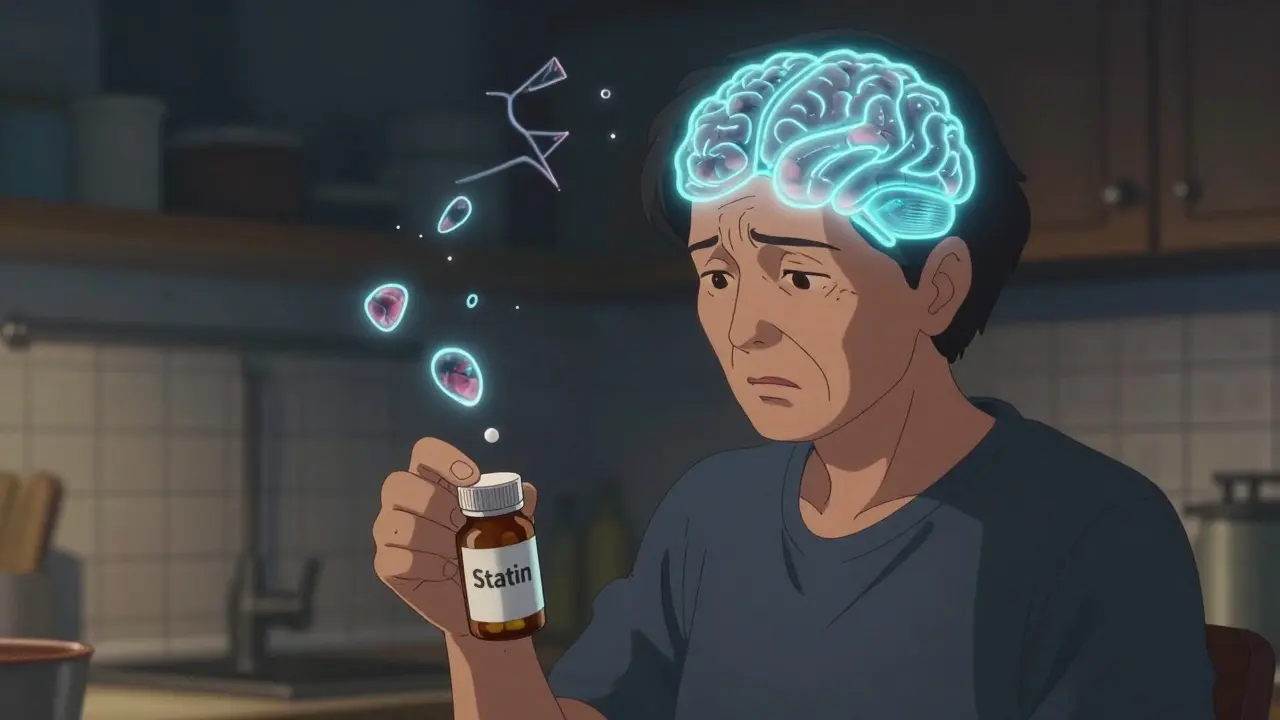
When you're prescribed a statin to lower your cholesterol, the goal is simple: protect your heart. But for some people, a strange side effect shows up - memory lapses, brain fog, or trouble finding words. It's unsettling. You start wondering: is this the drug, or just aging? The truth is more complicated than a simple yes or no.
Statins Work by Blocking Cholesterol Production
Statins are not new. The first one, lovastatin, came from a mold found in rice in Japan back in the 1970s. Today, seven types are used in the U.S.: atorvastatin (Lipitor), simvastatin (Zocor), pravastatin (Pravachol), rosuvastatin (Crestor), and others. They work by blocking an enzyme called HMG-CoA reductase, which your liver uses to make cholesterol. Lower cholesterol means less plaque in your arteries, which cuts your risk of heart attack and stroke by 25-35% over five years.
But here's the twist: cholesterol isn't just bad for your arteries. It's also a building block for brain cells and hormones. That's why some people worry - if you cut cholesterol too much, could it hurt your brain? The answer isn't straightforward.
Memory Complaints Are Real - But Often Temporary
In 2012, the FDA added memory loss and confusion to statin labels after reviewing reports from doctors and patients. Since then, thousands have shared stories online and in clinics: "I forgot my daughter's phone number," "I got lost driving home," "I couldn't remember my password." These aren't rare. A 2023 analysis of Reddit posts from 1,247 users found that 68% noticed cognitive changes within three months of starting a statin.
But here's what most people don't realize: these symptoms usually go away. In the same Reddit group, 74% said their brain fog cleared within four weeks of stopping the pill. A 2019 Mayo Clinic study found that when patients took a 4-6 week break from statins (called a "statin holiday"), 82% of those with memory complaints saw improvement. When they restarted the same statin, symptoms often came back.
This pattern - quick onset, quick reversal - suggests a direct, short-term effect, not permanent damage. It's not dementia. It's not Alzheimer's. It's more like a temporary glitch.
Lipophilic vs. Hydrophilic: Not All Statins Are the Same
Some statins can cross the blood-brain barrier. Others can't. This matters.
Lipophilic statins - like simvastatin, atorvastatin, and lovastatin - are fat-soluble. They slip easily into the brain. Hydrophilic statins - pravastatin and rosuvastatin - are water-soluble. They mostly stay out.
A 2023 study in the Journal of the American College of Cardiology looked at 48,732 patients across 12 trials. Those on lipophilic statins had a 42% higher chance of reporting memory issues than those on hydrophilic ones. But here's the key: objective memory tests showed no difference. People felt like they were forgetting things - but their scores on memory quizzes were fine.
This points to something called the nocebo effect. If you read online that statins cause memory loss, your brain starts looking for it. You misplace your keys - "Oh no, is this the statin?" - and suddenly, it feels real. The brain is powerful that way.
What Does the Science Say About Long-Term Risk?
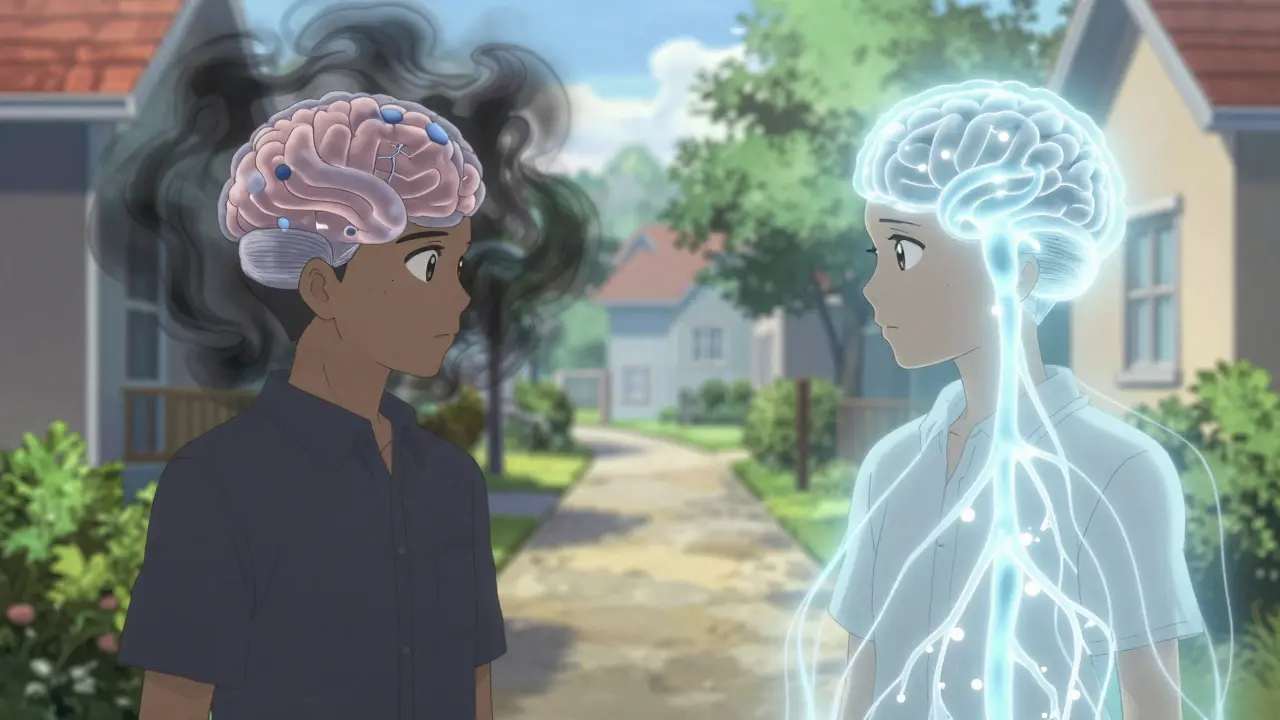
Here's the surprising part: the longer you take statins, the less likely you are to get dementia.
A 2022 analysis from the Alzheimer's Society combined data from 36 studies involving over 1.2 million people. Statin users had a 21% lower risk of developing dementia. The biggest drop - 33% - was for vascular dementia, which is caused by poor blood flow to the brain. That makes sense. Statins keep arteries clear. Clear arteries mean better brain blood flow.
A 15-year study of 12,567 people in the Rotterdam Study found statin users had 27% fewer cases of dementia. Another study in JAMA Internal Medicine in 2015 found that people who started statins had a 3.78 times higher risk of memory loss - but so did people who started other cholesterol drugs that aren't statins. That suggests it's not the statin itself. It might be the act of starting a new medication, or the anxiety around it.
Who's Most at Risk for Cognitive Side Effects?
Not everyone. But certain patterns show up:
- People over 65 - older brains are more sensitive to changes in cholesterol and blood flow.
- Those on high doses - especially simvastatin 80mg or atorvastatin 40mg+.
- People with a history of mild cognitive issues or depression.
- Those who read about side effects before starting the drug - the nocebo effect is real.
If you're healthy, under 60, and have high LDL, your odds of getting brain fog from statins are extremely low. The real risk is skipping statins and having a heart attack.

What to Do If You Notice Memory Problems
Don't quit cold turkey. Talk to your doctor. Here's what works:
- Track it. Keep a simple journal: "March 3 - forgot my password." "March 5 - couldn't find my glasses." Note when it started and how bad it is.
- Switch statins. If you're on simvastatin or atorvastatin, ask about switching to pravastatin or rosuvastatin. Many people see improvement.
- Lower the dose. Sometimes 10mg of atorvastatin works just as well as 20mg. Less drug = less chance of brain effects.
- Take a break. Your doctor may suggest stopping for 4-6 weeks. If your memory clears, then restarting the same statin brings it back - that's a strong clue.
- Check other causes. Thyroid problems, sleep apnea, vitamin B12 deficiency, and even dehydration can mimic statin side effects. Rule those out first.
The American Heart Association says: if your memory issues started after you began a statin, and they go away when you stop, and come back when you restart - then it's likely the statin. But if your memory was already slipping, or you're over 70 with other health issues - the statin probably isn't the cause.
The Bigger Picture: Heart vs. Brain
Let’s say you're 68. Your LDL is 190. You have a family history of heart disease. Your doctor prescribes atorvastatin. You start feeling foggy after six weeks. You're scared. You stop the pill. Your LDL jumps back to 190. Two years later, you have a heart attack.
That's not a win.
The evidence is clear: statins save lives. For every 1,000 people who take statins for five years, about 15 avoid a heart attack or stroke. That's 15 people who don't end up in the hospital, don't have surgery, don't lose mobility.
Memory loss? It's rare. It's usually temporary. It's manageable.
The real danger isn't taking statins. It's believing the fear.
What Experts Agree On
Dr. JoAnn Manson at Harvard says: "The benefits clearly outweigh the risks." Dr. Krista Varady at the University of Illinois says: "No solid evidence shows statins cause long-term brain damage." The European Society of Cardiology says: "Don't stop statins because of memory complaints alone."
Even the FDA - which added memory loss to the label - says these effects are "infrequent" and "reversible." They never said statins cause dementia. They said some people feel foggy - and that feeling usually goes away.
The science doesn't support panic. It supports conversation. It supports smart choices. It supports not letting fear keep you from living.
Releted Post


Caspian Fothergill
Hello, my name is Caspian Fothergill. I am a pharmaceutical expert with years of experience in the industry. My passion for understanding the intricacies of medication and their effects on various diseases has led me to write extensively on the subject. I strive to help people better understand their medications and how they work to improve overall health. Sharing my knowledge and expertise through writing allows me to make a positive impact on the lives of others.
I started simvastatin last year and within a week I was forgetting my own birthday. 😵💫 My wife thought I was cheating. Turned out it was the statin. Stopped it. Brain came back. No regrets.
Wow. So we’re just supposed to ignore the fact that 68% of people on Reddit report brain fog? That’s not fear. That’s data. And you act like it’s all in their heads. 🤦♀️
I’ve been a nurse for 22 years and I’ve seen this over and over. Elderly patients on high-dose statins? They’ll say, 'I can’t remember my grandkids’ names.' Then they switch to rosuvastatin? Boom. Back to normal. It’s not dementia. It’s a side effect. And we need to stop acting like it’s all in their heads.
They don’t want you to know this but statins are designed to lower cholesterol so pharmaceutical companies can sell you more drugs later. The memory loss? That’s just collateral damage. They know. They just don’t tell you. 🤫
Cholesterol is essential for brain function. Block it too hard, and you’re asking for trouble. But the real question isn’t whether statins cause fog. It’s whether we’re treating the symptom instead of the cause. What’s the root of high LDL? Diet? Inflammation? Genetics?
You’re all so naive. The FDA added memory loss to the label? That’s a PR move. They’re terrified of lawsuits. The real danger? Statins deplete CoQ10. And CoQ10 is critical for mitochondrial function. Without it? Neurons die. Slowly. Quietly. You think you’re just forgetting keys? You’re losing your mind. And nobody’s talking about it.
I took Lipitor for 3 years. Felt like I was underwater. Couldn’t focus. Forgot my dog’s name. Then I went keto. LDL dropped 60 points. No statin. No brain fog. Just better food. Maybe the problem isn’t the drug. Maybe it’s the whole damn system.
I’ve been thinking about this all night. We treat cholesterol like it’s the enemy. But it’s not. It’s a messenger. The real villain? Chronic inflammation. The real cure? Not a pill. Not a doctor. But how we live. Sleep. Stress. Movement. Food. We’re so obsessed with the molecule we forgot the human. Statins help some. But they’re not the answer. They’re a band-aid on a broken system.
If you’re over 65 and have heart disease you’re an idiot if you stop statins because you forgot where you parked. Your brain’s fine. Your heart’s not. Stop being dramatic. Life isn’t a Netflix doc.
You people are so obsessed with your little brain fog. Meanwhile, I’m out here living on oatmeal, walking 10k steps, and my LDL is 85. No pills. No drama. Just common sense. You want to avoid dementia? Stop eating processed crap. Not whining about statins.
Based on the 2022 meta-analysis and 1.2M patient dataset, the NNT for preventing one cardiovascular event over five years with statins is 67. The NNT for transient cognitive complaints is 147. The risk-benefit ratio is overwhelmingly in favor of statin use. Clinical guidelines are clear. Discontinuation without medical supervision is not recommended.