
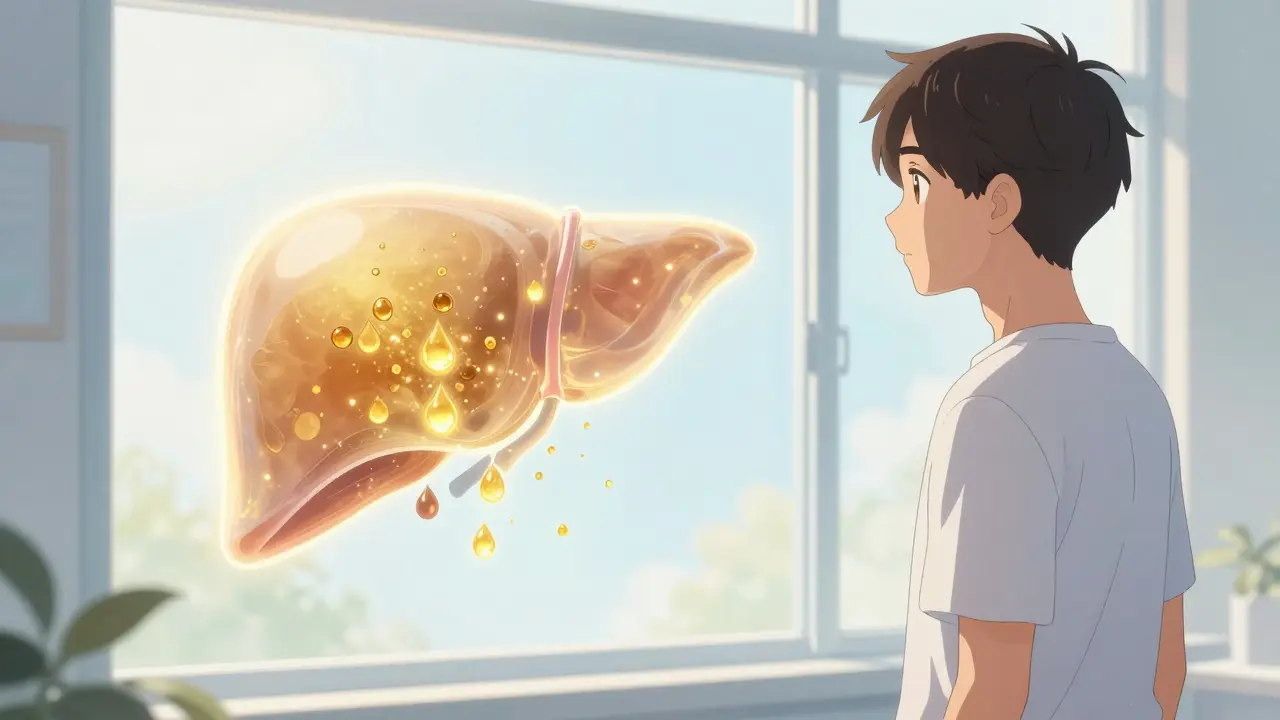
You might think you're fine because you don't feel "sick," but your liver is an organ that suffers in silence. It doesn't usually scream for help until it is severely damaged. Many people are shocked to find out that heavy drinking can trigger liver changes in as little as 72 hours. Whether it's a few drinks every night or heavy binge sessions, the impact on your liver follows a predictable, though dangerous, path. The good news? In the early stages, the damage is almost entirely reversible if you act fast.
Medical professionals have recently shifted the terminology to Alcohol-associated liver disease is a spectrum of liver injury caused by alcohol consumption, ranging from simple fat accumulation to permanent scarring. This change, led by the American Association for the Study of Liver Diseases (AASLD), aims to reduce stigma and focus on the biological cause rather than just the habit of dependency. Understanding where you stand on this spectrum can literally be the difference between a full recovery and a life-threatening diagnosis.
The First Warning: Hepatic Steatosis
The first stage is Hepatic Steatosis, more commonly known as fatty liver. This happens when your liver can't process the fat produced during alcohol metabolism, causing fat droplets to build up inside the liver cells. It's incredibly common; about 90% of people who drink heavily (roughly 3-6 standard drinks daily) develop this condition.
Here is the scary part: you won't feel it. About 95% of people with fatty liver have zero symptoms. You might feel slightly more tired than usual, but for most, the only way to find it is through blood tests showing elevated liver enzymes or an ultrasound. However, this stage is the "golden window." If you stop drinking completely for 4 to 6 weeks, the fat usually clears out. Research shows that 85% of people can completely reverse this stage with total abstinence. It's a clean slate, provided you don't keep adding fuel to the fire.
When Inflammation Hits: Alcohol-Associated Hepatitis
If the drinking continues, the liver moves from just storing fat to becoming inflamed. This is Alcohol-associated hepatitis (AH). Unlike the first stage, this isn't just about fat; it's about active damage and cell death. This stage can develop after years of steady drinking or even after a single, massive binge episode involving over 100 grams of alcohol in 24 hours.
This is where the symptoms become impossible to ignore. Jaundice-that telltale yellowing of the skin and eyes-appears in 85% of moderate to severe cases. You might also notice swelling in your abdomen (ascites) or a strange mental fog known as hepatic encephalopathy. Doctors use the Maddrey Discriminant Function (mDF) score to see how dangerous the situation is. If your score is 32 or higher, it's considered severe AH, and the short-term mortality rate can jump to 30-40% without aggressive treatment like corticosteroids.
The Point of No Return: Cirrhosis
The final and most severe stage is Cirrhosis. At this point, the liver has tried so hard to heal itself from the inflammation that it has replaced healthy tissue with thick, permanent scar tissue. In medical terms, this is Metavir F4 fibrosis, meaning over 75% of the liver's architecture is gone.
While we often call cirrhosis "irreversible," that's a bit of a simplification. You can't turn the scar tissue back into healthy liver cells, but you can stop the clock. For people with compensated cirrhosis (where the liver still functions okay), complete abstinence can increase 5-year survival rates from 30% up to 90%. But once you hit decompensated cirrhosis-where the liver fails completely-the risk of death within two years is about 50% unless you get a liver transplant.
| Attribute | Hepatic Steatosis | Alcoholic Hepatitis | Cirrhosis |
|---|---|---|---|
| Reversibility | Fully Reversible | Potentially Reversible | Irreversible (but stabilizable) |
| Primary Symptom | Asymptomatic | Jaundice / Inflammation | Ascites / Liver Failure |
| Incidence (Heavy Drinkers) | ~90% | ~30-35% | ~10-20% |
| Typical Treatment | Abstinence (4-6 weeks) | Corticosteroids / Abstinence | Managing complications / Transplant |
Why Some People Crash Faster Than Others
You've probably noticed that some people can drink for decades with no issues, while others develop liver failure quickly. It isn't just luck. Several factors play a role in how fast you move from fatty liver to cirrhosis:
- Gender: Women are at a significantly higher risk. Due to differences in how the body metabolizes alcohol, women can develop ALD with much lower doses of alcohol than men.
- Genetics: Certain genes, specifically PNPLA3 and TM6SF2, act like a biological amplifier for liver damage. If you have these variants, alcohol hits your liver much harder.
- Metabolic Health: If you already have metabolic syndrome (high blood pressure, high blood sugar, and obesity), your liver is already under stress. This "double hit" accelerates the scarring process.
- Viral Load: Having a pre-existing condition like Hepatitis (viral) creates a synergistic effect, speeding up the transition to cirrhosis.
How Doctors Spot the Damage
In the past, the only way to know for sure what was happening inside your liver was a biopsy-where a needle is inserted to take a piece of tissue. While that's still the gold standard, we now have better, non-invasive options. One of the most common is Transient Elastography, often called a FibroScan. It uses ultrasound-like waves to measure the stiffness of the liver; the stiffer the liver, the more scarring (fibrosis) is present. It's about 85-90% accurate in detecting significant fibrosis without needing a needle.
Blood tests are also evolving. While the ratio of AST to ALT enzymes is a classic indicator (AST is usually 1.5 to 2 times higher than ALT in alcohol-related cases), new biomarker panels are being tested to catch early fibrosis before the patient even feels sick. This is crucial because, as many patients report in forums like the British Liver Trust, they often don't seek help until they are already jaundiced, at which point the window for easy reversal has closed.
Managing the Aftermath and Finding a Way Out
Treatment depends entirely on which stage you are in. For the early stages, the "medicine" is simply time and abstinence. For those in the thick of alcoholic hepatitis, doctors may use Prednisolone to knock down the inflammation and save the liver from further collapse. This can reduce short-term mortality, though it only works for about 40% of patients.
Once cirrhosis sets in, the goal changes from "fixing" to "managing." This involves using medications like propranolol to prevent variceal bleeding (where veins in the esophagus burst) and lactulose to clear toxins from the brain to stop hepatic encephalopathy. In the most severe cases, a liver transplant is the only cure, but most hospitals require a strict six-month period of documented sobriety before you can even be put on the list.
The most important takeaway is that the liver is remarkably resilient. Even in the face of cirrhosis, stopping the damage today changes the trajectory of your life. Moving from a 2-year survival window to a 12-year window is entirely dependent on one decision: putting down the glass.
Can fatty liver really be reversed?
Yes. Hepatic steatosis is the only stage of alcohol-associated liver disease that is fully reversible. In most cases, complete abstinence from alcohol for 4 to 6 weeks allows the liver to clear the accumulated fat and return to normal function, provided no significant scarring has already occurred.
What is the difference between hepatitis and cirrhosis?
Hepatitis refers to the inflammation of the liver. In ALD, this is a stage where the liver is actively swollen and damaged. Cirrhosis is the result of chronic inflammation; it is the final stage where the liver is permanently scarred and loses its ability to function. You can have hepatitis without having cirrhosis, but cirrhosis is usually the end result of long-term hepatitis.
How much alcohol causes liver damage?
While it varies by person, hepatic steatosis is seen in about 90% of people who consume more than 40-80 grams of alcohol daily (roughly 3-6 standard drinks). However, some people develop damage at much lower levels due to genetics or gender, particularly women who may experience liver injury with significantly less alcohol exposure.
Can you survive cirrhosis if you stop drinking?
Yes, though the liver cannot "un-scar," stopping alcohol can stabilize the condition. For those with compensated cirrhosis, abstinence can increase the 5-year survival rate from 30% to as high as 70-90%. It prevents the liver from sliding into "decompensated" failure, which is far more lethal.
What are the early warning signs I should look for?
Early stages are often asymptomatic. However, persistent fatigue, a dull ache in the upper right side of the abdomen, and slight swelling in the legs can be indicators. If you notice yellowing of the eyes (jaundice) or a swollen belly (ascites), the disease has likely progressed to a more severe stage requiring immediate medical attention.
Releted Post

Caspian Fothergill
Hello, my name is Caspian Fothergill. I am a pharmaceutical expert with years of experience in the industry. My passion for understanding the intricacies of medication and their effects on various diseases has led me to write extensively on the subject. I strive to help people better understand their medications and how they work to improve overall health. Sharing my knowledge and expertise through writing allows me to make a positive impact on the lives of others.
Comments
Post Comment