
Fentanyl Patch Withdrawal Timeline Calculator
How Long Have You Been Using Fentanyl Patches?
This calculator estimates when withdrawal symptoms may begin and how long they may last. Remember: Never stop fentanyl patches without medical supervision.
Withdrawal Timeline Estimate
Please enter your information to see your estimated withdrawal timeline.
Using a fentanyl patch isn’t like taking a pill. It’s a slow, steady drip of a drug 50 to 100 times stronger than morphine-delivered through your skin for three full days. That’s why it works well for severe, long-term pain. But that same design makes it dangerous if not handled with extreme care. Too much heat. Accidental contact. Stopping suddenly. These aren’t just "risks"-they’re real, documented threats that have killed children and sent adults into life-threatening withdrawal. If you or someone you know is using this patch, you need to know what can go wrong-and how to prevent it.
How Fentanyl Patches Work (And Why That’s Dangerous)
Fentanyl patches, like the ones once sold as Duragesic, deliver the drug through a sticky adhesive layer on your skin. Inside the patch is a reservoir of fentanyl citrate. Over 72 hours, it slowly leaks into your bloodstream. This avoids the spikes and crashes you get with oral painkillers. For someone with chronic cancer pain or severe arthritis, that steady level can be life-changing.
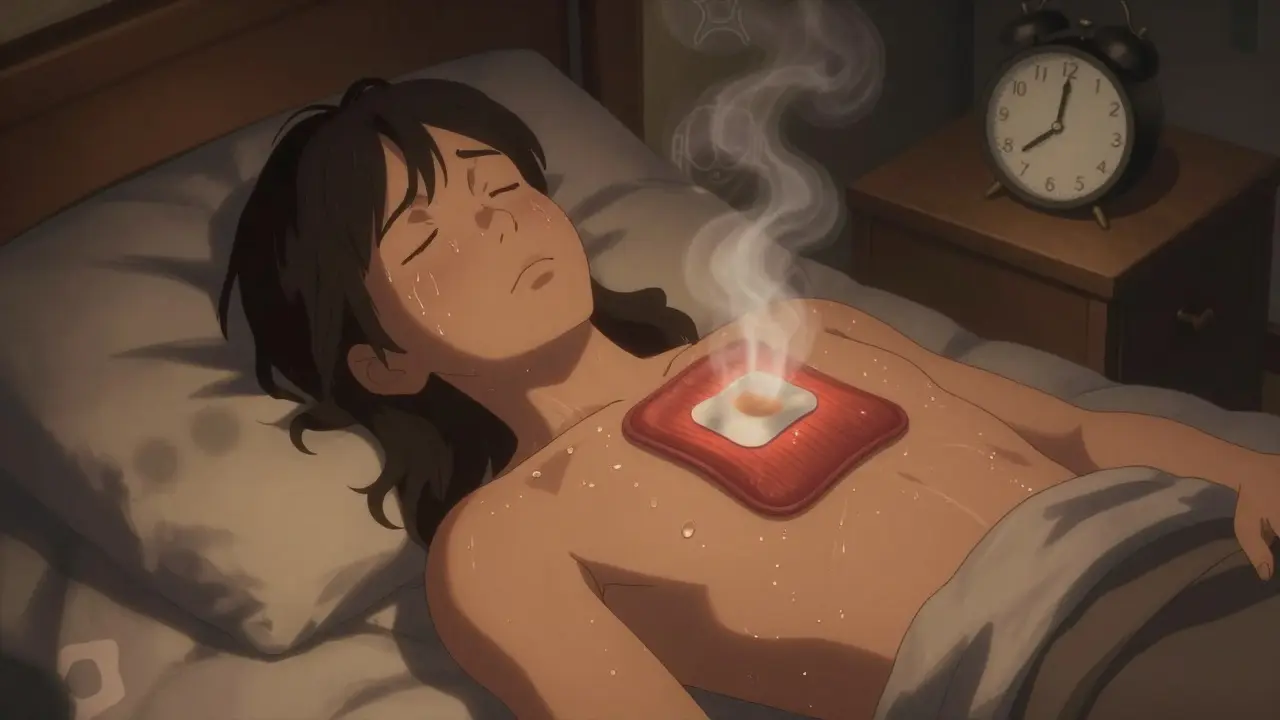
But here’s the catch: your body doesn’t know when to stop absorbing it. If you get a fever, sit in a hot tub, wear a heating pad, or even sleep under a heavy blanket, your skin absorbs fentanyl faster. The FDA has documented cases where body heat caused overdose-even in patients taking the patch exactly as prescribed. One 2013 safety alert warned that a patient’s patch absorbed twice the intended dose after a fever. That’s enough to stop breathing.
The patch is only meant for people already used to strong opioids. If you’ve never taken opioids regularly, even one patch can kill you. That’s why the FDA and EMA both say: never use fentanyl patches for acute pain, after surgery, or as-needed relief. They’re not for occasional use. They’re for steady, daily, long-term treatment only.
Fentanyl Overdose: The Silent Killer
Overdose from a fentanyl patch doesn’t always look like a drug user collapsing. It’s quiet. Slow. Easy to miss.
- Difficulty breathing or shallow, slow breaths
- Unusual snoring or gurgling sounds
- Extreme drowsiness-you can’t wake them up
- Cold, clammy skin
- Limp muscles
- Pale, blue, or gray lips and fingernails
- Pinpoint pupils
- Slow or irregular heartbeat
These signs don’t always come all at once. Sometimes, a person just seems "off." They’re unusually sleepy. They don’t respond when you talk. That’s not laziness. That’s your body shutting down.
Children are at especially high risk. Between 1997 and 2012, the FDA recorded 32 fatal overdoses in kids who found discarded or unused patches. A single patch can kill a child. That’s why you must fold the sticky side of a used patch onto itself before throwing it away-and keep all patches locked up, out of reach.
If you suspect an overdose: Remove the patch immediately. Call 911. If you have naloxone (Narcan), use it. The FDA now recommends that all fentanyl patch prescriptions include a naloxone kit. It’s not optional. It’s a lifeline.
Withdrawal: When Stopping Isn’t Simple
Stopping fentanyl patches cold turkey isn’t just uncomfortable-it can be dangerous.
Your body gets used to having the drug in your system. When you cut it off suddenly, your nervous system goes into overdrive. The FDA says abrupt discontinuation can lead to:
- Severe anxiety and agitation
- Insomnia and restlessness
- Profuse sweating and chills
- Nausea, vomiting, diarrhea
- High blood pressure and fast heart rate
- Intense muscle aches
- Thoughts of suicide
Withdrawal symptoms usually start 8 to 24 hours after your last patch. They peak around 36 to 72 hours. And they don’t vanish after a week. For many, they linger for weeks. That’s why the EMA, NHS, and Mayo Clinic all say: do not stop fentanyl patches without medical supervision.
Doctors don’t just cut the dose in half. They reduce it slowly-by 10% to 25% every 1 to 3 weeks. If you’ve been on a high dose for months, tapering can take months. Rushing it can cause dehydration from vomiting and diarrhea, which can lead to kidney stress or even heart failure. The American Society of Addiction Medicine warns that detoxing at home without help is risky.
What You Must Do to Stay Safe
Using a fentanyl patch safely isn’t about being careful. It’s about following strict rules.
- Never use heat. No heating pads, hot tubs, saunas, or sunbathing while wearing a patch. Even a warm room can increase absorption.
- Apply only to clean, dry, intact skin. No cuts, rashes, or burns. The patch won’t work right-and could absorb too fast.
- Keep patches away from children and pets. Store them locked up. Used patches still contain half the drug. Fold the sticky side together before throwing them in the trash.
- Never share your patch. Even if someone has chronic pain, they’re not the same as you. Their tolerance is different. One patch could kill them.
- Don’t stop suddenly. If you want to quit, talk to your doctor. They’ll create a tapering plan. Never adjust your dose on your own.
- Carry naloxone. If you’re prescribed a fentanyl patch, you should have naloxone at home. Know how to use it. Teach someone else too.
- Tell every doctor and dentist you’re using fentanyl. Even for a tooth extraction or surgery, fentanyl can interact dangerously with anesthesia and other drugs.
The CDC says fentanyl patches should only be prescribed to patients already taking at least 60 mg of morphine per day for a week or longer. That’s called being "opioid-tolerant." If you’re not, you shouldn’t be on this patch.
Why This Drug Is Becoming Rare
Prescriptions for fentanyl patches have dropped 42% since 2016-from 4.8 million to 2.8 million per year. Why? Because doctors are learning.
More than 78% of physicians now say they only consider fentanyl patches after trying other options. That’s up from 52% in 2016. The FDA’s mandatory training for prescribers since 2012 has helped. So have the label changes requiring warnings about overdose and withdrawal.
But the danger hasn’t gone away. New studies are testing patches with built-in safety features-like ones that block absorption if exposed to heat. Until then, the old patches are still out there. And they’re still deadly if misused.
What Comes Next?
If you’re on a fentanyl patch, your job isn’t just to take it. It’s to understand it. Talk to your doctor. Ask questions. Know the signs of overdose and withdrawal. Keep naloxone nearby. And never, ever assume it’s "safe" because you’ve been using it for months.
For those considering fentanyl patches: ask if there’s another option. There often is. Physical therapy. Nerve blocks. Non-opioid meds. Newer pain devices. Fentanyl patches are powerful. But they’re not the only answer-and they’re not risk-free.
One patch can save a life. One patch can end one. The difference? Knowledge.
Can you overdose on a fentanyl patch even if you take it exactly as prescribed?
Yes. Even when used correctly, fentanyl patches can cause overdose if your body temperature rises. Fever, hot tubs, heating pads, or even heavy blankets can increase absorption. The FDA has confirmed cases where patients overdosed while following their prescription because their skin absorbed the drug too fast. That’s why avoiding heat is non-negotiable.
How long does fentanyl withdrawal last?
Withdrawal symptoms usually begin 8 to 24 hours after the last patch. They peak between 36 and 72 hours. Most people feel better after 7 to 10 days, but some symptoms-like anxiety, sleep problems, or fatigue-can last for weeks. The longer and higher the dose, the longer withdrawal takes. Tapering slowly reduces the severity and duration.
Is naloxone really necessary if I’m only using fentanyl patches for pain?
Yes. Fentanyl is so potent that even small mistakes-like a patch falling off and being found by a child, or accidental exposure from heat-can lead to overdose. The FDA now recommends naloxone be available for all opioid prescriptions, including patches. It’s not just for people who misuse drugs. It’s for anyone using a powerful opioid. Keep it at home. Know how to use it. It can save a life.
Can I use alcohol or other painkillers with a fentanyl patch?
No. Mixing fentanyl with alcohol, benzodiazepines (like Xanax or Valium), sleep aids, or other opioids can cause your breathing to slow to a stop. This combination is one of the leading causes of opioid overdose deaths. Even one glass of wine or a single sleeping pill can be dangerous. Always tell your doctor about every medication you take.
What should I do if I find a used or unused fentanyl patch?
Never touch it with bare hands. Use gloves or a paper towel. Fold the sticky side onto itself so it sticks to itself. Put it in a sealed container or plastic bag. Then throw it in the trash. Do not flush it. Do not leave it on the counter. If a child or pet is exposed, call 911 immediately. A single patch can be fatal.
Why are fentanyl patches being prescribed less than before?
Because doctors now understand the risks better. Between 2016 and 2022, prescriptions dropped 42%. The FDA’s mandatory training for prescribers, stricter labeling, and awareness of overdose deaths have changed practice. Most physicians now only use fentanyl patches after other treatments fail-and only for patients already tolerant to strong opioids. It’s no longer a first-line option.
Can I switch from fentanyl patches to another pain medication?
Yes-but not on your own. Switching requires a careful plan. Your doctor will need to calculate your current daily fentanyl dose and convert it to an equivalent dose of another opioid, like oxycodone or hydromorphone. They’ll then taper you off the patch slowly while starting the new medication. Skipping this step can cause withdrawal or overdose. Always work with your provider.
Are there safer alternatives to fentanyl patches for chronic pain?
Yes. Many patients find relief with non-opioid options like physical therapy, nerve blocks, anti-inflammatory drugs, or newer devices like spinal cord stimulators. For some, long-acting non-opioid pain relievers like gabapentin or pregabalin work well. The key is to explore all options before choosing an opioid as strong as fentanyl. Talk to your pain specialist about alternatives.
Releted Post


Caspian Fothergill
Hello, my name is Caspian Fothergill. I am a pharmaceutical expert with years of experience in the industry. My passion for understanding the intricacies of medication and their effects on various diseases has led me to write extensively on the subject. I strive to help people better understand their medications and how they work to improve overall health. Sharing my knowledge and expertise through writing allows me to make a positive impact on the lives of others.
I've been on these patches for 5 years after my spinal fusion. Never had a problem until last winter when I got a fever and didn't realize the patch was absorbing faster. Ended up in the ER with shallow breathing. Scary stuff. Now I keep a thermometer next to my bed and avoid blankets heavier than a cotton sheet. Also, I fold my used patches like a burrito before tossing them. No joke.
So true!! I can't believe how many people don't know this!! My cousin almost died because her kid found a patch on the counter!!?? Please, please, please fold the sticky side together!! I'm not even kidding, it could save a life!! 😭
Man, this whole thing is wild. Fentanyl patches are like a silent assassin wrapped in a Band-Aid. You think you're being responsible, then BAM-your body turns into a drug sponge because you took a hot shower. It's not even a drug, it's a weather system. One minute you're chill, next minute your lungs are on vacation. And don't get me started on the FDA’s 'fold it like a burrito' advice. That’s not medical guidance, that’s a TikTok hack. But hey, if it works, I’m not complaining.
They say 'don't use heat' but what about the government? What if this is all a cover for Big Pharma to push people into addiction so they can sell naloxone? They want you dependent. They want you scared. That's why they push the patch and then the antidote. It's a cycle. They don't want you cured. They want you paying. And don't tell me about 'opioid-tolerant'-that's just a fancy word for 'we're gonna monetize your pain.' I've seen the charts. The numbers don't lie.
There’s something deeply poetic about a patch that delivers death slowly through your skin. We live in a world where we treat pain like a glitch in the system, not a signal. The patch doesn’t cure-it just silences the scream until your body forgets how to breathe without it. We’re not managing pain anymore. We’re outsourcing consciousness. And the FDA? They’re just the janitors cleaning up the mess after the machine breaks. I don’t trust any system that turns a human being into a drug delivery vessel. Maybe the real solution isn’t tapering… it’s asking why we need this in the first place.
Wow. This post reads like a public service announcement written by someone who’s seen too many funerals. I love it. Honestly, if I had a dollar for every time someone said 'I didn’t know it was dangerous' after their kid touched a patch… I’d have enough to buy every single person here a coffee. And maybe a naloxone kit. Because let’s be real-this isn’t about pain management. It’s about survival in a system that treats opioids like a Swiss watch: beautiful, precise, and capable of blowing up your chest if you glance at it wrong. 🤷♀️
I just want to say thank you for writing this. My mom was on these patches for 8 years. We lost her last year-not from misuse, but from a sudden fever during flu season. No one warned us. I wish I’d known about the heat risk. Please, if you’re reading this, talk to your doctor. Don’t assume they know everything. Ask questions. Keep naloxone in the fridge next to the butter. It’s not morbid. It’s smart.
Oh, absolutely-this is why I stopped using them. I was on a 25mcg patch for chronic back pain after my accident, and I started having these weird episodes where I’d just… zone out. Like, mid-conversation. I’d be talking to my sister, and then suddenly I’d be staring at the ceiling wondering why my tongue felt heavy. I thought it was stress. Turns out, it was the patch slowly drowning me. I tapered off over 11 weeks with my pain specialist, and honestly? It was worse than the pain. The anxiety. The sweating. The nightmares. But I’d do it again. Because I don’t want to be a statistic. And I don’t want to be the guy who accidentally killed his grandson by leaving a patch on the nightstand. I’m not brave. I’m just tired of being a target.
Okay but what if you're just trying to get through the day? Like, I get the risks. I do. But what's the alternative? I can't walk. I can't sit. I can't sleep. And now I'm supposed to just 'try physical therapy'? That's what they told my cousin. He went to 37 sessions. Ended up in a wheelchair anyway. Fentanyl patches kept me functional. I'm not a junkie. I'm a guy who needs to work. So yeah, I fold the patch. I keep it locked. I have naloxone. But don't act like this is some moral failure. It's survival.
Right. So now we're treating American patients like radioactive waste? Fold it. Lock it. Pray to the FDA. Meanwhile, in the UK, we just give them morphine tablets and tell them to stop being dramatic. You Americans turn every medical issue into a horror movie. It's exhausting. I’ve got a cousin on a patch. He’s fine. He doesn’t live in a bunker. He just… doesn’t use a hot tub. Shocking, I know.