
Trans Fat: What It Is, Why It's Dangerous, and How to Avoid It
When you see trans fat, a type of unhealthy fat created when liquid oils are turned solid through industrial processing. Also known as partially hydrogenated oil, it's been linked to heart disease, stroke, and type 2 diabetes—even in small amounts. Unlike natural fats found in meat or dairy, trans fat doesn’t occur in nature in significant amounts. It’s made in factories to make foods last longer, taste better, or stay spreadable. And it’s deadly quiet—no warning labels on the packaging, no taste of danger, just a slow wrecking ball for your arteries.
What makes trans fat so bad isn’t just that it raises your bad cholesterol (LDL). It also lowers your good cholesterol (HDL), something almost no other fat does. The CDC says even 2% of your daily calories from trans fat can increase your heart disease risk by 23%. That’s less than a tablespoon of margarine or a single serving of store-bought cookies. And it’s not just about heart health. Studies show it’s tied to inflammation, insulin resistance, and even belly fat buildup. You won’t find trans fat in fresh fruit, grilled chicken, or plain oats. But you’ll find it in fried foods, frozen pizzas, microwave popcorn, store-bought pastries, and even some brands of peanut butter that say "no cholesterol"—a trick that hides the real problem.
Food labels can be misleading. In the U.S., products can say "0 grams trans fat" if they contain less than 0.5 grams per serving. But if you eat two servings, or three, or the whole bag, you’re getting more than you think. Always check the ingredient list. If you see partially hydrogenated oil, an industrial process that forces hydrogen atoms into liquid oils to make them solid, it’s trans fat—even if the nutrition label says zero. The FDA banned artificial trans fat in 2020, but it’s still lurking in imported foods, restaurant cooking oils, and older products on shelves. And in many countries, there’s no ban at all.
So what’s the fix? Skip anything that’s fried, shelf-stable, or comes in a box unless it’s clearly labeled "0g trans fat" AND has no partially hydrogenated oil in the ingredients. Cook at home. Choose butter over margarine. Eat whole foods. Your arteries don’t need perfection—just less of this stuff. Below, you’ll find real guides on how to read labels, spot hidden trans fat in common foods, understand how it compares to saturated fat, and what alternatives actually work without sacrificing taste or convenience.
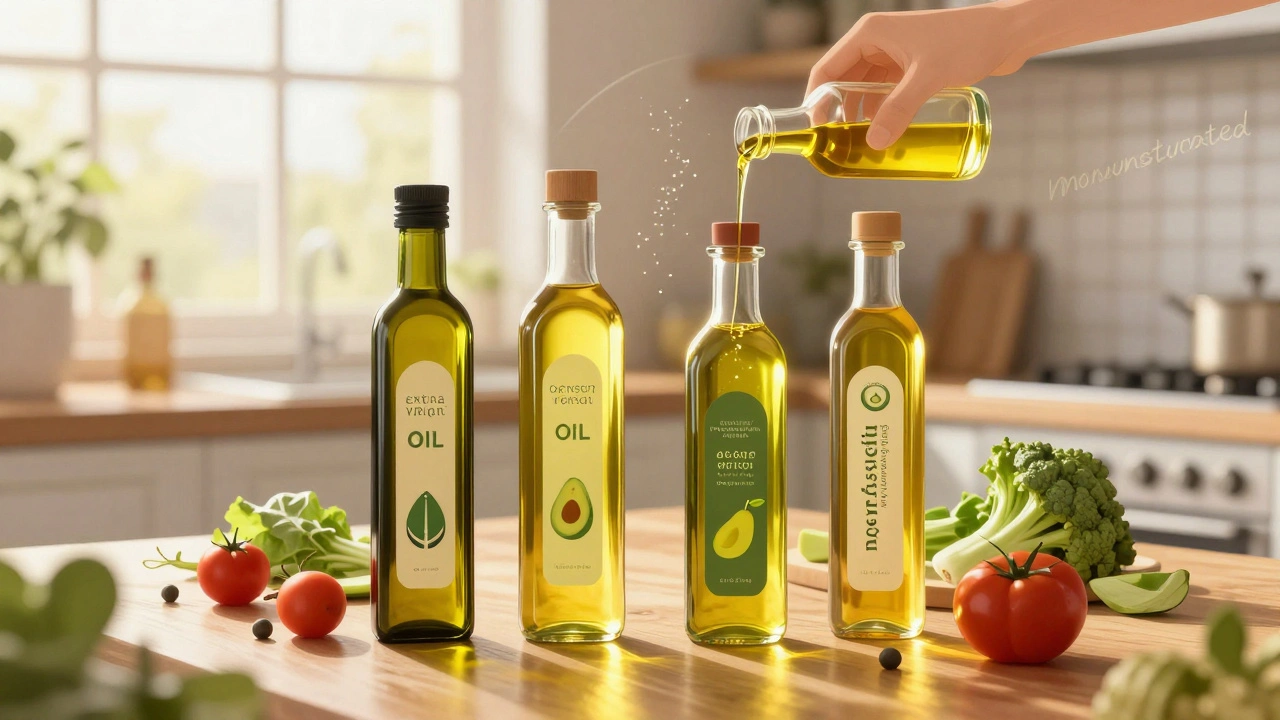
Learn which cooking oils truly support heart health, how to read food labels to avoid hidden fats, and practical swaps that lower your risk of heart disease. Backed by science and real-world use.