
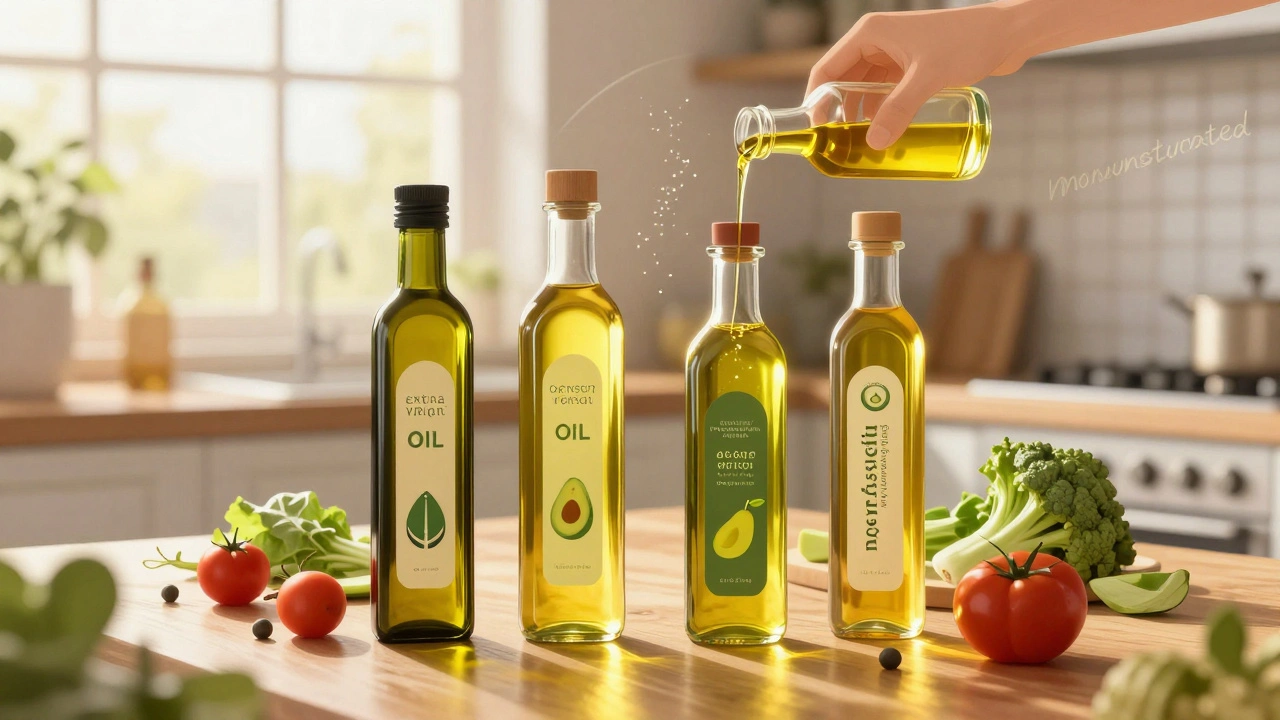
Heart disease is still the number one killer worldwide. But what you cook with every day can make a real difference. It’s not about cutting out all fats-it’s about choosing the right ones. The oils and fats you use in your kitchen directly affect your cholesterol, inflammation, and long-term heart health. And the labels on those bottles? They’re not always telling the whole story.
What Makes an Oil Heart-Healthy?
Not all fats are created equal. The key is in the type of fat: monounsaturated and polyunsaturated fats are your friends. They help lower LDL (the "bad" cholesterol) and raise HDL (the "good" cholesterol). Studies show swapping out saturated fats for these healthier options can cut your risk of heart attack by up to 15%.Look for oils with at least 55% monounsaturated fat and less than 15% saturated fat. Omega-3s are a bonus-they reduce triglycerides and fight inflammation. But avoid oils high in omega-6 fats like corn, sunflower, and safflower. Too much omega-6 without enough omega-3 can actually promote inflammation, which is bad news for your arteries.
And then there’s the big one: trans fats. These are the ones you need to avoid completely. Even if a label says "0g trans fat," it can still have up to 0.5 grams per serving. That adds up fast if you’re cooking with it regularly. The FDA banned partially hydrogenated oils in 2020, but they can still sneak into packaged snacks, fried foods, and margarine. Always check the ingredient list for "partially hydrogenated"-that’s your red flag.
The Best Oils for Your Kitchen
Here’s what actually works in real cooking, backed by science and practical use:- Extra virgin olive oil: 73% monounsaturated fat, rich in antioxidants called polyphenols. These compounds have anti-inflammatory effects similar to low-dose ibuprofen. Perfect for salad dressings, drizzling over roasted veggies, or light sautéing. Smoke point: 375-410°F.
- Avocado oil: 67% monounsaturated fat, 520°F smoke point. This is your go-to for high-heat cooking-searing steaks, roasting at 425°F, or stir-frying. It’s neutral in flavor, so it won’t overpower your food. It’s pricier than olive oil, but you get more heat tolerance.
- Algae oil: 86% monounsaturated fat, smoke point of 535°F. The newest player on the scene. It’s nearly flavorless, stable at high heat, and has more monounsaturated fat than any other common oil. It’s also more sustainable-uses 90% less land than olive oil. Still harder to find and costs about $25 per bottle.
- Canola oil: 62% monounsaturated fat, 7% saturated fat, and a good source of plant-based omega-3 (ALA). Great for baking, frying, and everyday use. It’s affordable and widely available.
- Almond and hazelnut oils: 7% saturated fat, great for low-heat cooking or finishing dishes. Nutty flavor adds depth to salads or roasted vegetables.
Stay away from coconut oil. Despite claims about "healthy" medium-chain fats, it’s 82% saturated fat-worse than butter. The American Heart Association says it raises LDL cholesterol and has no proven heart benefit.
How to Read Food Labels Like a Pro
Labels can be misleading. Here’s what to actually look for:- Saturated fat: Aim for less than 2 grams per serving. If a product has more than that, ask yourself if it’s worth it.
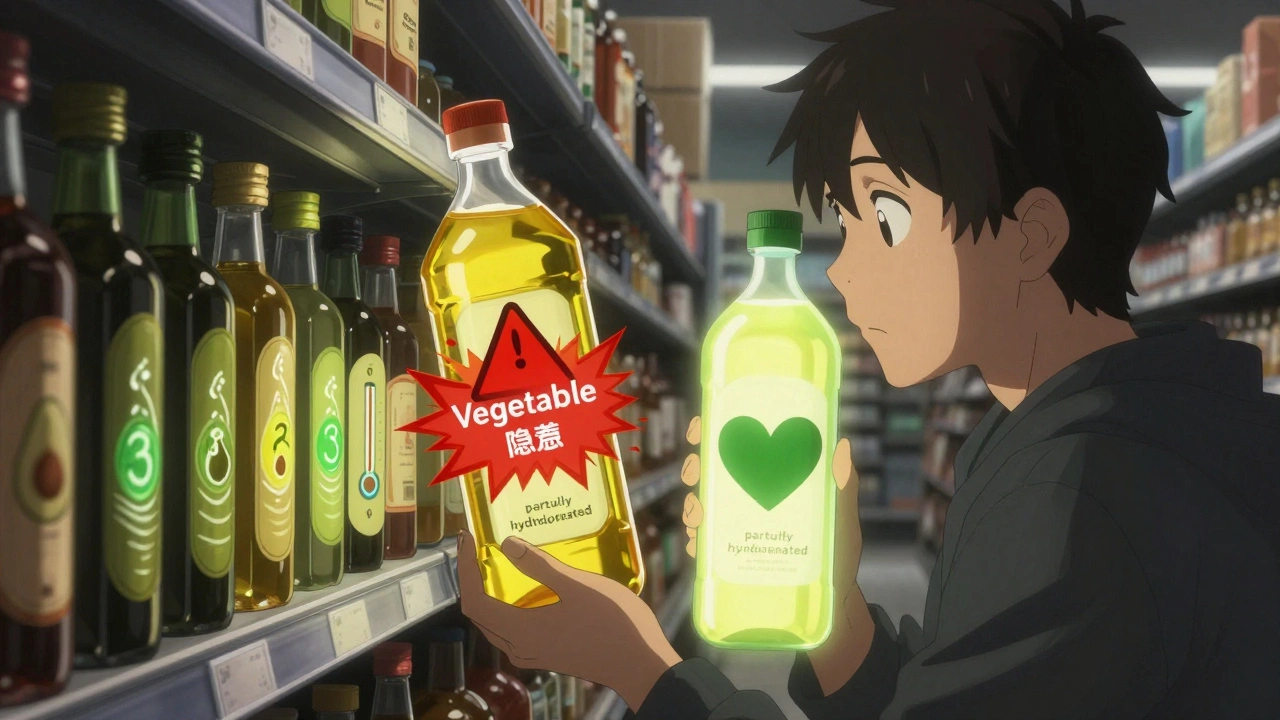
- Trans fat: Even if it says "0g," check the ingredients. If you see "partially hydrogenated," put it back.
- Ingredients list: The first three ingredients make up most of the product. If oil is listed early, check what kind. "Vegetable oil" is vague-it could be soybean or palm oil, both high in omega-6 or saturated fat.
- Claims like "natural" or "heart-healthy": These aren’t regulated. Look for certifications like the American Heart Association’s Heart-Check mark or Australia’s Tick Program. These mean the product met strict nutritional criteria.
- Cold-pressed, expeller-pressed, unrefined: These terms mean less processing, which preserves beneficial compounds. Refined oils are stripped of antioxidants and flavor.
Don’t trust color or packaging. Dark bottles don’t guarantee quality. A bottle labeled "extra virgin olive oil" might still be diluted with cheaper oils. University of California Davis testing found 60% of "extra virgin" olive oil sold in the U.S. doesn’t meet international standards.
Smoke Points Matter-Don’t Burn Your Oil
When oil smokes, it breaks down and creates harmful compounds. Using the wrong oil for the wrong heat level is a common mistake.- Low heat (under 350°F): Extra virgin olive oil, flaxseed oil, walnut oil. Use for dressings, drizzling, or gentle sautéing.
- Medium heat (350-400°F): Regular olive oil, canola oil, peanut oil. Good for baking, stir-frying, or pan-searing.
- High heat (400-500°F): Avocado oil, algae oil, refined sunflower oil. Use for roasting, deep frying, or grilling.
Never reuse oil multiple times for frying. It degrades quickly and increases free radicals. If it smells off or looks dark, toss it.
Storage Tips to Keep Oil Fresh
Oils go rancid-especially those high in polyunsaturated fats like flaxseed, walnut, and even canola. Rancid oil doesn’t just taste bad; it can promote inflammation.- Store oils in a cool, dark place-away from the stove or window.
- Flaxseed and walnut oils must be refrigerated and used within 30-60 days.
- Buy in smaller bottles if you don’t cook often. Olive oil lasts 12-18 months if stored right, but it’s better to use it fresh.
- Clear bottles? Avoid them. Dark glass or tin containers protect against light damage.
What About Butter, Lard, and Coconut Oil?
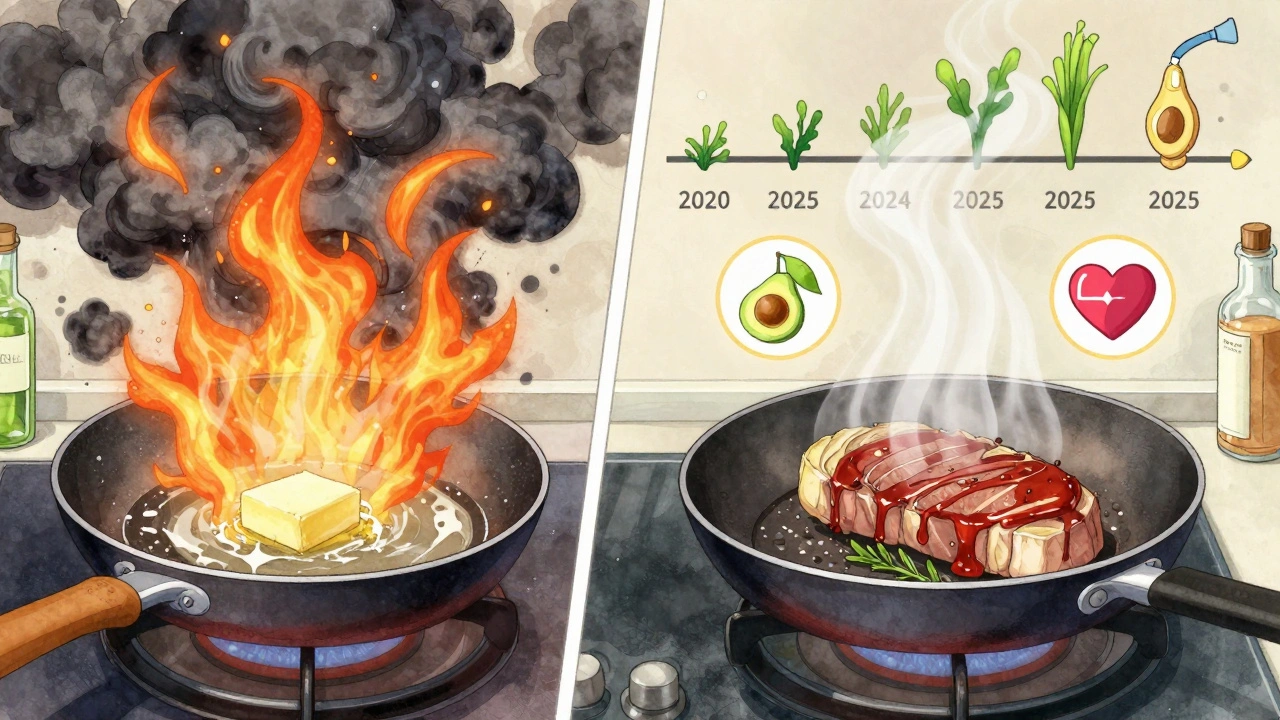
These are saturated fats. They’re not poison, but they’re not heart-healthy either. If you use them, use them sparingly. A pat of butter on toast once in a while? Fine. Cooking your entire meal in lard? Not ideal.Butter has flavor, and sometimes that’s worth it. But don’t mistake tradition for health. The science is clear: replacing saturated fats with unsaturated fats lowers heart disease risk by up to 30%, according to the Heart Foundation of Australia.
Real-Life Swaps That Work
You don’t need to overhaul your whole kitchen overnight. Start small:- Swap butter for olive oil when sautéing onions or garlic.
- Use avocado oil instead of vegetable oil for roasting vegetables.
- Make salad dressing with olive oil and lemon juice instead of bottled ranch.
- Choose whole-grain crackers with almond butter instead of cookies with hydrogenated oils.
- When buying pre-made sauces or dressings, pick the one with olive oil listed first and no "partially hydrogenated."
These aren’t extreme changes. They’re simple, practical, and backed by decades of research. The PREDIMED study showed people who ate a Mediterranean diet with extra olive oil had 30% fewer heart attacks and strokes than those on a low-fat diet.
What’s New in 2025?
Algae oil is now in over 25,000 U.S. stores. It’s not a fad-it’s a breakthrough. With higher monounsaturated fat than olive oil, no strong flavor, and a smoke point higher than avocado oil, it’s becoming the new standard for high-heat cooking.The American Heart Association updated its guidelines in 2021 to focus on replacing saturated fats, not just cutting total fat. That’s why demand for heart-healthy oils is expected to grow 12-15% annually through 2025.
But watch out for greenwashing. Companies are slapping "heart-healthy" on products that barely qualify. Stick to the facts: check the fat profile, read the ingredients, and choose oils with proven benefits-not marketing hype.
Is olive oil really the best for heart health?
Yes, extra virgin olive oil is one of the best choices. It’s packed with monounsaturated fats and polyphenols that reduce inflammation and lower LDL cholesterol. But it’s not ideal for high-heat cooking. Use it for dressings, drizzling, or low-heat sautéing. For frying or roasting, switch to avocado or algae oil.
Can I use coconut oil for heart health?
No. Coconut oil is 82% saturated fat-higher than butter. While some claim it raises "good" cholesterol, it also raises "bad" cholesterol more. The American Heart Association advises against using it for heart health. Stick to unsaturated oils like olive, avocado, or canola.
How do I know if my olive oil is real extra virgin?
Look for certifications like the North American Olive Oil Association (NAOOA) seal or the European Union’s PDO/PGI labels. Avoid bottles in clear glass. Check the harvest date-fresh is better. And taste it: real extra virgin should taste fruity, peppery, or grassy, not bland or greasy. If it’s cheap and tastes like nothing, it’s likely diluted.
Are all "vegetable oils" bad?
Not all, but many are. "Vegetable oil" is often soybean or corn oil-high in omega-6 fats. Too much omega-6 without enough omega-3 promotes inflammation. Canola oil is a better option because it’s lower in omega-6 and has some omega-3. Always check the ingredient list to see what’s actually in it.
What’s the safest oil for frying?
Avocado oil and algae oil are the safest for frying because of their high smoke points (520°F and 535°F). They’re stable at high heat and don’t break down into harmful compounds. Regular olive oil can work for light frying, but avoid using extra virgin. Never reuse frying oil more than once or twice.
Switching to heart-healthy oils isn’t about perfection. It’s about progress. Start by replacing one unhealthy oil in your kitchen. Swap out the vegetable oil for avocado oil. Use olive oil instead of butter. Read labels when you shop. These small steps add up. And over time, they protect your heart in ways you won’t even notice-until you’re 70 and still cooking without a single heart problem.
Releted Post

Caspian Fothergill
Hello, my name is Caspian Fothergill. I am a pharmaceutical expert with years of experience in the industry. My passion for understanding the intricacies of medication and their effects on various diseases has led me to write extensively on the subject. I strive to help people better understand their medications and how they work to improve overall health. Sharing my knowledge and expertise through writing allows me to make a positive impact on the lives of others.
Interesting breakdown-really appreciate how you laid out the science without turning it into a lecture. I’ve been using avocado oil for roasting for about a year now, and honestly? It’s a game changer. No more smoke alarm panic at 400°F. Plus, the neutral flavor lets the food shine. I used to think olive oil was the end-all-be-all, but now I’ve got a little oil shelf with separate bottles for dressings, sautéing, and high-heat stuff. It’s not fancy, just practical.
Also, the algae oil mention? That’s new to me. I’ll be keeping an eye out. If it’s truly more sustainable and performs better, why aren’t we all switching? Maybe it’s just a matter of time before it’s on every grocery shelf next to the olive oil.
And yes, I’m now checking the ingredient list on every single bottle of "vegetable oil" I pick up. Turns out "vegetable oil" is basically the culinary equivalent of "mystery meat."
Just use butter. It tastes better.
Thank you for this meticulously curated overview. The lipid profile analysis is clinically sound, particularly the emphasis on monounsaturated-to-saturated fat ratios as a primary determinant of cardiovascular risk modulation. The distinction between omega-6 and omega-3 fatty acid metabolism is critical-excess linoleic acid without sufficient eicosapentaenoic acid (EPA) and docosahexaenoic acid (DHA) shifts the eicosanoid cascade toward a pro-inflammatory phenotype, which directly contributes to endothelial dysfunction.
Furthermore, the regulatory gap regarding "0g trans fat" labeling is a significant public health concern. The FDA’s 0.5g/serving threshold permits cumulative intake exceeding 5g/day in habitual consumers, which is well above the WHO’s recommended limit of 1g/day. This represents a systemic failure in consumer protection.
Algae oil’s emergence as a high-oleic, low-saturated-fat alternative is indeed promising. Its lipid profile aligns with the 2021 AHA dietary guidelines, and its carbon footprint is substantially lower than terrestrial oil crops. However, accessibility remains a barrier. I recommend institutional procurement policies prioritize algae oil in public food service settings to improve population-level outcomes.
Lastly, the UC Davis study on olive oil adulteration underscores the urgent need for standardized, third-party certification protocols. Without enforceable traceability, consumer trust in "extra virgin" labeling remains fundamentally compromised.
OH MY GOSH, I CAN’T BELIEVE PEOPLE ARE STILL USING COCONUT OIL?!?!?!?!?!
It’s literally 82% SATURATED FAT-EIGHTY-TWO PERCENT!!!
And don’t even get me started on "heart-healthy" labels on junk food that’s got partially hydrogenated oil in the ingredients-WHY ARE WE STILL ALLOWING THIS?!?!
I read this whole thing and I’m just… shaking. People are dying because they think "natural" means healthy. It doesn’t. It means they’re marketing to your emotions. And I’m so tired of it.
Also, why is algae oil $25?! That’s criminal. It should be cheap and everywhere. Someone’s making a fortune off our hearts.
And if you’re still using vegetable oil… I’m not mad, I’m just disappointed. 💔
Bro, I used to cook everything in that cheap vegetable oil from the big yellow bottle. Fries, eggs, even my oatmeal (don’t judge me). Then I switched to avocado oil for roasting veggies-and man, it was like my food finally started tasting like it was meant to.
Also, I found out my "extra virgin" olive oil was basically lamp oil. No flavor, no burn, no nothing. I did the taste test thing you mentioned-real EVOO hits your throat like a peppery slap. That’s the good stuff. Now I buy small bottles from the local Italian market and keep ‘em in the fridge.
And algae oil? I just tried it last week. Tasted like… nothing. Which, honestly, is perfect. I don’t want my steak tasting like a tree. Just heat, flavor, no smoke. I’m sold.
Don’t overthink it. Swap one oil. See how you feel. Do it again. You don’t need a PhD in lipids to eat better. Just pay attention.
Also, butter on toast? Still a win. Just don’t use it to fry your whole damn chicken. 🤙
I just wanted to say how much I appreciate this post. It’s rare to see something so well-researched without feeling like you’re being scolded for your cooking habits. I used to feel guilty every time I reached for coconut oil because I liked the flavor, but now I know it’s not about guilt-it’s about awareness.
I’ve started keeping a little notebook by my stove: one column for the oil I’m using, another for the heat level, and a third for whether it smoked. It sounds silly, but it’s helped me feel more in control. And honestly? My meals taste better now, even if they’re simpler.
Also, thank you for mentioning storage. I had a bottle of walnut oil that went rancid and I didn’t even realize it until I made a salad and my mouth felt weird. Yuck. Now I keep mine in the fridge with a sticky note that says "USE BY 10/15".
You’ve given me tools, not rules. And that makes all the difference.
Thank you for writing this.
- A person who just realized she’s been cooking like a 1990s TV chef
Can we talk about the omega-6/omega-3 ratio as a biomarker? The literature suggests a ratio of 4:1 or lower is ideal for reducing systemic inflammation. Most Western diets are hovering around 15:1 to 20:1 due to heavy reliance on soybean and corn oils. That’s not just suboptimal-it’s pathological. Canola oil, despite being refined, has a ratio of ~2:1, making it a superior choice for everyday use. But I’m curious-has any longitudinal data been collected on algae oil’s impact on inflammatory markers like CRP or IL-6? It seems too good to be true, but the lipidomics look promising. Also, does the processing method (cold-pressed vs. solvent-extracted) affect its omega-3 content? Because if it’s refined, is it just a neutral-fat vehicle with no bioactive compounds? Just wondering.
so i tried algae oil last week… honestly? it’s like cooking with magic butter that doesn’t exist 😅
no smoke, no weird taste, just… clean heat. i’m not saying it’s perfect (it’s pricey as heck) but man, if this is the future of cooking, i’m all in.
also, i just checked my olive oil bottle and it’s in a clear glass… oops. 🙈
and to the person who said "just use butter"-i love you, but your arteries are gonna throw a party in 20 years and you won’t be invited 😘
ps: i’m gonna start writing "use by" dates on my oils too. thanks, elizabeth. you’re a good human.
Still think butter wins. But hey, at least now I know not to fry eggs in coconut oil.