
REM Sleep Behavior Disorder: Causes, Risks, and Medication Links
When you sleep, your brain usually paralyzes your body to stop you from acting out dreams. But with REM sleep behavior disorder, a type of parasomnia where people physically act out vivid dreams during REM sleep. Also known as RBD, it can lead to kicking, yelling, or even jumping out of bed—sometimes injuring the person or their partner. This isn’t just restlessness. It’s a neurological signal gone wrong, often showing up years before Parkinson’s or other brain diseases.
Many people with RBD are unaware until a partner reports violent movements during sleep. Some wake up mid-action, fully aware of what they were doing. Others don’t remember at all. The disorder is more common in men over 50, but it can affect anyone. What’s critical to know: medication side effects, especially from antidepressants like SSRIs and SNRIs, can trigger or worsen RBD. Even drugs for high blood pressure, Parkinson’s, or sleep aids have been linked to it. If you or someone you know suddenly starts acting out dreams after starting a new medication, it’s not just a coincidence—it’s a red flag.
Unlike sleepwalking, which happens in deep non-REM sleep, RBD occurs during REM sleep—the stage where dreaming is most intense. That’s why people with RBD often describe vivid, action-packed dreams involving being chased, fighting, or falling. The brain’s normal inhibition during REM is broken, letting motor signals reach the body. It’s not dangerous just because it’s weird—it’s dangerous because it can be an early warning sign of neurodegenerative disease. Studies show over 70% of people with idiopathic RBD develop Parkinson’s, dementia with Lewy bodies, or similar conditions within 10–15 years.
That doesn’t mean everyone with RBD will get these diseases—but it does mean you need to pay attention. A sleep study (polysomnography) is the only way to confirm it. Treatment usually involves melatonin or clonazepam, both of which help reduce movements. But if your RBD started after a new drug, stopping or switching that medication might fix it. And if you’re already on meds for depression, anxiety, or Parkinson’s, don’t stop them without talking to your doctor—just get checked.
You’ll find posts here that dig into how drugs like SSRIs, opioids, and even common painkillers can disrupt sleep architecture. There’s also advice on tracking symptoms, asking your doctor the right questions, and understanding how sleep and brain health are deeply connected. This isn’t just about sleeping better—it’s about protecting your long-term brain health. If you’ve noticed unusual movements during sleep, this collection gives you the facts you need to act before it’s too late.
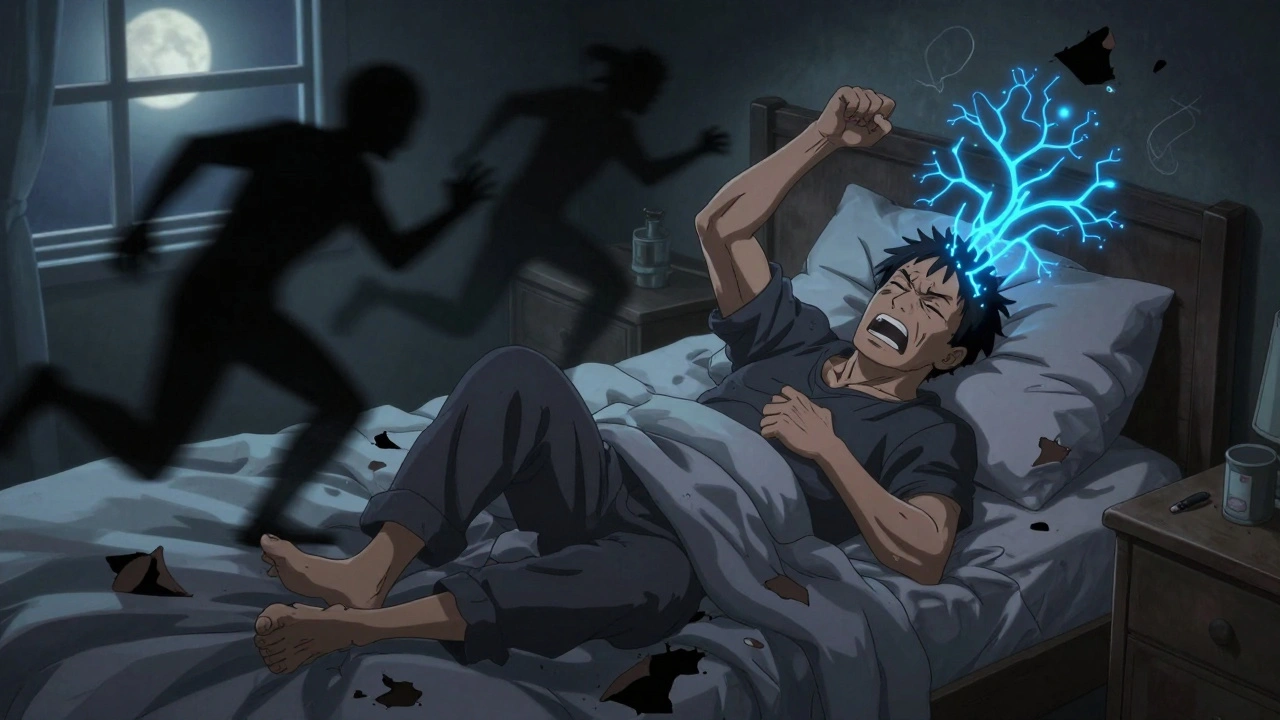
REM sleep behavior disorder involves acting out dreams during sleep and is often a warning sign of Parkinson’s or dementia. Learn about effective medications like melatonin and clonazepam, safety steps, and why neurological monitoring is critical.