
RBD and Parkinson's: What You Need to Know About the Link
When you act out your dreams—yelling, punching, kicking while asleep—you might have REM sleep behavior disorder, a condition where the brain fails to paralyze muscles during REM sleep, leading to physical dream enactment. Also known as RBD, it’s not just a weird habit—it’s one of the strongest early warning signs of Parkinson's disease, a progressive brain disorder that affects movement, balance, and eventually cognition. Studies show over 70% of people with RBD will develop Parkinson’s, dementia with Lewy bodies, or another neurodegenerative condition within 10 to 15 years.
This isn’t guesswork. Researchers at the Mayo Clinic and the University of Toronto have tracked thousands of RBD patients and found a clear pattern: the same brain changes that cause dream-enacting behavior are the same ones that later destroy dopamine-producing cells in Parkinson’s. That’s why doctors now see RBD as a red flag, not a nuisance. If you or someone you know has RBD, it’s not about waiting for tremors or stiffness—it’s about monitoring for subtle changes like loss of smell, constipation, mood shifts, or trouble with fine motor tasks. These are the quiet signals that come before the big ones.
What makes this connection so important is that it opens a window for early intervention. Right now, there’s no cure for Parkinson’s, but treatments that slow progression are getting better. If you catch the disease early—through RBD—you might be able to start lifestyle changes, neuroprotective therapies, or clinical trials before major damage happens. And yes, not everyone with RBD gets Parkinson’s, but the risk is high enough that ignoring it isn’t an option.
You’ll find real stories here about people who spotted RBD early, what their doctors did next, and how tracking sleep patterns helped them stay ahead of symptoms. There are also guides on how to talk to your neurologist about RBD, what tests to ask for, and how medications like melatonin or clonazepam help manage the disorder while you monitor for deeper changes. This isn’t about fear—it’s about awareness. The brain doesn’t shout when it’s changing. Sometimes, it just kicks in your sleep.
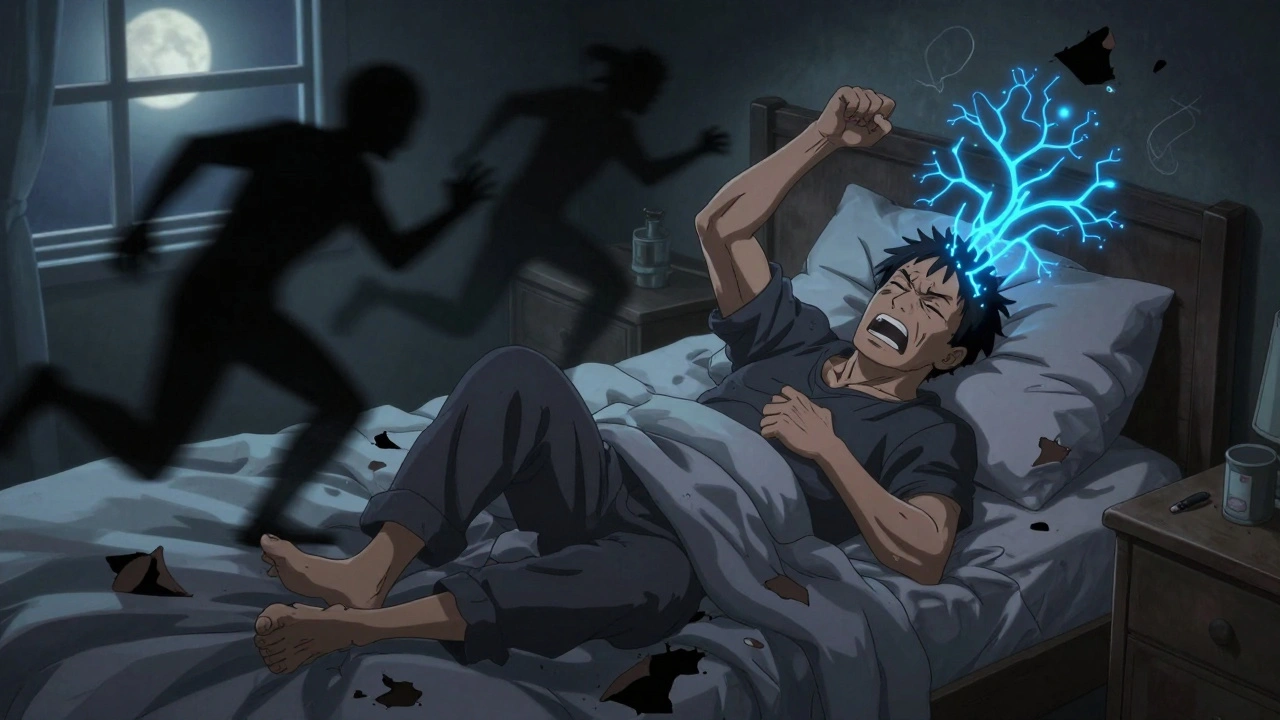
REM sleep behavior disorder involves acting out dreams during sleep and is often a warning sign of Parkinson’s or dementia. Learn about effective medications like melatonin and clonazepam, safety steps, and why neurological monitoring is critical.