
Pharmacist Advice: Trusted Guidance on Medications, Interactions, and Safety
When you're taking multiple medications, wondering if your supplement is safe, or confused about why your doctor changed your dose, pharmacist advice, professional guidance from licensed pharmacy experts focused on safe and effective drug use. Also known as medication counseling, it's the missing link between your prescription and your well-being. Too many people treat pills like candy—pop them, forget them, mix them with tea or energy drinks—until something goes wrong. A pharmacist doesn’t just count tablets. They see the full picture: what you’re taking, what you’re not telling your doctor, and what your body is really dealing with.
Drug interactions, harmful reactions when two or more medications, foods, or supplements affect each other in the body are one of the most common reasons people end up in the ER. It’s not just about mixing aspirin and blood thinners. It’s about how your statin interacts with grapefruit, how caffeine amps up your Adderall, or how an antibiotic like cefadroxil might not work if you’re also taking antacids. And then there’s therapeutic drug monitoring, the process of measuring drug levels in the blood to ensure they’re in the safe, effective range. Drugs like theophylline or lithium don’t have a wide safety margin—too little and they don’t work, too much and they can kill you. That’s not guesswork. That’s lab tests, timing, and expert interpretation.
And it’s not just about avoiding danger. Patient compliance, how well a person sticks to their prescribed medication schedule is just as critical. Why do so many people stop taking their glaucoma drops? Because they forget. Or because the bottle is too hard to open. Or because they don’t understand why one drop a day matters. A good pharmacist doesn’t just hand you the bottle—they explain it in plain language, suggest pill organizers, check if you can afford it, and ask if you’re having side effects you’re too embarrassed to mention. That’s the kind of advice that keeps people out of the hospital.
You’ll find real stories here—not theory. Like how someone lost 10% of their weight and cut their CPAP pressure in half. Or how acetaminophen isn’t just for headaches—it changes your brain chemistry. Or how a simple switch from one NSAID to another saved someone’s stomach. These aren’t abstract ideas. They’re lived experiences, backed by data, and filtered through years of pharmacy practice. Whether you’re managing diabetes with Precose, worried about hair loss from antidepressants, or trying to understand why your anticoagulant still feels risky even though you haven’t fallen, this collection gives you the facts without the jargon. No fluff. No marketing. Just what you need to know to take control of your meds—and your health.
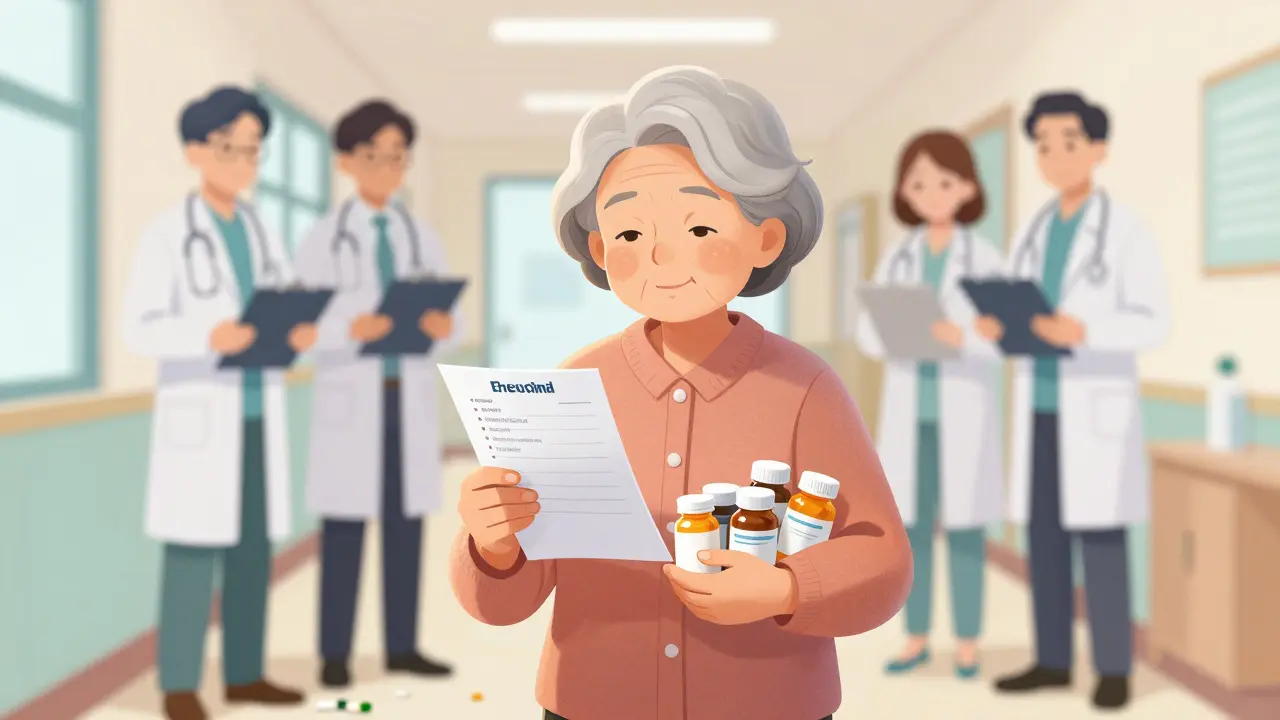
Learn how seniors can prevent dangerous duplicate medications after specialist visits by keeping a full medication list, using one pharmacy, and asking the right questions at every appointment.
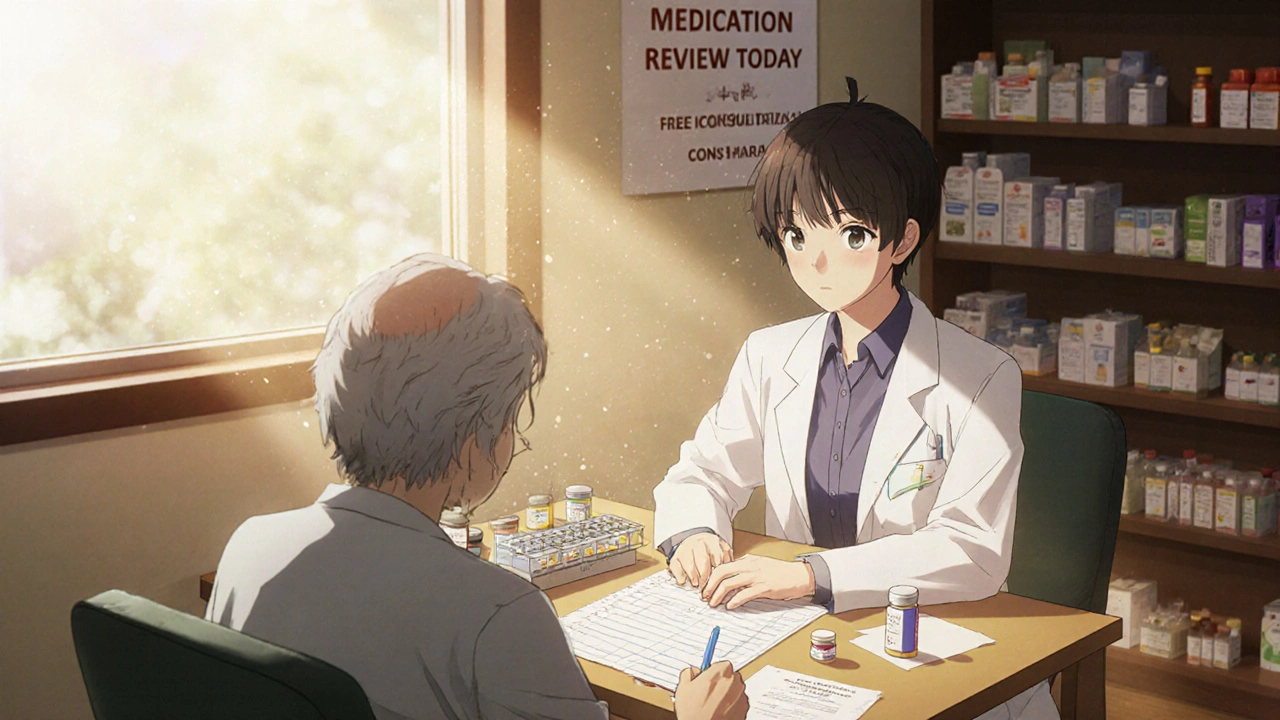
Learn how to use your pharmacy's free consultation service to prevent dangerous drug interactions, save money, and improve medication safety - with real examples and step-by-step guidance.