
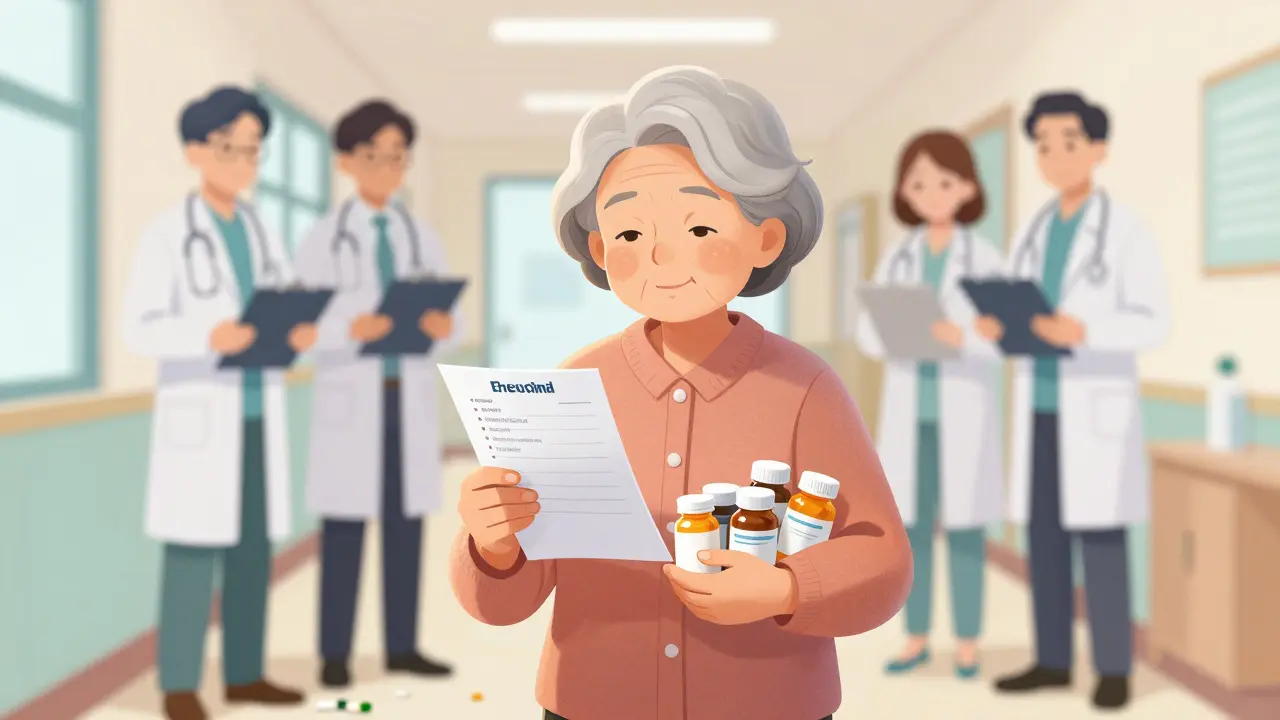
Every year, thousands of older adults end up in the emergency room because they took two pills that did the same thing-without knowing it. It’s not a mistake they made on purpose. It’s a system failure. You see a cardiologist for your blood pressure, a rheumatologist for your arthritis, and a neurologist for your nerve pain. Each one writes a prescription. None of them know what the others prescribed. And suddenly, you’re on two different blood pressure meds. Or two different painkillers that both slow your breathing. Or two drugs that together could cause internal bleeding. This isn’t rare. It’s common. And it’s preventable.
Why Duplicate Medications Happen to Seniors
When you’re 70 or older and managing three or more chronic conditions, it’s normal to see multiple specialists. But here’s the problem: most specialists focus on one part of your body. They don’t have time to dig through your full medication list. Even if they use electronic records, those records often don’t show everything-especially over-the-counter drugs, supplements, or medications prescribed by a doctor you haven’t seen in six months. A 2023 study from the American Society of Health-System Pharmacists found that 68% of pharmacists see at least one case of duplicate medication per week. And 42% say the main reason? Lack of communication between doctors. That’s not your fault. It’s not your doctor’s fault either. It’s how the system is built. Seniors are especially at risk because they often take more medications. The more pills you swallow, the higher the chance one will overlap with another. And many older adults don’t realize that even common things like ibuprofen, melatonin, or fish oil can interact dangerously with prescription drugs. A 2022 report from the NIH found that medication errors involving duplication are among the top causes of preventable harm in people over 65.What Counts as a Duplicate Medication
Not all duplicates are obvious. You might not know that metoprolol and atenolol are both beta-blockers. Or that celecoxib and ibuprofen both reduce inflammation-and both raise your risk of stomach bleeding if taken together. Even if the names are different, if they work the same way, they’re duplicates. Here are real examples from patients:- Two different antidepressants prescribed by separate doctors-both are SSRIs, increasing the risk of serotonin syndrome.
- A blood thinner (warfarin) and an over-the-counter painkiller (naproxen) taken together-this combo can cause dangerous internal bleeding.
- Two different sleep aids: one prescription (zolpidem) and one supplement (melatonin) taken at the same time, leading to dizziness and falls.
Your Medication List: Your Most Important Tool
The single most effective thing you can do to avoid duplicate medications? Keep a real, updated list-and bring it to every appointment. Don’t rely on memory. Don’t say, “I think I take...” Write it down. Include:- All prescription medications (name, dose, how often)
- All over-the-counter drugs (pain relievers, cold meds, antacids)
- All vitamins, minerals, and supplements (fish oil, magnesium, turmeric)
- All herbal remedies (St. John’s wort, ginkgo, garlic pills)
Use One Pharmacy-Always
This one change can cut your risk of duplicate prescriptions in half. Pharmacists are trained to spot duplicates. Their computer systems flag when two drugs from the same class are prescribed. But here’s the catch: they can only do that if they have your full record. If you fill your blood pressure med at CVS, your arthritis pill at Walgreens, and your sleep aid at a local independent pharmacy, no one sees the full picture. Choose one pharmacy and stick with it. Even if it’s a little farther away. Even if it’s not the cheapest. The safety benefit is worth it. That pharmacist will know your history. They’ll notice if your cardiologist prescribes a new beta-blocker while your primary care doctor already has you on one. They’ll call your doctor before filling it. A 2023 study in U.S. Pharmacist showed that patients who used a single pharmacy had 31% fewer medication errors than those who shuffled between stores.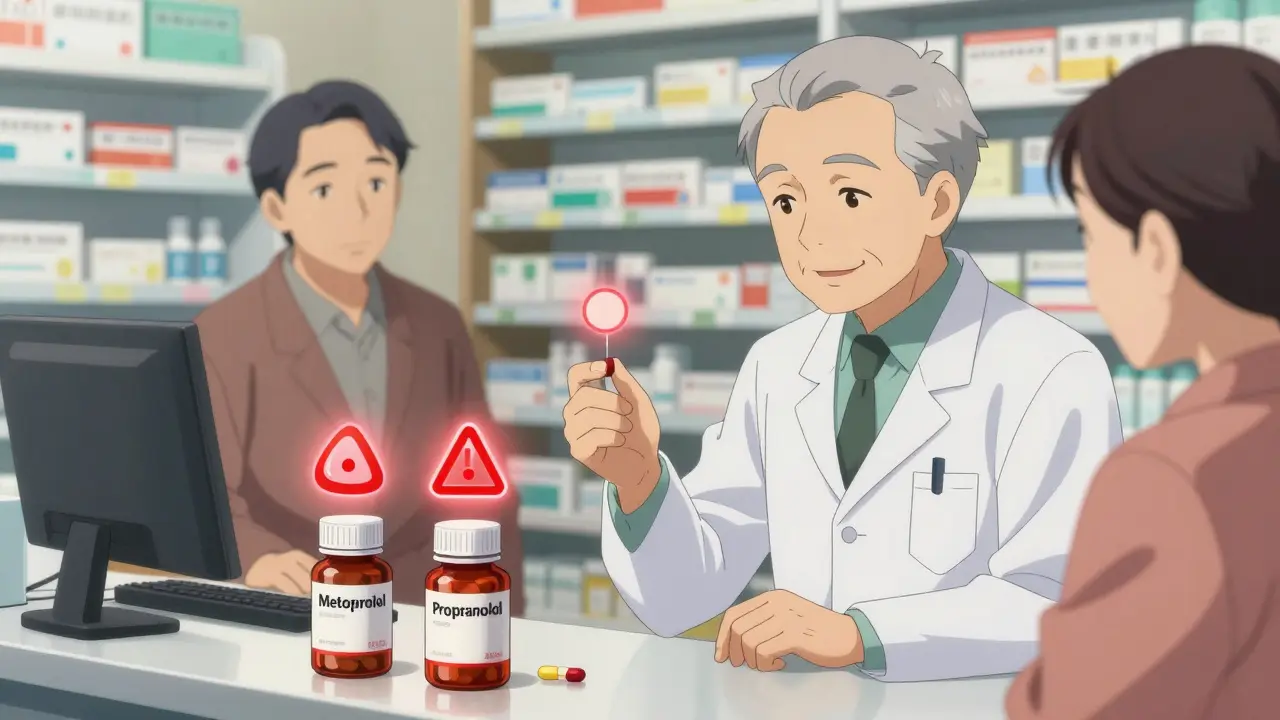
Ask the Right Questions at Every Visit
You don’t have to be a medical expert to protect yourself. Just ask these three questions at every specialist visit:- “Why am I taking this?” If the answer is “to lower your blood pressure” and you’re already on another drug for that, you’ll know something’s off.
- “Is this new medicine replacing something I’m already taking?” Sometimes doctors assume you stopped an old drug. You didn’t. Now you’re on two.
- “Can we go over my full list together?” Say it like you mean it. Most doctors will pause and review it with you. If they don’t, it’s a red flag.
What to Do If You Find a Duplicate
If you notice two drugs that seem to do the same thing, don’t stop either one on your own. That could be dangerous. Instead:- Write down both drug names and what they’re for.
- Call your primary care doctor. They’re your central point of care. They can coordinate with your specialists.
- Ask: “Which one should I keep? Why?”
- Don’t be afraid to say, “I think I might be taking two of the same thing.”
Technology Can Help-But Don’t Rely on It Alone
Some clinics now use AI tools that scan your records and flag possible duplicates. Mayo Clinic’s system, for example, improved detection by 143% using advanced analytics. That’s impressive. But here’s the truth: technology still misses things. It doesn’t know about your melatonin. It doesn’t know you took ibuprofen for your back pain last week. It doesn’t know your daughter gave you a new supplement for memory. Your list. Your bottles. Your questions. Those are still your best tools.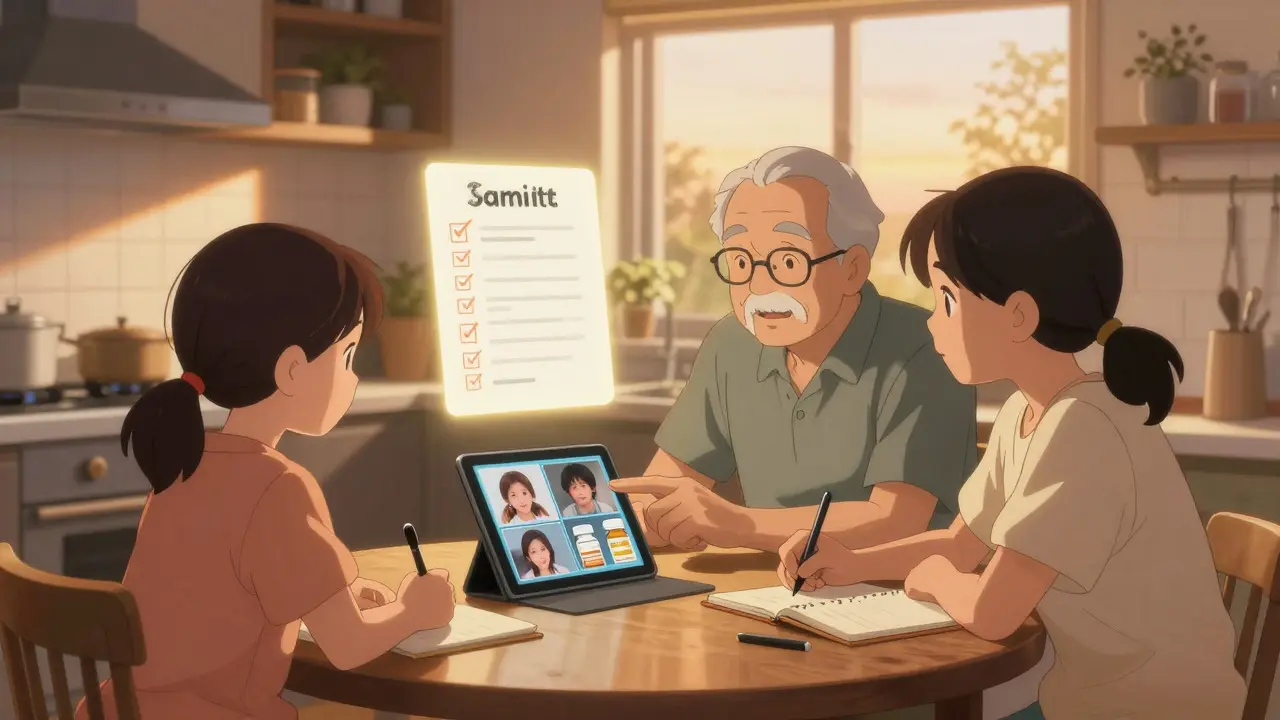
Who Should You Talk To?
You don’t have to do this alone.- Your primary care doctor - They should be the hub. Ask them to review your full list at least once a year.
- Your pharmacist - They see every prescription you fill. They’re your front-line defense. Ask for a free med review.
- A family member or caregiver - If you’re forgetful, have someone help you update the list and go with you to appointments.
Real-Life Example: What Went Wrong (And How It Was Fixed)
Meet Eleanor, 78, from Minneapolis. She saw her cardiologist for high blood pressure. He prescribed metoprolol. A month later, she saw her neurologist for migraines. He prescribed propranolol-another beta-blocker. Neither doctor knew about the other’s prescription. Eleanor started feeling dizzy, tired, and her heart rate dropped to 48. She didn’t know why. She didn’t connect the dots. At her next primary care visit, she brought her pill bottles. Her doctor saw both drugs. He called both specialists. They agreed: keep metoprolol, stop propranolol. Her symptoms cleared up in three days. She didn’t need a fancy app. She didn’t need a tech solution. She just brought her bottles.Final Checklist: Your Action Plan
Here’s what to do this week:- Write down every medication, supplement, and OTC drug you take. Include doses and times.
- Gather all your pill bottles and take photos of the labels.
- Call your pharmacy and ask if they have a complete record of your prescriptions.
- Ask your primary care doctor to review your list at your next visit.
- Choose one pharmacy to use for all your prescriptions-even if it’s not the closest.
- Next time you see a specialist, say: “I’m trying to avoid taking two drugs that do the same thing. Can we check my list together?”
Can over-the-counter drugs cause duplicate medication issues?
Yes. Common OTC drugs like ibuprofen, naproxen, and acetaminophen can overlap with prescription painkillers or anti-inflammatories. Even supplements like fish oil and garlic pills can interact with blood thinners. Always include OTCs and supplements on your medication list.
How often should I update my medication list?
Update it every time you start, stop, or change a medication. At a minimum, review it with your primary care doctor every six months. If you’ve been hospitalized or seen a new specialist, update it before your next visit.
Do I need to tell my specialist about medications from my primary doctor?
Yes. Specialists don’t automatically see what your primary doctor prescribed. Even if your records are electronic, they may not be fully synced. Always bring your list-don’t assume they already know.
What if my doctor says I need both medications?
Ask why. Sometimes doctors prescribe two drugs from the same class for different reasons-like one for blood pressure and another for heart rhythm. But if they can’t explain clearly, get a second opinion. Don’t take two similar drugs without understanding the reason.
Can my pharmacist help me avoid duplicates even if I don’t see my doctor?
Absolutely. Pharmacists are trained to spot potential duplicates and drug interactions. If you use one pharmacy consistently, they’ll flag issues before you even pick up your prescription. Ask for a free medication review-most pharmacies offer it.
Releted Post


Caspian Fothergill
Hello, my name is Caspian Fothergill. I am a pharmaceutical expert with years of experience in the industry. My passion for understanding the intricacies of medication and their effects on various diseases has led me to write extensively on the subject. I strive to help people better understand their medications and how they work to improve overall health. Sharing my knowledge and expertise through writing allows me to make a positive impact on the lives of others.
I HAD TO GO TO THE ER BECAUSE I TOOK IBUPROFEN AND WARFARIN TOGETHER AND STARTED BLEEDING OUT MY BUTTHOLE LOL WHO KNEW?? MY DOCTOR SAID IT WAS MY FAULT BUT I THOUGHT IT WAS JUST A NORMAL PAINKILLER 😭
It's fascinating how the system fails so predictably. We treat organs like separate departments instead of one body. Maybe if doctors were trained in systems thinking instead of siloed specialties, we wouldn't need patients to become amateur pharmacologists just to stay alive.
This whole article is a distraction. The real problem is Big Pharma pushing multiple drugs to maximize profits. The doctors? They're just puppets. The FDA? Complicit. Your 'medication list'? A placebo for control. They want you to feel responsible so you don't ask why your insulin costs $300 and your blood pressure med is free in Canada.
i am student from india and i never knew this was such a big problem in usa.. in my country we just go to one doctor for everything.. but i guess with more specialists its harder.. i will share this with my grandma who takes 8 pills a day 😅
Of course you should bring your pill bottles. Because clearly, the solution to a broken healthcare system is to make elderly people haul glass containers across town instead of fixing the damn EHR systems that cost billions. Brilliant. Truly. The only thing more ridiculous than this advice is the fact that people still believe it works.
The body doesn't care about specialties. Neither should the system.
In Nigeria, where I grew up, elders often relied on traditional healers who knew their full regimen-herbs, teas, and all. We didn't have specialists, but we had continuity. Perhaps the answer isn't just better records, but rethinking how care is structured entirely.
I just started helping my mom with her meds and holy cow this is a nightmare. We made a spreadsheet, took pics of every bottle, and now we go to one pharmacy. She’s been less dizzy and actually sleeping through the night. It’s not glamorous, but it works. You don’t need tech-you need persistence.
I work in geriatric care and this is the single most effective intervention we’ve ever implemented: the pill bottle method. One elderly woman brought in 14 bottles, and we found three duplicates, two dangerous interactions, and one expired antidepressant she’d been taking for 8 years. She cried because she thought she was doing everything right. She just needed someone to look.
I’ve been taking the same three pills for 12 years and never thought to check if they conflicted. Now I’m afraid to take anything. I feel like my body is a ticking bomb and everyone’s just waiting for me to die quietly so they don’t have to deal with me anymore.
The irony is that the people most vulnerable to this are also the least likely to have the cognitive capacity to manage a medication list. The system doesn't fail because of poor communication-it fails because it was never designed for human frailty.
I find it amusing that you suggest using one pharmacy. As if pharmacists are not also profit-driven entities who prioritize insurance networks over patient safety. And don’t even get me started on how EHRs are fragmented because of corporate monopolies. You’re treating symptoms, not the disease.
Bro, this is why we need African-style community care in the West. Back home, if your grandma takes five things, the whole family knows them by heart-what they look like, what they do, when she takes them. No app needed. Just love, attention, and someone who actually cares enough to remember. Maybe we’re missing the human layer, not the tech.