
Neurological Assessment RBD: What It Is and Why It Matters for Medication Safety
When you're having vivid dreams and acting them out—kicking, yelling, even jumping out of bed—you might not think it's a medical issue. But REM sleep behavior disorder, a condition where people physically act out their dreams during REM sleep, often due to underlying neurological changes. Also known as RBD, it's not just bad dreaming—it's a red flag for brain changes that can show up years before Parkinson’s or dementia. Studies show over 70% of people with RBD eventually develop a neurodegenerative disease, sometimes a decade or more later. That’s why a proper neurological assessment, a clinical evaluation to detect signs of nervous system dysfunction through history, physical exam, and sleep studies isn’t optional. It’s a critical step in catching problems early.
RBD doesn’t happen in isolation. It often shows up alongside medications that affect brain chemistry—like antidepressants, antipsychotics, or even some blood pressure pills. A neurological assessment, a clinical evaluation to detect signs of nervous system dysfunction through history, physical exam, and sleep studies can tell you if the issue is drug-induced or a sign of something deeper. For example, if someone starts acting out dreams after beginning a new SSRI, it could be a side effect. But if they’ve had RBD for years with no new meds, it’s likely a warning sign of Parkinson’s. That’s why doctors look at timing, symptoms, and medical history together.
There’s no single test for RBD. A full neurological assessment includes a detailed sleep history, a physical exam to check reflexes and movement, and often an overnight sleep study called a polysomnogram. That’s when they monitor brain waves, eye movements, and muscle activity to confirm you’re acting out dreams during REM sleep. It’s not just about sleep—it’s about your brain’s health. And if you’re on long-term medications, especially for depression, Parkinson’s, or high blood pressure, this assessment can help untangle whether your symptoms are from the drug or the disease.
What you’ll find in the posts below isn’t just theory. These are real stories and science-backed guides on how RBD connects to medications, how it’s diagnosed, and why ignoring it can cost you years of early intervention. You’ll see how drugs like SSRIs can trigger it, how Parkinson’s risk climbs with untreated RBD, and what steps to take if you or a loved one is acting out dreams at night. This isn’t about sleep hygiene—it’s about protecting your brain before it’s too late.
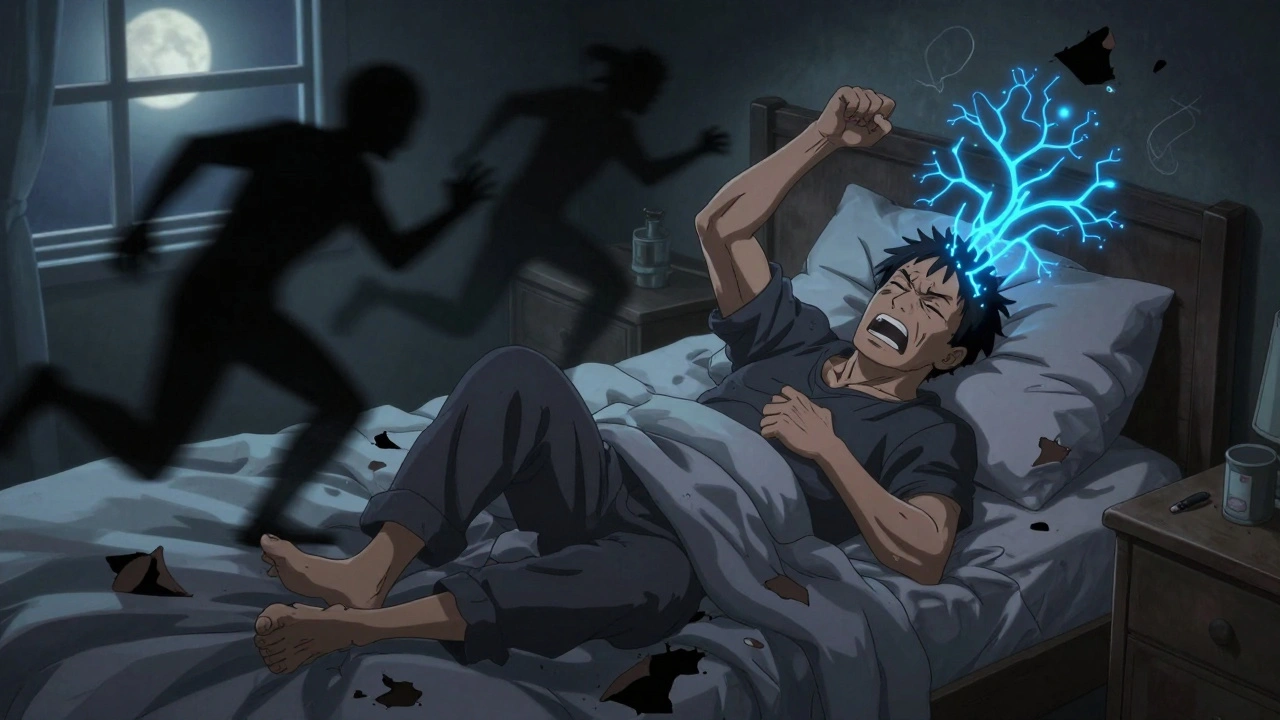
REM sleep behavior disorder involves acting out dreams during sleep and is often a warning sign of Parkinson’s or dementia. Learn about effective medications like melatonin and clonazepam, safety steps, and why neurological monitoring is critical.