
Best Cooking Oils: What Works, What Doesn't, and Which Ones Actually Help Your Health
When you pick a cooking oil, a fat used to fry, sauté, or dress food that impacts flavor, smoke point, and long-term health. Also known as edible oil, it's not just about taste—it affects your cholesterol, inflammation, and even how your body processes food. The best cooking oils aren’t the ones with the flashiest labels or the ones your grandma swore by. They’re the ones backed by real data on how they behave when heated and how they impact your body over time.
Take olive oil, a monounsaturated fat rich in antioxidants, commonly used in Mediterranean diets to reduce heart disease risk. It’s great for low-heat cooking and dressings, but it starts breaking down and losing benefits above 375°F. Then there’s avocado oil, a high-smoke-point oil with a similar fatty acid profile to olive oil but better suited for searing and roasting. It’s pricier, but if you’re frying chicken or roasting veggies at 400°F, it’s one of the few oils that won’t turn toxic. Coconut oil, a saturated fat often marketed as a superfood, but with limited evidence for heart health benefits. It’s stable at high heat, but studies show it raises LDL cholesterol more than most plant oils. And don’t get fooled by "natural" claims—just because it comes from a tree doesn’t mean it’s healthy when burned.
What you’re really looking for is balance: an oil that won’t smoke up your kitchen, won’t spike your bad cholesterol, and won’t vanish into your food without offering anything back. The science is clear—oils high in monounsaturated and polyunsaturated fats (like olive, avocado, and canola) are safer for daily use. Saturated fats like coconut and palm oil have their place, but they shouldn’t be your go-to. And steer clear of anything labeled "partially hydrogenated"—that’s just hidden trans fat, banned for a reason.
You’ll find posts here that dig into how certain oils interact with medications—like how olive oil might affect blood thinners, or why coconut oil could interfere with cholesterol drugs. Others show how to track side effects from dietary fats, or how to use a symptom diary to spot if a new oil is triggering inflammation. There’s even a guide on checking drug interactions with supplements you might be taking alongside your diet. This isn’t about fads. It’s about what actually works when you’re trying to eat better without guessing.
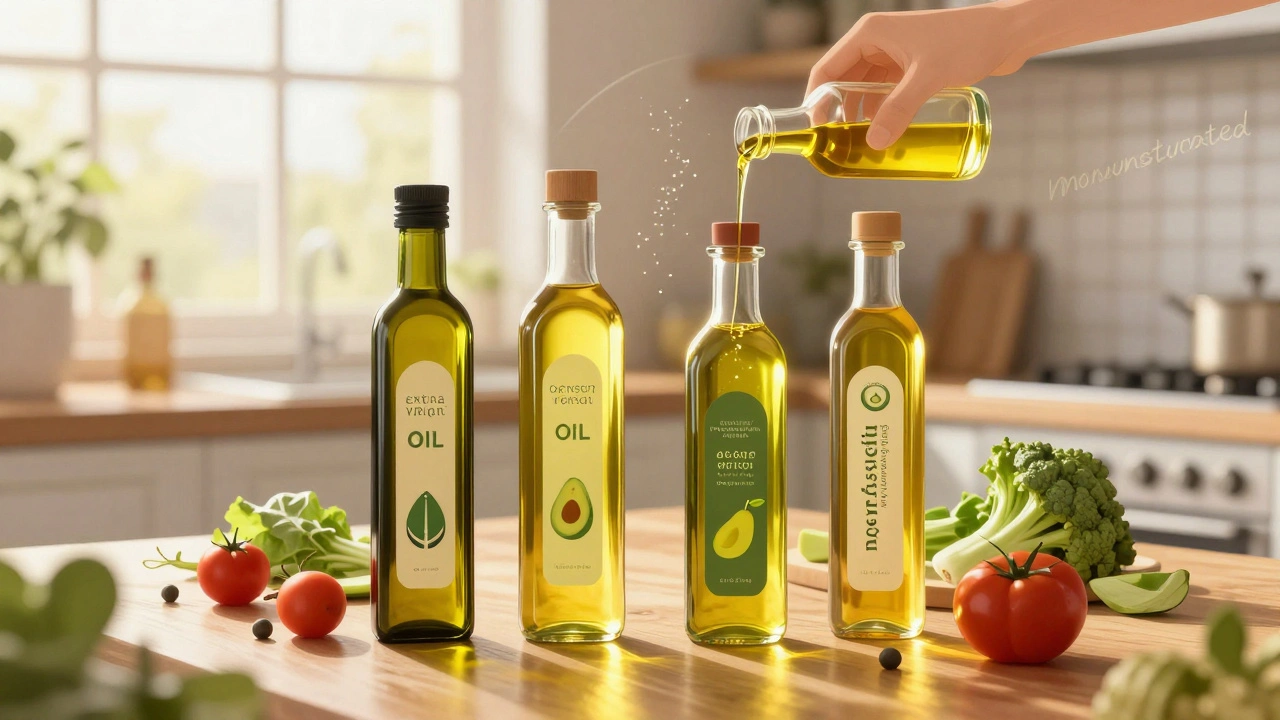
Learn which cooking oils truly support heart health, how to read food labels to avoid hidden fats, and practical swaps that lower your risk of heart disease. Backed by science and real-world use.