
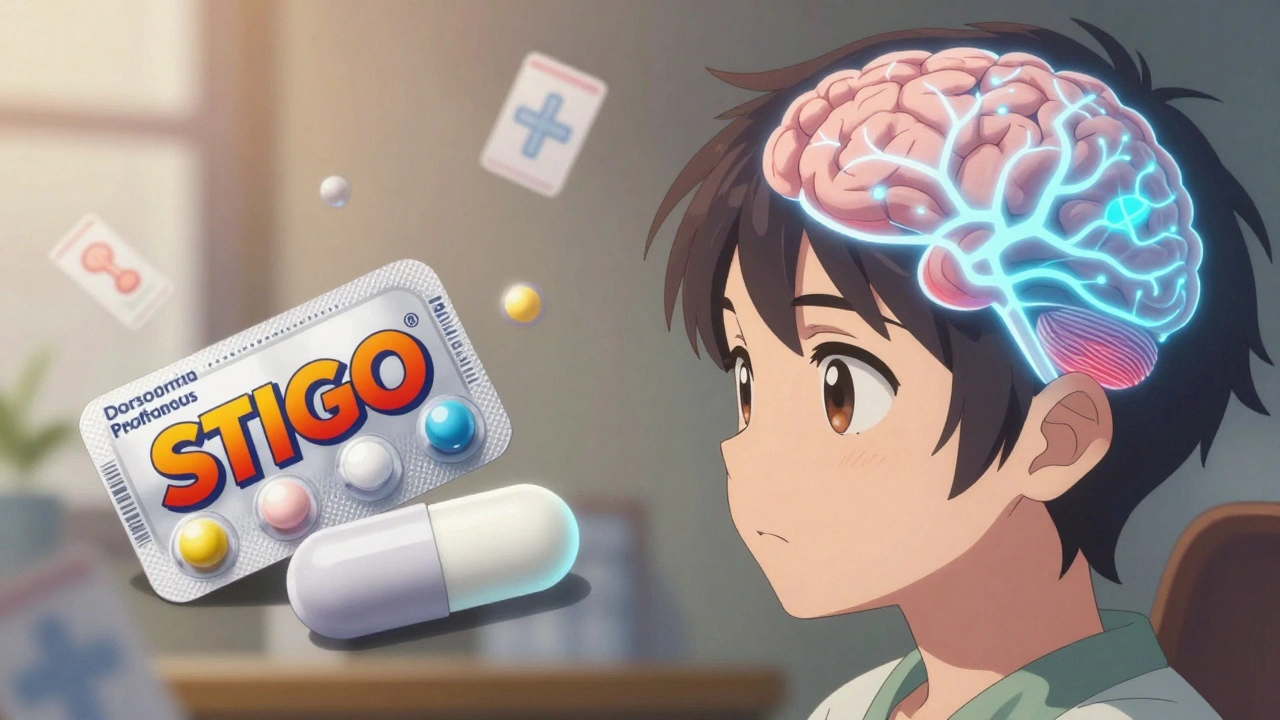
Have you ever felt like a generic pill just didn’t work as well as the brand-name version-even though they’re supposed to be the same? You’re not alone. Millions of people feel this way, and science now shows it’s not just in their heads. It’s in their brain.
What’s Really Going On When You Doubt Your Generic?
The placebo effect isn’t just about sugar pills in old-timey clinical trials. It’s happening right now, every time someone takes a generic drug and expects less from it. Research shows that your belief about a medication-whether it’s branded, cheap, or plain-looking-can change how your body responds to it. Even if the active ingredient is identical, your brain can dial up or dial down the effect based on what you think you’re taking. A 2016 study at the University of Illinois tested this with headache sufferers. Two groups got identical placebo tablets. One group was told they were taking Nurofen (a well-known brand). The other was told they were taking generic ibuprofen. The Nurofen group reported pain relief equal to actual ibuprofen. The generic group? Their pain barely budged. The pills were the same. The difference? Perception.Branding Isn’t Just Marketing-It’s Neurobiology
Your brain doesn’t just passively receive pills. It actively predicts what’s going to happen. When you see a familiar brand logo, your brain lights up in areas linked to expectation and reward. Brain scans from the University of Hamburg show that when people believe they’re taking a brand-name aspirin, the dorsolateral prefrontal cortex-a region tied to belief and anticipation-activates 22-35% more than when they think they’re taking a generic version of the same drug. This isn’t just about feeling better. It’s about actual biological changes. In one experiment, participants applied a cream labeled as expensive and another labeled as cheap. Both creams were identical. But those who thought they were using the expensive one reported twice as much pain-and their spinal cords showed stronger pain signals. The pain wasn’t imagined. Their nervous systems were responding differently because of what they believed.The Dark Side: When Belief Makes You Sicker
It’s not just about expecting more. Expecting less can make you feel worse. This is called the nocebo effect. In one major study of statin drugs, patients were given placebo pills but told they might get muscle pain. About 18% of them quit the trial because they felt symptoms-even though the pills had no active ingredients. In another trial, placebo groups reported muscle pain rates ranging from 0.2% to 2.7%. That’s a 13-to-1 difference. All from what patients were told-or what they assumed. People who’ve taken brand-name antidepressants before often switch to generics and say, “This one doesn’t work.” Blood tests show the same drug levels. But their brains have already decided: this isn’t the real thing. So their anxiety spikes, sleep worsens, and symptoms return-not because the drug failed, but because their mind did.Price Tag = Pain Signal
Here’s something counterintuitive: paying more for a drug can make you feel worse if it’s labeled as generic. In experiments, when people were told a placebo was cheap, they reported more side effects than when they were told it was expensive-even though it was the same pill. Why? Because cheap = low quality = less effective. Your brain translates price into trust. And if you don’t trust it, your body reacts like something’s wrong. This is why telling patients, “This generic costs less,” can backfire. A 2020 study found that mentioning price increased reported side effects by 25-40%. It’s not the drug. It’s the message.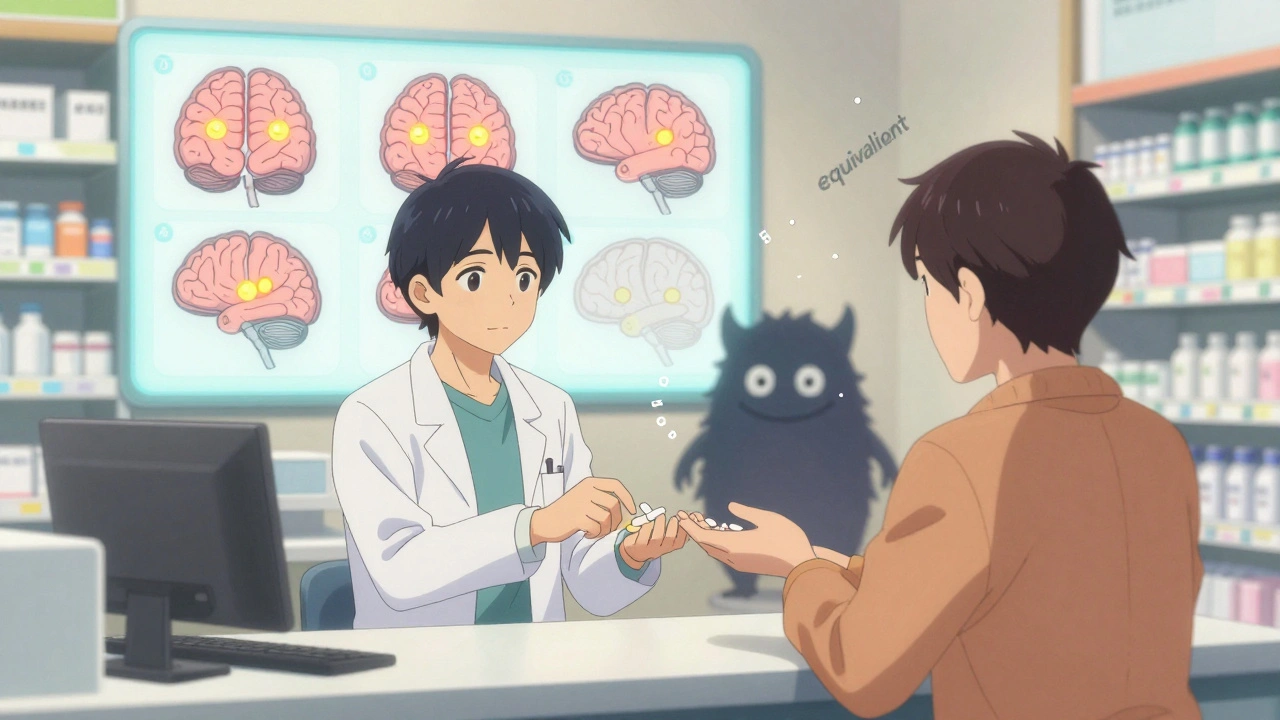
What About Packaging and Design?
You might think fancy packaging for generics would help. But studies say otherwise. One 2019 study tested three versions of a beta-blocker: branded, plain generic, and “enhanced” generic with better colors and branding. The enhanced version didn’t improve outcomes. In fact, the plain generic caused slightly more anxiety reduction than the fancy one. Why? Because patients trusted the simplicity. They didn’t overthink it. The real winner? Clear, honest labeling. A 2021 study found that adding the phrase “This medication is FDA-approved equivalent to [Brand Name]” to generic packaging boosted patient confidence by 34% and improved adherence by 19%. No tricks. Just facts.Why Do Some People Trust Generics-and Others Don’t?
About 30% of people are highly responsive to placebo effects. They’re more likely to feel better with brand-name drugs-or worse with generics-because their brains are wired to respond strongly to expectations. The rest? They’re less influenced. But even they aren’t immune. Cultural factors matter too. In the U.S., 63% of people believe brand-name drugs are superior. Only 11% say they’d choose a generic if they had to pay more. And yet, 90% of prescriptions filled in America are generics. That gap between reality and belief is huge. It’s worse for mental health drugs. Only 68% of patients accept generics for antidepressants, compared to 89% for blood pressure meds. Why? Because depression feels personal. People think, “If this doesn’t feel right, it must not be working.” But the science says: it’s the same molecule.What Can Doctors and Pharmacies Do?
The fix isn’t to trick patients. It’s to talk to them. A 2020 study showed that spending just two extra minutes explaining generic equivalence increased adherence by 18-22%. That’s it. No sales pitch. Just saying: “This has the same active ingredient, same FDA standards, same effectiveness. The only difference is the price.” Avoid phrases like “just a generic.” Don’t mention cost unless asked. Instead, say: “This is exactly what the brand is made of. The FDA checks it twice as hard as the brand.” Some clinics are now using short educational videos before dispensing generics. One study from Oxford found that patients who watched a 90-second video explaining how expectations affect healing had 28% better outcomes than those who didn’t.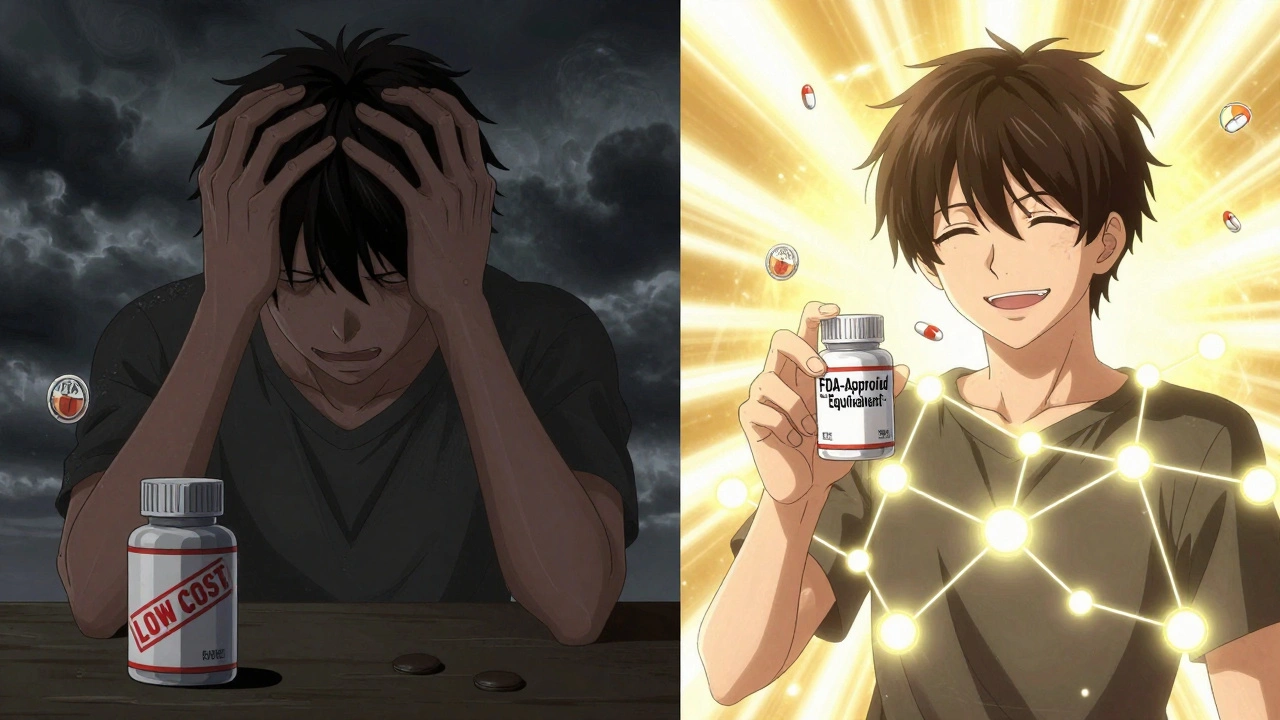
The Bigger Picture: Money, Trust, and Health
This isn’t just about feelings. It’s about billions of dollars and real health outcomes. The U.S. spends $28 billion extra each year because people quit or delay generics due to distrust. That’s more than the cost of treating diabetes nationwide. If we could raise generic adherence from 76% to 85%, we’d save $15-20 billion a year. That’s enough to cover free prescriptions for millions of people. The problem isn’t the drugs. It’s the story we’ve told about them. We’ve made generics sound like second-rate options. But they’re not. They’re the same medicine, cheaper, and just as safe.What You Can Do
If you’re on a generic:- Don’t assume it’s weaker. Check the active ingredient. It’s identical.
- If you feel worse, ask yourself: Is it the pill-or my mind?
- Ask your pharmacist to explain the FDA requirements. Knowledge reduces fear.
- Don’t let price label your trust. A cheap pill can heal just as well.
- Never say “just a generic.”
- Use the phrase: “FDA-approved equivalent.”
- Explain the science of expectations in one sentence: “Your brain can make a pill work better-or worse-based on what you believe.”
- Offer a one-minute handout with the FDA’s generic drug facts.
Final Thought
The placebo effect isn’t a trick. It’s your body’s natural response to belief. And when it comes to generics, that belief has been poisoned by marketing, misinformation, and fear. The solution isn’t to sell more branded drugs. It’s to restore trust in the science-and remind people that healing doesn’t come from the label. It comes from the molecule, the mind, and the message.Releted Post


Caspian Fothergill
Hello, my name is Caspian Fothergill. I am a pharmaceutical expert with years of experience in the industry. My passion for understanding the intricacies of medication and their effects on various diseases has led me to write extensively on the subject. I strive to help people better understand their medications and how they work to improve overall health. Sharing my knowledge and expertise through writing allows me to make a positive impact on the lives of others.
The neurobiological mechanisms underlying the placebo effect in generic medication adherence are profoundly underappreciated in clinical practice. The dorsolateral prefrontal cortex’s differential activation based on brand perception suggests a top-down modulation of nociceptive processing that transcends mere cognitive bias. This isn’t ‘mind over matter’ in the New Age sense-it’s predictive coding in action, where prior expectations shape somatic outcomes through descending inhibitory and facilitatory pathways. The implications for pharmacoeconomics and patient autonomy are staggering.
It’s funny, really, how we’ve built this whole culture around branding in medicine. I remember when I was prescribed a generic version of my dad’s blood pressure med-he refused to take it for months because the pills were ‘too small’ and ‘not the right color.’ Turned out, he felt worse not because the drug wasn’t working, but because he kept staring at the label and thinking, ‘This isn’t the real thing.’ Once we explained the FDA equivalence and he stopped overthinking it? His BP stabilized. Sometimes, the cure is just unlearning the story we’ve been sold.
It is imperative to recognize that the nocebo effect, as it pertains to pharmaceutical perception, constitutes a significant confounding variable in both clinical trials and real-world therapeutic outcomes. The linguistic framing employed by healthcare providers-particularly the use of qualifiers such as ‘just a generic’-directly modulates patient expectations, thereby inducing physiologically measurable alterations in neurotransmitter release and autonomic response. Consequently, the standard of care must be revised to incorporate structured psychoeducation regarding generic equivalence as a non-negotiable component of dispensing protocol.
People are dumb. They pay more for brand name because they think it’s magic. Meanwhile, the generic works just fine. Stop overthinking it. Your brain is the problem, not the pill.
So… the pill’s the same, but your brain makes you feel worse? Cool. I’ll stick with the brand.
I’ve seen this play out with so many patients-especially with antidepressants. One woman cried because she said, ‘This one doesn’t make me feel like myself.’ We sat down, I showed her the FDA equivalence chart, and we talked about how her fear of change was making her body react. She didn’t need a different drug. She needed to be heard. Two weeks later, she sent me a note: ‘I took the generic today. I didn’t think about it. And I felt okay.’ Sometimes healing isn’t about chemistry. It’s about safety. And trust.
Oh, darling, it’s not about the pill-it’s about the *aesthetic ontology of pharmaceuticals*. The branded capsule is a sacrament of capitalist modernity, while the generic is the banal ghost of consumerism’s afterlife. I’d rather suffer a migraine than swallow a tablet that looks like it was manufactured in a basement with a 1998 inkjet printer. Beauty is efficacy. And if your brain doesn’t recognize the logo, your serotonin might as well take a vacation.
Interesting, but let’s be real-this is just confirmation bias wrapped in fMRI data. 😏 I’ve taken generics for years, never had an issue. But then again, I don’t live in a marketing bubble where a pill’s worth is determined by its packaging. The real tragedy? People pay more for placebo branding and then blame the system. The system’s just mirroring your expectations. Classic.