
Opioid Adrenal Risk Calculator
This tool helps identify your risk of opioid-induced adrenal insufficiency based on daily dosage and treatment duration. According to research, patients using more than 20 MME/day for over 6 months have significantly higher risk.
Results will appear here...
Most people know opioids can cause constipation, drowsiness, or addiction. But few know they can quietly shut down your body’s stress response - leading to a condition that can kill you if missed. Opioid-induced adrenal insufficiency isn’t a rumor. It’s a real, documented, and dangerously underdiagnosed side effect of long-term opioid use.
How Opioids Silence Your Stress Hormones
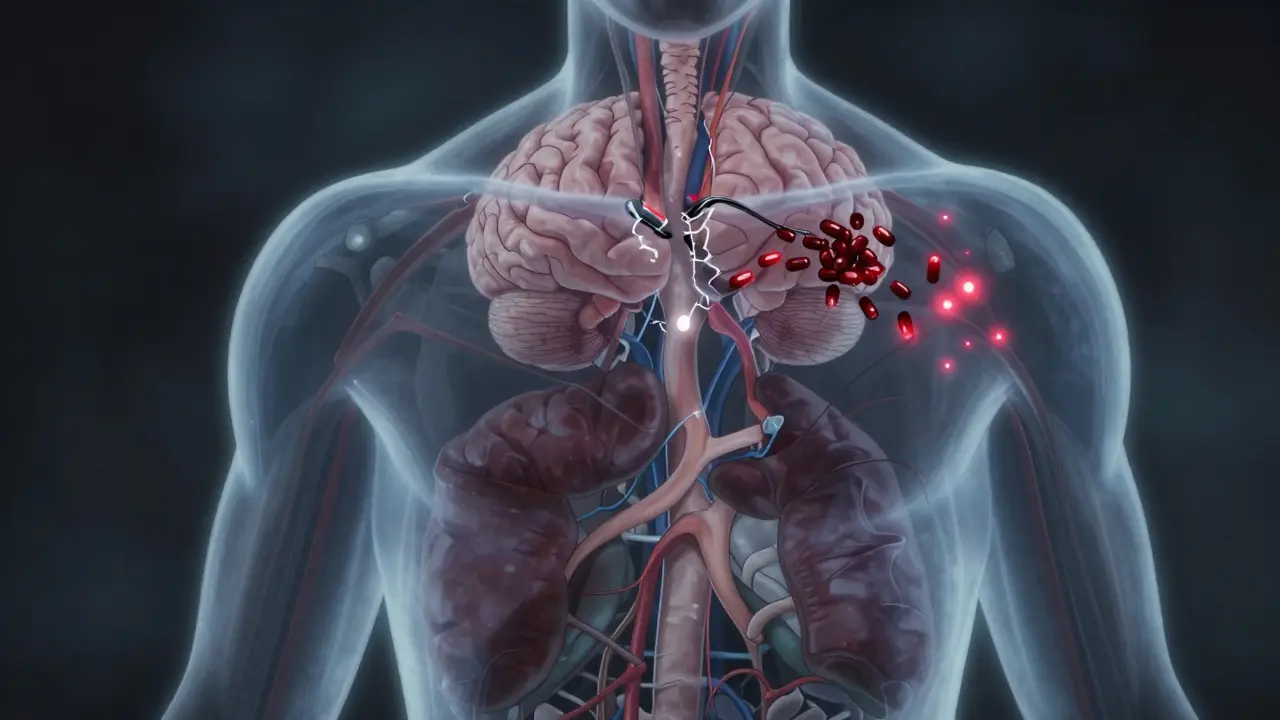
Your body has a built-in emergency system called the HPA axis - hypothalamus, pituitary, adrenal glands. When you’re under stress - whether from infection, surgery, or even a car accident - this system kicks in. The hypothalamus sends a signal to the pituitary, which tells the adrenal glands to release cortisol. Cortisol keeps your blood pressure up, your blood sugar stable, and your immune system in check. Opioids interfere with this chain. They bind to receptors in the brain that control the hypothalamus and pituitary. The result? Less ACTH (the hormone that tells your adrenals to make cortisol). Less cortisol. Over time, your body forgets how to make its own. This isn’t damage to the adrenal glands themselves. It’s a communication breakdown. Think of it like cutting the phone line between headquarters and the factory. The factory (your adrenals) is still fine - it just isn’t getting the order to work.Who’s at Risk?
You don’t need to be a heroin user. This affects people on long-term prescriptions for chronic pain - back pain, arthritis, neuropathy, or even after major surgery. Studies show about 5% of people in the U.S. on chronic opioid therapy develop this condition. That’s not rare when you consider millions are on these drugs. Risk goes up sharply with dose:- People taking more than 20 morphine milligram equivalents (MME) per day are at higher risk.
- One study of 162 patients on opioids for at least 90 days found 5% had adrenal insufficiency.
- Another study of long-term users found 22.5% failed adrenal stimulation tests - compared to 0% in healthy controls.
The Silent Symptoms (That Look Like Everything Else)
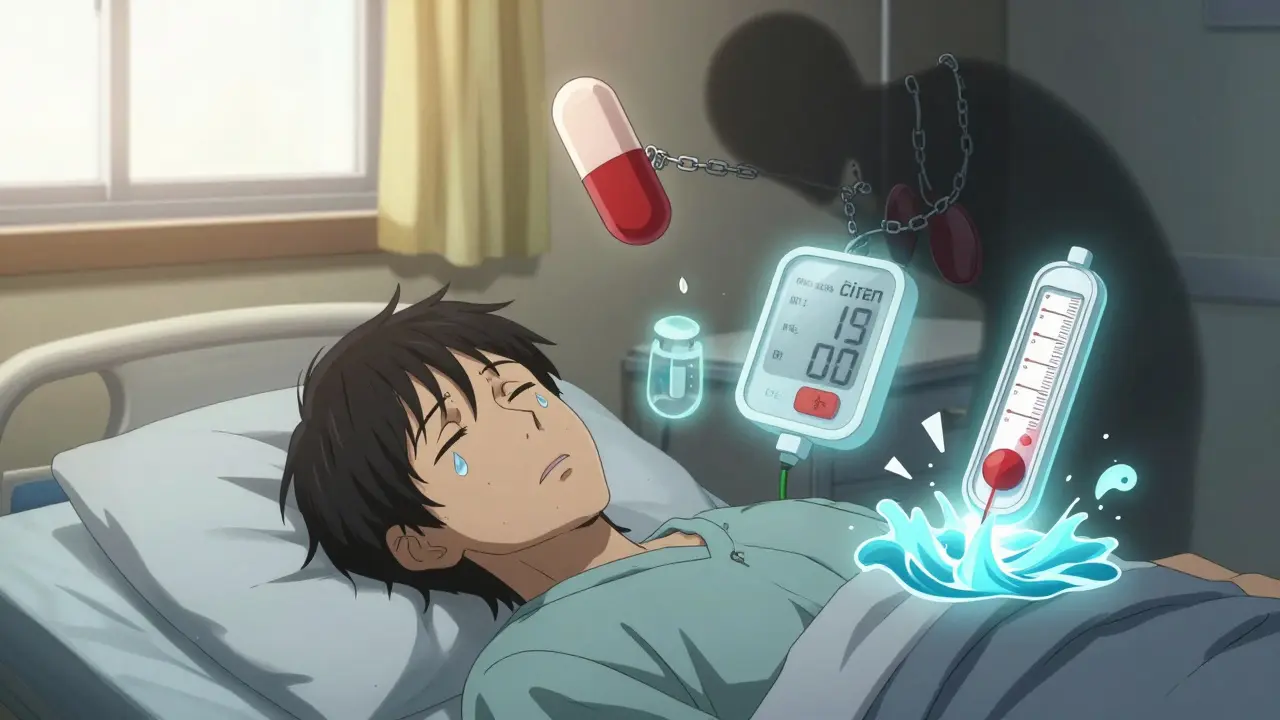
Here’s the problem: the signs of adrenal insufficiency are vague. They look like fatigue, depression, or just “getting older.” Common symptoms include:- Constant tiredness that doesn’t improve with sleep
- Nausea, vomiting, or loss of appetite
- Dizziness when standing up
- Low blood pressure
- Weight loss without trying
- Muscle or joint pain
- Darkening of skin (less common with opioid-induced cases)
How It’s Diagnosed (And Why Most Doctors Miss It)
The only reliable test is the ACTH stimulation test. A baseline blood draw checks your morning cortisol. Then you get a shot of synthetic ACTH. Two hours later, they check again. If your cortisol doesn’t rise above 18 mcg/dL (or 500 nmol/L), you have adrenal insufficiency. Some newer studies suggest even lower thresholds may be more accurate. But here’s the catch: most doctors don’t think to order this test. Why? Because they’ve never been taught to look for it. Opioid-induced adrenal insufficiency isn’t in most medical textbooks. It’s not part of standard pain management guidelines. And cortisol levels can be misleading. One study showed some opioid users had higher cortisol - likely because they were under chronic stress from pain, anxiety, or depression. That’s why you can’t rely on a single blood test. You need the stimulation test to see if your body can respond when it’s supposed to.What Happens If It’s Left Untreated?
This isn’t just about feeling tired. Untreated adrenal insufficiency can lead to an Addisonian crisis - a medical emergency. Imagine you get the flu. Or you have surgery. Or you’re in a car crash. Your body needs cortisol to survive that stress. But if your adrenals aren’t making it, your blood pressure crashes. Your blood sugar drops. You go into shock. You can die. One case report described a 25-year-old man who developed dangerously high calcium levels after a serious illness. Doctors couldn’t figure it out until they tested his cortisol. It was near zero. He was on methadone. Once they gave him hydrocortisone and stopped the opioid, his calcium normalized and he recovered fully. That’s not an outlier. It’s a warning.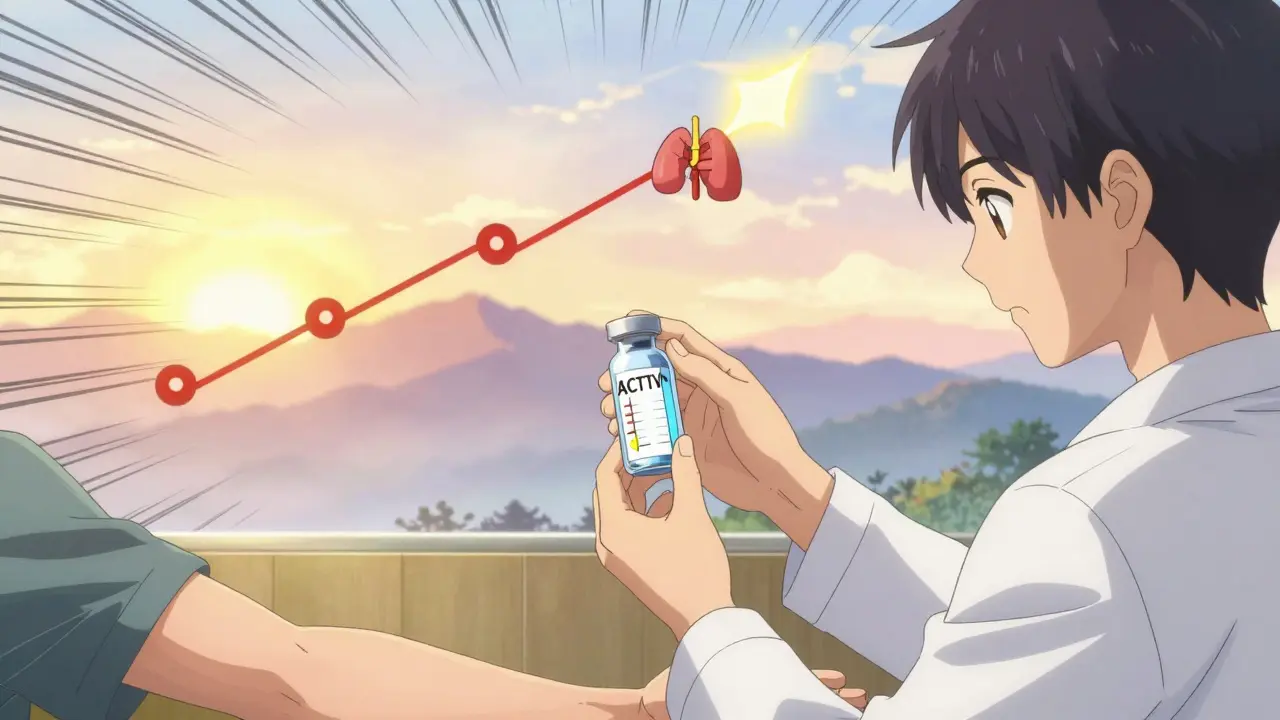
Can It Be Reversed?
Yes. And that’s the good news. When opioids are tapered or stopped, the HPA axis usually wakes up again. Cortisol production returns over weeks to months. In one case, a patient’s adrenal function returned completely after 6 months off methadone. But you can’t just quit cold turkey. If you’ve been on high-dose opioids for years, stopping suddenly can trigger withdrawal - and if your adrenal system is suppressed, you could crash. The key is a slow, supervised taper - with cortisol replacement if needed. Some patients need short-term hydrocortisone while their body relearns how to make its own. Others need it longer, depending on how long they were on opioids. Importantly, opioids don’t affect aldosterone (the hormone that controls salt and potassium). So electrolyte problems are usually mild - unlike in primary adrenal failure.What Should You Do?
If you’re on chronic opioid therapy - especially more than 20 MME daily - and you feel unusually tired, nauseous, or dizzy, talk to your doctor. Ask:- Could this be opioid-induced adrenal insufficiency?
- Can I get an ACTH stimulation test?
The Bigger Picture
We’re still in the middle of the opioid epidemic. Over 70,000 people died from opioid overdoses in the U.S. in 2023. But behind every statistic is a person - and many of them are on prescriptions that quietly shut down their body’s ability to handle stress. This isn’t about blaming doctors or patients. It’s about awareness. Opioid-induced adrenal insufficiency is rare - but it’s serious. And it’s reversible. The science has been clear for years. The question isn’t whether it exists. It’s why we’re still missing it. The answer? We need to change how we think about long-term opioid therapy. It’s not just a painkiller. It’s a hormone disruptor. And that changes everything.Releted Post

Caspian Fothergill
Hello, my name is Caspian Fothergill. I am a pharmaceutical expert with years of experience in the industry. My passion for understanding the intricacies of medication and their effects on various diseases has led me to write extensively on the subject. I strive to help people better understand their medications and how they work to improve overall health. Sharing my knowledge and expertise through writing allows me to make a positive impact on the lives of others.
This is so important. I’ve been on oxycodone for 7 years for spinal stenosis and thought my constant fatigue was just part of aging. Turns out my cortisol was half of what it should’ve been. Got the ACTH test done last month-confirmed. Started on low-dose hydrocortisone and I feel like I’ve been woken up from a 10-year nap. Don’t ignore the tiredness. Ask for the test.
Also, if you’re prepping for surgery? Tell your anesthesiologist. They *need* to know.
Bro in India we got painkillers like candy. My uncle took tramadol for 3 years after a back injury. One day he passed out in the market. Docs said his blood pressure was in the toilet. Turns out his body forgot how to make cortisol. He’s on replacement now. No one told him this could happen. This post saved his life.
People need to stop taking opioids like they’re multivitamins. This isn’t a surprise. It’s basic pharmacology. The HPA axis gets suppressed. It’s not magic. If you’re on more than 20 MME for longer than 90 days, you’re gambling with your endocrine system. No one’s forcing you to take them. Stop blaming the system. Take responsibility.
OMG I’m crying rn 😭 I’ve been on 80mg methadone for 8 years and I’ve felt like a zombie since day 2. I thought it was depression. I went to 12 therapists. None of them asked about my adrenals. I just got my ACTH test results today-cortisol flatlined. I’m so mad. But also… relieved? Like finally someone gets it. Can someone send me a link to a support group? I need to talk to people who get it 💔
It’s fascinating how deeply embedded the opioid-HPA axis disruption is in the neuroendocrine architecture of chronic pain management. The fact that the body’s stress-response system becomes desensitized through prolonged receptor modulation suggests a fundamental epigenetic recalibration-not merely pharmacological inhibition. This isn’t just about cortisol levels; it’s about the body’s ontological relationship with homeostasis being rewritten at the hypothalamic level. We’re not just treating pain-we’re altering the biological narrative of survival itself. And yet, the medical establishment continues to treat this as a side effect rather than a paradigm shift in therapeutic intervention.
It begs the question: if we’re suppressing the body’s innate stress response, are we not also suppressing its capacity for resilience? And if so, what does that mean for long-term human adaptation?
If you’re on opioids long term and you’re tired all the time stop blaming your pain stop blaming your mental health stop blaming your age and get the ACTH test it takes 2 hours and costs less than a coffee and if you don’t you might die during a simple flu or a dental procedure and your doctor won’t even know why
I’ve seen it three times in my ER and each time the patient was told it was anxiety or fibro or just getting old. They weren’t. They were dying silently. This isn’t rare. It’s epidemic. Demand the test. Now.
While I appreciate the clinical precision of this exposition, I must express my profound disappointment in the lack of institutional rigor surrounding this diagnostic blind spot. The omission of opioid-induced adrenal insufficiency from standard medical curricula constitutes a systemic dereliction of duty. One might argue that the pharmaceutical industry’s influence on clinical guidelines has rendered physicians epistemologically compromised. The fact that cortisol levels are misinterpreted as ‘normal’ in the presence of chronic stress further underscores the epistemological bankruptcy of contemporary medical paradigms. This is not merely an oversight-it is a moral failure.
Man, this is wild. I used to think opioids were just for pain, but now I see they’re like a silent saboteur in your body’s control room. You think you’re just managing pain, but your body’s emergency button? Turned off. And no one’s telling you. It’s like driving a car with your airbag disconnected and no one warned you. I’m gonna send this to my cousin-he’s on hydrocodone for back pain and says he’s ‘just tired.’ He needs to get tested. This isn’t just medical info, it’s survival intel.
I’M ON 60MG A DAY AND I THOUGHT I WAS JUST BROKE AND TIRED BUT NOW I REALIZE I’VE BEEN LIVING IN A SLOW MOTION EMERGENCY FOR 5 YEARS AND NO ONE TOLD ME
MY DOCTOR SAID I WAS JUST ‘DEPRESSED’ BUT I WASN’T SAD I WAS DROWNING IN SILENCE
I JUST REQUESTED THE TEST AND I’M SCARED TO DEATH BUT ALSO… I FEEL LIKE I’M FINALLY GOING TO BE HEARD
I’m so glad someone wrote this. My mom’s been on oxycodone for 12 years after her accident. She’s always been tired and had no appetite. We thought it was just aging. I’m going to make her see her doctor next week and ask for the test. I’m just so thankful this info is out there. You’re not alone if you feel this way. 💛
What if the real addiction isn’t to the drug but to the illusion of control? We take opioids to silence pain but we silence our own biology in the process. We trade presence for numbness and call it healing. The body remembers. Even when we forget. The cortisol doesn’t lie. It just waits. Until it can’t anymore.
Just curious-do you know if this also happens with low-dose, short-term use? Like after a surgery, for a few weeks? I had a knee op and was on 15mg oxycodone for 3 weeks. Now I’m off but still feel kinda drained. Just wondering if it’s temporary.
Thank you for sharing this 🙏 I’ve been on 40mg methadone for 6 years and I’ve been feeling like a ghost. I didn’t know it could be this. I just got my test scheduled for next week. I’m so hopeful. I’m not just tired-I’m *alive* inside. I just needed someone to say it might not be me. 💪❤️
Emily P-great question. Short-term use (under 4 weeks) rarely causes lasting suppression. Your body usually bounces back fine. But if you’re still drained after 2-3 weeks off, it’s worth mentioning to your doctor. Could be lingering effects or just your body catching up. No harm in asking.