

Medication Safety ROI & Risk Calculator
Select active safety technologies:
Projected Error Reduction
0%
Based on selected technologies and training level.
Annual Financial Impact
$0
Vs. Implementation CostsRecommendation Summary
Calculate your profile above to see specific recommendations.
The Urgency of Medication Safety in Modern Care
Every year, medication errors result in over 1.3 million injuries across the United States alone. For those numbers to sink in, you have to realize we are talking about preventable harm occurring daily. When you think about Medication Safety is a systematic approach defined by the prevention of errors and minimization of risks throughout the medication use process. According to the World Health Organization, it ensures patients receive optimal therapeutic benefits while minimizing adverse effects. In 2026, with aging populations and complex polypharmacy becoming the norm, maintaining safety isn't just a compliance box-it's the core of ethical practice. We see initiatives like the Medication Without Harm campaign pushing for a 50% reduction in severe medication-related harm, a target many facilities are still racing to meet.
Understanding the Core Frameworks
How do we actually define what "safe" looks like in a clinical setting? It starts with established frameworks. You cannot improvise safety; it requires standardized protocols. The Institute for Safe Medication Practices (ISMP) has released updated Targeted Medication Safety Best Practices that specifically address high-risk issues leading to fatal errors. These aren't vague suggestions. They include hard technical specifications like requiring electronic order entry systems to enforce verification for oncologic indications when ordering daily oral methotrexate. Without these hard stops, weekly-to-daily dosing errors remain a lethal risk.
We also rely heavily on the Agency for Healthcare Research and Quality is an organization that develops patient safety culture assessments. Their Hospital Survey tools help institutions measure organizational learning and teamwork across units. Top-performing hospitals score above the 75th percentile on these dimensions. Why does this matter? Because a study showed that when safety culture is strong, the number of errors drops significantly compared to facilities relying solely on technology without cultural support.
Technology: Tools and Pitfalls
Technology is often seen as the silver bullet for preventing mistakes. In reality, it's a powerful tool that needs careful management. Electronic Health Records (EHR) have become the standard backbone for safety. They offer Clinical Decision Support (CDS) that can flag interactions or duplicate therapies. However, we have to talk about the dark side of this: alert fatigue. Clinicians override between 49% and 96% of alerts because too many warnings are irrelevant. If a system generates more than 20 alerts per patient encounter, you lose trust in the system.
| Technology/System | Error Reduction Rate | Implementation Cost |
|---|---|---|
| E-Prescribing | 48% | Low to Moderate |
| Barcode-Assisted Medication Administration | 41.1% | High ($250k-$1.2M) |
| Clinical Decision Support | Variable (depends on tuning) | Moderate |
| AI-Assisted Prescribing | 89% detection rate (early trials) | High |
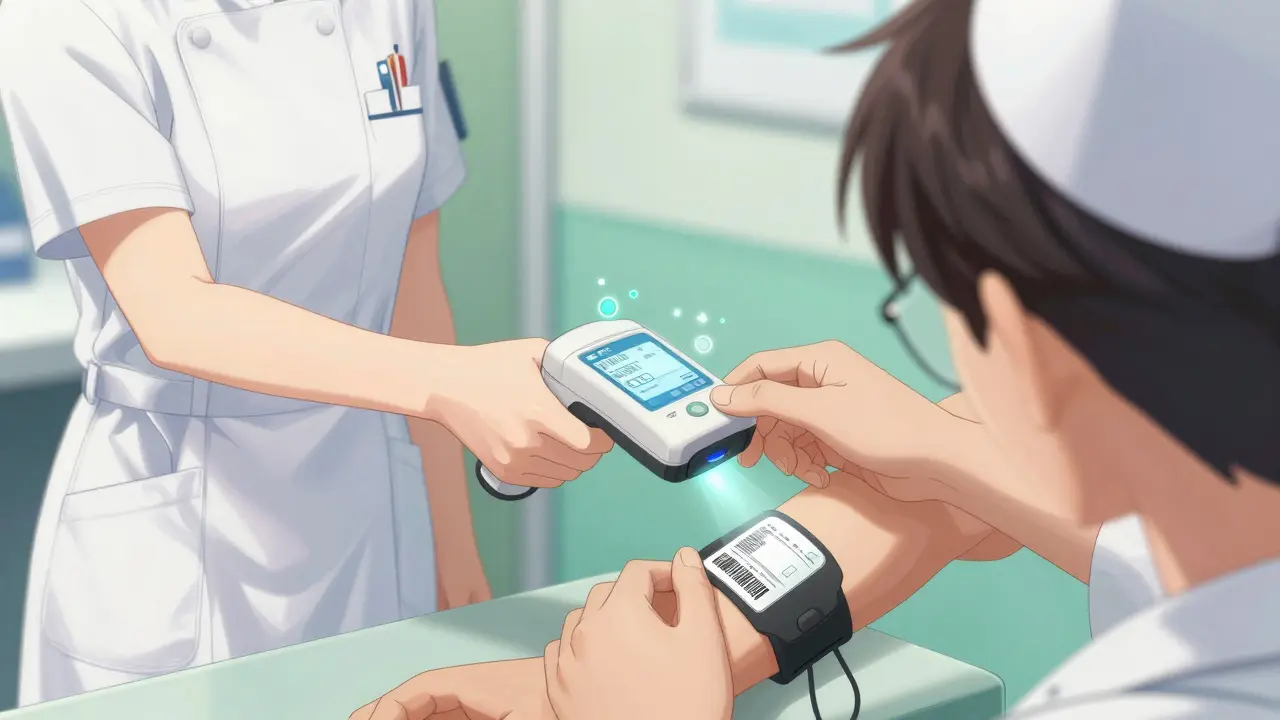
Barcode-assisted medication administration (BCMA) is another critical component. It works by verifying the five rights: right patient, drug, dose, route, and time at the point of care. Compliance needs to be near 100% to be effective. But here is the catch reported by nurses: during emergencies, bypassing scanners happens. This creates dangerous workarounds. Embedding pharmacists in intensive care units has shown a way out of this loop, reducing errors by 81% through real-time order verification.
Training Standards for Providers
You might think medical school covers everything, but continuous training is vital. The AHRQ Patient Safety Network recommends specific timeframes for new clinicians. We are talking about 16 to 24 hours of initial medication safety training. That is substantial dedicated time before you touch a patient. Following that, 8 hours of annual refresher training with simulation components keeps skills sharp. Simulation matters. It allows providers to fail safely in a controlled environment, identifying gaps in knowledge without risking a patient.
What exactly should be trained? Proficiency in EHR safety features is non-negotiable. Understanding high-alert medications specific to your unit-like intravenous oxytocin in obstetrics-is crucial because errors here cause disproportionate harm. Communication techniques for medication reconciliation are also part of the curriculum. Did you know only 32% of surveyed primary care practices had formal reconciliation processes compared to 89% in hospitals? This gap highlights where training focuses and where it falls short in outpatient settings.
Cultivating a Non-Punitive Safety Culture
A culture that punishes errors hides problems. Dr. Tejal Gandhi from the National Patient Safety Foundation advocates for a nonpunitive approach. When staff feel safe reporting mistakes, transparency improves. This transparency facilitates root cause analysis, which leads to better systemic fixes. If a nurse reports a near-miss because the packaging of two drugs looked similar, the hospital can fix the stockroom issue. If that nurse gets reprimanded, the problem remains hidden until someone gets hurt.
Hospitals implementing all 12 ISMP Targeted Medication Safety Best Practices achieve 63% fewer serious medication errors compared to those implementing fewer than five practices. The difference isn't just checking boxes; it's the integration of multidisciplinary efforts. ASHP guidelines specify that health-system pharmacists lead these efforts. Their expertise prevents medication-related problems by integrating pharmacy information systems with clinical documentation effectively.

Challenges in Primary Care vs. Hospitals
Safety isn't uniform across all settings. While acute care hospitals boast 86% adoption of Computerized Provider Order Entry (CPOE), only 54% of primary care practices have implemented similar systems. This disparity leaves community patients vulnerable. Transition periods are especially risky. Even community pharmacies using e-prescribing report 2.3% error rates due to workflow disruptions. Successful implementations usually require 9-12 months for full integration according to ISMP worksheets. Rushing this process often results in outdated policies lingering for years; a survey found 31% of hospital medication safety policies hadn't been updated in over three years.
Future Trends and AI Integration
Looking ahead to the rest of 2026, the focus is shifting toward artificial intelligence. Early studies demonstrate AI algorithms can identify 89% of potential prescribing errors before they reach patients, significantly higher than the 67% detection rate of standard decision support. However, this brings risks of over-reliance. The FDA reported adverse events related to EHR usability increased by 37% recently. As digital health expands, ensuring that social determinants of health are integrated into risk assessment becomes a priority identified by the National Academy of Medicine.
Implementation Roadmap
If you are tasked with rolling out these changes, follow the step-by-step guidance available from ISMP implementation worksheets. First, assess your current status against the Targeted Best Practices. Develop an action plan that accounts for resistance to change-studies show 42% of nursing staff initially resist BCMA due to perceived workflow disruption. Proper support increases compliance to 95% within six months. Documentation quality must be monitored continuously to ensure policies reflect current evidence rather than legacy habits.
What are the minimum training hours required for medication safety?
The AHRQ Patient Safety Network recommends 16-24 hours of initial medication safety training for new clinicians, followed by 8 hours of annual refresher training that includes simulation components.
How much does BCMA system implementation cost?
Comprehensive Barcode-Assisted Medication Administration systems typically require an initial investment between $250,000 and $1.2 million for a 300-bed hospital, plus an additional 15-20% annually for maintenance.
Do EHR systems actually reduce medication errors?
Yes, electronic prescribing reduces error rates by 48% compared to handwritten prescriptions. However, they can introduce new error types, with 34% of digital errors stemming from incorrect default values or dropdown selections.
What is alert fatigue in clinical decision support?
Alert fatigue occurs when clinicians receive excessive warnings, leading to overrides. Studies show clinicians override 49-96% of alerts, particularly when systems generate more than 20 alerts per patient encounter.
Which organizations set medication safety standards?
Key organizations include the World Health Organization (WHO), Institute for Safe Medication Practices (ISMP), Agency for Healthcare Research and Quality (AHRQ), and The Joint Commission, which accredits facilities based on safety goals.
Releted Post


Caspian Fothergill
Hello, my name is Caspian Fothergill. I am a pharmaceutical expert with years of experience in the industry. My passion for understanding the intricacies of medication and their effects on various diseases has led me to write extensively on the subject. I strive to help people better understand their medications and how they work to improve overall health. Sharing my knowledge and expertise through writing allows me to make a positive impact on the lives of others.
The reality is that the medical industrial complex treats patients like statistics rather than actual human beings who deserve care. Every single error reported in those numbers represents a life destroyed by negligence disguised as protocol. We talk about systematic approaches but the truth remains hidden behind layers of liability protection for institutions. It feels like watching a slow train wreck that nobody wants to acknowledge until it is too late for the victim. The focus on compliance boxes instead of ethical practice shows a complete lack of moral courage from leadership. I suspect the reduction targets are merely marketing spin designed to quiet the regulators temporarily. Nothing changes until the culture itself admits that safety is paramount over efficiency metrics. Trust in these systems is eroding faster than they can install new software patches for old problems. The human element is being treated as an obsolete variable in the equation. We need radical honesty before we pretend we have solved the crisis through technology alone.
This is absolutely critical information!!! The statistics regarding preventable harm are shocking!!! We need to demand better standards everywhere!!! Ismp guidelines are vital tools that cannot be ignored!!! The WHO campaign goals are necessary steps forward!!! Thank you for sharing these frameworks!!! Healthcare quality depends on everyone following them!!!
The five rights are absolute law in my unit.
Clinical Decision Support algorithms require rigorous tuning to reduce alert fatigue significantly. When CDS flags exceed twenty instances per encounter override rates skyrocket past acceptable thresholds. Electronic order entry mandates verification steps specifically for oncologic indications to prevent lethal dosing errors. Hard stops in the workflow function as the primary defense against weekly-to-daily frequency confusion. Systems must integrate pharmacy data with clinical documentation effectively to maintain high reliability. Implementation costs for barcode-assisted administration remain substantial but necessary for patient safety outcomes. Data shows eighty-one percent reduction in errors when pharmacists embed within intensive care units directly. Automation assists providers but does not replace the need for continuous simulation-based training programs.
The foundation of a truly safe environment begins with cultivating a nonpunitive culture among all staff members. It is widely understood that organizations which punish errors inevitably hide critical problems from view. Staff must feel completely secure reporting mistakes without fear of personal retribution or professional termination. Transparency facilitates root cause analysis which ultimately leads to sustainable systemic fixes within the facility. A nurse who reports a near-miss regarding similar packaging deserves commendation rather than disciplinary action. Hospitals implementing all twelve targeted practices achieve significantly fewer serious medication errors compared to peers. The difference is found in the integration of multidisciplinary efforts rather than isolated checklist completion exercises. Health-system pharmacists lead these efforts by integrating pharmacy information systems with clinical documentation effectively. Communication techniques for medication reconciliation are often neglected in outpatient settings due to resource constraints. Only thirty-two percent of surveyed primary care practices had formal reconciliation processes compared to hospital benchmarks. We must address this disparity to protect community patients vulnerable during transition periods. Workflow disruptions during implementation phases account for significant portions of reported error rates initially. Rushing integration results in outdated policies lingering for years which compromises safety standards permanently. Proper support increases compliance to ninety-five percent within six months according to recent studies. Documentation quality monitoring ensures policies reflect current evidence rather than legacy habits formed decades ago. Continuous vigilance is required because safety is a dynamic state rather than a static achievement.
Love seeing such detailed insights on how safety culture drives performance! Keeping teams engaged with simulation training really makes a huge difference for everyone involved. The data supports that structured learning prevents real world harm effectively. We should all encourage our colleagues to embrace these updates enthusiastically. Together we can make healthcare much safer for every single patient receiving care.
So happy to see progress being made on AI detection rates! 🌟 Early trials showing eighty-nine percent detection is incredible news 💡 But we must stay mindful of over-reliance risks ⚠️ Social determinants need to be part of the risk assessment process too 🏥 Hope to see more success stories soon 🙏💕
Hospitals always talk about innovation but never fix the basic staffing issues causing most of the chaos. They push expensive systems onto nurses who already work double shifts to handle the backlog created by bureaucracy. The average patient doesn't notice the fancy tech but suffers when a dose gets mixed up because the scanner is jammed. Management cares more about meeting targets than actually listening to frontline workers who know the risks. Another report claiming zero tolerance for errors while ignoring the workload that causes them.
The impementation of policys is crucial for maintaning standard procedures acros all departments. Resisteance to change among nursing staff indicates a need for better communication strategies regarding workflow adjustments. Facilities must allocate resources for full integration periods rather than rushing the rollout phase prematurely. Survey data indicates thirty-one percent of safety policies havent been updated in over three years. Legacy habits persist because leadership fails to enforce mandatory documentation reviews periodically. Compliance requires ongoing support mechanisms to sustain high performance levels over time.
The emotional toll of medication errors on families is devastating and cannot be overstated!!! Preventable harm destroys lives beyond repair!!! We owe it to victims to pursue truth relentlessly!!! Safety culture needs to evolve beyond corporate slogans!!! Accountability matters for healing!!!
focus on training hours is important for new hires. refresher courses help keep skills sharp. simulation works well for learning. less errors happen with good prep.
Future trends indicate artificial intelligence will redefine prescribing workflows entirely by 2026. FDA adverse events related to EHR usability highlight the need for better interface design standards. Ensuring social determinants of health are integrated into risk assessment becomes a priority identified by national bodies. Digital health expansion requires parallel improvements in data privacy and security infrastructure measures. We need to balance automation with human oversight to maintain patient trust consistently. The roadmap provided offers clear steps for leaders willing to execute changes properly. Implementation worksheets serve as actionable guides for rolling out these systemic changes safely.