

Every year, millions of people accidentally take the wrong pill, double-dose, or skip a medication entirely. For older adults managing five or more prescriptions, it’s not a matter of if they’ll make a mistake-it’s when. Blister packs and pill organizers aren’t just convenient tools-they’re life-saving systems that cut medication errors in half. If you or someone you care for is juggling multiple pills, this isn’t about organization. It’s about preventing an ER visit, a hospital stay, or worse.
Why Medication Mistakes Happen
People don’t forget pills because they’re lazy. They forget because the system is broken. A bottle with 90 pills, no labels, and no schedule? That’s a recipe for disaster. Studies show nearly half of people with chronic conditions don’t take their meds as prescribed. The cost? Over $200 billion a year in avoidable hospitalizations. And for seniors, a single missed dose or extra pill can trigger a fall, a stroke, or an overdose. The biggest culprits? Complex schedules. Multiple pills at different times. Similar-looking capsules. Memory issues. And the simple fact that most people aren’t trained to manage their own meds. That’s where blister packs and pill organizers come in-not as nice-to-haves, but as essential safety tools.What Are Blister Packs and How Do They Work?
Blister packs are pre-filled, sealed plastic cards with individual compartments for each dose. Each bubble holds one pill, clearly labeled with the day and time: Mon AM, Tue PM, Wed Bedtime. They’re made by specialty pharmacies, not drugstores. You send in your prescription list, and they sort everything for you-no manual counting, no guesswork. Unlike a bottle, you can’t accidentally grab the wrong pill. You see exactly what’s supposed to be taken, when. If a bubble is empty, you know you missed it. If it’s still full, you know you’re safe. No confusion. No doubt. According to a 2022 study in the American Journal of Epidemiology, patients using blister packs took their meds correctly 87% of the time. Those using regular bottles? Only 64%. That’s a 23-point gap in adherence. And it’s not just about numbers-real people report fewer mistakes. One caregiver on Reddit said switching her 82-year-old mother to blister packs cut missed doses from 3-4 per week to just 1-2 per month.How Pill Organizers Fall Short
Pill organizers are the DIY version. You buy a plastic box with compartments-usually one per day, or sometimes four per day for morning, noon, evening, bedtime. You fill them yourself, once a week. Sounds simple, right? It’s not. Filling a pill organizer is where mistakes happen. You’re juggling bottles, trying to read tiny labels, counting pills by hand. One wrong count. One misread time. One pill dropped and lost. And if your meds change? You have to empty the whole box and start over. A 2021 study found that 37% of users reported mixing up pills during refilling. That’s more than one in three. Even the best organizers can’t prevent errors if the person filling them is tired, stressed, or has shaky hands. Arthritis, vision problems, dementia-these aren’t rare. They’re common. And they make manual sorting risky. Blister packs remove the human error entirely. You don’t fill them. The pharmacy does. And they’re sealed. Tamper-evident. Clear. You can’t mess it up.When to Choose Blister Packs Over Organizers
You need a blister pack if:- You take 4 or more medications daily
- Your schedule changes often (e.g., antibiotics, steroids, pain meds)
- You or your loved one has memory issues, dementia, or low vision
- You’ve had a medication error in the past
- You’re on blood thinners, diabetes meds, or heart drugs where timing matters
How to Get Blister Packs
You don’t buy them off Amazon. You get them through a pharmacy that offers multi-dose packaging. Many Medicare Advantage plans cover them at no extra cost. Ask your pharmacist or call your insurance. The process is simple:- Call your pharmacy and ask if they offer blister pack services
- Send them your full list of meds (include supplements and OTC drugs)
- They review your regimen and set up a schedule
- They fill and seal your blister cards
- You get your first pack in 3-5 business days
What to Look for in a Blister Pack
Not all blister packs are created equal. Here’s what matters:- Clear labeling - Day and time must be large and easy to read
- Easy-open design - Perforated edges or peel-back tabs for people with arthritis
- Tamper-evident seals - FDA requires this. If it’s broken, don’t use it
- Visual contrast - Light background, dark text. No gray on white
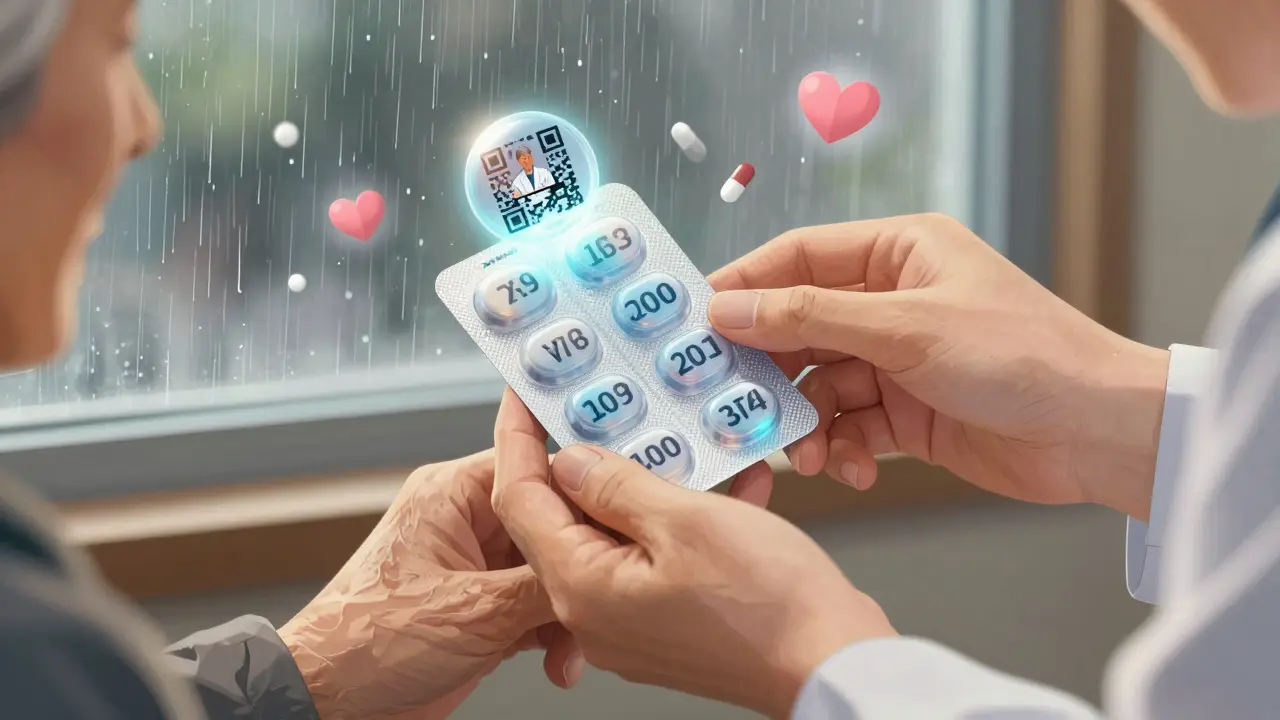
- QR codes - Newer packs let you scan for video instructions or medication info
Common Problems and How to Fix Them
Problem: I can’t open the blister pack. My hands are stiff. Solution: Ask for easy-open versions. Many pharmacies now offer packs with perforated edges or special tabs. You can also buy a blister pack opener for under $5 online. No need to use teeth or scissors. Problem: My doctor changed my meds. Now the pack is wrong. Solution: Blister packs are flexible. If you add or remove a pill, the pharmacy can repackage just that day’s dose. You don’t have to throw out the whole pack. Call them immediately. Problem: My mom takes the same pill twice because she thinks she missed it. Solution: That’s why blister packs work better than organizers. With a blister pack, she sees the empty bubble. She knows she already took it. With a pill organizer, she sees an empty slot and thinks, “I didn’t take it today.” That’s a dangerous assumption.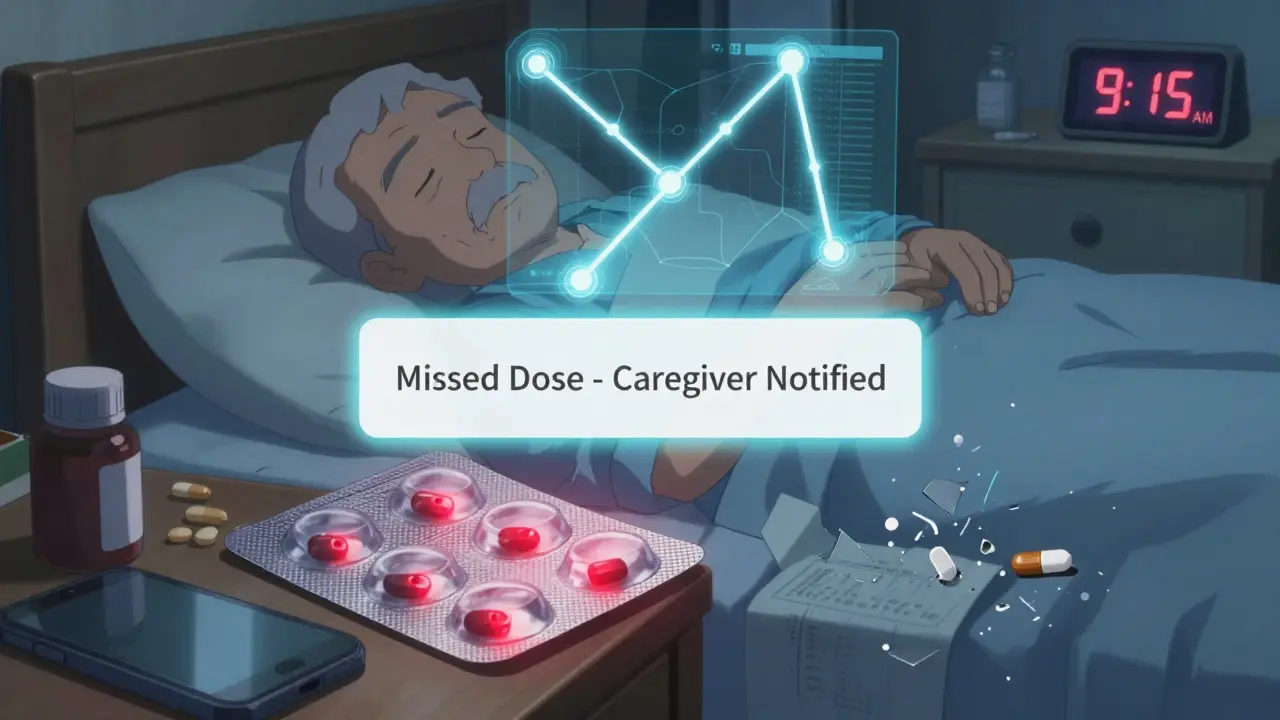
Technology Is Making Blister Packs Even Smarter
In 2023, the FDA approved the first blister packs with QR codes. Scan the bubble and get a video of your pharmacist explaining what the pill does and why. Some new packs even have sensors that track when you open each compartment. If you miss a dose, it texts your caregiver. AdhereTech’s smart blister packs showed a 37% increase in adherence in a 120-patient pilot. That’s not just tech-it’s safety. And it’s coming fast. By 2025, nearly half of Medicare beneficiaries are expected to use blister packs. Hospitals like Mayo Clinic already use them for high-risk patients, cutting readmissions by 18%.What You Can Do Today
Don’t wait for a crisis. If you’re managing multiple meds, act now.- Ask your pharmacist: “Do you offer blister packs?”
- Check your insurance: “Is this covered under my plan?”
- Stop using pill organizers if you take 4+ meds daily
- Teach your caregiver how to read the blister pack
- Keep the pharmacy’s number handy. Changes happen. You need to call fast.
Real Stories, Real Results
A 78-year-old man in Ohio was taking 8 medications. He mixed up his blood pressure pills and ended up in the ER with a dangerously low heart rate. After switching to blister packs, he went 18 months without a single error. No more ER visits. No more panic. A caregiver in Michigan told her story on AgingCare.com: “I used weekly organizers for my dad with dementia. He’d take extra pills thinking he missed one. After blister packs, his ER visits dropped from quarterly to zero.” These aren’t outliers. They’re the norm. When people stop guessing and start seeing, they stop hurting.Are blister packs covered by Medicare?
Original Medicare (Part A and B) doesn’t cover blister packs. But most Medicare Advantage plans (Part C) do, especially for patients on 4+ medications. Check your plan’s formulary or call customer service. Many also cover them under their pharmacy benefit. If your plan says no, ask for a prior authorization-it’s often approved when documented as medically necessary.
Can I make my own blister packs at home?
No. Home-made blister packs aren’t safe or legal. Pharmacy-grade blister packs are sealed in tamper-evident, climate-controlled environments. They’re labeled with barcodes, expiration dates, and FDA-compliant text. Trying to seal pills in plastic at home risks contamination, mislabeling, and improper storage. Only licensed pharmacies can legally prepare them.
Do blister packs work for people with dementia?
Yes-they’re one of the best tools for dementia patients. Because each dose is clearly labeled by day and time, and the pill is already separated, there’s no need to remember schedules or count pills. Visual cues reduce confusion. Studies show a 42% reduction in medication errors in home care settings for patients with mild to moderate cognitive impairment. Many families report fewer arguments and less stress after switching.
What if I need to take a pill at a different time?
Blister packs are designed for fixed schedules. If you need to change the time, contact your pharmacy. They can repackage your next week’s pack with updated times. Never manually move pills between compartments-it defeats the purpose and risks overdose. Always consult your doctor before changing timing, especially for blood pressure, heart, or diabetes meds.
Are there blister packs for travel?
Yes. Many pharmacies offer travel blister packs with 7-14 days of medication in compact, TSA-compliant sizes. Some even include a small organizer for daily use. These are ideal for trips, vacations, or visiting family. Just request them when you order your regular pack. Never carry pills loose in a bag-always use a labeled, sealed pack.
Releted Post



Caspian Fothergill
Hello, my name is Caspian Fothergill. I am a pharmaceutical expert with years of experience in the industry. My passion for understanding the intricacies of medication and their effects on various diseases has led me to write extensively on the subject. I strive to help people better understand their medications and how they work to improve overall health. Sharing my knowledge and expertise through writing allows me to make a positive impact on the lives of others.
blister packs are just another way for big pharma to make you pay more while they get rich off your fear
my grandma used a pillbox for 20 years and never had an issue
Oh please. Blister packs? That’s just the government’s way of controlling what old people take. Did you know the FDA approves these so they can track your medication use? They’re putting chips in them now. I saw a guy on YouTube who said his pack sent data to some corporate server. And don’t get me started on how they’re slowly phasing out bottles to force everyone into these surveillance packs.
i get what ur saying but honestly if u have 5+ meds and shaky hands or bad eyesight a blister pack is way less stress than trying to count 27 pills every sunday
my uncle with parkinsons switched and he stopped mixing his blood thinner with his sugar pills
You people are so naive. Blister packs are a godsend if you’re not a robot. But let’s be real-this whole thing is a marketing gimmick wrapped in fear porn. Pharma companies push these because they know seniors are scared to death of dying wrong. Meanwhile, they’re charging $3.50 a day for plastic and pills you could’ve gotten for $0.20 in a bottle. It’s not safety-it’s profit with a side of paternalism.
While the emotional appeal of this article is understandable, it is critical to acknowledge that the cited studies do not universally control for socioeconomic variables. Many elderly patients lack access to pharmacies offering blister packaging, and insurance coverage is inconsistent even under Medicare Advantage. To frame this as a universal solution without addressing systemic barriers is misleading. The real issue is not adherence-it is equitable access to healthcare infrastructure.
I just watched my neighbor’s wife die because she took the wrong pill from her organizer. It was a Tuesday. She thought she missed her blood thinner. She took two. Then three. They found her on the floor. The organizer had been filled by her daughter who was drunk. Blister packs would’ve saved her. Don’t you dare say this isn’t life or death.
How quaint. You think a plastic card with bubbles is the answer to a society that has abandoned its elderly? You’re not solving the problem-you’re just giving them a fancy toy so you don’t have to visit them. Meanwhile, their children are working three jobs, their Medicare premiums are rising, and you’re celebrating a $45 weekly plastic box like it’s a miracle. This isn’t innovation. It’s emotional capitalism.
The real tragedy here isn’t medication errors-it’s that we’ve outsourced care to plastic bubbles because we’ve stopped caring. We’ve turned human memory into a logistical problem. We’ve turned compassion into compliance tracking. Blister packs don’t cure loneliness. They don’t fix the fact that most seniors take their meds alone, in silence, afraid to admit they’re confused. The real innovation would be having someone sit with them. Not a barcode. Not a QR code. A person.
I’ve seen this play out in my family. My dad had dementia and used a weekly organizer. He’d take his pills twice because he couldn’t remember if he already did. Then we switched to a blister pack. The difference wasn’t just in accuracy-it was in peace. He stopped asking the same question ten times a day. He stopped yelling at his wife because he thought she was hiding his meds. The pack didn’t fix his brain, but it stopped the chaos. Sometimes the simplest thing is the most human.
this is why america is dying
you people are so obsessed with gadgets you forget that real care is just showing up
i grew up in india where grandmas took pills from a cloth bag and someone always checked on them
no plastic, no qr codes, just love
you think a machine fixes loneliness?
i got a blister pack last month and the label on the wed pm bubble was smudged and i took my blood pressure pill at night by mistake and my heart felt like it was gonna explode
so now i just use my phone to take pics of the bottles
If you’re taking more than four meds, you’re probably being overprescribed. Blister packs don’t solve the problem-they just make it prettier. The real issue is doctors who treat symptoms like a grocery list. Stop blaming the pill box. Start blaming the pill pushers.
I cried when my mom got her first blister pack. She’s 84, has glaucoma, and used to cry every Sunday because she couldn’t read the tiny labels. Now she opens it like a gift. She says it feels like someone finally saw her. I didn’t think a plastic card could do that. But it did. It didn’t just organize her meds-it gave her back her dignity. And that’s worth every penny.