
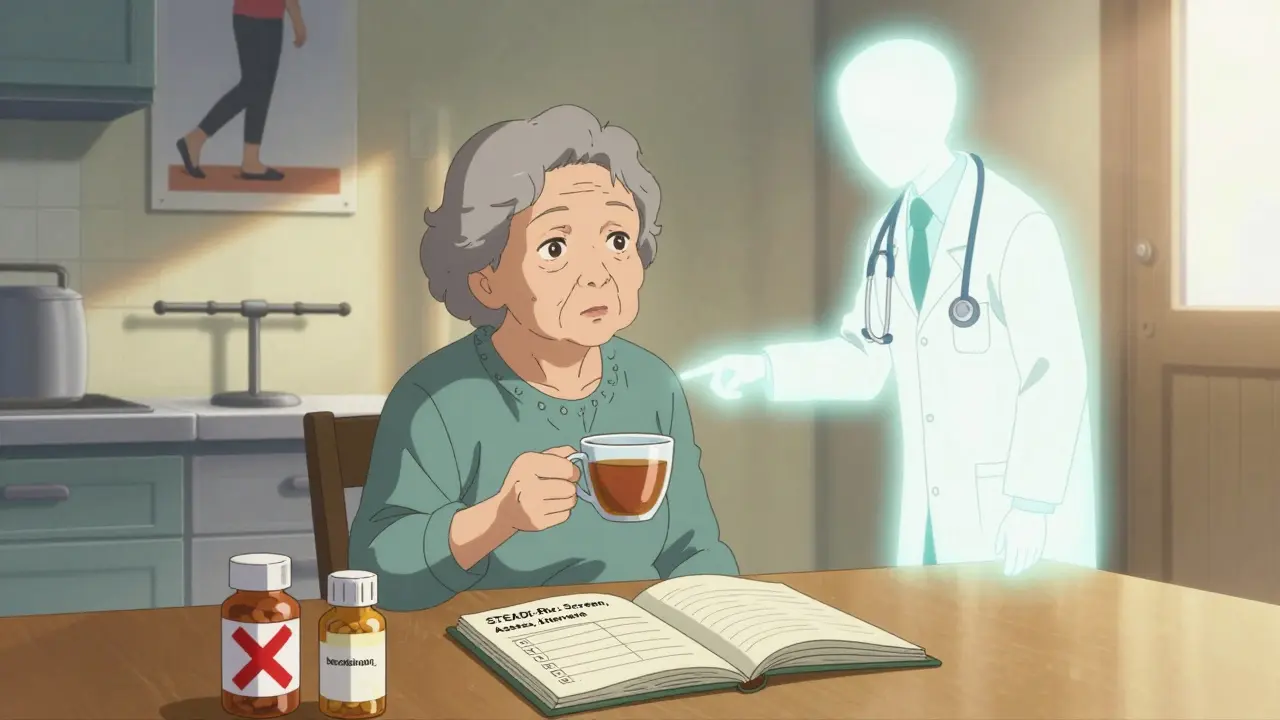
Medication Fall Risk Checker
Check if your medications increase fall risk. Enter medications below to see if they're on the high-risk list for older adults.
Every year, over 36 million older adults in the U.S. fall - and for many, the cause isn’t slippery floors or poor lighting. It’s their medicine.
Drugs meant to help - like sleeping pills, anxiety meds, painkillers, or antidepressants - can quietly turn into fall risks. They make people dizzy, slow their reflexes, blur their vision, or leave them groggy in the morning. For someone over 65, one fall can mean a broken hip, a hospital stay, or even death. The good news? We know exactly how to stop this. And it starts with looking closely at what’s in the medicine cabinet.
Which Medications Are Most Likely to Cause Falls?
Not all sedating drugs are created equal when it comes to fall risk. Some are far more dangerous than others. The CDC and American Geriatrics Society have identified a group called FrIDs - Fall Risk Increasing Drugs. These include:
- Benzodiazepines (like diazepam, lorazepam, alprazolam): Used for anxiety or insomnia, but they linger in the body, especially in older adults. A 2022 study found people on these had a 50% higher chance of falling.
- Opioids (like oxycodone, hydrocodone): Even at low doses, they cause dizziness and confusion. The risk jumps sharply when taken with other sedatives.
- Antidepressants (especially tricyclics like amitriptyline): These aren’t just for mood - they affect balance centers in the brain. Taking two or more antidepressants doubles the fall risk.
- Antipsychotics (like quetiapine, risperidone): Often prescribed off-label for sleep or agitation in dementia, but they severely impair movement control.
- Baclofen: A muscle relaxant with the highest documented fall risk in its class. Many prescribers don’t realize how dangerous it is for older patients.
Polypharmacy - taking three or more medications daily - is the silent killer here. Each additional drug doesn’t just add risk; it multiplies it. A 2021 study in Journal of the American Geriatrics Society showed that people taking five or more medications had a 78% higher chance of falling than those on one or none.
The STEADI-Rx Model: A Proven System for Prevention
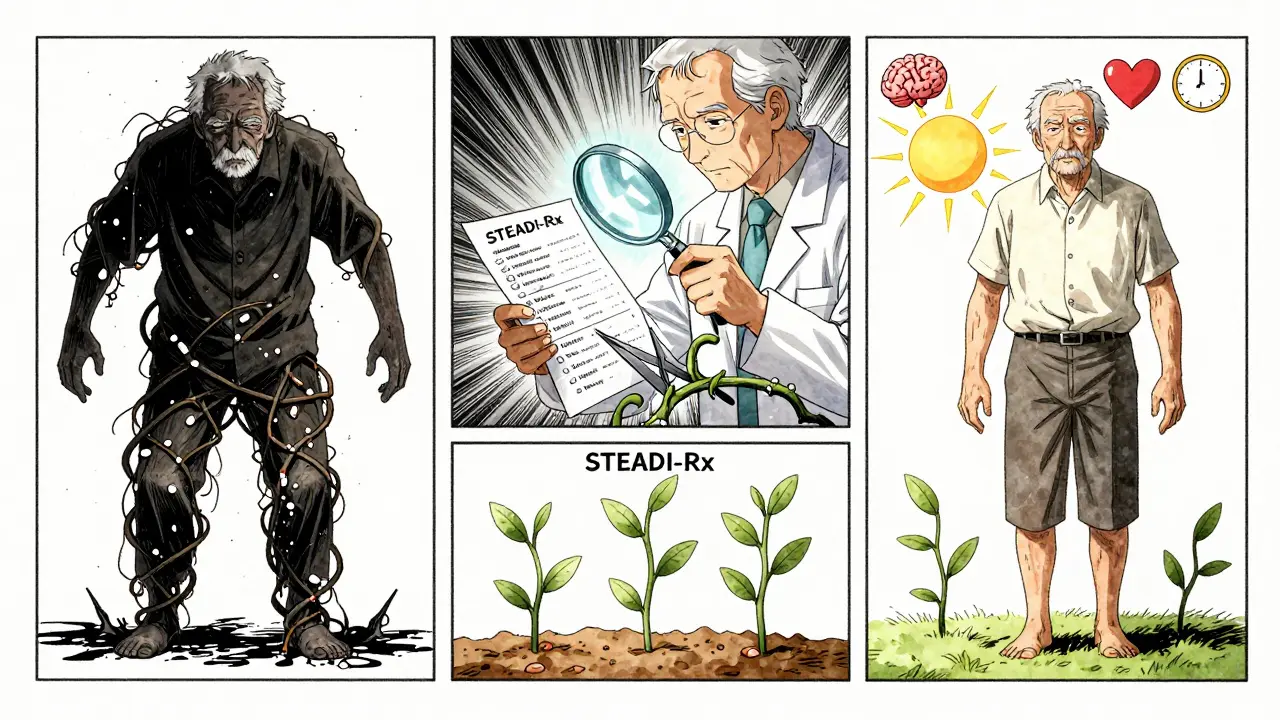
There’s a clear, science-backed way to tackle this - the STEADI-Rx program. Developed by the CDC and the University of North Carolina, it’s not a suggestion. It’s a step-by-step protocol that works in real clinics and pharmacies.
Here’s how it breaks down:
- Screen: Ask every patient over 65: "Have you fallen in the past year?" If yes, or if they feel unsteady, move to the next step.
- Assess: Review every medication - not just the big ones. Look at dose, duration, and combinations. Check for drugs on the Beers Criteria list (a guide to risky meds for older adults).
- Intervene: This is where change happens. Most interventions (75% in studies) involve switching to a safer alternative - not just stopping meds.
For example, instead of prescribing lorazepam for sleep, a pharmacist might recommend cognitive behavioral therapy for insomnia (CBT-I). Instead of oxycodone for chronic back pain, they might suggest physical therapy or naproxen - with careful monitoring.
Pharmacists play the lead role here. They use a Provider Consult Form to send clear, structured feedback to doctors. It includes answers to three key questions: Is this med necessary? Is there a safer option? Can we lower the dose?
One community pharmacy in Minnesota started using STEADI-Rx in 2020. Within 18 months, they reduced benzodiazepine prescriptions in older patients by 41%. Falls in that group dropped by 34%.
Why Medication Review Alone Isn’t Enough
Stopping a risky drug helps - but it’s not the whole solution. The most effective approach combines medication changes with physical activity.
A Cochrane review of 108 studies found that exercise programs reduced falls by 15-29%. The best programs include:
- Balance training (standing on one foot, heel-to-toe walking)
- Strength work (leg presses, chair stands)
- Gait training (learning to walk with confidence and stability)
These aren’t fancy gym routines. They’re 30-minute sessions, once or twice a week, for at least 12 weeks. Done right, they cut falls that lead to fractures by 61%.
And while vitamin D is often recommended, the evidence is mixed. The U.S. Preventive Services Task Force says 800 IU daily may help. But a major 2023 review found no clear benefit. Don’t rely on supplements alone.
Real Stories: What Works in Real Life
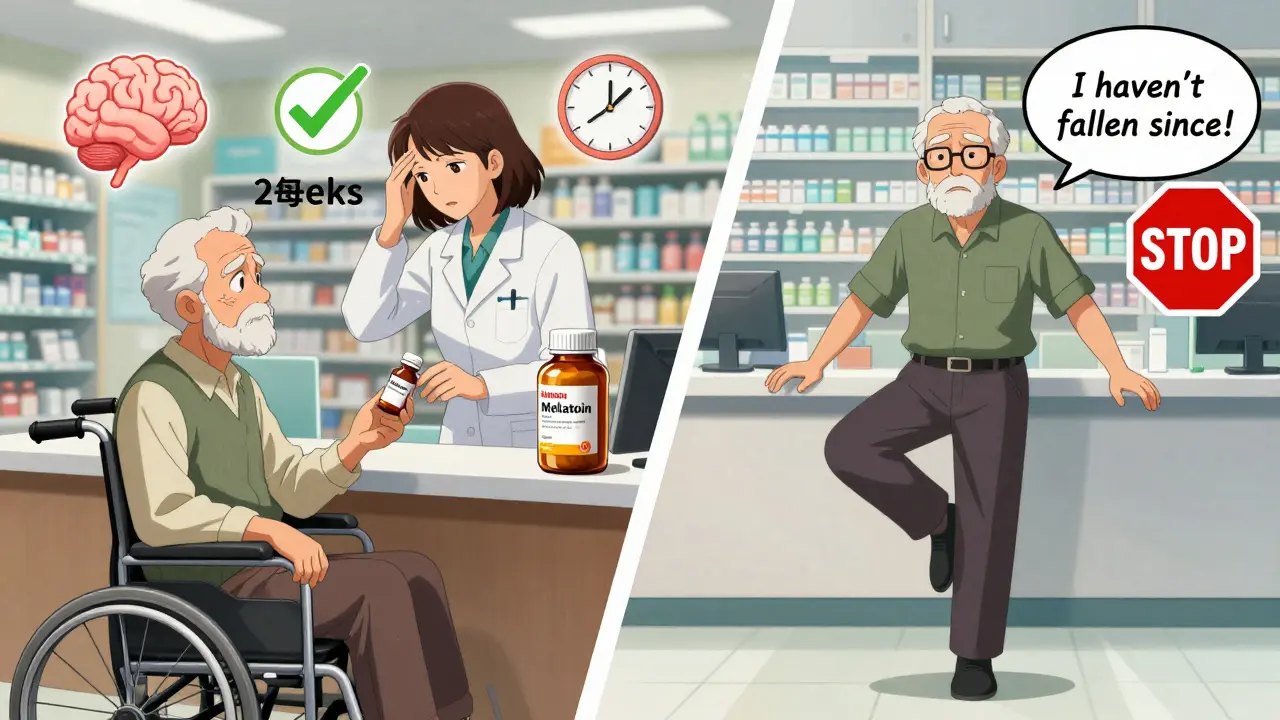
On Reddit’s r/geriatrics forum, a 78-year-old woman named Linda shared her story: "I was on 7 medications. I fell three times in four months. My pharmacist looked at my list and said, ‘You don’t need two sleeping pills.’ She switched me from temazepam to melatonin and cut my hydrocodone in half. I haven’t fallen since. I feel like myself again."
But not everyone has that luck. A 2021 survey by the National Council on Aging found that 63% of older adults were afraid to stop their meds. They worried about anxiety returning, pain flaring up, or insomnia coming back. That fear keeps risky drugs in circulation.
Education changes minds. When patients get clear, simple info - "This pill makes you slow to react. If you’re not sleeping better after 2 weeks, we can try something else" - they’re 3 times more likely to agree to a change.
Barriers and How to Overcome Them
Even with solid evidence, change is slow. Why?
- Doctors are busy: A 15-minute appointment doesn’t leave room for a full med review.
- Pharmacists aren’t always involved: Only 45% of pharmacists report having enough time to do full medication reviews.
- Reimbursement is poor: Medicare pays for medication therapy management, but many providers don’t bill for it.
Solutions exist. Electronic health records can be set to flag high-risk combinations. Pharmacies can use automated alerts when a patient gets a new sedating script. Some clinics now have "medication safety coordinators" - often pharmacists - who meet with patients monthly.
And here’s something powerful: when a doctor and pharmacist communicate directly - not just through charts, but through phone calls or shared notes - deprescribing success rates jump by 60%.
What You Can Do Right Now
If you or someone you care about is over 65 and taking any of these drugs:
- Ask: "Is this still necessary?" Sometimes meds are prescribed for a short problem but kept for years.
- Ask: "Is there a non-sedating alternative?" For anxiety, try therapy. For pain, try movement. For sleep, try routine and light control.
- Ask: "Can we lower the dose?" Often, half the dose works just as well - with half the risk.
- Get a full med review. Go to a community pharmacy that offers medication therapy management (MTM). Ask if they use STEADI-Rx.
- Start simple balance exercises. Stand on one foot while brushing your teeth. Do chair stands three times a day. It takes 10 minutes. It saves lives.
Fall prevention isn’t about banning meds. It’s about using them smarter. The goal isn’t to take fewer drugs - it’s to take the right ones, at the right dose, with the right support.
Can stopping sedating medications really prevent falls?
Yes - and the evidence is strong. A 2021 study found that medication reviews alone could prevent over 42,000 medically treated falls each year in the U.S. When combined with exercise, the reduction jumps even higher. For example, switching from benzodiazepines to non-sedating alternatives led to zero nighttime falls in one patient over six months, according to user reports on Reddit. The key is doing it safely, with professional guidance.
What is the STEADI-Rx program?
STEADI-Rx is a CDC-backed program designed to help pharmacists and doctors work together to reduce medication-related fall risk in older adults. It uses a three-step process: screen for fall risk, assess medications for danger, and intervene by changing, lowering, or replacing risky drugs. It’s been implemented in over 65% of major U.S. health systems and is especially effective in community pharmacies.
Which drugs are the most dangerous for falls?
The highest-risk drugs include benzodiazepines (like Valium or Xanax), opioids (like oxycodone), tricyclic antidepressants (like amitriptyline), antipsychotics (like quetiapine), and baclofen. These drugs slow reaction time, cause dizziness, and impair balance. Baclofen, in particular, has the highest documented fall risk among muscle relaxants. The Beers Criteria, updated in 2023, lists these and other high-risk medications for older adults.
Do vitamin D supplements help prevent falls?
The evidence is unclear. The U.S. Preventive Services Task Force recommends 800 IU daily, but a major 2023 Cochrane review found no significant benefit from vitamin D alone. While it may help in people with true deficiency, it shouldn’t be relied on as a primary fall prevention tool. Exercise and medication review are far more effective.
Why is it hard to stop sedating medications?
Many older adults fear withdrawal symptoms, worsening anxiety, or returning pain. A 2021 survey found 63% of older adults resisted deprescribing because of these concerns. Also, some doctors don’t have time to guide tapering, and patients often don’t realize their meds are causing dizziness. Working with a pharmacist who specializes in geriatric meds can make the process safer and easier.
How can I get a medication review?
Ask your pharmacist if they offer Medication Therapy Management (MTM) services. These are free for Medicare Part D beneficiaries and often covered by private insurance. You can also ask your doctor for a referral to a geriatric pharmacist. The STEADI-Rx toolkit, available on the CDC website, includes a checklist to help you prepare for your review: bring a list of all meds (including supplements), note when you feel dizzy or unsteady, and ask if any drugs can be reduced or replaced.
Releted Post

Caspian Fothergill
Hello, my name is Caspian Fothergill. I am a pharmaceutical expert with years of experience in the industry. My passion for understanding the intricacies of medication and their effects on various diseases has led me to write extensively on the subject. I strive to help people better understand their medications and how they work to improve overall health. Sharing my knowledge and expertise through writing allows me to make a positive impact on the lives of others.
Love this breakdown! 🙌 I work in geriatric pharmacy and see this every day. One lady I helped switched from lorazepam to melatonin + CBT-I - she went from 3 falls in 6 months to zero. Her grandson said she’s dancing again at family dinners. Small changes, huge impact. 💃
Oh please. This is just Big Pharma’s latest scare tactic to get us all off meds so they can sell you $200/month ‘wellness’ programs. Nobody’s falling because of their sleeping pills - they’re falling because the sidewalks are cracked and the lights are out. Fix the environment, not the medicine. 🤦♀️
I’ve seen this too. My dad was on 7 meds - 4 of them sedating. He didn’t even realize he was shuffling like he was drunk. We got him off the benzos and started simple chair stands. Six months later, he’s walking the dog alone again. No drama. No drama at all. Just quiet, stubborn progress.
They’re putting tracking chips in your meds. They want you to fall so they can bill Medicare for the ER visit. Then they sell your data to insurance companies. You think this is about safety? It’s about profit. I read it on a blog. It’s real.
It’s strange how we treat the body like a machine that needs fixing - but we forget it’s also a story. The fear of stopping a pill isn’t just about symptoms. It’s about losing the version of yourself that needed it. Maybe the fall isn’t the problem. Maybe it’s the silence that comes after.
So we’re just supposed to ‘exercise’ our way out of a pharmacological cascade created by decades of overprescribing? Cute. The real question isn’t how to prevent falls - it’s why we let doctors write scripts like they’re ordering coffee. 🤔
STEADI-Rx works. I’ve used it. The key is the pharmacist’s consult form - it forces the doctor to pause. Most don’t realize how many meds are just ‘carry-overs’ from 10 years ago. One patient had 5 sedatives. Cut it to one. No fall in 18 months. Simple. Systemic.
The data presented is statistically significant but lacks longitudinal control. The reduction in falls may correlate with seasonal variation or concurrent public health initiatives. Furthermore, the reliance on self-reported outcomes from Reddit introduces significant selection bias. A proper RCT with blinded assessment is required before policy implementation.
My grandma took one pill and died. That’s it. No more meds. Done. 💀