
If you’re taking warfarin, a blood thinner prescribed to prevent clots, you’ve probably been told to watch your diet. But one food that often slips under the radar is cranberry. Whether it’s juice, pills, or even cranberry-flavored snacks, many people think it’s just a healthy choice-especially for urinary health. But for those on warfarin, cranberry products can be dangerous. And it’s not a myth. Real people have ended up in the hospital because of it.
Why Cranberry and Warfarin Don’t Mix
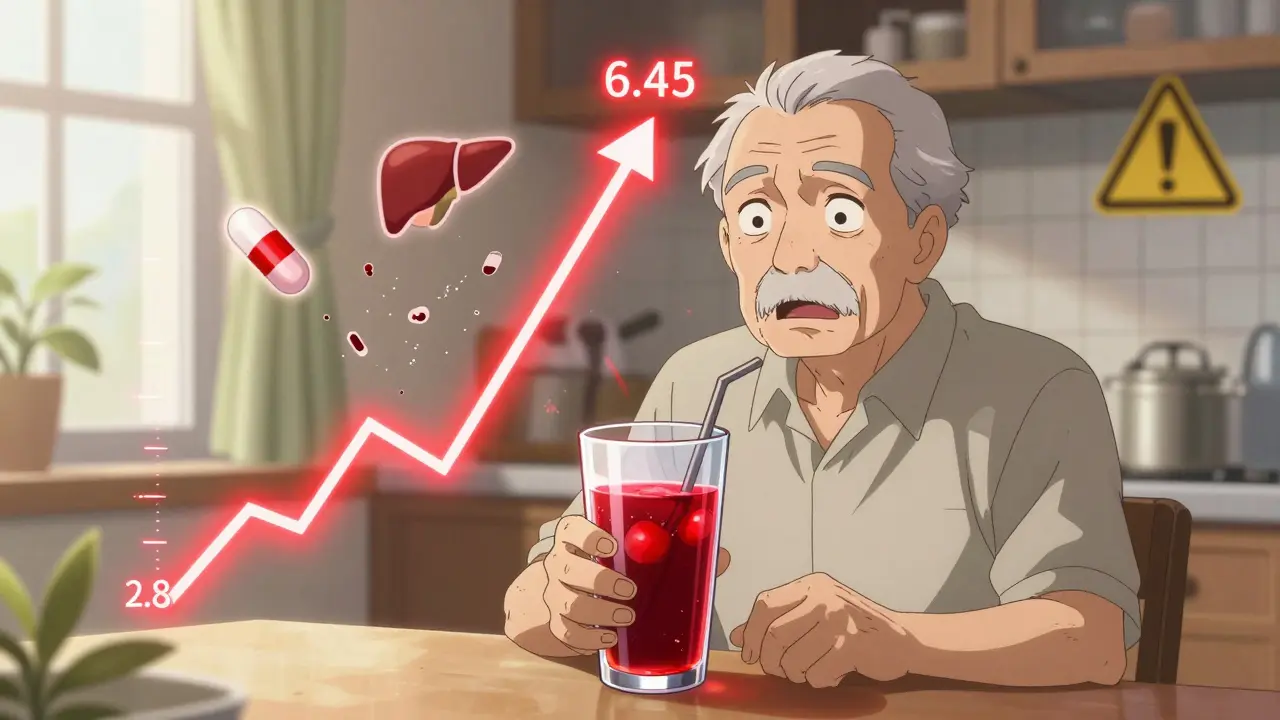
Warfarin works by slowing down your blood’s ability to clot. It’s precise-too little, and you risk a clot; too much, and you risk bleeding. Doctors monitor this with a blood test called INR. A normal range is 2.0 to 3.0. Go above 4.0, and your risk of internal bleeding goes up sharply. Now, add cranberry into the mix, and that number can spike overnight. The problem isn’t the sugar or the acidity. It’s chemicals in cranberries-mainly flavonoids like quercetin-that interfere with how your liver breaks down warfarin. Specifically, they block an enzyme called CYP2C9. This enzyme normally clears the active part of warfarin from your body. When it’s slowed down, warfarin builds up. That’s when INR climbs. One case report showed a 78-year-old man’s INR jumping from a stable 2.8 to 6.45 after drinking half a gallon of cranberry-apple juice every week. He didn’t change his warfarin dose. He just kept drinking the juice. He nearly bled out.What Counts as a Cranberry Product?
It’s not just the juice. Anything made from cranberries can be risky:- Cranberry juice (even diluted or mixed with apple juice)
- Cranberry capsules or tablets (common for UTI prevention)
- Cranberry extract supplements
- Cranberry-flavored sodas, teas, or snacks
- Cranberry sauce or dried cranberries (less risk, but still possible)
How Fast Does This Happen?
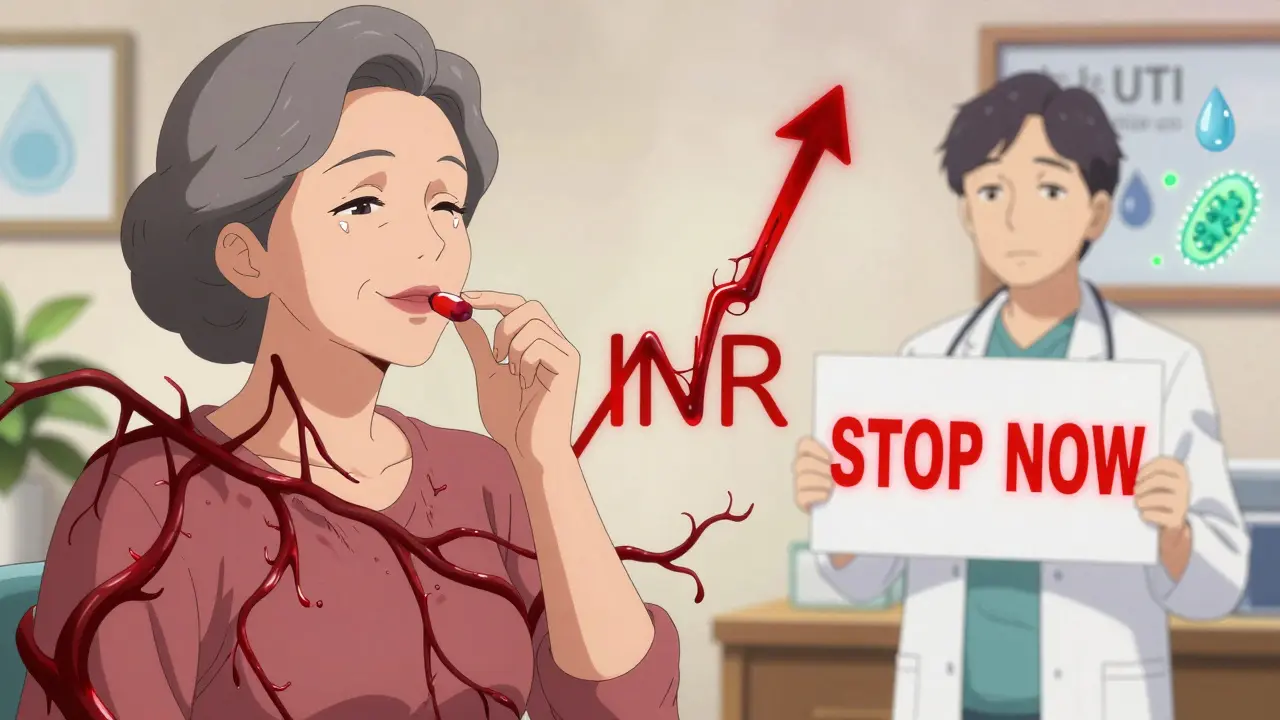
You might think, “I only had a glass once-what’s the harm?” But this isn’t about frequency. It’s about consistency and individual sensitivity. INR changes usually show up within 3 to 7 days after starting cranberry. In some cases, it took as little as 48 hours. And it doesn’t matter if you’ve been drinking cranberry juice for years. One person in a Reddit thread said they’d taken cranberry pills for five years with no issues-until one day, their INR jumped from 2.4 to 4.1 after switching brands. Their hematologist told them to stop immediately. The timing is tricky because the effect isn’t always immediate. Some people don’t see a change until after several weeks. Others react fast. That’s why even occasional use is risky. There’s no safe amount. The American College of Chest Physicians says: if you’re on warfarin, avoid cranberry products unless you’re getting INR checks every 3 to 5 days after starting them. And even then, most doctors recommend just skipping them entirely.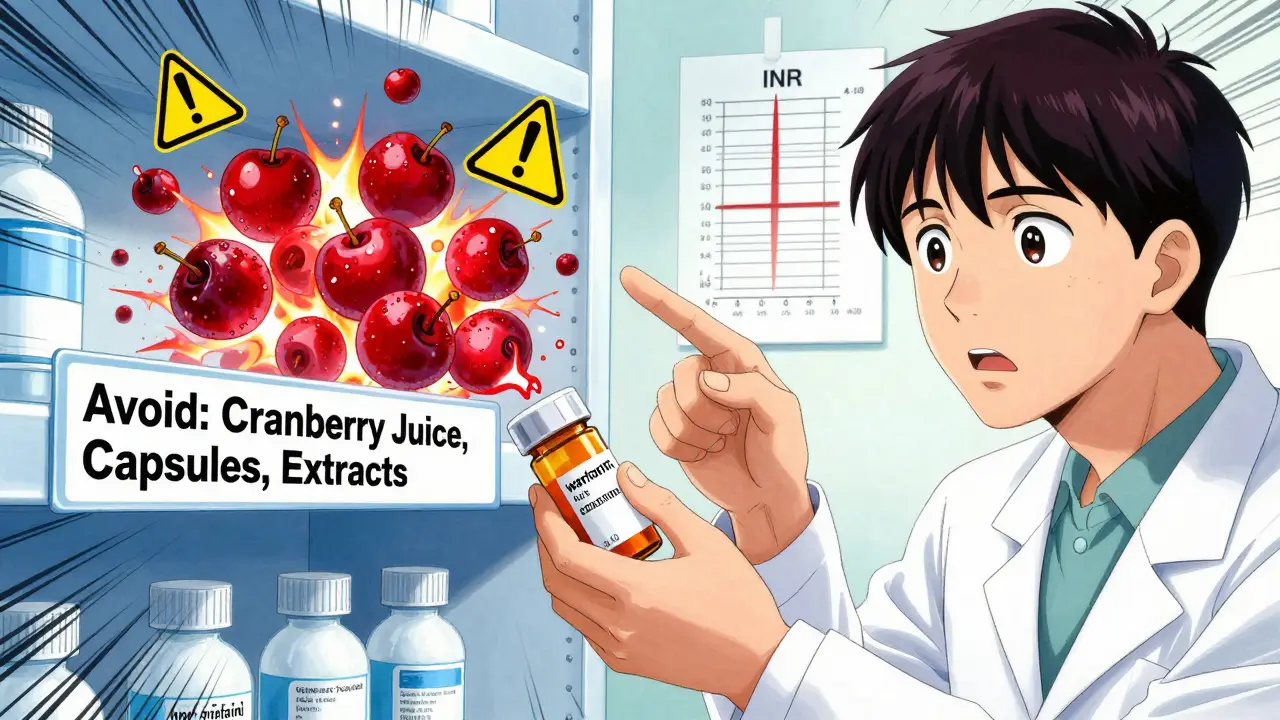
What Do Experts Really Say?
There’s some debate in the research. A few small studies didn’t find a link. But those studies often used tiny amounts of cranberry or didn’t track people long enough. The real-world evidence is overwhelming. The FDA, Health Canada, the European Medicines Agency, and New Zealand’s Medsafe all warn about this interaction. Medsafe collected 33 reports of warfarin interacting with food or supplements in just nine months in 2022-and cranberry was a top suspect. Dr. Paul Offit, a well-known vaccine expert and clinical pharmacologist, calls it one of the most dangerous food-drug interactions he’s seen. Dr. Sarah Jones, a cardiologist at Massachusetts General Hospital, tells her patients: “Even occasional cranberry juice can cause unpredictable spikes. If you’re on warfarin, don’t take any chance.” The inconsistency in research? That’s because cranberry products vary wildly. One bottle of juice might have 25% cranberry content; another might have 10%. Supplements aren’t regulated the same way as drugs, so the active compounds can differ from batch to batch. Your genetics matter too. People with certain CYP2C9 gene variants (called *2 or *3) break down warfarin slower to begin with. For them, cranberry can cause INR spikes two to three times higher than in others.What Should You Do?
If you’re on warfarin:- Avoid all cranberry products. This includes juice, pills, and flavored drinks.
- If you’ve been using cranberry for UTI prevention, talk to your doctor about safer alternatives. Methenamine hippurate or low-dose antibiotics are proven options.
- If you accidentally consume cranberry, call your doctor right away. Don’t wait for your next INR check.
- Don’t assume “natural” means safe. Just because it’s a fruit doesn’t mean it won’t interfere with your medication.
What About Cranberry for UTIs?
Many people, especially older women, take cranberry to prevent urinary tract infections. It’s a common belief that it “flushes out” bacteria. But the science on that is shaky. The active compounds in cranberries might help prevent bacteria from sticking to the bladder wall-but only if you’re drinking concentrated, unsweetened juice daily. Most commercial juices don’t have enough of the active ingredient. And if you’re on warfarin? The risk isn’t worth it. There are better, safer ways to prevent UTIs:- Drink plenty of water
- Urinate after sex
- Use probiotics (like Lactobacillus strains)
- Ask your doctor about low-dose antibiotics if you get frequent infections
What If You’ve Already Been Drinking Cranberry Juice?
Don’t panic. But don’t ignore it either. If you’ve been drinking cranberry juice regularly while on warfarin:- Stop immediately.
- Call your doctor or anticoagulation clinic.
- Ask for an INR test within the next 2-3 days.
- Don’t adjust your warfarin dose yourself.
The Bigger Picture
Warfarin use is declining as newer blood thinners (DOACs) become more common. But as of 2023, about 2.5 million Americans still take it. That’s a lot of people who need to know this. And while the cranberry-warfarin interaction isn’t new, it’s still happening. The FDA received 17 reports of this interaction between 2020 and 2022. That’s not a fluke. That’s a pattern. The bottom line? Cranberry isn’t harmless. It’s not just a “natural” fruit. When you’re on warfarin, it’s a medication interaction with real, documented, life-threatening consequences. You don’t need to be a scientist to understand this: if your doctor tells you to avoid something, listen. Even if it’s something you’ve always believed was good for you.Can I drink cranberry juice if I take warfarin occasionally?
No. Even occasional use can cause unpredictable spikes in INR. There’s no safe amount. The interaction depends on your body, the product’s concentration, and your genetics. The safest choice is to avoid all cranberry products completely.
Do cranberry pills have the same risk as cranberry juice?
Yes. Cranberry capsules and extracts often contain concentrated levels of the active compounds that interfere with warfarin. In fact, they may be riskier than juice because the dose isn’t regulated. A single pill could have more of the inhibiting flavonoids than a full glass of juice.
How long does it take for INR to return to normal after stopping cranberry?
Typically, INR levels begin to drop within 2-3 days and return to baseline within 5-7 days after stopping cranberry. But this varies by person. If your INR is above 4.0, contact your doctor immediately-you may need medical intervention.
Are there any safe cranberry alternatives for UTI prevention?
Yes. Drink plenty of water, urinate after sex, and consider probiotics like Lactobacillus. For recurrent UTIs, your doctor may prescribe low-dose antibiotics or methenamine hippurate-both are proven and don’t interact with warfarin.
Should I stop cranberry if I’m on a different blood thinner like Eliquis or Xarelto?
While the strongest evidence is for warfarin, some case reports suggest cranberry may increase bleeding risk with newer anticoagulants too. Since the risk isn’t fully ruled out, it’s best to avoid cranberry products regardless of which blood thinner you’re taking. Always check with your doctor.
Releted Post

Caspian Fothergill
Hello, my name is Caspian Fothergill. I am a pharmaceutical expert with years of experience in the industry. My passion for understanding the intricacies of medication and their effects on various diseases has led me to write extensively on the subject. I strive to help people better understand their medications and how they work to improve overall health. Sharing my knowledge and expertise through writing allows me to make a positive impact on the lives of others.
I used to drink cranberry juice every morning like it was water-until my INR went off the charts and I ended up in the ER with a hematoma on my thigh. No joke. My doctor looked at me like I’d just admitted to drinking bleach. Now I stick to water. And yeah, I feel guilty every time I see someone else chugging that stuff. Don’t be that person.
This is why people die from natural remedies. You think because it’s fruit, it’s harmless. Wrong. Medicine is science. Not folklore. Stop mixing food with anticoagulants like it’s a smoothie recipe.
From a clinical pharmacology standpoint, the CYP2C9 inhibition by cranberry flavonoids-particularly quercetin and myricetin-is well-documented in vitro and in case series. The variability in INR elevation correlates strongly with CYP2C9*2 and *3 polymorphisms, which affect enzyme activity by up to 70%. The FDA’s 2005 warning was based on 12 confirmed cases of supratherapeutic INR with cranberry juice ingestion, and subsequent meta-analyses (e.g., J Clin Pharmacol 2018) confirm a 2.3-fold increased risk of INR >4.0. Supplements are worse-unregulated, variable potency, often contain concentrated extracts. Avoid entirely. No gray area.
EVERYONE knows Big Pharma hates natural stuff, right? They don’t want you to know cranberry is a miracle cure for UTIs-and they’re scared you’ll ditch their expensive blood thinners for a fruit. They made up this whole ‘interaction’ thing to sell more warfarin and keep you dependent. I’ve been drinking cranberry juice for 15 years with warfarin and my INR’s always been perfect. They’re lying to you. Ask your pharmacist-they’re paid by the drug companies. I’ve got receipts. And photos. And a whole folder. You’re being gaslit.
I just... I just had a glass. One. Glass. Last week. And now I’m sitting here staring at my INR results like they’re a death sentence. I didn’t even think it mattered. I thought it was just juice. I didn’t know it was a chemical grenade. I’m terrified. I stopped it. But what if it’s already too late? I don’t even know what to do now.
It’s funny how we treat food like it’s innocent and medicine like it’s dangerous. But medicine is just chemistry. And food is chemistry too. Cranberry isn’t evil-it’s just powerful. And when you’re on warfarin, your body is dancing on a razor’s edge. Adding another variable-even something ‘natural’-is like tossing a pebble into a wind tunnel. You don’t know where it’ll land. Maybe it’s safer to just not toss the pebble at all.
my grandma swore by cranberry juice for UTIs-she drank it like tea. she was on warfarin for 12 years. never had an issue. but then she switched to a new brand-‘organic, no sugar added’-and boom, INR at 5.1. she didn’t even know why. turns out that brand had 3x the cranberry extract. so yeah, it’s not about the juice-it’s about the concentration. and the brand. and your genes. and your liver. and your mood. and the moon. kinda. anyway. just skip it. your doctor’s not being dramatic. they’re just trying to keep you alive. and also. try probiotics. they’re way less scary than cranberry juice.
Thank you for sharing this. I’ve been on warfarin for 8 years and never realized how sneaky cranberry products could be. I’ve been using cranberry capsules for UTIs for years. I’m stopping today. I’ll talk to my doctor about alternatives. You’re right-natural doesn’t mean safe. I’m grateful for this reminder.
I had a patient last month who came in with a GI bleed. INR was 9.2. He swore he hadn’t changed anything. Turned out he started drinking cranberry tea because his wife said it was ‘good for the kidneys.’ He’d been having one cup a day for three weeks. No juice. No pills. Just tea. That’s how subtle this is. He’s fine now. But he’s not drinking tea anymore. Ever. I wish more people knew this. Don’t assume it’s safe because it’s herbal.
OMG I just realized I’ve been eating dried cranberries in my oatmeal every day 😳 I thought they were just sweet! I’m so dumb. Stopped immediately. Going to call my doctor tomorrow. Thank you for this post-seriously. You saved me from a hospital trip 💪❤️