
Sleep Disorder Treatment: Effective Solutions for Insomnia, Apnea, and More
When sleep disorder treatment, the targeted approach to fixing problems that prevent restful, restorative sleep. Also known as insomnia therapy, it’s not just about popping a pill—it’s about fixing your body’s rhythm, environment, and habits. Millions of people think they just need a stronger sleeping pill, but the real fix often lies deeper. Sleep disorders like insomnia, the persistent trouble falling or staying asleep, aren’t always caused by stress. Sometimes, they’re tied to something else—like sleep apnea, a condition where breathing stops repeatedly during sleep, often linked to excess weight. And if you’re using statins, antidepressants, or even caffeine late in the day, those could be quietly wrecking your sleep without you realizing it.
There’s no one-size-fits-all fix. For some, melatonin, a natural hormone that signals your brain it’s time to sleep taken in low doses at the right time can reset a messed-up circadian rhythm, your body’s internal 24-hour clock that controls sleep-wake cycles. But high doses? They backfire. For others, losing just 5–10% of body weight cuts sleep apnea severity so much that CPAP pressure drops—or disappears. And if you’re on opioids or SSRIs, you might be dealing with serotonin issues that disrupt sleep without you connecting the dots. The best sleep disorder treatment doesn’t start with a prescription. It starts with tracking: What time do you really go to bed? Are you snoring? Do you wake up gasping? Did your mood change after switching meds? These aren’t small details—they’re clues.
You’ll find real stories here—not theory. Posts that break down how melatonin actually works (and why most people take too much), how weight loss directly impacts CPAP needs, why statins might be giving you vivid dreams, and how to talk to your doctor about sleep issues without sounding like you’re just asking for pills. No fluff. No hype. Just what’s been proven to help real people get back to sleep—without relying on guesswork or outdated advice.
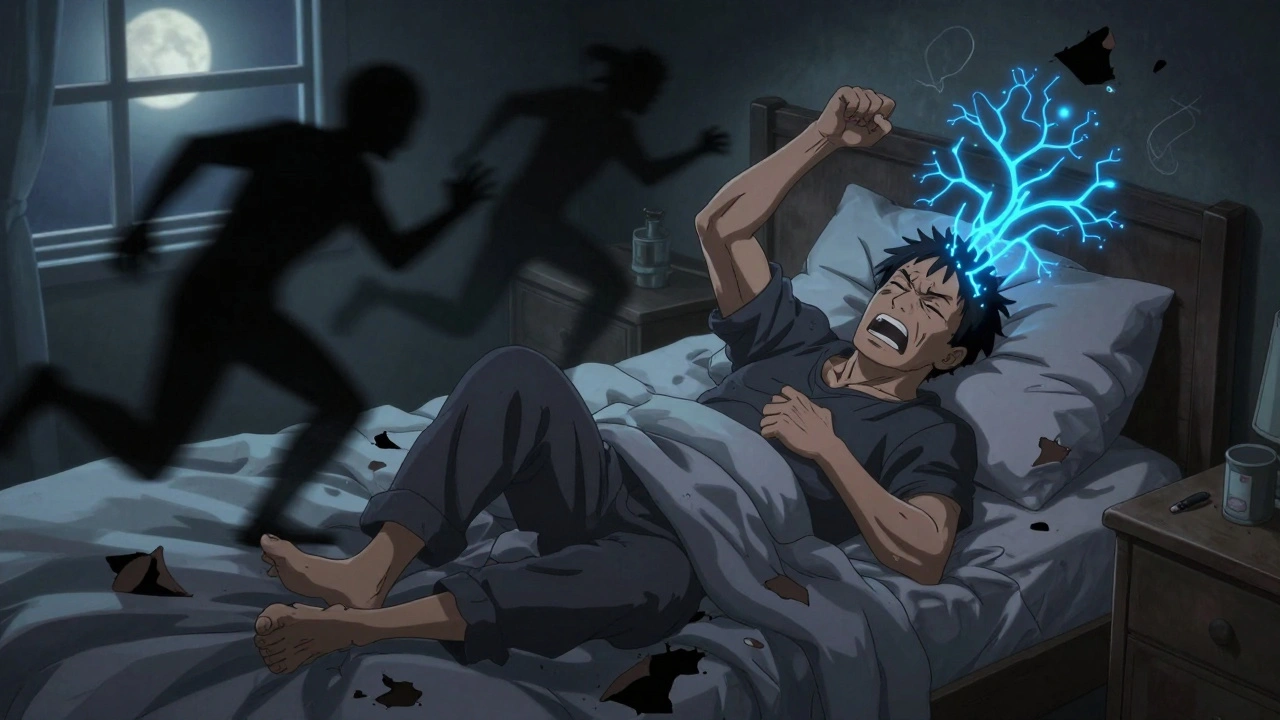
REM sleep behavior disorder involves acting out dreams during sleep and is often a warning sign of Parkinson’s or dementia. Learn about effective medications like melatonin and clonazepam, safety steps, and why neurological monitoring is critical.