
Red Blood Cell Destruction: Causes, Risks, and What You Need to Know
When your body breaks down red blood cells, the oxygen-carrying units in your blood that typically live for about 120 days. Also known as hemolysis, it’s a normal process—but when it happens too fast, it becomes dangerous. Your bone marrow usually keeps up by making new ones, but if destruction outpaces production, you’re at risk for anemia, a condition where your blood can’t carry enough oxygen to keep you energized. This isn’t just about feeling tired. It can trigger heart strain, jaundice, dark urine, and even organ damage if ignored.
What makes red blood cell destruction spike? Some causes are genetic, like G6PD deficiency, a common enzyme disorder that makes red blood cells fragile when exposed to certain foods, infections, or drugs. Others come from outside your body. Certain antibiotics, antimalarials, and even some painkillers can trigger drug-induced hemolysis, a reaction where your immune system attacks your own red cells after taking a medication. It’s not rare—especially in people with hidden genetic risks. Theophylline toxicity, for example, doesn’t just affect the heart; it can stress your blood cells too. And if you’re on multiple meds, interactions can quietly push your red cells over the edge.
Here’s the thing: you might not feel it until it’s advanced. No one tells you that unexplained fatigue or yellowish eyes could be your body screaming that your red blood cells are vanishing faster than they’re replaced. That’s why checking for drug interactions isn’t just smart—it’s lifesaving. A simple blood test can spot early signs: low hemoglobin, high bilirubin, or a spike in reticulocytes. But most people never get tested unless they’re already in the ER.
Red blood cell destruction doesn’t always come with a diagnosis. Sometimes it’s hidden behind a cold, a new pill, or even a change in diet. That’s why understanding what triggers it matters more than ever. Whether it’s a genetic quirk, a medication mix-up, or an autoimmune flare-up, knowing the signs helps you act before it turns serious. Below, you’ll find real guides on drugs that can trigger this, how to spot the warning signs, and what to do if your body starts breaking down its own blood cells.
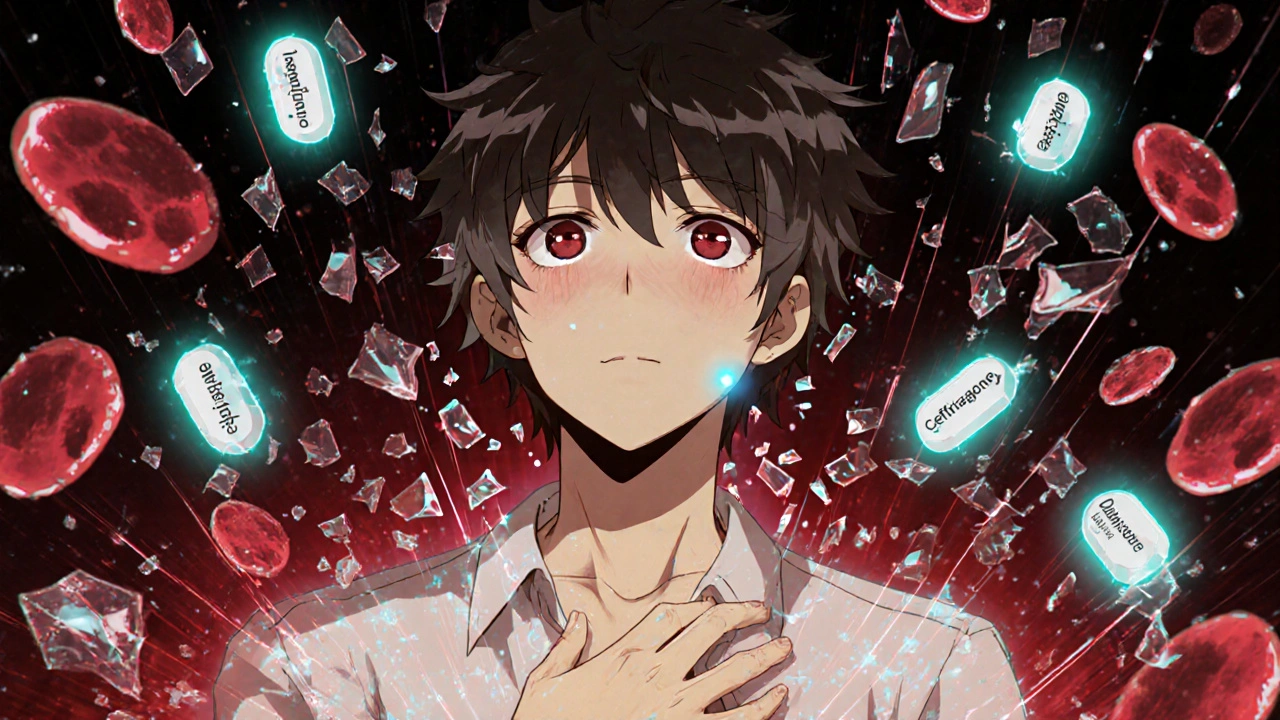
Drug-induced hemolytic anemia is a rare but dangerous condition where medications trigger the immune system to destroy red blood cells. Recognizing symptoms like jaundice, fatigue, and dark urine-and knowing which drugs are most likely to cause it-can save lives.