
Medication Review: What It Is and Why It Saves Lives
When you're taking multiple drugs, a medication review, a structured evaluation of all your current drugs to catch risks and improve effectiveness. Also known as drug reconciliation, it's not just for older adults—it's for anyone on more than one prescription, supplement, or over-the-counter pill. Think of it like a safety net. Without it, you could be mixing drugs that cancel each other out, or worse, trigger something deadly like serotonin syndrome or liver damage. It’s not about taking fewer pills—it’s about taking the right ones, the right way.
Medication reviews connect directly to drug interactions, when two or more substances affect each other’s action in your body, which show up in posts about tramadol and SSRIs, caffeine and Adderall, or even acetaminophen altering brain chemistry. They also tie into therapeutic drug monitoring, blood tests that track how much of a drug is actually in your system, like with theophylline, where a tiny change can mean the difference between healing and hospitalization. And they’re why patient compliance, how well someone sticks to their prescribed regimen matters—because even the best drug fails if you forget it, skip doses, or stop because of side effects like hair loss or vivid dreams.
These aren’t abstract ideas. They’re real risks people face every day. A senior on blood thinners might fall and bleed out—not because the drug is bad, but because no one checked if it was still needed. Someone on statins might blame insomnia on stress, not realizing their cholesterol med is the culprit. A person with diabetes might keep taking Precose because it’s cheap, unaware that metformin or GLP-1 agonists work better and safer. A medication review catches these gaps. It asks: Are you still taking this? Why? Is it helping? Is it hurting? What’s missing?
Below, you’ll find real-world guides that show exactly how medication reviews work in practice—from spotting dangerous combos to adjusting doses for kidney function, from improving adherence with once-daily eye drops to recognizing when a drug is causing your hair to fall out. This isn’t theory. It’s what happens when someone takes the time to look closely at your pills—and actually listens to what your body is telling you.
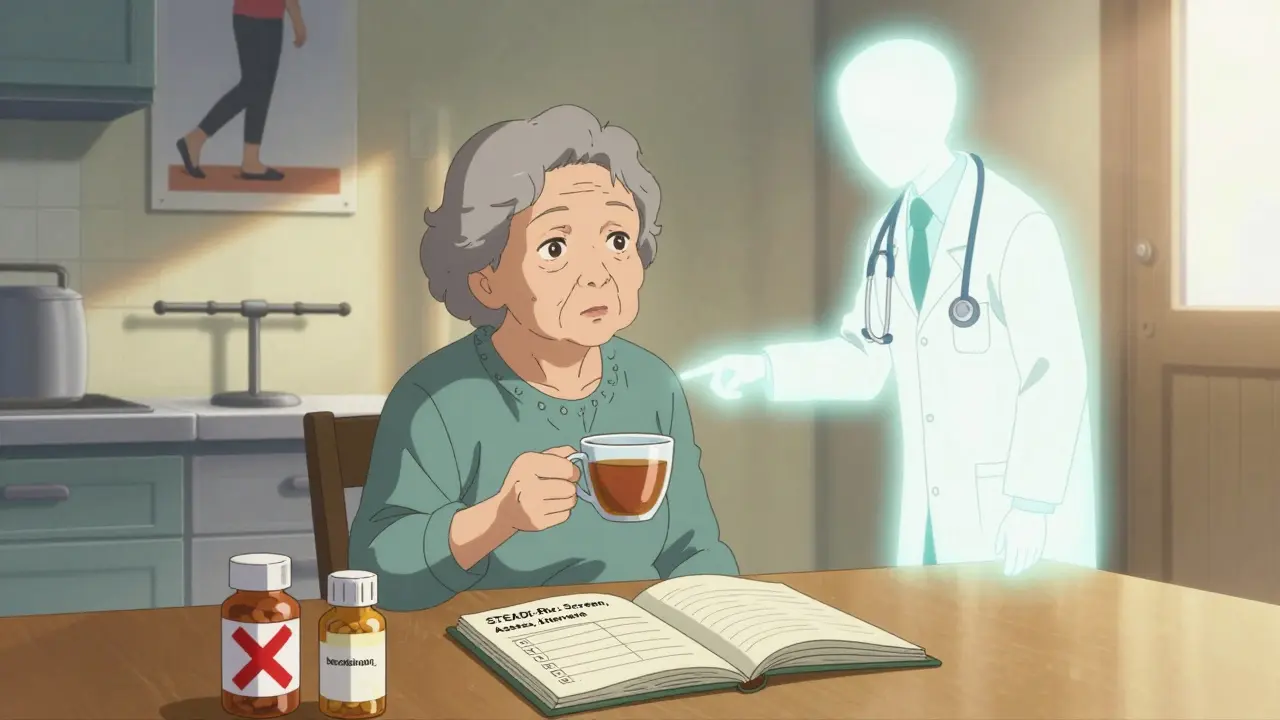
Sedating medications are a leading cause of falls in older adults. Learn proven strategies - from medication reviews to exercise - that can cut fall risk by over 30% and save lives.
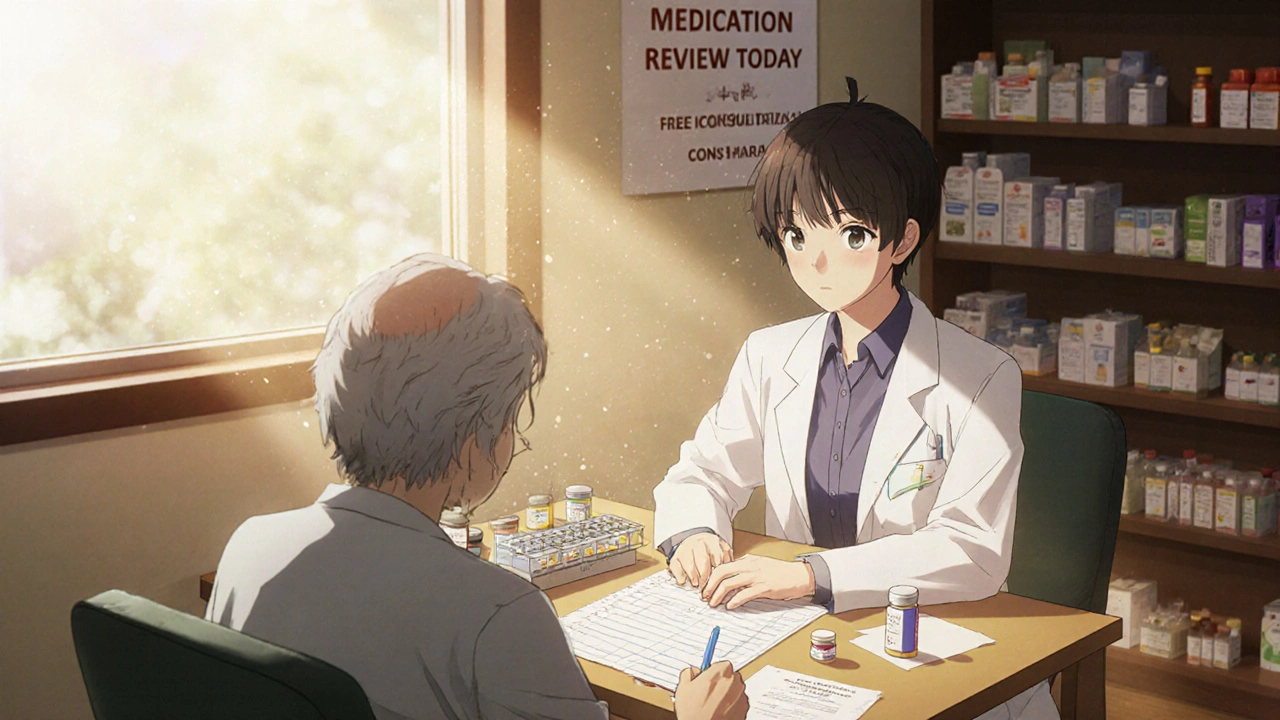
Learn how to use your pharmacy's free consultation service to prevent dangerous drug interactions, save money, and improve medication safety - with real examples and step-by-step guidance.