
Medication Renewal: How to Stay on Track with Your Prescriptions Safely
When you need a medication renewal, the process of getting a new supply of a prescribed drug after the current supply runs out. Also known as prescription refills, it’s not just a routine trip to the pharmacy—it’s a critical checkpoint for your health. Many people assume that if a drug worked before, it’ll keep working forever. But your body changes. New conditions appear. Other meds get added. A refill that seems harmless could quietly set off a dangerous drug interaction, a harmful reaction when two or more medications react with each other. That’s why renewal isn’t about convenience—it’s about control.
Think of your medication list like a living document. Every time you renew, you’re not just asking for more pills—you’re asking your doctor or pharmacist to review whether those pills still make sense. For example, someone on pharmacist consultation, a free service where a licensed pharmacist reviews your full medication list for safety and effectiveness might discover that a blood pressure med they’ve been refilling for years is now causing dizziness because they started taking a new supplement. Or that their diabetes drug is less effective now that their weight has dropped. These aren’t edge cases. They’re everyday risks. And most people don’t catch them until something goes wrong.
It’s not just about what you’re taking—it’s about how you’re taking it. Some drugs, like medication safety, the practice of preventing harm from drugs through proper use, monitoring, and communication, need strict timing or blood tests to stay in the safe zone. Theophylline, for instance, has a razor-thin line between helping and harming. Even a small change in dose or diet can push you into danger. That’s why renewal should never be automatic. It should be a conversation.
You don’t need to wait until you’re out of pills to act. If you’ve noticed new side effects—headaches, fatigue, weird dreams, or even hiccups that won’t quit—it’s not just bad luck. It could be your meds. A symptom diary, like the ones recommended for tracking drug reactions, turns guesswork into facts. And when you walk into your pharmacy for a renewal, bring that diary. Ask the pharmacist to scan your whole list. Most pharmacies offer this for free, and they’ve seen more combinations than you can imagine.
Renewal is also where cost and quality meet. Generic drugs make up most of what’s refilled today. But not all generics are created equal. Some people swear brand names work better—even when the chemistry is identical. That’s the placebo effect in action. Others worry about Indian-made generics, not knowing they supply over 20% of the world’s meds. The truth? Quality isn’t about where it’s made—it’s about whether it’s right for you. And that’s something only a review can confirm.
When you renew, you’re not just getting a refill—you’re getting a chance to fix something that’s broken. Maybe your sleep meds are making you restless. Maybe your painkiller isn’t cutting it anymore. Maybe your antidepressant is causing hair loss. These aren’t normal. They’re signals. And the only way to respond is to speak up before the next bottle runs out.
Below, you’ll find real stories and proven tips on how to handle medication renewal the smart way—whether you’re managing chronic pain, mental health, heart conditions, or just trying to avoid dangerous mix-ups. No fluff. No jargon. Just what works.
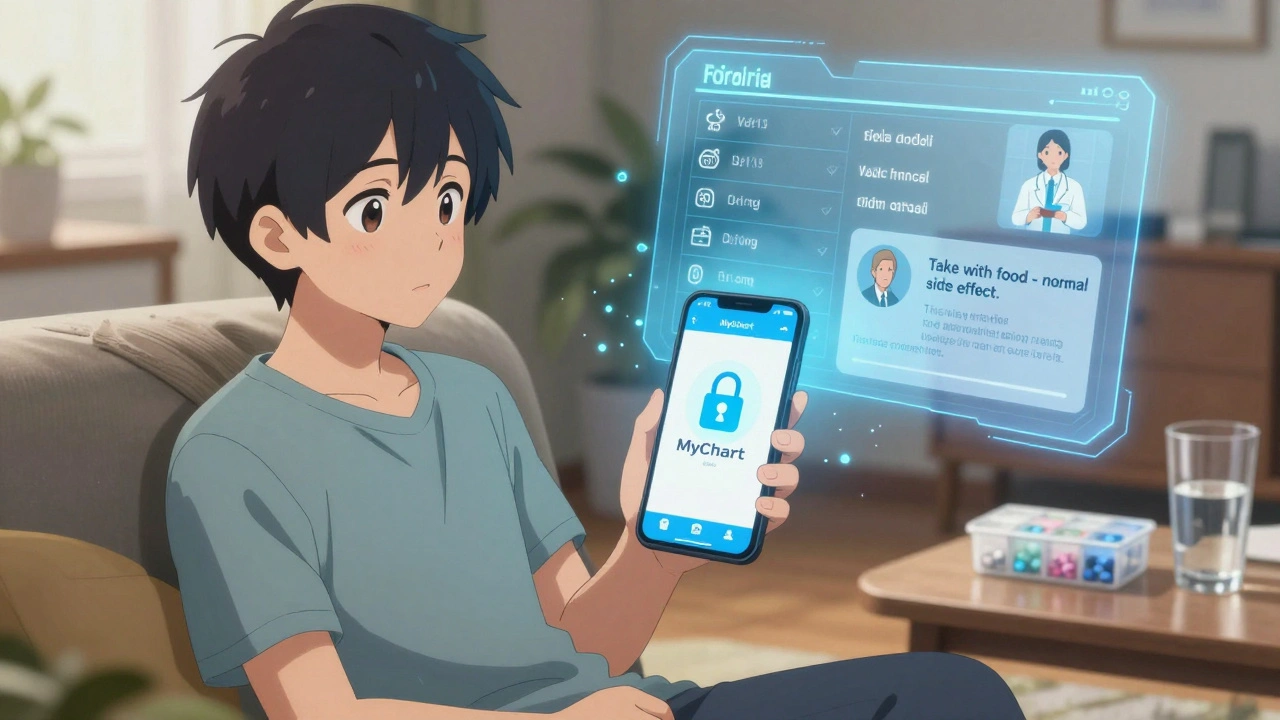
Learn how to use HIPAA-compliant secure messaging to ask medication questions safely and effectively. Get step-by-step guidance on using MyChart, avoiding common mistakes, and getting faster responses from your care team.