
Heart-Healthy Oils: Best Choices for Lower Cholesterol and Stronger Arteries
When you think about heart-healthy oils, fats that support cardiovascular function by lowering LDL cholesterol and reducing inflammation. Also known as cardiovascular-friendly fats, these oils aren’t just about replacing butter—they’re about actively improving how your blood vessels work. The right oil can lower your risk of heart attack, reduce arterial plaque, and even help control blood pressure. But not every oil labeled "natural" or "cold-pressed" actually delivers these benefits. Some even do more harm than good.
Take olive oil, a monounsaturated fat proven to reduce bad cholesterol without lowering good cholesterol. It’s the cornerstone of the Mediterranean diet, backed by decades of research showing people who use it regularly have fewer heart events. Then there’s avocado oil, a high-heat stable oil rich in oleic acid and antioxidants like lutein. It’s perfect for frying or roasting, and unlike many vegetable oils, it doesn’t break down into harmful compounds at high temperatures. Don’t overlook omega-3 fats, found in flaxseed and walnut oils, which directly fight inflammation linked to heart disease. These are the oils your body uses to build cell membranes that keep arteries flexible and clean.
But here’s the catch: coconut oil is often pushed as heart-healthy, even though it’s 90% saturated fat—more than butter. Studies show it raises LDL cholesterol, and no major health organization recommends it for heart protection. Same goes for palm oil and partially hydrogenated oils, which are full of trans fats that silently damage your arteries. The goal isn’t to avoid fat—it’s to choose the right kind. Your kitchen should have oils that actively protect, not just replace one bad option with another.
You don’t need fancy gadgets or expensive brands. Just look for cold-pressed, unrefined options in dark glass bottles, store them away from heat and light, and use them within a few months. Swap out margarine for avocado oil in your stir-fries. Drizzle olive oil on salads instead of pouring on creamy dressings. Add a spoonful of flaxseed oil to your smoothie—not for cooking, but for that daily omega-3 boost. These small swaps add up over time, and they’re backed by real data from long-term population studies, not marketing hype.
Below, you’ll find real guides from people who’ve used these oils to manage cholesterol, reduce inflammation, and improve their heart health—without drugs. Some share how they replaced processed fats in their meals. Others show how combining the right oil with movement or supplements made a measurable difference. No fluff. No theory. Just what worked, what didn’t, and why.
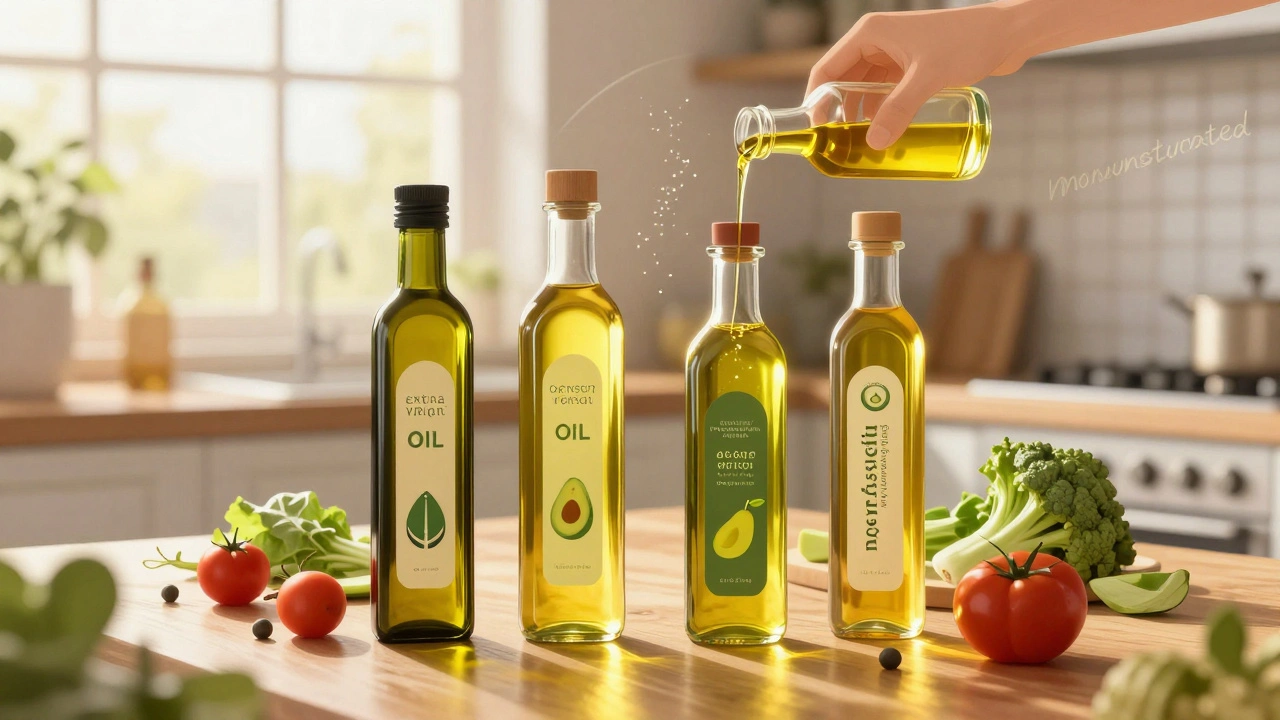
Learn which cooking oils truly support heart health, how to read food labels to avoid hidden fats, and practical swaps that lower your risk of heart disease. Backed by science and real-world use.