
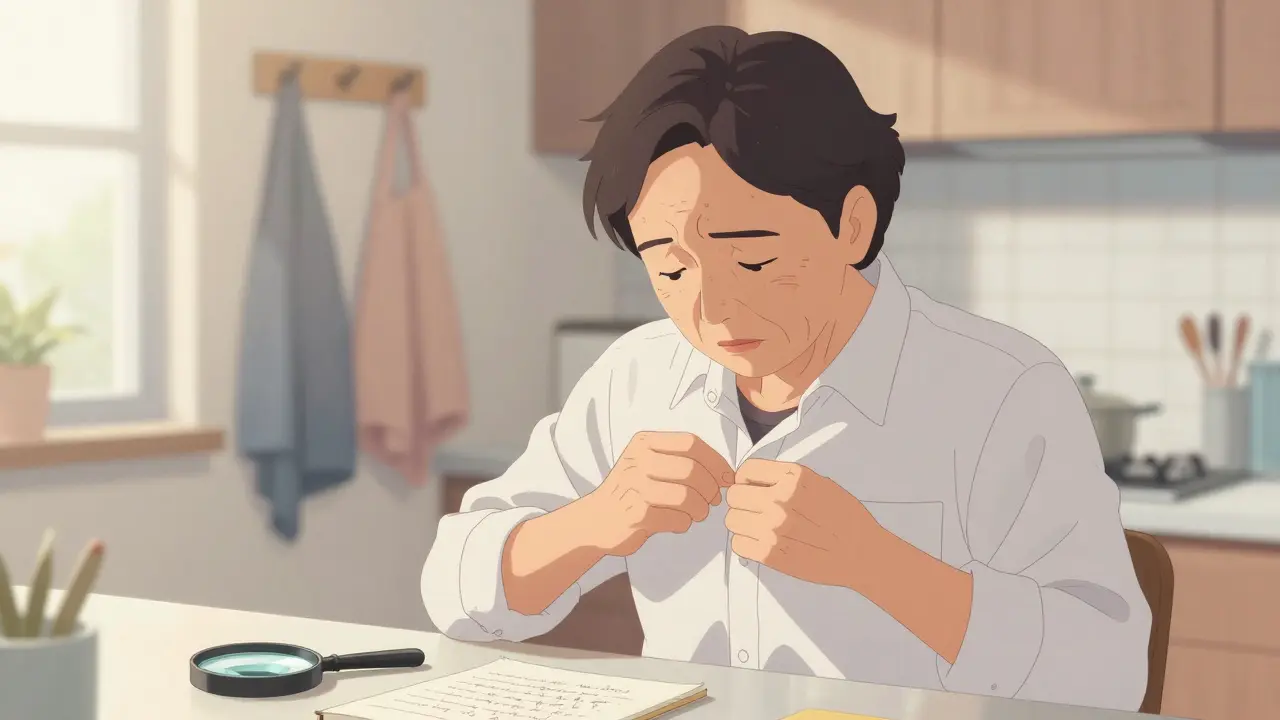
When you think of Parkinson’s disease, you might picture a hand trembling at rest - the classic Parkinson's disease tremor. But that’s just the tip of the iceberg. Behind that shaking hand is a slow, steady erosion of movement, coordination, and independence. For more than 1 million Americans living with this condition, every day brings new challenges: buttoning a shirt, standing up from a chair, speaking clearly, or even swallowing food. These aren’t just inconveniences - they’re life-altering changes driven by the loss of dopamine-producing brain cells. And while there’s no cure yet, knowing what to expect and how to manage it can make a huge difference in how you live with it.
What You’ll Notice First: The Four Cardinal Motor Symptoms
The diagnosis of Parkinson’s doesn’t rely on one single sign. Doctors look for a pattern - specifically, at least two of four core motor symptoms. The most common is tremor, often starting in one hand as a subtle ‘pill-rolling’ motion between the thumb and finger. It happens when you’re relaxed, not when you’re moving. About 70% of people notice this first, but here’s the catch: 20 to 30% of people with Parkinson’s never develop a noticeable tremor at all. That’s where bradykinesia comes in - and it’s the one symptom you can’t ignore. It means slow movement. Not just slow walking, but slow everything. Getting out of bed takes longer. Turning over in bed becomes a chore. Your face loses expression - a condition called hypomimia - and you blink less often. Writing gets smaller, turning into cramped, almost illegible script (micrographia). Buttoning a shirt? It can take over three times longer than it used to. Bradykinesia shows up early, often before tremor, and it’s present in nearly every person with Parkinson’s. Rigidity is another key player. Your muscles feel stiff, like they’re resisting movement even when you’re not trying to move. Sometimes it feels like a grinding resistance - called cogwheel rigidity - especially when someone moves your arm for you. Other times, it’s a constant, lead-like tightness. About 85% of people experience the cogwheel version. This stiffness isn’t just uncomfortable - it limits your range of motion and makes everyday motions feel heavy and awkward. Postural instability, or trouble with balance, usually comes later - often after five to ten years. But when it does, it’s serious. You might find yourself leaning forward, taking smaller steps, or losing your balance when turning. About 68% of people with Parkinson’s fall at least once a year. Falling isn’t just embarrassing - it’s dangerous. Falls lead to fractures, hospitalizations, and loss of independence.Other Motor Signs You Might Not Recognize
Beyond the big four, there are other motor symptoms that sneak up quietly. Your arm doesn’t swing naturally when you walk - that’s a red flag. About 75% of people lose that automatic motion, which throws off balance and makes walking feel unsteady. Your voice gets softer, sometimes to the point where family members have to ask you to repeat yourself. On average, voice volume drops by 5 to 10 decibels - enough to make conversations in a noisy room impossible. Speech can also become slurred or mumbled (dysarthria), affecting 74% of people. And then there’s drooling. It’s not because you’re producing more saliva - it’s because swallowing happens less often. About half to 80% of people with Parkinson’s struggle with this, especially as the disease progresses. Swallowing problems (dysphagia) affect 35% early on and jump to 80% in advanced stages. That’s not just uncomfortable - it’s risky. Aspiration pneumonia, caused by food or liquid entering the lungs, is the leading cause of death in Parkinson’s patients. Dystonia - painful, involuntary muscle contractions - often appears in younger patients. You might notice your foot twisting inward, or your neck pulling to one side. It can happen at rest or during movement. And akathisia - the constant urge to move - affects 15 to 25% of people. It’s not restlessness from anxiety; it’s a physical compulsion to shift, pace, or fidget, even when you’re exhausted.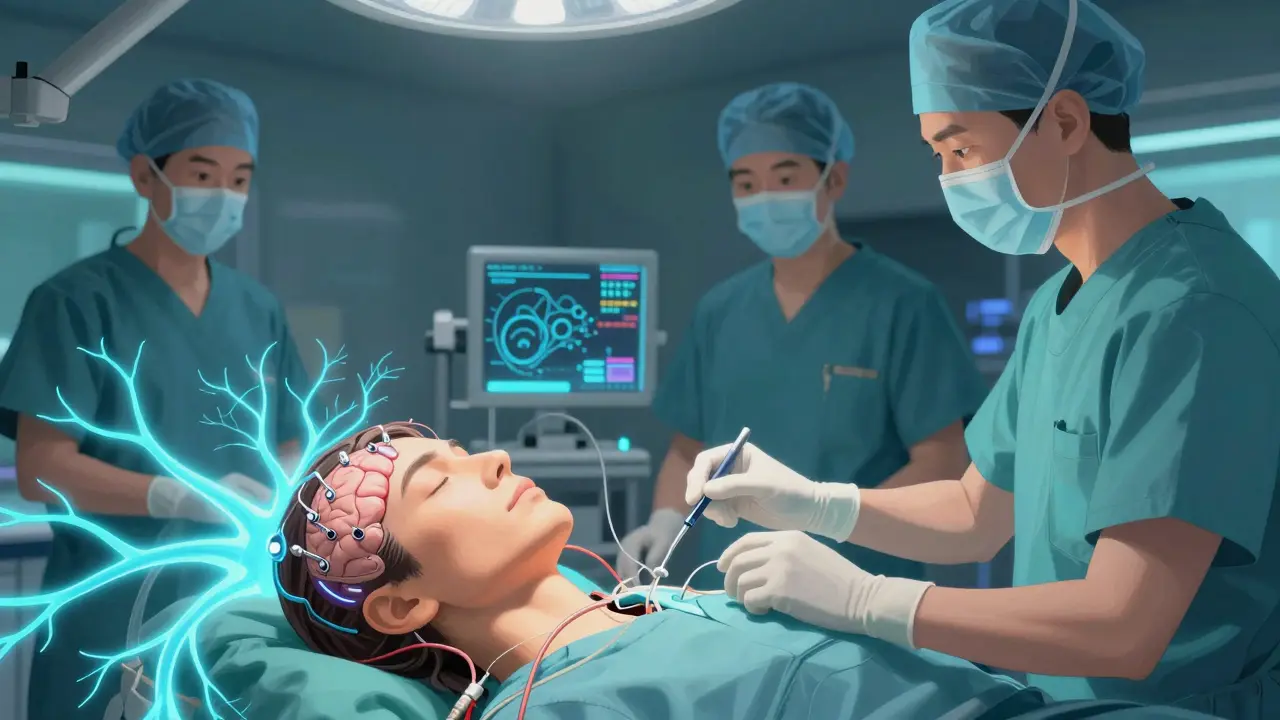
Medications: The Lifeline - and the Trade-Offs
The goal of treatment is simple: replace what the brain has lost. Dopamine. That’s why levodopa, introduced in 1967, remains the gold standard. It crosses into the brain and turns into dopamine. For about 70 to 80% of people, it dramatically improves movement - walking, writing, speaking - almost overnight. But it’s not perfect. After five years of use, up to half of people start experiencing side effects. One is motor fluctuations - the ‘on-off’ phenomenon. One minute you’re moving freely; the next, you’re frozen. The other is dyskinesia - uncontrolled, dance-like movements that happen when the drug peaks. These aren’t signs the medication stopped working. They’re signs it’s working too hard. That’s why doctors often start younger patients on dopamine agonists like pramipexole or ropinirole. These drugs mimic dopamine without turning into it. They’re less effective than levodopa - helping about half of early-stage patients - but they delay the onset of dyskinesia. They’re not a replacement, just a bridge. For those who’ve been on levodopa for a decade or more, and whose symptoms are no longer controlled by pills, deep brain stimulation (DBS) becomes an option. About 30% of patients eventually get this surgery. Electrodes are implanted in the brain to send electrical pulses that block the faulty signals causing tremor and stiffness. It doesn’t stop the disease, but it can give back hours of usable time each day.Daily Living: What Changes, and How to Adapt
Simple tasks become complex. Getting dressed? You might need adaptive clothing with magnetic buttons or elastic waistbands. Bathrooms become hazards - install grab bars, non-slip mats, and a raised toilet seat. Kitchen tools with thick, cushioned handles make cooking easier. A voice amplifier helps when your voice fades. Exercise isn’t optional - it’s medicine. Studies show 12 weeks of targeted physical therapy can improve walking speed by 15 to 20% and cut fall risk by 30%. Tai chi, dance, and strength training all help. Walking with a metronome or stepping over lines on the floor can improve stride length. You’re not just staying fit - you’re training your brain to keep moving. Speech therapy is just as important. Techniques like the Lee Silverman Voice Treatment (LSVT LOUD) help people speak louder and clearer. Swallowing therapy can prevent choking and pneumonia. Occupational therapists can teach you how to conserve energy, reorganize your home, and use assistive devices that make life manageable. Sleep becomes harder. You might kick, shout, or act out dreams - a condition called REM sleep behavior disorder. It often shows up years before motor symptoms. Medications can help, but so can safety measures: padding the floor, removing sharp objects, and sleeping separately if needed. Sexual dysfunction affects 50 to 80% of men with Parkinson’s. It’s not just about libido - it’s about nerve damage, medication side effects, and depression. It’s rarely discussed, but it’s real. Talk to your doctor. Solutions exist.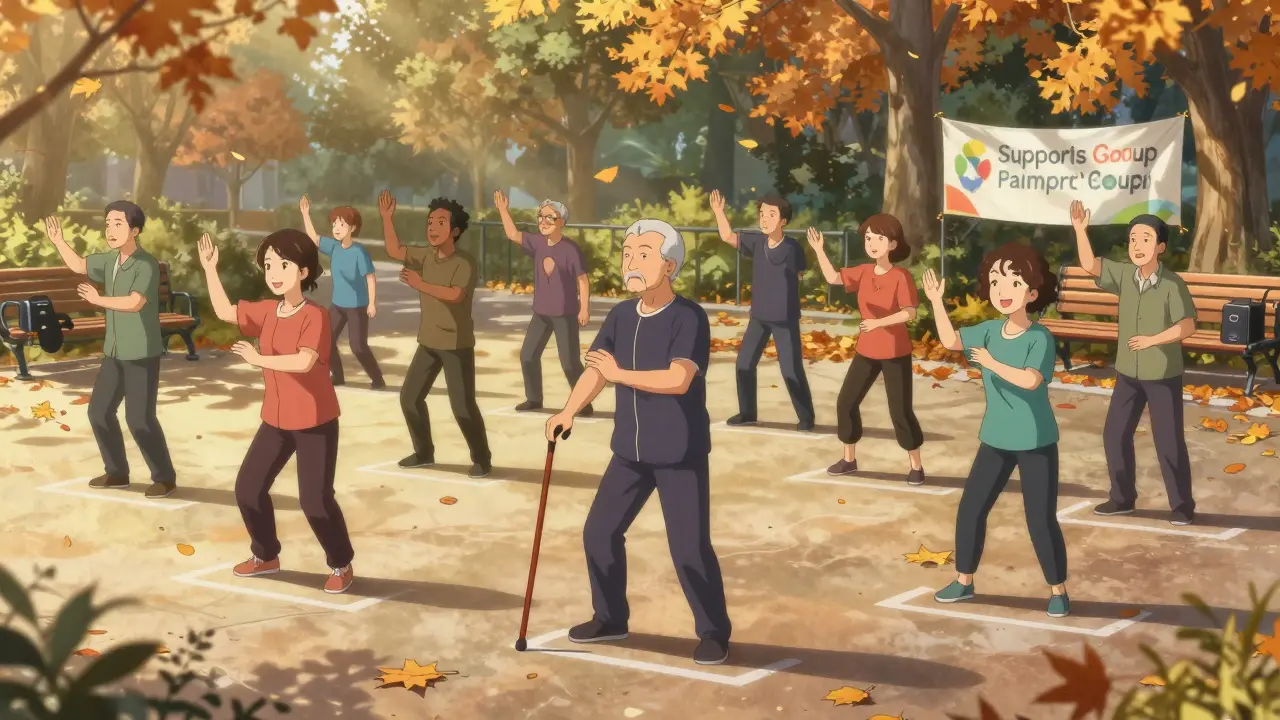
Progression and What to Expect
Parkinson’s doesn’t progress the same way for everyone. The Hoehn and Yahr scale breaks it into five stages. Stage 1 means mild symptoms on one side of the body. Stage 2 brings symptoms to both sides. Stage 3 is the turning point - balance issues appear, and you might need help with daily tasks. Stage 4 means you’re still able to stand and walk, but you need assistance. Stage 5 means you’re wheelchair-bound or bedridden. Most people move through these stages slowly - over 10 to 20 years. But the timeline varies. Young-onset Parkinson’s (diagnosed before 50) often progresses more slowly but brings earlier complications like dystonia and dyskinesia. The good news? No current medication stops the disease from progressing. But that doesn’t mean you’re powerless. Every step you take - physically, socially, emotionally - helps preserve your independence longer. Research is moving fast. New drugs targeting alpha-synuclein, the protein that clumps in Parkinson’s brains, are in clinical trials. Hope isn’t just a word here - it’s a growing field.Living Well With Parkinson’s
Parkinson’s isn’t just about tremors and pills. It’s about learning to live differently. It’s about asking for help before you need it. It’s about finding a neurologist who listens, a therapist who pushes you, and a community that understands. You don’t have to do it alone. Support groups, online forums, and local Parkinson’s centers offer resources, education, and connection. The goal isn’t to fight the disease - it’s to outlive its limitations. With the right tools, support, and mindset, you can keep doing the things that matter: laughing with family, walking in the park, reading a book, or simply enjoying a quiet morning.Is tremor always the first sign of Parkinson’s disease?
No. While tremor is the most common symptom at diagnosis - appearing in about 70% of cases - 20 to 30% of people never develop a noticeable tremor. The most consistent early sign is bradykinesia, or slowness of movement. This includes reduced facial expression, smaller handwriting, slower walking, and difficulty with fine motor tasks like buttoning a shirt. Doctors rely on bradykinesia plus either tremor or rigidity to make a diagnosis.
Can medication stop Parkinson’s from getting worse?
No current medication has been proven to slow or stop the underlying progression of Parkinson’s disease. Drugs like levodopa and dopamine agonists improve symptoms by replacing dopamine, but they don’t protect brain cells from dying. Research is ongoing, especially around therapies targeting alpha-synuclein protein clumps, but as of 2026, no treatment has shown disease-modifying effects in large-scale trials. The focus remains on managing symptoms to maintain quality of life.
Why do people with Parkinson’s fall so often?
Falls happen because of a combination of factors: postural instability (loss of balance reflexes), reduced arm swing during walking, shuffling steps, and freezing episodes where the feet feel stuck. About 68% of people with Parkinson’s fall at least once a year. Risk increases after five to ten years, especially if balance isn’t actively trained. Physical therapy focused on balance, strength, and gait training can reduce fall risk by up to 30%.
What’s the difference between levodopa and dopamine agonists?
Levodopa is converted into dopamine in the brain and is the most effective medication for improving motor symptoms - helping 70 to 80% of patients. Dopamine agonists like pramipexole and ropinirole mimic dopamine without becoming it. They’re less effective (helping about 50 to 60% of early-stage patients) but are often used first in younger people to delay levodopa-related side effects like dyskinesia. Agonists can cause nausea, dizziness, and impulse control issues, while levodopa leads to motor fluctuations over time.
Does everyone with Parkinson’s need surgery?
No. Deep brain stimulation (DBS) is only considered for people who’ve had Parkinson’s for at least 10 years and whose symptoms are no longer controlled well by medication. About 30% of patients eventually get DBS. It’s not a cure - it helps reduce tremor, stiffness, and dyskinesia, but it doesn’t stop the disease. Candidates must be in good overall health, have a clear diagnosis, and respond well to levodopa. Many people manage well with medication and therapy alone.
How can diet and lifestyle help with Parkinson’s symptoms?
Diet and lifestyle play a big role. High-fiber foods and plenty of fluids help with constipation, a common non-motor symptom. Protein can interfere with levodopa absorption, so some people time their protein intake for evening meals. Regular exercise - especially walking, tai chi, and strength training - improves mobility and balance. Speech therapy helps with voice volume and swallowing. Sleep hygiene, stress reduction, and staying socially active all contribute to better quality of life. Small changes add up over time.
Releted Post

Caspian Fothergill
Hello, my name is Caspian Fothergill. I am a pharmaceutical expert with years of experience in the industry. My passion for understanding the intricacies of medication and their effects on various diseases has led me to write extensively on the subject. I strive to help people better understand their medications and how they work to improve overall health. Sharing my knowledge and expertise through writing allows me to make a positive impact on the lives of others.
bro i had my grandpa with parkinsons and he used to just sit there staring at the wall for hours like a broken robot
no tremor no nothing just... gone
then one day he tried to eat soup and spilled it all over his lap and just started crying
no one talks about that part
I’ve seen this in my mother’s care home in London - the quiet dignity with which people adapt. I remember one woman who still danced in her wheelchair to old Bollywood songs. It’s not about fighting the disease, it’s about finding the music within it.
they left out the big secret - levodopa is made from horse urine and the FDA knew this in the 70s but kept pushing it because big pharma owns the FDA
also dopamine agonists cause compulsive gambling and hypersexuality - that’s why so many patients end up broke and divorced
they don’t tell you that on the pamphlets
Okay but let’s be real - this article reads like a corporate wellness blog written by someone who’s never held a shaking hand
you say "exercise is medicine" like it’s a yoga class, not a daily battle against gravity
and don’t get me started on "support groups" - when your muscles are locked in a permanent cramp and your voice is a whisper, telling you to "stay socially active" is cruel
it’s not about mindset, it’s about survival
The philosophical dimension of Parkinson’s is often overlooked. It is not merely a neurological disorder, but a profound recalibration of the self. The body, once a vessel of effortless agency, becomes a foreign landscape - a terrain of resistance and delay. In this recalibration, one finds not only suffering, but an unexpected clarity: the value of stillness, the grace of small movements, the dignity of persistence. We do not conquer Parkinson’s; we learn to inhabit it.
my uncle got dbs and now he’s got this weird twitchy robot dance when the battery’s low 😂
he says it’s like his brain’s got a glitchy video game controller
my mom has parkinson’s and she still grows tomatoes 🌱
she says the dirt helps her fingers move
love you mom
Just read this after my dad’s diagnosis… thank you for explaining dysphagia and drooling - I thought he was just being messy 😔
Now I know to get him a special cup and not judge him. 💙
Why are we even talking about this? In America we fix things with tech - why not just inject stem cells or gene therapy? This article sounds like surrender. We’re the land of innovation - stop talking about coping and start talking about curing.