
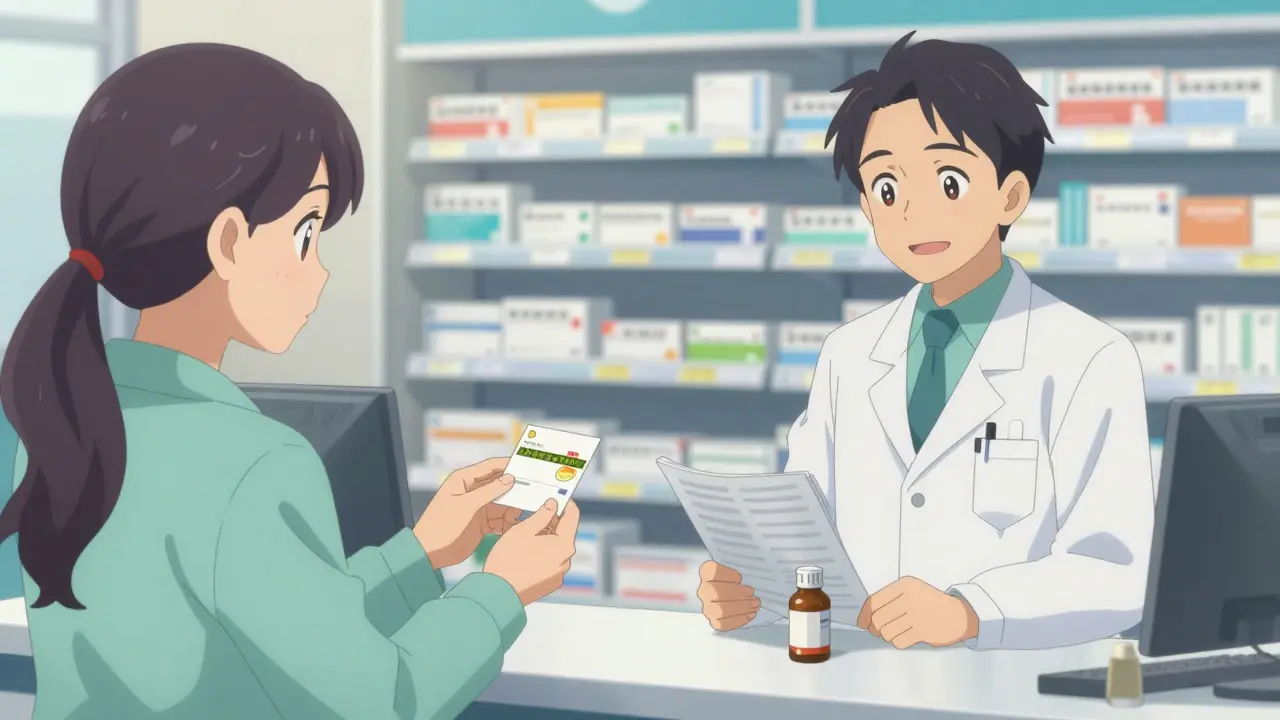
Have you ever walked out of a pharmacy with a stack of paper and wondered which piece actually mattered? You might hold a small card called a Medication Guide and later see your doctor referencing a thick booklet known as a Package Insert. It’s confusing enough to ask your pharmacist about your risks, but trying to decipher these documents yourself can feel like reading a different language. Knowing where to find the real side effect details isn’t just academic; it keeps you safe.
The confusion stems from a split system designed by regulators. For decades, the Food and Drug Administration, often abbreviated as FDA, has maintained two parallel tracks for drug information. One track is for you, the patient. The other is for your doctor. Understanding which document does what helps you skip the noise and find the facts that affect your health.
What Exactly Are These Documents?
When you pick up a prescription, the paperwork comes in different flavors depending on the drug's risk profile. You likely haven't seen them both side-by-side, but they serve distinct roles in medicine.
A Medication Guide is a specific type of patient leaflet. It exists because certain drugs carry serious risks that require you to take action. For example, if you are prescribed isotretinoin for severe acne, you will receive a guide warning about birth defects and mental health monitoring. These guides are written in plain language, usually targeting a 6th to 8th-grade reading level. They answer simple questions like "What is the most important information I should know about [Drug Name]?"
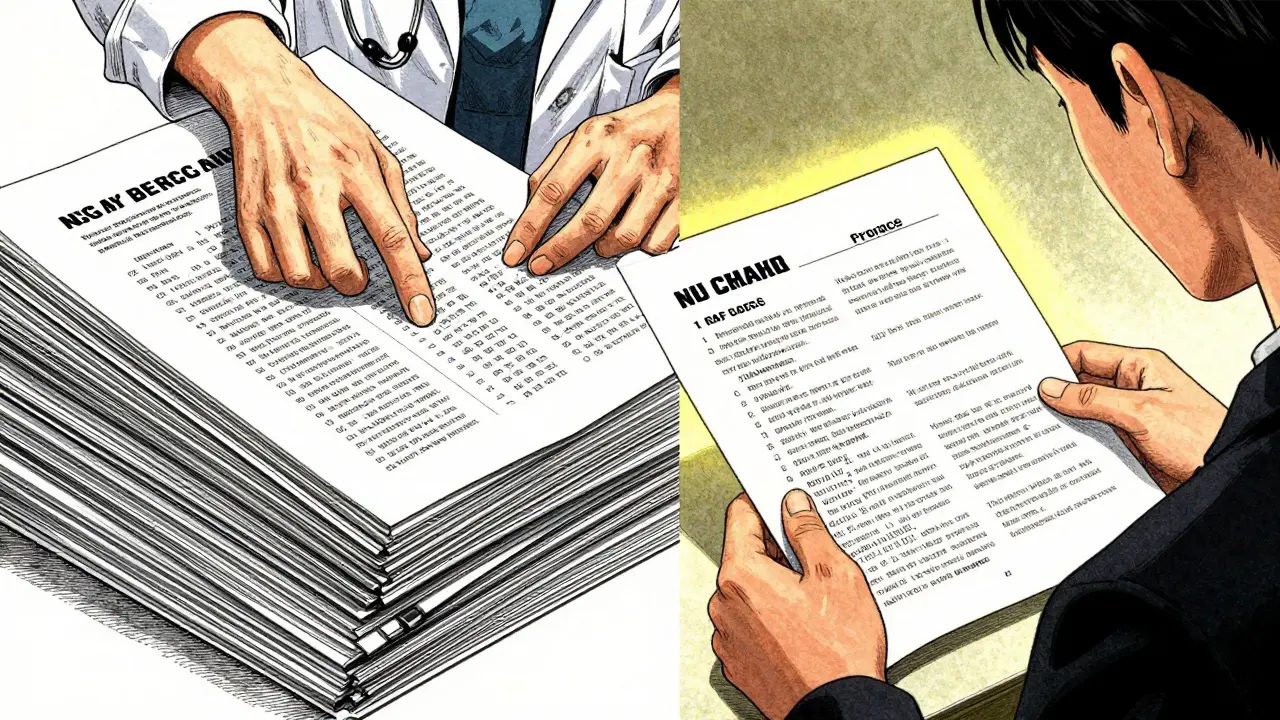
In contrast, a Package Insert, also called Prescribing Information, is the technical blueprint for healthcare professionals. Imagine a manual for a complex machine-that is what this document represents for doctors. It contains every clinical trial result, dosage adjustment calculation, and adverse reaction recorded in years of study. While a Medication Guide fits on four to six pages, a Package Insert often spans 10 to 50 pages of dense medical jargon.
Both documents come from the same source-the manufacturer-and undergo strict review. However, they reach you through different channels. Your local pharmacist must hand you a Medication Guide when dispensing high-risk outpatient drugs. But they generally do not give you the full Package Insert unless you specifically ask for it. This distinction creates a gap where patients assume they are getting all the safety information when they are actually seeing only a summary of the highest risks.
Comparing the Two Systems
It helps to see them laid out together. You might wonder why there isn't just one sheet of paper for everyone. The answer lies in how much information different users need to make decisions. Doctors need statistical probabilities; patients need clear actions.
| Feature | Medication Guide | Package Insert |
|---|---|---|
| Primary Audience | Patients and Caregivers | Healthcare Professionals |
| Reading Level | 6th-8th Grade | 12th Grade or Higher |
| Length | 4-6 Pages | 10-50+ Pages |
| Content Focus | Critical Risks and Actions | Complete Clinical Data |
| Availability | Mandatory Dispensing | Professional Database Only |
The table above highlights the divide. If you are looking for common side effects like headaches or nausea, you might find them in the Medication Guide if the risk is significant. However, rare but severe reactions detailed in the Package Insert might not appear in the shorter version. The Medication Guide focuses only on risks where your behavior can prevent harm. If a side effect is unavoidable and requires a doctor's management, it lives in the Package Insert.
Where to Find Complete Side Effect Details
Finding the right document depends on whether you need quick answers or deep research. Most people start at the counter, but digital resources offer the most reliability.
If you walk into a pharmacy, check for the white paper handed with your bottle. Under federal law, pharmacists must provide this when required. However, studies show inconsistent compliance. Sometimes you have to ask. Once home, check the envelope; if it's missing, call the store immediately. They are legally required to supply it for specific drugs.
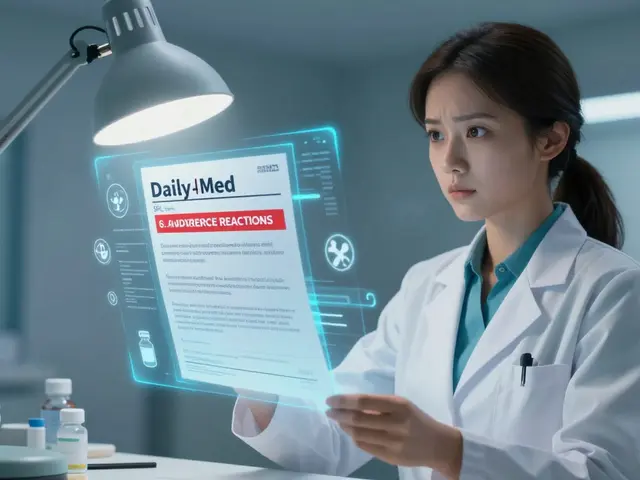
For the deeper dive, go online. The National Library of Medicine maintains DailyMed, a free database containing over 140,000 official Package Inserts. Unlike commercial sites like WebMD, DailyMed hosts the exact files approved by the FDA. You can search by brand name or generic drug name.
- Navigate to the DailyMed website.
- Type your drug name in the search bar.
- Click on the result under the label "Prescribing Information."
- Scroll to Section 6, labeled "Adverse Reactions."
This section lists every side effect reported in clinical trials with their percentages. You won't find this percentage breakdown in a Medication Guide. While reading the Package Insert directly can be intimidating, knowing exactly where to look makes it manageable. Another option is the FDA's own Medication Guide webpage, which lists all active guides alphabetically by drug class if your local pharmacy failed to distribute one.
Why Some Drugs Have Guides and Others Don't
You might notice that your amoxicillin prescription came with zero paperwork, while your neighbor's new blood thinner came with a thick guide. This isn't random. The FDA mandates Medication Guides only when three specific criteria are met. First, patient labeling could help prevent a serious adverse reaction. Second, the drug carries a risk relative to benefits that affects the decision to use it. Third, sticking to the directions for use is crucial for the drug to work.
This threshold explains why antibiotics often lack guides; their risks are lower and standard care instructions suffice. Conversely, drugs like Xarelto (apixaban) require guides because stopping the medication suddenly increases stroke risk. There are currently about 250 prescription drugs requiring these guides out of over 20,000 products available. Being aware of this threshold helps you realize that a lack of a Medication Guide does not mean a drug has no side effects; it means the risks do not demand specific patient behaviors to mitigate them.
The Upcoming Changes in 2026
We are living through a major transition in how this information is delivered. As of 2026, the FDA is implementing a new system called Patient Medication Information, known as PMI. This initiative aims to replace the fragmented dual-system with a standardized one-page document for all prescription drugs. The goal is to ensure every patient gets consistent, easy-to-read safety data regardless of the drug's risk level.
This change addresses the confusion caused by the old method. Previously, you might get a detailed guide for a dangerous drug but nothing at all for a safer one. The PMI standard, rolling out over the next few years, intends to cover every single prescription. This shift means that eventually, the distinction between a Medication Guide and a Package Insert for patients will blur, as manufacturers will create unified patient labels. Until then, understanding the current landscape remains essential for navigating your health safely.

Practical Steps to Protect Yourself
Don't rely solely on memory or the little cards in your mailbox. Here is how to stay informed actively.
- Ask before you leave: When picking up meds, ask specifically, "Is there a Medication Guide for this?" If the answer is no, ask if the risk profile requires one.
- Use DailyMed: Save this bookmark for checking complex details like interactions that guides might skip.
- Discuss with your Doctor: Bring printed side effects to your appointment. Doctors read Package Inserts differently than patients; they see clinical context you might miss.
- Watch for updates: Drug labels change. If you've been on a medication for years, check for new warnings periodically.
Your safety depends on bridging the gap between technical data and daily life. Whether you are reading a brief guide at the counter or searching the digital archives of the National Library of Medicine, knowing where to look empowers you to manage your treatment effectively.
Frequently Asked Questions
Do all prescriptions come with a Medication Guide?
No, only about 250 drugs meet the strict FDA criteria requiring a Medication Guide. Common antibiotics or low-risk supplements usually do not include one, even though they may still have side effects listed in their Package Inserts.
Can I ask my pharmacist for the Package Insert?
Yes, you can request it, but they may not print the full document. It is easier to access the digital version through the DailyMed website directly on your phone or computer rather than waiting for a physical copy.
Which document has more accurate side effect data?
The Package Insert contains the most comprehensive data, including rare events found in clinical trials. Medication Guides summarize only the most critical risks requiring patient awareness. Neither is more "accurate," but the Package Insert is more detailed.
Will Medication Guides disappear in the future?
They are being replaced by a new system called Patient Medication Information (PMI) starting in 2026. Eventually, all drugs will have a standardized patient label, reducing the current inconsistency.
How do I know if I received a required Medication Guide?
Check the FDA website for the specific drug name. If it appears on the official list, your pharmacist was required to give you the guide. If you didn't get it, contact the pharmacy to request it.
Releted Post

Caspian Fothergill
Hello, my name is Caspian Fothergill. I am a pharmaceutical expert with years of experience in the industry. My passion for understanding the intricacies of medication and their effects on various diseases has led me to write extensively on the subject. I strive to help people better understand their medications and how they work to improve overall health. Sharing my knowledge and expertise through writing allows me to make a positive impact on the lives of others.
The distinction between these two regulatory documents often gets lost in clinical practice.
Most healthcare providers understand the package insert deeply.
They reference clinical trial data daily.
Patients rarely see the full scope of that information.
Safety profiles rely heavily on accurate adverse reaction reporting.
Pharmacists act as gatekeepers for patient access.
Compliance varies significantly across regions.
I see gaps in education constantly.
Medication guides summarize critical risks only.
They omit rare events found in section 6.
DailyMed archives hold the raw data necessary for research.
Digital literacy is becoming a prerequisite for safety.
We cannot rely solely on verbal counseling.
Written documentation provides legal protection too.
Understanding this duality empowers the consumer base.
Honestly nobody reads these anyway.
This is so helpful!!!
Thank you for sharing this info!!!
It makes everything so clear now!!!
You really saved my day with this post!!!!
people think they know what is going on but the structural complexity of drug regulation exceeds common understanding and we find ourselves in a position where information flow is restricted by design
in my home country we struggle to even get basic meds so reading about guides here seems distant yet useful
i hope everyone gets better care soon
Compliance rates are pathetic in the real world.
Pharmacies ignore laws when they want to.
Patient harm increases because of this negligence.
We need stricter audits on dispensing practices.
Your frustration is noted and shared widely.
Regulatory oversight must be enforced aggressively.
Patients deserve consistent protection regardless of location.
We cannot accept lower standards for safety.
It is comforting to see detailed resources available online.
Many patients feel lost without guidance.
Digital tools bridge the gap effectively.
Appreciation goes out to those who organize these databases.
The architectural framework of medical labeling is significant.
Accessibility remains a concern for many stakeholders.
We must evaluate the impact of upcoming policy changes.
Formal review processes should include public feedback.
You can find most docs on the government site easily.
Just search the drug name in the bar.
Click the prescribing info link next to the results.
Scroll down to see the side effect lists clearly.
It helps a lot to know where to look.
Actually relying on gov sites is dangerous.
Data gets outdated faster than anyone realizes.
Trust your doctor instead of searching online blindly.
These forums always push digital self help too hard.
Knowledge is power but information overload causes paralysis.
We must strive for clarity above all else.
The path to health requires informed consent at every step.
Fight for your own rights regarding medical data access.
The drama surrounding pharmacy paperwork never ends.
I hate getting all those papers with my bottle.
It feels like someone suspects I am dangerous.
Maybe they just want me to stay healthy safely.