
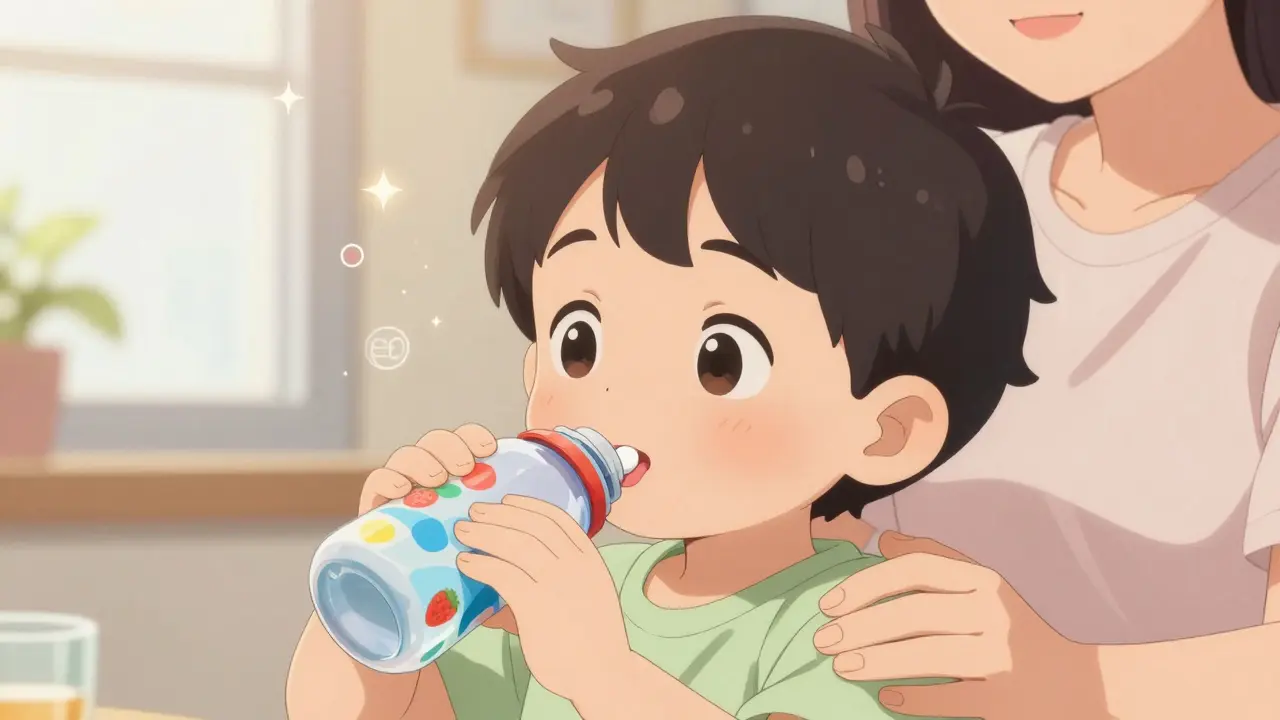
When your child is sick, the last thing you want is a battle over medicine. You’ve got the prescription in hand, but now you’re staring at two options: a sweet-tasting liquid or a tiny pill. Which one really works better? For years, doctors and parents defaulted to liquid meds, assuming kids couldn’t swallow pills. But things have changed - and the science now says you might be giving your child a harder, more expensive, and less reliable option than you need to.
Why Liquids Are Still Common - But Not Always Best
Liquid medications have been the go-to for kids because they’re easy to measure. You can adjust the dose by weight - perfect for babies and toddlers. A 10-pound infant needs less than a 40-pound child, and liquids make that simple. But here’s the catch: liquid medications are messy, unstable, and often taste terrible. A 2021 study from the American Academy of Pediatrics found that 15-20% of parents mismeasure liquid doses. That’s not because they’re careless - it’s because syringes leak, cups spill, and the tiny markings are hard to read. One mom in Minneapolis told me her 3-year-old spit out half his antibiotic because the bottle didn’t have a proper dosing cap. She ended up giving too much the next time, just to be safe. Then there’s the taste. Many kids’ liquids are labeled "strawberry" or "cherry," but they don’t taste like real fruit. They taste like chemical syrup. A 2007 study showed 68% of children refuse liquid meds because of bad taste. One parent on Reddit wrote: "My kid would swallow a pill before he’d take that ‘strawberry’ amoxicillin. It tasted like medicine, not candy." Liquid meds also need refrigeration. Many antibiotics, antivirals, and seizure meds must be kept between 2-8°C. If you forget the fridge for a few hours, the medicine can break down. Once opened, most liquids expire in 14-30 days. That means you’re throwing away half a bottle if your child finishes treatment early. The waste adds up - the NHS estimates $5,000-$8,000 in savings per hospital annually just by switching to pills where possible.The Rise of Pediatric Tablets - Yes, Even for Toddlers
For decades, we assumed kids under 6 couldn’t swallow pills. That’s no longer true. Modern mini-tablets are as small as 2mm wide - smaller than a grain of rice. They’re coated to hide bitterness, and some dissolve in your mouth without water. A 2012 study with 60 children aged 6 months to 6 years found that mini-tablets were accepted just as often as liquids - and better in kids under 1 year. The fear of choking is real, but the risk is tiny. The FDA tracked adverse events from 2010 to 2020 and found choking incidents with properly sized pediatric tablets occurred in fewer than 0.002% of cases. That’s less likely than choking on a grape. Children as young as 2 can learn to swallow tablets with the right technique. The "pop-bottle method" works wonders: have your child take a sip from a plastic water bottle, place the tablet on their tongue, then swallow while still sipping. Studies show over 90% success rates in kids 3 and up after just one or two tries. And it’s not just about swallowing. Tablets are more accurate. No measuring errors. No spilled doses. No refrigeration. No expiration worries after 2 weeks. A 2018 study found solid forms had 3-5 times lower degradation rates than liquids. That means your child gets the full dose - every time.When Liquids Are Still Necessary
This isn’t a blanket switch. There are real cases where liquids win. For babies under 6 months, liquids are still the standard. Their swallowing reflex isn’t fully developed, and tablets pose a higher risk. Also, some medications need precise, tiny doses - like levothyroxine for thyroid conditions or warfarin for blood clotting. Even a 0.1mL error can be dangerous. Liquids allow that level of control. Some kids have medical conditions that make swallowing hard - neurological disorders, severe reflux, or cleft palate. In those cases, liquids or dissolvable films are safer. But for the vast majority of healthy kids - even toddlers - tablets are not just possible, they’re better.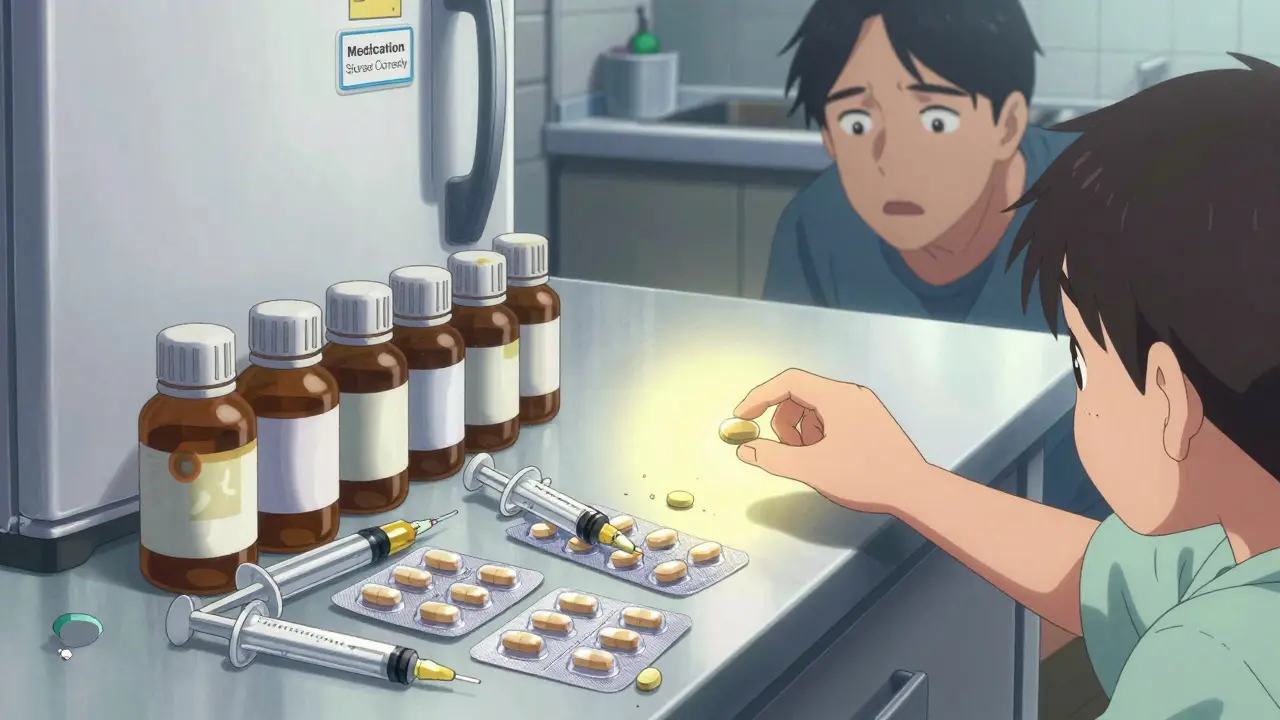
Cost, Convenience, and Long-Term Benefits
Let’s talk money. A 2021 NHS analysis found that switching just 10,000 pediatric prescriptions from liquid to tablet form saved £7,842. Multiply that across hospitals and clinics, and you’re talking millions saved every year. For families, it’s simpler too. No more buying extra syringes, worrying about fridge space, or throwing away half-used bottles. Long-term, tablets help with adherence. A 2022 JAMA Pediatrics meta-analysis showed kids on solid medications were 22% more likely to finish their full course. That’s huge. Incomplete antibiotic courses lead to resistant bacteria - a growing global threat. And here’s something surprising: kids who learn to swallow pills early are more likely to take medication on their own as teens. One study followed kids who learned tablet swallowing at age 4. By age 12, 89% of them took their own meds without help. That’s independence you can’t buy.How to Make the Switch - Step by Step
If you’re thinking about switching from liquid to tablet, here’s how to do it right:- Ask your doctor: "Is there a tablet version of this medication?" Don’t assume it doesn’t exist. Many generics now come in mini-tablet form.
- Check the dose: Make sure the tablet strength matches your child’s weight. Some tablets are scored so you can split them safely.
- Practice with food: Start with mini-marshmallows or tiny bread balls. Let your child practice swallowing them one at a time. Do this for a few days before introducing the real pill.
- Use the pop-bottle method: Fill a plastic water bottle with water. Have your child take a sip, place the tablet on their tongue, then swallow while still drinking.
- Be patient: It might take 3-5 tries. Praise every attempt, even if they spit it out. No pressure.
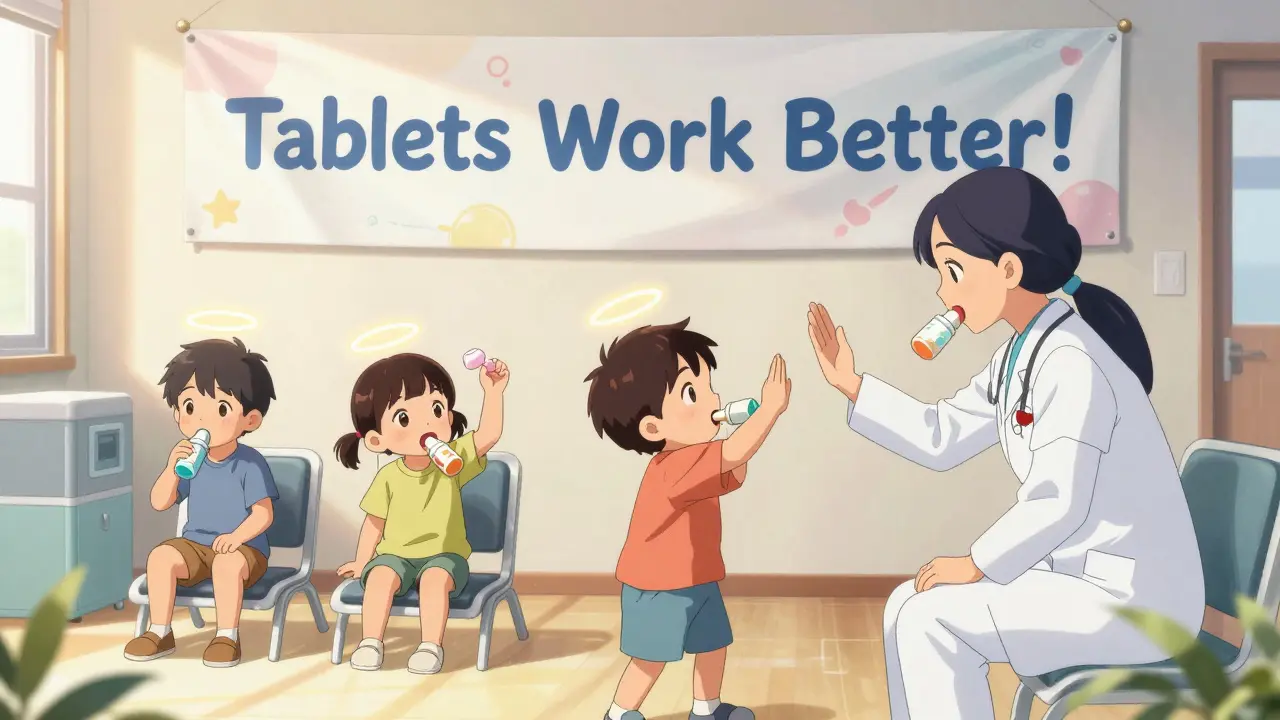
What to Look for in a Pediatric Tablet
Not all tablets are made the same. Here’s what to ask for:- Mini-tablets: 2-4mm in size. Too big and they’re hard to swallow.
- Orally disintegrating: Dissolves in the mouth. No water needed. Great for kids who hate swallowing.
- Film-coated: Masks bitter taste. Look for "enteric-coated" or "sugar-coated" - avoid crushed tablets.
- Flavor-matched: If it says "strawberry," make sure it actually tastes like strawberry. Fake flavors backfire.
Why So Many Doctors Still Prescribe Liquids
You might wonder: if tablets are better, why are so many kids still getting liquids? The answer isn’t science - it’s habit. A 2021 survey of 500 U.S. pediatricians found 62% still default to liquids for kids under 8. Why? Parental preference. Many parents assume pills are dangerous. Others just don’t know tablets are an option. Doctors often don’t bring it up because they’re not trained in swallowing techniques. The European Medicines Agency has been pushing for tablet use since 2013. The FDA’s 2023 draft guidance now explicitly encourages "age-appropriate solid formulations." But change moves slowly. If your doctor doesn’t mention tablets, ask. You’re not being pushy - you’re being informed.The Bottom Line
For most children - even toddlers - tablets are a safer, cheaper, more reliable option than liquids. They don’t spoil. They don’t spill. They don’t taste like chemical syrup. And they help your child build a lifelong skill: taking medicine on their own. The only exceptions? Babies under 6 months, kids with swallowing disorders, or meds that need ultra-precise dosing. For everyone else? It’s time to rethink the default. Start small. Practice with food. Ask your doctor. And give your child the chance to swallow a pill - they might surprise you.Can my 2-year-old swallow a pill?
Yes, many 2-year-olds can swallow small, age-appropriate tablets with proper training. Start with practice using mini-marshmallows or bread balls. Use the "pop-bottle method" - have them sip water from a plastic bottle while placing the tablet on their tongue. Success rates jump to over 90% with guided practice, even in children as young as 3.
Are liquid medications more accurate than pills?
Only if measured correctly. In practice, 12-18% of liquid doses are mismeasured due to faulty syringes, spilled doses, or misreading labels. Tablets come in fixed strengths, so there’s no room for human error. For medications requiring precise dosing - like levothyroxine - liquids are still preferred. But for most antibiotics and common meds, tablets are just as accurate.
Why do some kids refuse liquid medicine?
Mostly because of bad taste. Many "strawberry" or "cherry" liquids don’t taste like real fruit - they taste like artificial chemicals. A 2007 study found 68% of children refuse liquid meds due to flavor. Tablets with film coatings mask bitterness better, and some are even flavored with real fruit extracts. Kids often prefer swallowing a pill over tasting fake candy syrup.
Do pediatric tablets expire faster than liquids?
No - the opposite. Liquid medications typically last only 14-30 days after opening and often require refrigeration. Tablets last 2-3 years at room temperature. They’re stable, don’t degrade as quickly, and don’t need special storage. That means less waste and more reliability, especially if your child doesn’t finish the full course.
Is crushing a tablet safe for my child?
No - never crush tablets unless your doctor or pharmacist specifically says it’s safe. Crushing can destroy time-release coatings, alter absorption rates, and make the medicine less effective or even dangerous. For kids who can’t swallow pills, ask for an orally disintegrating tablet or a liquid version instead. Never crush without professional approval.
Can I save money by switching to tablets?
Yes. A 2021 NHS analysis showed switching 10,000 pediatric prescriptions from liquid to tablet form saved £7,842. Tablets cost less per dose, generate less waste, and don’t require special packaging or refrigeration. For families, that means fewer repeat visits, less medicine thrown away, and lower out-of-pocket costs over time.
Releted Post

Caspian Fothergill
Hello, my name is Caspian Fothergill. I am a pharmaceutical expert with years of experience in the industry. My passion for understanding the intricacies of medication and their effects on various diseases has led me to write extensively on the subject. I strive to help people better understand their medications and how they work to improve overall health. Sharing my knowledge and expertise through writing allows me to make a positive impact on the lives of others.
soooooo... uhh... the FDA's 'draft guidance' is just a draft, right? like, the same agency that let Big Pharma bury the truth about opioid addiction is now telling us pills are 'better'? 🤔 i mean, have u seen how many kids end up in ERs after swallowing 'mini-tablets'? they dont even test them on real toddlers, just lab rats with fake throats. and dont get me started on the 'pop-bottle method'-that’s just a corporate marketing ploy to sell more pills and cut costs. they dont care if your kid chokes, they care about the quarterly reports. #PharmaControl #LiquidNotLies
why are we even talking about this? kids just want candy. if it tastes like chemicals, they’ll spit it out. pills? same thing. just smaller. why not just give them gummies? problem solved. 🤷♀️
Tablets are indeed more stable and accurate for most medications. For children under 6, consult a pharmacist about available mini-tablet or dispersible options. Always confirm dosage with weight-based guidelines, not age.
OMG YES THIS IS A GAME CHANGER!!! I thought my 3yo would never swallow a pill but we did the bottle trick and she did it on the third try!!! I cried!! She felt like a superhero!!! No more sticky syrup messes!!! No more fridge chaos!!! My life is better now!!! 🙌💊
I get why some parents are skeptical. I was too. But after my daughter had a bad reaction to a mismeasured liquid dose, I asked for tablets. The pharmacist showed me how to use the bottle method. It worked. No more guessing. No more waste. Just simple, clean dosing. It’s not magic-it’s just better science.
Let me tell you something about Western medicine. This whole tablet push? It’s not about health. It’s about control. The West has been slowly removing the human touch from medicine for decades. First, they took away herbal remedies. Then they replaced traditional healing with pills. Now they’re forcing toddlers to swallow tiny capsules because it’s cheaper and faster for the system. Who benefits? Not the child. Not the mother. The pharmaceutical conglomerates. They don’t want you to know that liquids are more adaptable, more natural, more responsive to the body’s needs. Tablets are rigid. Like their ideology. This is cultural imperialism disguised as progress. India has known for centuries that nature provides the right form-why are we blindly following Western corporate guidelines? Wake up.
It’s statistically irresponsible to claim that "most" children under six can safely swallow tablets without professional guidance. The FDA’s 0.002% choking statistic is misleading-it doesn’t account for unreported incidents or children with undiagnosed dysphagia. Furthermore, the assertion that "tablets are more accurate" ignores the fact that many pediatric tablets are not scored for division, making dose adjustment for under-10kg children impossible without compounding. This post reads like a pharmaceutical white paper masquerading as parenting advice. Misinformation dressed as empowerment.
I love how this post doesn’t shame parents who use liquids-it just gives options. My son was terrified of pills until we started practicing with sprinkles. Took a week, but now he swallows his amoxicillin like a champ. The key is patience, not pressure. And yes, the taste thing is real-ask for the sugar-coated version, not the "flavored" one. Also, thank you for mentioning not to crush tablets. I’ve seen so many parents do it without realizing how dangerous that can be.