
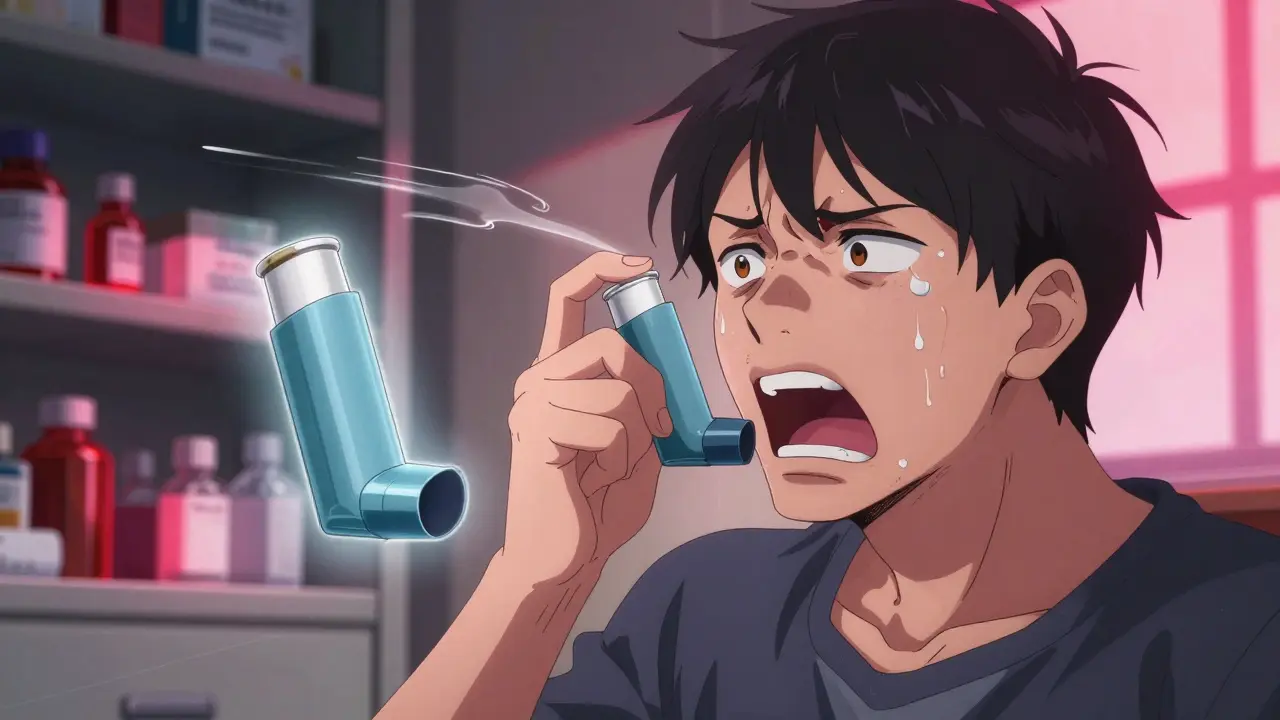
Most people don’t think twice about keeping an old inhaler, eye drop bottle, or cream in the medicine cabinet-until they need it. Maybe it’s been sitting there since last winter, or maybe you grabbed it during an asthma flare-up because your new prescription hasn’t arrived yet. But here’s the hard truth: expired inhalers can fail you when you need them most. And using outdated eye drops or creams isn’t just ineffective-it can be dangerous.
Why Expiration Dates Matter More Than You Think
Expiration dates aren’t just bureaucratic labels. They’re the last day the manufacturer guarantees the medication will work as intended. The FDA required these dates in 1979 after real cases of patients getting sick from degraded drugs. For most pills, the date means the drug will still be 90%+ potent. But for inhalers, eye drops, and topical meds? The rules change. Take albuterol inhalers like Ventolin or ProAir. These are pressurized canisters with propellants that break down over time. Once past expiration, the spray might feel weaker, or worse-it might not deliver the full dose. A 2021 study in the Chest Journal found expired albuterol inhalers delivered only 60-70% of the intended dose. In a severe asthma attack, that’s not a minor drop-it’s the difference between breathing and ending up in the ER. Eye drops are even riskier. Once opened, they’re exposed to bacteria. After expiration, contamination rates jump from 8% in fresh bottles to 42% within 30 days, according to a 2022 Clinical Ophthalmology study. Using contaminated drops can lead to corneal ulcers, infections, and even vision loss. Topical creams like hydrocortisone lose potency too. At room temperature, a cream that’s 6 months past expiration might only be 65% effective. That means your rash, eczema, or bug bite isn’t getting the relief it should.The Hidden Dangers of Improper Disposal
You might think tossing expired meds in the trash is harmless. It’s not. Inhalers are pressurized. If crushed in a garbage truck or burned in a landfill, they can explode. The propellants inside-like hydrofluoroalkanes-are also greenhouse gases. The EPA found pharmaceuticals in 80% of U.S. waterways, partly because people flush pills or toss inhalers in the trash. Eye drop bottles and cream tubes aren’t much better. Even if the liquid’s gone, the plastic can leach chemicals over time. And if someone else-like a child or pet-finds them, they might try to use them. That’s how accidental poisonings happen. The good news? You don’t have to guess how to dispose of these. There are safe, simple ways.How to Dispose of Expired Inhalers
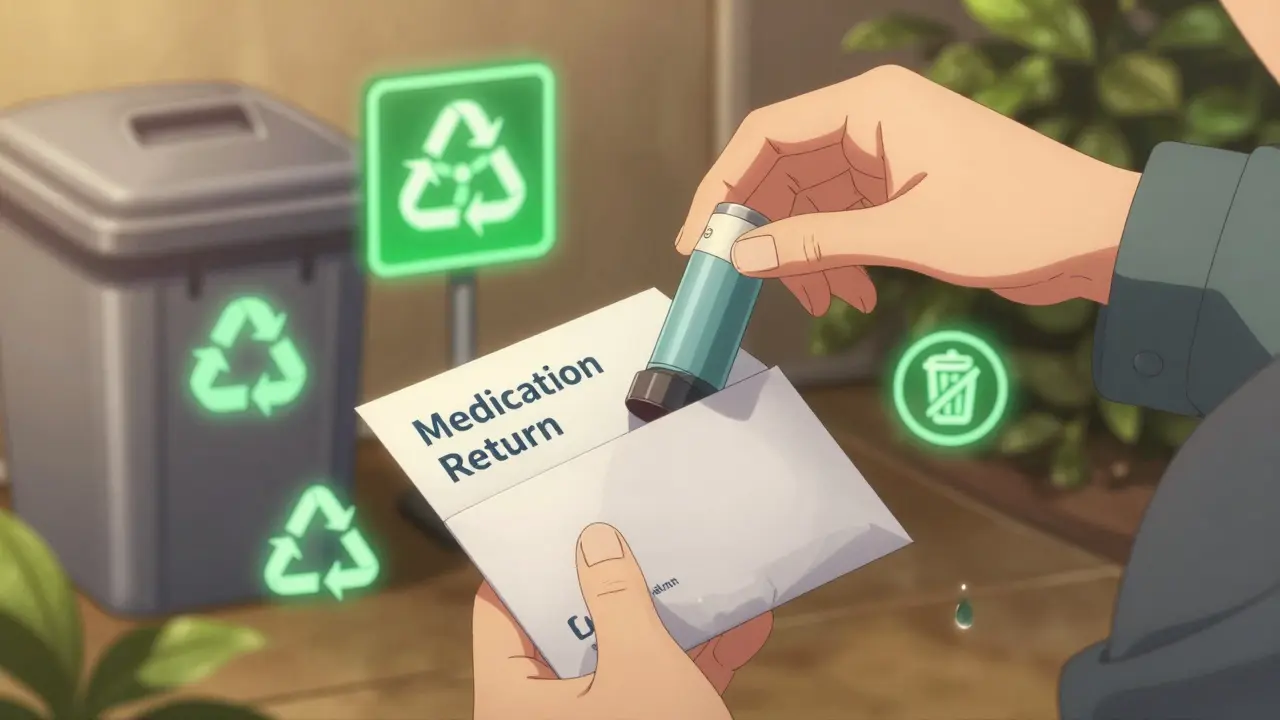
Inhalers are the trickiest. You can’t just throw them in the recycling bin. They’re classified as hazardous waste because of their propellants. Here’s what to do:- Check if your pharmacy offers a take-back program. CVS and Walgreens have collection bins in over 18,000 locations nationwide.
- Use a free mail-back kit. Washington State and several other states offer prepaid envelopes. Amazon Pharmacy now offers one too-just request it online, drop in your inhaler, and mail it.
- If no program is available, remove the metal canister (if possible) and take it to a household hazardous waste site. You can find one near you at EPA’s Hazardous Waste Locator.
- Never puncture, burn, or toss the canister in the trash. Even if it feels empty, up to 29% of the medication can still be inside.
What to Do with Expired Eye Drops
Eye drops are single-use and easily contaminated. Once past the expiration date, even if the bottle looks fine, it’s not safe.- Do not flush them down the toilet. That’s a major source of water contamination.
- Remove the cap and mix the liquid with coffee grounds or kitty litter in a sealed plastic bag. This makes it unappealing and prevents accidental ingestion.
- Throw the bag in the trash. Don’t rinse the bottle-just toss it. Plastic recycling bins don’t accept medication containers.
- For preservative-free single-dose vials, discard immediately after use-even if the expiration date is months away.
Handling Expired Topical Medications
Creams, ointments, and gels are less risky than inhalers or eye drops, but still need care.- If the cream has changed color, smell, or texture, throw it out immediately. That’s a sign of chemical breakdown.
- For unopened or stable creams, mix the contents with an unpalatable substance like dirt, coffee grounds, or used paper towels.
- Seal it in a zip-top bag and toss it in the trash.
- Do not pour it down the drain. Even small amounts add up over time and pollute water systems.
When Is It Okay to Use an Expired Medication?
The FDA says expiration dates are about potency-not safety. Some pills, like antibiotics or painkillers, may still work months after their date if stored properly. But that doesn’t apply to inhalers, eye drops, or topicals. Here’s the rule: Never use an expired inhaler during an emergency. If your asthma attack hits and your inhaler is past its date, use it only as a last resort-and call 911 immediately. Don’t wait. Don’t hope. Your life depends on that dose being full-strength. For eye drops, the answer is always no. Even one drop from a contaminated bottle can cause serious damage. And for creams? If it’s expired, it’s not working well enough. You’re wasting time and risking skin damage from under-treatment.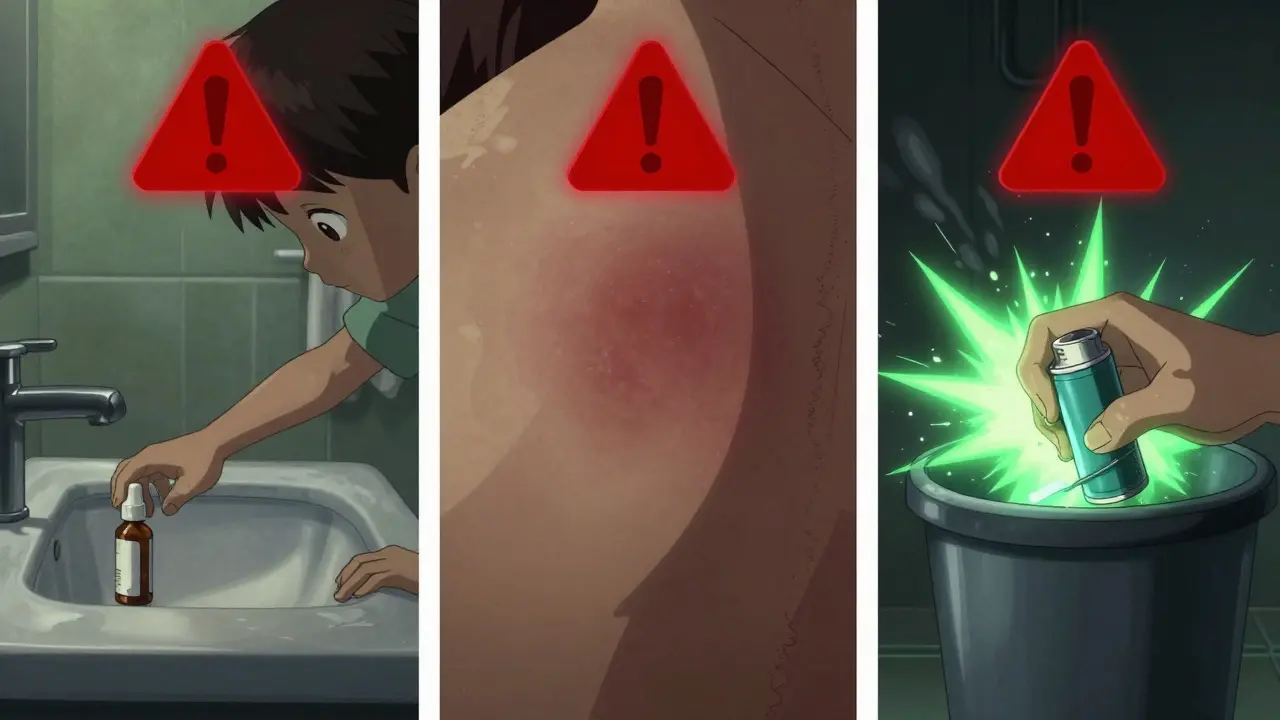
What If You Can’t Afford a New One?
A 2022 survey by the Asthma and Allergy Foundation found 41% of low-income patients use expired inhalers because they can’t afford replacements. That’s not a choice-it’s a system failure. There are options:- Ask your doctor for samples or generic brands. Albuterol generics cost under $10 at Walmart and Target.
- Apply for patient assistance programs. Companies like GlaxoSmithKline and Teva offer free inhalers to qualifying patients.
- Check with local health clinics. Many provide free or low-cost asthma supplies.
- Use the Medicine Safe Disposal Hotline at 1-800-222-1222. They can connect you to resources for affordable meds.
What’s Changing in 2026?
New tech is making this easier. Propeller Health’s smart inhaler cap, released in mid-2023, tracks usage and sends alerts 30 days before expiration. It even tells you how to dispose of it properly. More pharmacies are rolling out free mail-back programs. And thanks to the Inflation Reduction Act, 47 states now fund disposal initiatives. But awareness is still low. A 2023 survey found 63% of people think expired inhalers are safe to toss in the trash. That’s wrong. And deadly.Bottom Line: Don’t Risk It
Expired inhalers, eye drops, and topical medications aren’t just outdated-they’re unreliable and potentially dangerous. Using them can lead to failed treatment, infection, or worse. Proper disposal protects your health, your family, and the environment. Take five minutes today to check your medicine cabinet. Toss what’s expired. Use a take-back program. Save your life-and someone else’s-by doing it right.Can I still use an expired inhaler if it looks fine?
No. Even if the canister looks full and the spray works, the medication inside may have degraded. Albuterol inhalers past expiration can deliver as little as 60% of the correct dose, which is dangerous during an asthma attack. Never rely on an expired inhaler in an emergency.
Are expired eye drops dangerous to use?
Yes. After expiration, eye drops can grow harmful bacteria and fungi. A 2022 study found 42% of expired eye drops were contaminated. Using them can cause corneal ulcers, severe eye infections, or permanent vision damage. Always discard them after the date.
Can I recycle empty inhaler canisters?
No. Most recycling programs don’t accept inhalers because they contain pressurized gas and hazardous propellants. Remove the metal canister only if you can safely do so, and take it to a household hazardous waste facility. Otherwise, use a mail-back program or pharmacy take-back service.
Where can I find a medication disposal site near me?
CVS and Walgreens have take-back bins in over 18,000 locations. You can also use the DEA’s National Prescription Drug Take Back Day or search for nearby drop-off sites at dea.gov/takebackday. Many pharmacies now offer free prepaid mailers for inhalers and other meds.
What should I do if I accidentally used an expired medication?
If you used an expired inhaler and your symptoms didn’t improve-or got worse-seek medical help immediately. For eye drops or creams, watch for signs of infection like redness, swelling, pain, or discharge. Call your doctor or poison control at 1-800-222-1222 if you’re unsure. Don’t wait.
Releted Post

Caspian Fothergill
Hello, my name is Caspian Fothergill. I am a pharmaceutical expert with years of experience in the industry. My passion for understanding the intricacies of medication and their effects on various diseases has led me to write extensively on the subject. I strive to help people better understand their medications and how they work to improve overall health. Sharing my knowledge and expertise through writing allows me to make a positive impact on the lives of others.
Just checked my medicine cabinet and found three expired inhalers. I had no idea they could be so dangerous if used. This post literally saved me from a potential emergency. Thanks for the clear breakdown.
OMG I’m so glad I read this!! I’ve been using my old albuterol since last winter because ‘it still sprays’-turns out it’s basically a fancy aerosol with 60% of the punch 😳 Now I’m heading to CVS tomorrow to drop it off. Also-coffee grounds + eye drops? Genius. Never thought of that. 🙌
I’ve been a nurse for 18 years and I still see patients bring in expired inhalers during asthma visits. The fear of cost keeps them using them. This post nails the balance between urgency and compassion. Please share this with anyone who’s struggling to afford meds.
Back in India, we don’t have take-back programs. People just toss them or flush them. I didn’t realize how much damage this causes to water systems. I’m sharing this with my family and friends back home. Maybe we can start something local.
My mom uses expired hydrocortisone for her eczema. I’m sending her this right now. She’ll ignore me, but maybe this will convince her. Also-did you know some pharmacies give free samples? I didn’t. That’s huge.
Expire dates are a scam honestly. I’ve got pills from 2015 that still work fine. Why are inhalers different? What’s the science behind the propellant degradation? I need more than ‘it’s dangerous’
Man I used to toss inhalers in the trash like it was nothing. Now I’m paranoid every time I see one. This post changed my habits. Thanks for not just scaring people but giving real solutions.
While I appreciate the intent, this article is alarmist and lacks peer-reviewed citations for the 60-70% potency claim. The FDA’s own data shows that most pharmaceuticals retain stability well beyond expiration dates. This is fear-mongering disguised as public health advice.
Just called my local pharmacy. They said they’ll take back inhalers even if they’re not from their store. That’s huge. I’m gonna drop off my dad’s old one tomorrow. Also-did you know the EPA tracks pharmaceutical pollution? This stuff is in our drinking water. Wild.
Let’s be real-most people don’t care about this. They’re too lazy, too broke, or too ignorant. You can write the most detailed guide in the world, but if someone’s choosing between rent and a new inhaler, they’re gonna use the old one. This post doesn’t fix the system. It just makes people feel guilty.
My sister had a corneal ulcer from expired eye drops. She lost vision in one eye for six months. This isn’t theoretical. It’s real. Please don’t gamble with your eyes.
Per the FDA’s 2012 Shelf-Life Extension Program (SLEP), 90% of medications tested retained potency beyond their labeled expiration date. However, aerosolized delivery systems-particularly pressurized metered-dose inhalers (pMDIs)-are excluded from this program due to propellant volatility and valve degradation kinetics. Therefore, while oral solid dosage forms may exhibit extended stability, pMDIs are not equivalent. The 60-70% dose reduction cited in the Chest Journal (2021) aligns with pharmacokinetic decay curves for HFA-134a under ambient storage conditions. Disposal protocols should adhere to RCRA Subtitle C guidelines for hazardous waste, not household trash. The mail-back initiative is commendable but underutilized due to lack of patient education.
Found a free inhaler program through my clinic. Got my refill for $5. No joke. Just ask.
Thank you for this 🙏 I live in India and we have no proper disposal system. I will share this with my community. Maybe we can start a small collection drive. Safety first 💪
This is all a corporate scam. The FDA and pharma companies push expiration dates to force you to buy new stuff. I’ve used expired inhalers for 8 years. I’m fine. They don’t want you to know that drugs last forever. The propellant myth? Total lie. They just want your money.