
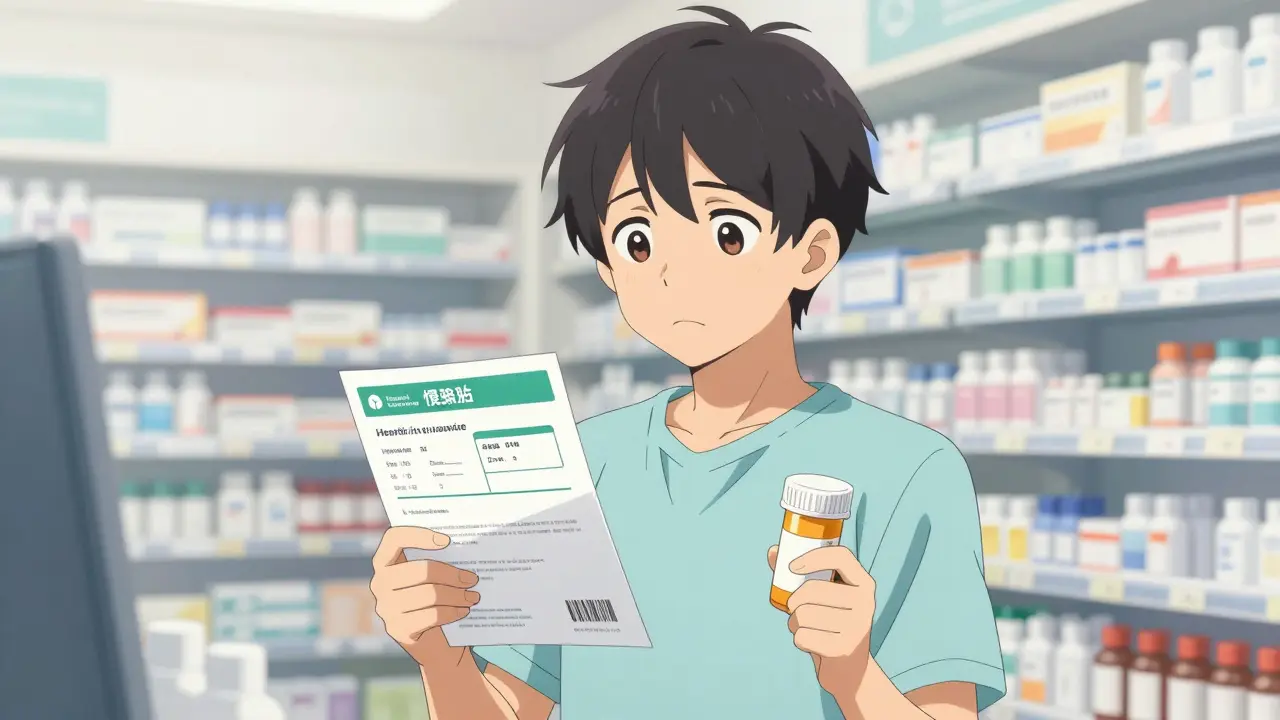
Switching your health insurance can feel like a gamble, especially if you rely on daily medications. You might find a plan with a lower monthly premium, only to realize later that the "cheap" plan actually costs you thousands more at the pharmacy counter. The secret to avoiding this trap is understanding the insurance formularies is a comprehensive list of prescription drugs covered by a health insurance plan, detailing the cost-sharing requirements for each . If you don't check how your specific generics are tiered, you're essentially guessing your healthcare budget for the year.
The Basics of Drug Tiers
Most insurance companies don't treat all generics the same. They use a tiered system to decide how much you pay. Think of it as a ladder: the lower the tier, the lower your cost. While 92% of non-Medicare plans use a 3-to-5 tier structure, the impact on your wallet is huge.
Typically, Tier 1 is the gold standard for generics. These are the most cost-effective options and usually have the lowest copays, often ranging from $3 to $20. However, as plans evolve, some have introduced "preferred" and "non-preferred" generics. This means a drug that is generic-and therefore cheaper for the insurer to buy-might still be placed in a higher tier, like Tier 2, which could jump your copay from $10 to $40 per fill.
Deductibles: The Hidden Cost Gap
One of the biggest mistakes people make when switching plans is ignoring how the deductible interacts with their prescriptions. In many High-Deductible Health Plans (HDHPs), you have to pay the full retail price for every single medication until you hit your annual medical deductible. This can lead to a "sticker shock'" January where a generic drug that usually costs $15 suddenly costs $150 because your deductible hasn't been met.
If you want to avoid this, look for Silver SPD (Standardized Plan Design) options in the marketplace. According to KFF analysis, these plans often waive the deductible for Tier 1 generics. This means you get a flat $20 copay from day one, potentially saving you thousands of dollars if you have a complex medication regimen.
| Plan Type | Typical Generic Copay | Deductible Impact | Best For... |
|---|---|---|---|
| Silver SPD (Marketplace) | ~$20 | Often waived for Tier 1 | People with regular maintenance meds |
| HDHP (High Deductible) | Variable | Must meet full deductible first | People who rarely use medications |
| Medicare Part D | $0 - $10 | Fixed base deductible (~$505) | Seniors with multiple generics |
| Employer-Sponsored | $5 - $15 | Varies by employer option | Stable, predictable cost-sharing |

The Danger of "Same Drug, Different Tier"
You might think, "I take Metformin; it's generic, so it's covered." But here is the catch: insurers don't just cover the drug; they cover specific formulations. For example, the immediate-release version of a drug might be Tier 1, while the extended-release (ER) version is Tier 2. If you switch plans and don't verify the exact formulation, you could see your costs spike.
Furthermore, some plans have "preferred pharmacies." If you fill your generic prescription at a non-preferred retail pharmacy, the cost can increase by 300-400%. Always cross-reference the plan's pharmacy network with your local drugstore before signing the contract.
How to Verify Your Coverage (Step-by-Step)
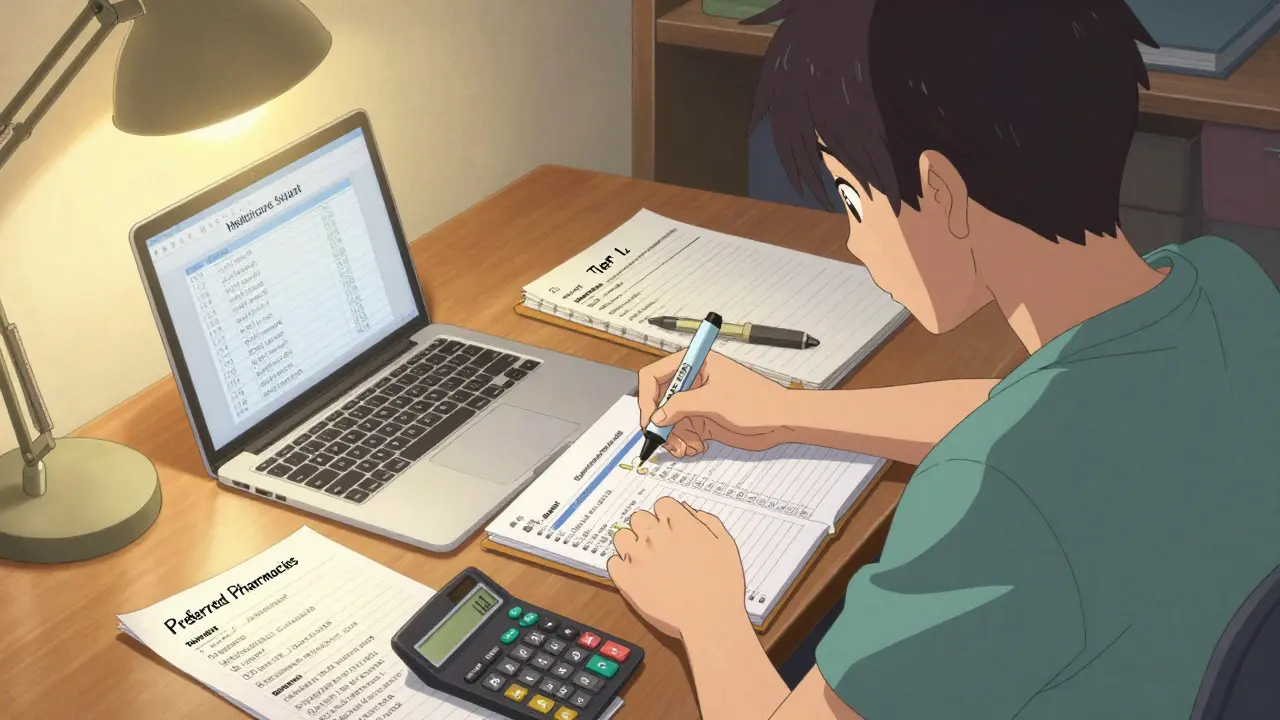
Don't rely on a salesperson's word that your drugs are "covered." Use this systematic approach to ensure your costs stay low:
- Gather Your Full List: Write down the exact name, dosage (e.g., 500mg), and formulation (e.g., extended-release) of every medication you take.
- Request the Full Formulary: Don't just look at the "Summary of Benefits." Ask for the complete drug list.
- Check the Tier: Locate your drug and identify its tier. If it's Tier 2 or higher, check if there is a Tier 1 alternative your doctor can prescribe.
- Run the Math: Use a cost estimator tool. Calculate: (Copay x Number of Fills per Year) + (Any applicable deductible).
Special Considerations for Medicare and State Rules
If you are switching Medicare Part D plans, be aware that the landscape is changing. The 2025 redesign is introducing new tiered structures that separate preferred and non-preferred generics even further. This makes using the Medicare Plan Finder tool essential, as it can help you spot which plan offers the lowest total out-of-pocket cost for your specific mix of drugs.
Geography also plays a huge role. For instance, if you live in New York, state rules may waive deductibles for generics entirely. In contrast, California residents might face a separate outpatient drug deductible. Always check your state's specific mandates, as they often provide more protection than the baseline federal requirements.
Common Pitfalls to Avoid
Many people fall into the trap of choosing a plan based on the monthly premium. A plan that costs $50 less per month sounds great, but if it moves your primary generic from Tier 1 to Tier 2, you could be paying an extra $30 per month in copays, erasing your savings. Additionally, beware of "integrated deductibles" where your pharmacy and doctor visit costs all go toward one big bucket. These can be confusing and often leave you paying full price for meds for the first three months of the year.
What happens if my generic drug isn't on the new plan's formulary?
If a drug isn't listed, it's considered "non-formulary." You may still be able to get it, but you'll likely pay a much higher percentage of the cost. In this case, you can file a "formulary exception" request through your doctor, arguing that the drug is medically necessary and no covered alternative works for you.
Is a "preferred generic" the same as a regular generic?
Not necessarily. Both are generic versions of a brand-name drug. However, the insurer has a special deal with the manufacturer of the "preferred" version, meaning you pay a lower copay (Tier 1) for that specific one and a higher copay (Tier 2) for others.
Do I have to pay my deductible before my generic copay kicks in?
It depends on your plan. High-deductible plans usually require you to pay the full cost until the deductible is met. However, some Silver SPD marketplace plans waive the deductible for Tier 1 generics, allowing you to pay only the copay immediately.
Why does the pharmacy tell me my drug is a different price than the insurance site?
This usually happens because of pharmacy networks. If you are at a "non-preferred" pharmacy, the insurance company will only cover a portion of the cost, leaving you to pay the difference. Always check if your pharmacy is "in-network" for the specific plan you are choosing.
Can I switch my medication to a lower tier?
Yes. You can ask your doctor to look at the new plan's formulary and see if there is a "therapeutic equivalent" in Tier 1. Many drugs have similar generics that perform the same function but are categorized differently by the insurance company.
Releted Post

Caspian Fothergill
Hello, my name is Caspian Fothergill. I am a pharmaceutical expert with years of experience in the industry. My passion for understanding the intricacies of medication and their effects on various diseases has led me to write extensively on the subject. I strive to help people better understand their medications and how they work to improve overall health. Sharing my knowledge and expertise through writing allows me to make a positive impact on the lives of others.
Comments
Post Comment