
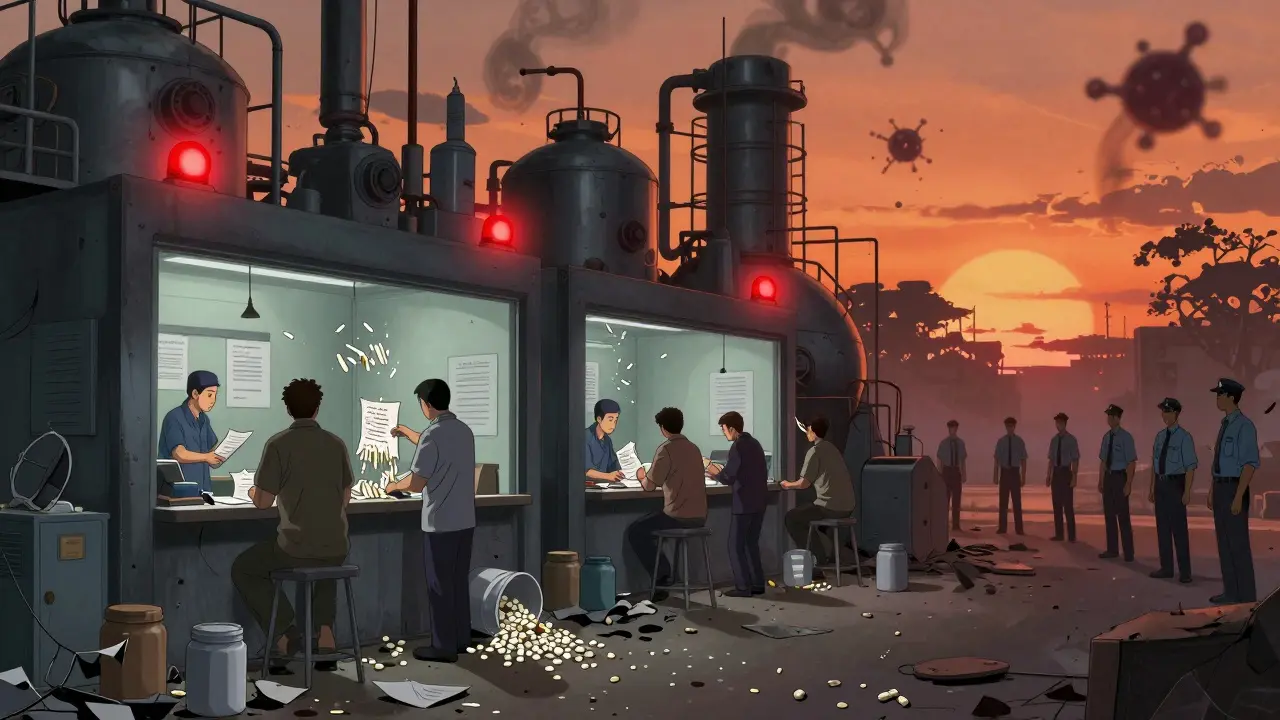
When you pick up a generic pill at the pharmacy, you expect it to work just like the brand-name version. But behind that simple promise lies a complex, often broken system. In 2022, the FDA recorded 3,944 drug recalls - many tied directly to manufacturing flaws at foreign plants. These aren’t random errors. They’re systemic failures in how generic drugs are made, tested, and monitored. And the consequences aren’t theoretical. Patients have suffered strokes, heart attacks, and treatment failures because a pill didn’t dissolve properly, contained hidden toxins, or varied too much in strength from batch to batch.
What Goes Wrong Inside a Generic Drug Factory?
Generic drug manufacturers don’t need to repeat the expensive clinical trials that brand-name companies do. Instead, they must prove their product is bioequivalent - meaning it delivers the same amount of active ingredient at the same rate as the original. But proving equivalence doesn’t guarantee quality. Many plants cut corners to save money under intense price pressure. The average price of generic drugs fell by 18.3% between 2018 and 2022, forcing manufacturers to reduce spending on quality control by 22.7%. Common failures include:- Inadequate testing: 18.7% of FDA inspection findings point to flawed analytical methods. Some labs use outdated or inaccurate tools to check potency or purity.
- Poor data integrity: 24.8% of violations involve falsified or deleted records. Employees have been caught shredding test results or disabling audit trails on computer systems.
- Uncontrolled impurities: The 2018 valsartan recall exposed NDMA, a probable carcinogen, in blood pressure meds made in China and India. This wasn’t an accident - it was a chemical reaction triggered by unapproved process changes.
- Bad packaging: 12.3% of inspection issues involve packaging that lets in moisture or light, degrading the drug before it reaches patients.
- Unstable formulations: 15.6% of facilities lack proper long-term stability data. That means no one knows if the pill will still work after six months on a shelf.
Why Foreign Plants Are More Likely to Fail
About 80% of the active ingredients in U.S. drugs come from overseas, mostly China and India. Yet the FDA inspects only 13% of these foreign facilities each year. Why? Because they can’t just show up unannounced. In the U.S., inspectors can walk into a plant without warning. In India or China, they must give notice - sometimes months in advance. That gives factories time to clean up, hide bad records, or even temporarily shut down problematic lines. A 2023 Ohio State University study found generic drugs made in India were linked to 23.7% more severe adverse events than those made in the U.S. The numbers don’t lie:- Chinese facilities receive 28.6% more FDA inspection violations than U.S. ones.
- Indian facilities get 19.3% more violations.
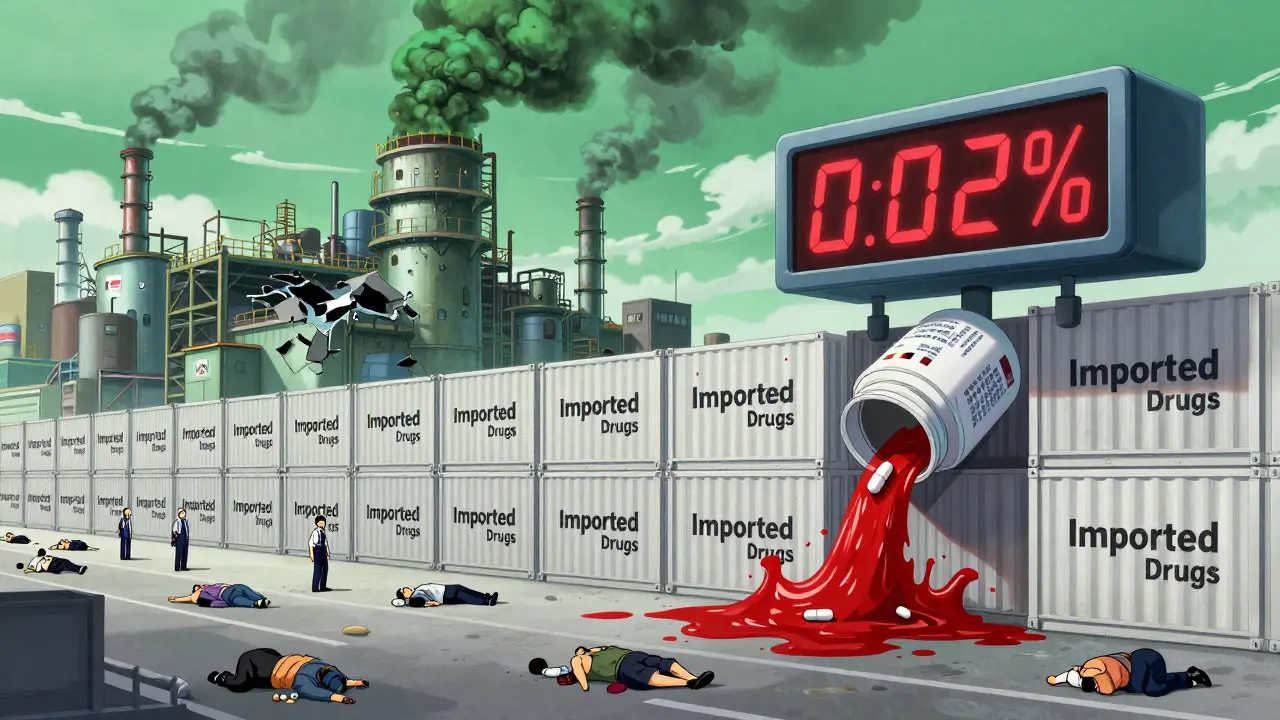
- Over 68% of 2022 drug shortages were caused by quality issues at foreign plants.
High-Risk Drugs Are Especially Dangerous
Not all generics are created equal. Some drugs have a narrow therapeutic index - meaning the difference between a safe dose and a toxic one is tiny. These include blood thinners like warfarin, epilepsy drugs like phenytoin, and transplant medications like tacrolimus. In 2022, 37% of complete response letters (denials) from the FDA for generic drugs were for these high-risk products. A Harvard study found that generic tacrolimus capsules showed 28.4% higher variability in blood levels than the brand version. For a transplant patient, that’s the difference between organ rejection and survival. The FDA’s own data shows that 15.2% of drugs on its Watch List - those flagged for possible quality issues - were not truly equivalent to their brand-name counterparts. And when patients report problems, the FDA’s system is slow to catch them. In 2022, over 1,800 adverse event reports were linked to generic drug quality - many involving drugs like nitroglycerin tablets that failed to dissolve properly, leading to heart attack deaths.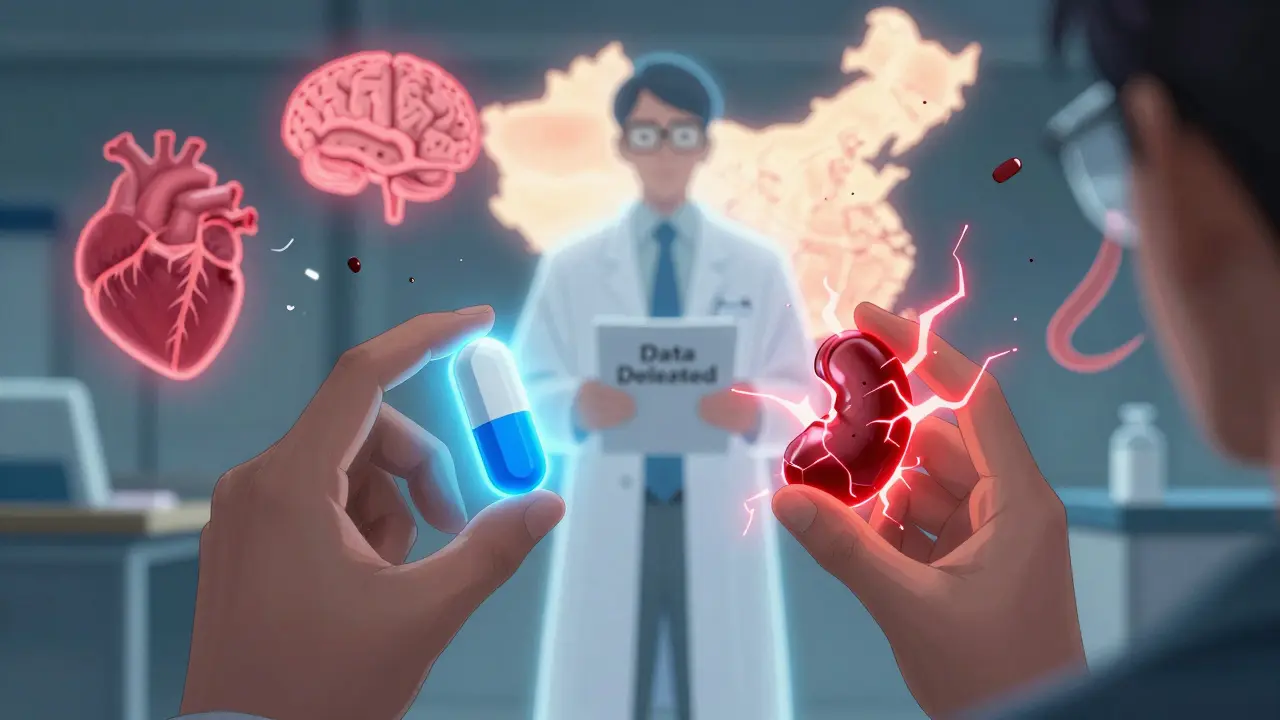
The Inspection Gap and Regulatory Failures
The FDA’s ability to oversee global manufacturing is stretched thin. In 2016, the Government Accountability Office found that nearly 1,000 foreign drug plants had never been inspected at all. Even today, the agency can’t keep up. Dr. Ameet Nathwani of Sanofi called the current inspection model “fundamentally broken.” Dr. Helen Winkle, former FDA deputy commissioner, pointed out that the agency doesn’t routinely test products - it relies on paperwork. One shocking 2022 inspection report from Intas Pharmaceuticals in Gujarat, India, showed an employee pouring acid into a trash can full of quality control documents. The FDA issued a warning letter, but the plant kept making drugs. Meanwhile, the cost of compliance keeps rising. FDA user fees for generic applications jumped 62.9% from 2018 to 2023. But instead of investing in better systems, many companies cut corners. Only 23.8% of generic manufacturers have fully adopted Quality by Design (QbD) - a science-based approach that builds quality into the process from day one.What’s Being Done - And What’s Not
The FDA’s 2023-2027 Strategic Plan promises risk-based inspections and more focus on high-risk products. The 2022 FDA User Fee Reauthorization added $56.7 million to boost foreign inspections - aiming to raise them from 1,200 to 1,800 per year by 2027. That sounds good, but with over 3,000 foreign drug plants, it’s still less than 60% coverage. The European Medicines Agency (EMA) took a harder line. Since January 2023, it has conducted unannounced inspections on all foreign suppliers. Result? A 41.2% spike in critical findings - proof that surprise visits work. Some manufacturers are stepping up. Companies investing in QbD, automated testing, and real-time monitoring are seeing fewer recalls and higher market share. McKinsey predicts that by 2027, these high-quality producers will control 65% of the market. The rest? They’ll either fix their systems or get pushed out.What Patients and Providers Can Do
You can’t control where your drug is made. But you can be smarter about how you use it.- Watch for changes: If a generic pill looks different, tastes different, or doesn’t seem to work like before, talk to your pharmacist. It might be a new supplier.
- Check the manufacturer: Look up the name on the bottle. Some companies have better reputations than others. Zhejiang Huahai, for example, had a 3.2-star rating on Drugs.com for valsartan - far below U.S. versions.
- Report problems: Use the FDA’s MedWatch system to report adverse events. The more reports, the more likely the FDA will investigate.
- Ask for brand-name when critical: For drugs like warfarin, levothyroxine, or tacrolimus, the small cost difference may be worth the consistency.
How Quality Is Measured - And Why It’s Not Enough
The FDA judges generic drugs on bioequivalence - whether the drug gets into the bloodstream at the same rate and amount as the brand. But that’s only part of the story. Two pills can have identical blood levels but different release patterns, impurities, or degradation rates. Critical Quality Attributes (CQAs) like dissolution rate, particle size, and stability must be tightly controlled. Yet in 2022, 18.7% of FDA Form 483 observations were about inadequate analytical methods. Some labs used old equipment or skipped validation tests. One plant in India used a method that couldn’t detect nitrosamine impurities - until the FDA caught it. Even when tests are done right, data integrity is a mess. Passwords aren’t protected. Audit trails are turned off. Records are altered. In 2022, 78.3% of data integrity issues involved these basic failures. No amount of testing matters if the data is fake.The Bigger Picture: Supply Chains and National Security
The U.S. depends on China and India for 72% of essential medicine active ingredients. That’s not just a business issue - it’s a national security risk. During the pandemic, shortages of heparin, antibiotics, and steroids showed how fragile the system is. The White House’s 2021 Executive Order on supply chains flagged pharmaceuticals as a top vulnerability. But progress has been slow. The FDA still can’t inspect most foreign plants without warning. And Congress hasn’t funded the tools needed to fix it. The solution isn’t bringing all manufacturing back to the U.S. - that’s not realistic or affordable. But it is possible to demand better oversight, fund more inspectors, and require unannounced checks. The EMA proved it can be done. The FDA just needs the will.Are generic drugs always safe?
Not always. While many generics are safe and effective, quality issues at foreign manufacturing plants have led to recalls, dangerous impurities, and treatment failures. Drugs with narrow therapeutic indexes - like blood thinners or transplant meds - are especially risky if quality control is poor.
Why are drugs from India and China more likely to have problems?
They face less oversight. The FDA can’t inspect foreign plants without advance notice, so manufacturers have time to clean up before inspectors arrive. These facilities also receive more violations per inspection than U.S. plants. Data shows drugs from these regions are linked to more adverse events and account for most drug shortages.
How can I tell if my generic drug is from a bad manufacturer?
Check the label for the manufacturer’s name. Some companies have higher recall rates or poor patient ratings. If your pill looks different, doesn’t work as well, or causes new side effects, ask your pharmacist if the supplier changed. You can also report issues to the FDA’s MedWatch system.
Should I avoid generic drugs altogether?
No. Most generics are safe and save money. But for critical medications - like those for heart conditions, epilepsy, or organ transplants - consider sticking with the brand-name version if you notice changes in effectiveness or side effects. The cost difference is often small compared to the risk.
What is the FDA doing to fix this?
The FDA is increasing foreign inspections and targeting high-risk facilities, but progress is slow. They’ve added funding to raise inspections from 1,200 to 1,800 per year by 2027. But with over 3,000 foreign plants, that’s still not enough. The EMA’s unannounced inspections show what’s possible - but the FDA hasn’t adopted that model yet.
What Comes Next?
The pressure is building. More patients are reporting problems. More pharmacists are refusing to dispense certain generics. More lawmakers are asking questions. The next few years will decide whether the system reforms - or collapses under its own weight. If you take a generic drug, you’re trusting a global supply chain you can’t see. That trust is being tested. And right now, the system is failing too many of us.Releted Post

Caspian Fothergill
Hello, my name is Caspian Fothergill. I am a pharmaceutical expert with years of experience in the industry. My passion for understanding the intricacies of medication and their effects on various diseases has led me to write extensively on the subject. I strive to help people better understand their medications and how they work to improve overall health. Sharing my knowledge and expertise through writing allows me to make a positive impact on the lives of others.
so the fda is basically just reading the company’s homework and hoping for the best? lmao. 0.02% testing? that’s not oversight, that’s a joke. my grandma’s pill bottle has more quality control than this system.
It is beyond unacceptable that the United States of America, a global leader in science and medicine, has outsourced the production of its life-saving pharmaceuticals to nations with no accountability, no transparency, and no respect for regulatory integrity. This is not merely a public health failure-it is a national security crisis. The FDA’s reliance on advance notice inspections is tantamount to inviting a thief to clean his fingerprints before the police arrive. We must immediately halt all imports from foreign manufacturers lacking unannounced inspection compliance. This is not a matter of cost-it is a matter of survival.
They say China and India make bad drugs-but who gave them the contracts? The same FDA that approved every single one. This isn’t about foreign corruption-it’s about American greed. The FDA is owned by Big Pharma, and they want the cheapest pills possible so they can sell them for $500 instead of $5. The real villains are the CEOs who profit from patients dying because their blood thinner didn’t dissolve. Wake up-this was planned.
Thank you for writing this. I’ve been terrified to refill my tacrolimus for months because the pills looked different, and I didn’t know if I should trust them. I called my pharmacist and found out the manufacturer switched-no one told me. This post gave me the courage to ask for the brand. I’m not rich, but my life isn’t cheap. 🙏
My uncle died because his generic warfarin didn’t work. They said it was ‘bioequivalent.’ He bled out in his sleep. No one ever apologized.
Usha, I’m so sorry to hear about your uncle. That’s devastating. But your story matters-this is why we need to report every single change in how a generic feels. The FDA only acts when enough people speak up. If you’re comfortable, consider filing a MedWatch report. It’s not just for you-it’s for everyone who comes after. You’re not alone in this.
For anyone reading this: check the manufacturer name on your bottle. Look up the company on Drugs.com or the FDA’s warning letters list. If it’s flagged, ask your pharmacist for a different batch-even if it costs $3 more. Your life isn’t worth the savings. I’ve worked in pharma logistics. I’ve seen the paperwork. It’s worse than you think.
The assertion that 68% of drug shortages originate from foreign manufacturing quality issues is statistically misleading. The FDA’s own data indicates that 41% of shortages are due to supply chain disruptions, 22% due to production halts for capital upgrades, and only 19% directly attributable to GMP violations. Correlation does not imply causation. Furthermore, the EMA’s unannounced inspection model has not demonstrably reduced adverse events-it has merely increased compliance costs. Regulatory efficiency must be measured by outcomes, not inspection frequency.