
Workstation Setup: Optimize Your Health and Safety for Daily Medication Management
When you’re managing multiple medications, tracking side effects, or monitoring something like therapeutic drug monitoring, the process of measuring drug levels in the blood to ensure they’re in the safe and effective range. Also known as TDM, it requires focus, consistency, and a space designed for accuracy. Your workstation setup, the physical and digital environment where you manage your health records, medication schedules, and doctor communications isn’t just a desk and a chair—it’s your command center for avoiding dangerous drug interactions, harmful combinations between medications, supplements, or foods that can lead to serious side effects or treatment failure and catching early signs of adverse drug reactions, unexpected or harmful responses to medications that aren’t listed on the label. This isn’t about having a fancy office. It’s about building a system that keeps you alive and in control.
Think about it: if you’re taking theophylline, your dose window is razor-thin. A single missed blood test or misread label could mean seizures or worse. If you’re on statins and waking up with vivid dreams, you need to log it—fast. If you’re juggling antidepressants and painkillers, one wrong mix could trigger serotonin syndrome. All of this demands a clear, clutter-free space where you can open your symptom diary, a daily log of physical and emotional changes linked to medication use, cross-check your medication tracker, a tool or system used to record what drugs you take, when, and at what dose, and call your pharmacist for a free pharmacy consultation, a service where trained professionals review your full drug list for risks and savings. Your desk needs to hold your pill organizer, your printed drug interaction checklist, your CPAP pressure log, and your last lab result—all within reach, all visible, all organized. No more digging through folders. No more guessing if you took your dose at 8 a.m. or 9 a.m. This is how people avoid hospital visits: by making their daily routine foolproof.
It’s not about buying expensive gear. It’s about reducing friction. A well-lit corner with a labeled tray for daily meds, a tablet or notebook set up for quick symptom entries, a printed list of your top three drug interactions you need to avoid, and a phone number taped to the wall for your pharmacy—these are the real tools. You don’t need a standing desk to manage your diabetes meds. You just need to know where everything is when your brain is foggy from sleep apnea or your hands are shaking from low thyroid. The posts below show you exactly how others have built systems that work—whether they’re tracking acetaminophen’s effect on mood, comparing ED drugs side by side, or using a simple spreadsheet to cut their CPAP pressure by losing weight. This isn’t theory. It’s what people are doing right now to stay safe, save money, and take back their health. Let’s see what works.
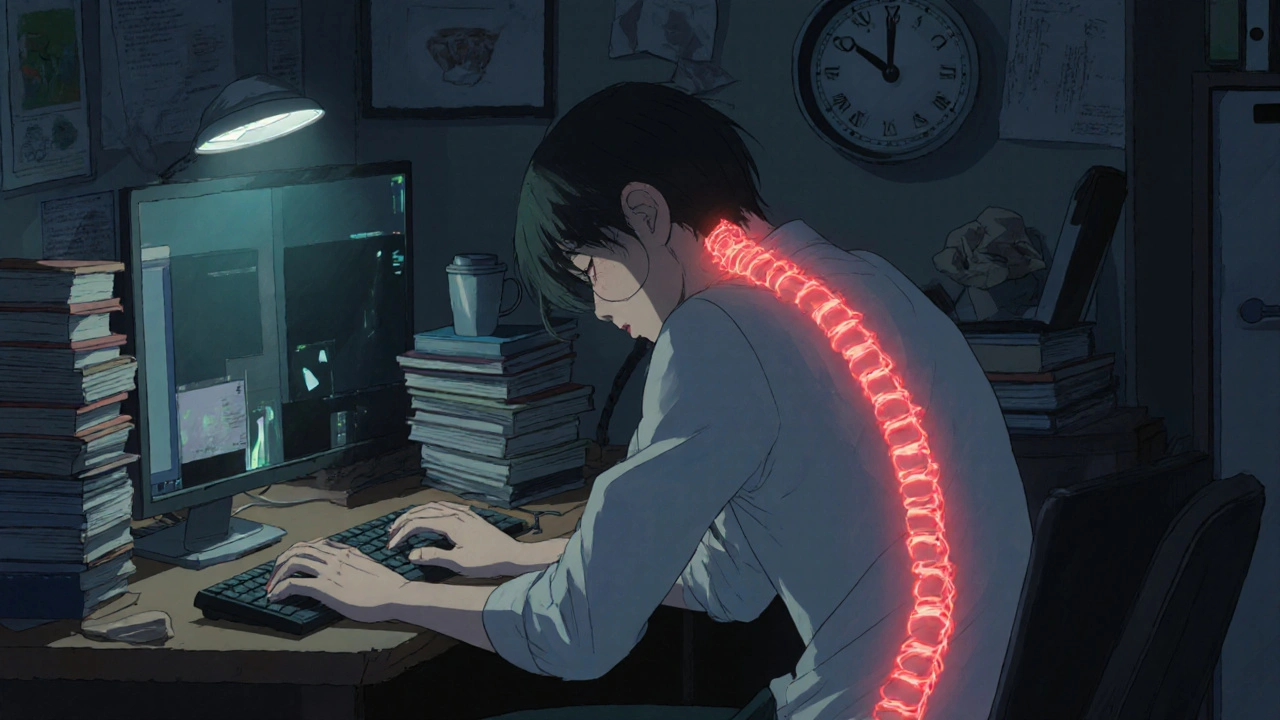
Learn simple, science-backed ways to adjust your workstation and posture to reduce joint pain from sitting all day. No expensive gear needed - just smart placement and small habits.