
Therapeutic Drug Monitoring: What It Is and Why It Matters for Your Medications
When you take a medication, your body doesn’t always process it the same way as someone else. That’s where therapeutic drug monitoring, the process of measuring drug concentrations in your blood to ensure they’re in the right range for safety and effectiveness. Also known as TDM, it’s not just for complex cases—it’s a practical tool used daily to fine-tune treatment. Think of it like checking your car’s oil level. You don’t just guess how much you need—you measure it. The same goes for drugs like digoxin, lithium, or vancomycin. Too little and the drug won’t work. Too much and you risk serious side effects.
Pharmacokinetics, how your body absorbs, moves, and gets rid of a drug over time plays a huge role here. Your age, liver function, kidney health, and even what you eat can change how fast a drug clears from your system. That’s why two people on the same dose of an antidepressant might feel totally different. One might be fine, while the other feels dizzy or nauseous—because their blood levels are out of range. Blood tests for drugs, routine lab checks that track actual drug concentrations help doctors see what’s really happening inside you, not just what’s written on the prescription.
It’s not just about avoiding toxicity. Therapeutic drug monitoring can mean the difference between a treatment that works and one that doesn’t. For example, if you’re on an antibiotic like vancomycin for a stubborn infection, your doctor might check your levels to make sure it’s hitting the right spot in your body to kill bacteria. Or if you’re taking epilepsy meds like phenytoin, even a small change in your levels can trigger a seizure. And for drugs like lithium, used for bipolar disorder, the window between helpful and dangerous is razor-thin—monitoring isn’t optional, it’s life-saving.
What you’ll find in these articles isn’t just theory. Real stories. Real tests. Real choices. You’ll learn how to spot when your meds might need checking, which common drugs require it, and how to talk to your pharmacist or doctor about getting your levels tested. You’ll see how drug interactions—like mixing antibiotics with heart meds—can throw your levels off balance. You’ll understand why some people need weekly checks while others only need them once a year. And you’ll find out how simple changes—like skipping a dose or starting a new supplement—can quietly mess with your treatment without you even noticing.
Therapeutic drug monitoring isn’t about overcomplicating your care. It’s about making sure your treatment actually fits you—not the other way around.
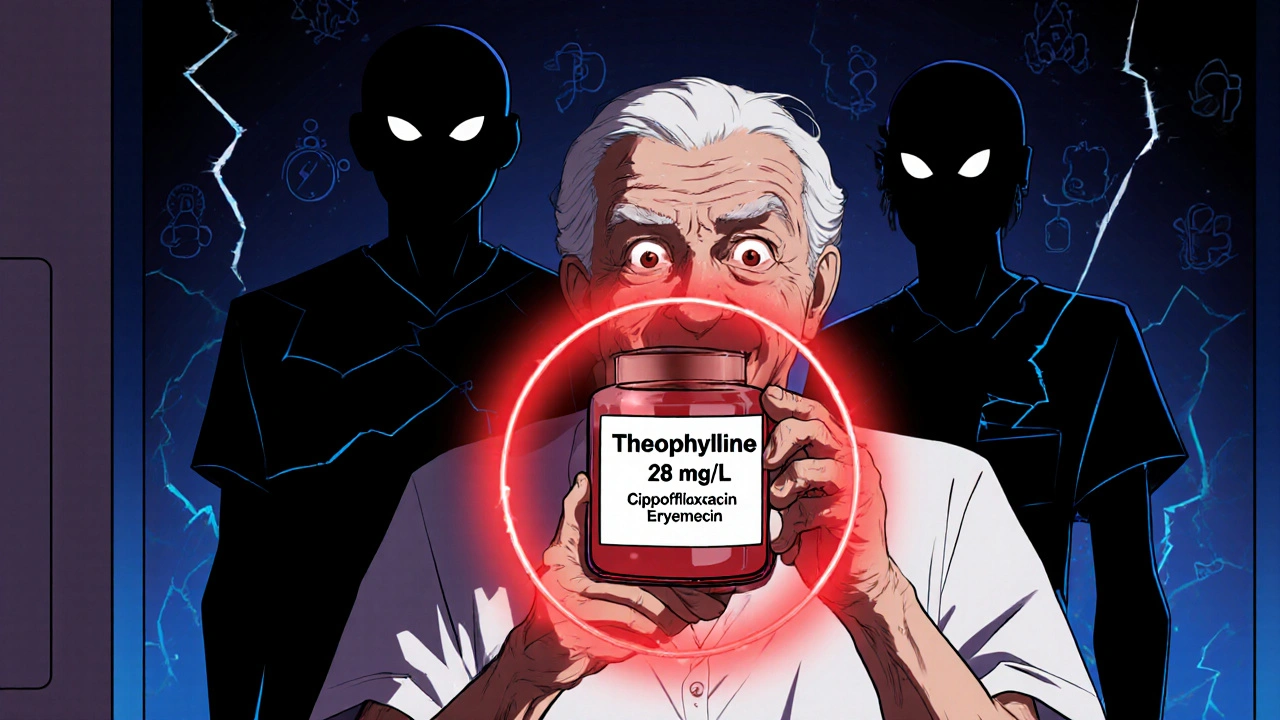
Theophylline has a narrow therapeutic index-tiny margins between effectiveness and deadly toxicity. Regular blood monitoring is essential to avoid seizures, arrhythmias, and death. Learn why this old drug still demands strict oversight.