
Pharmacy Consultation: Get Smart About Your Medications and Safety
When you walk up to the pharmacy counter, a pharmacy consultation, a direct conversation with a licensed pharmacist about your medications, side effects, and health goals. Also known as medication review, it’s not just about picking up a prescription—it’s the moment you turn from passive receiver to active partner in your care. Too many people treat it like a transaction. But a real pharmacy consultation can stop a deadly drug interaction before it starts, help you manage confusing side effects, or even save you money by finding a safer, cheaper alternative.
Think about drug interactions, when two or more medications react in your body in harmful ways. One post in this collection explains how mixing opioids like tramadol with antidepressants can trigger serotonin syndrome—a condition that can shut down your breathing. Another shows how caffeine with Adderall spikes your heart rate dangerously. These aren’t rare cases. Pharmacists see these mistakes every day. A good consultation catches them before you even leave the store.
And it’s not just about pills. medication safety, the practice of using drugs correctly to avoid harm includes knowing how to track symptoms, when to test blood levels (like with theophylline), or how to adjust doses if you’re on multiple drugs. You don’t need to be a doctor to ask the right questions. You just need to know what matters: What’s this for? What should I watch for? What else am I taking that could mess with it? The pharmacist doesn’t care if you sound smart—they care if you’re safe.
Some people think consultations are only for the elderly or the seriously ill. But if you’re on more than three meds, take supplements, have chronic pain, or just feel off after starting something new—you need one. The pharmacist advice, expert guidance from a trained professional who knows how drugs behave in real bodies you get here isn’t guesswork. It’s based on what works in real patients, not just textbook theory. You’ll find posts that show how to use a symptom diary to spot hidden reactions, how to check for interactions before starting anything new, and why even something as simple as acetaminophen can affect your brain chemistry.
There’s no magic trick. No app replaces a human who’s seen 500 people take the same drug and react differently. But you can make the most of every visit. Write down your meds. Bring your supplements. Note when you feel weird. Ask what happens if you skip a dose. And don’t let them rush you. This isn’t a formality—it’s your safety net.
Below, you’ll find real, practical guides written by people who’ve been there: tracking drug reactions, comparing ED meds, understanding why statins mess with sleep, or how to handle hair loss from meds. Each one started with a question someone asked at the pharmacy counter. You’re not alone. And you don’t have to figure it out alone either.
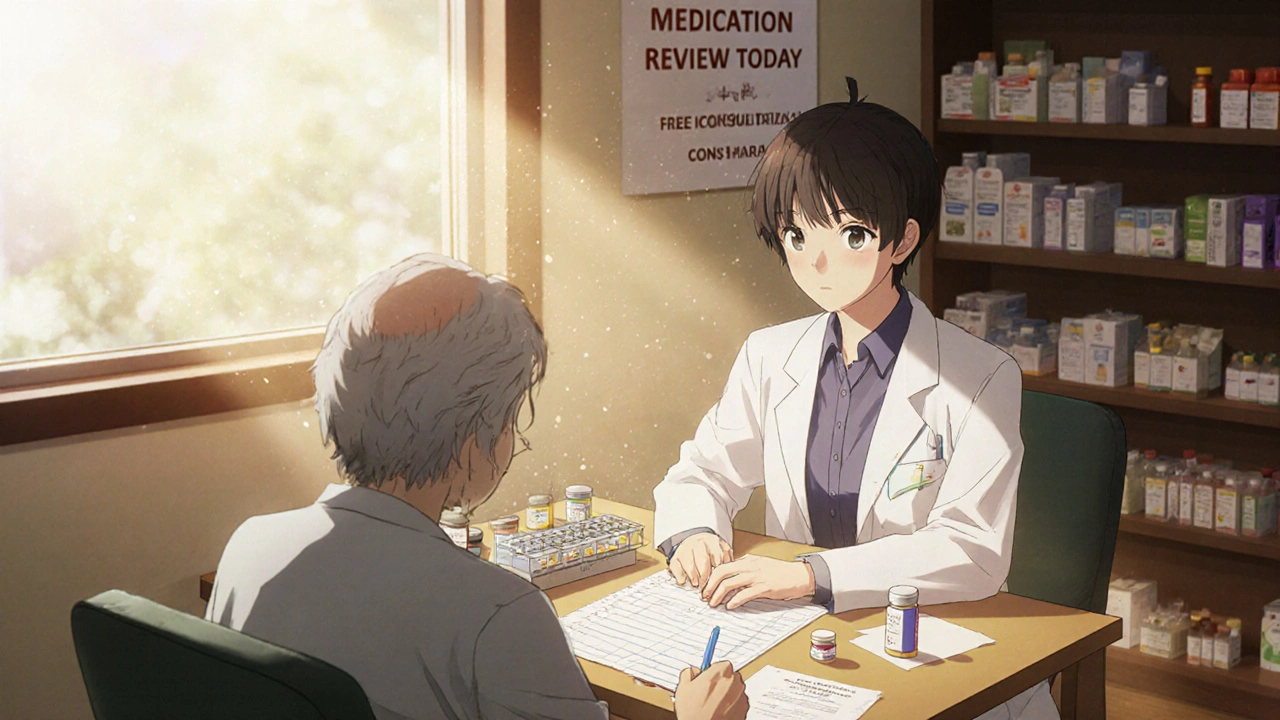
Learn how to use your pharmacy's free consultation service to prevent dangerous drug interactions, save money, and improve medication safety - with real examples and step-by-step guidance.