
MTM Services: What They Are and How They Keep Your Medications Safe
When you’re taking multiple medications, MTM services, Medication Therapy Management is a structured service where pharmacists review all your drugs to catch problems before they happen. Also known as medication review, it’s not just a checkup—it’s a safety net for people juggling prescriptions, supplements, and over-the-counter pills. Many patients don’t realize their blood pressure med might make their diabetes drug less effective, or that an herbal supplement could turn a common painkiller into a liver risk. MTM services step in to connect those dots.
These services are built around three key things: drug interaction review, the process of spotting dangerous combinations between medications, supplements, and even foods, medication safety, ensuring each drug is still needed, at the right dose, and not causing harm, and pharmacist consultation, direct access to a trained expert who knows how your body reacts to specific combinations. You won’t find this in a quick pharmacy pickup. MTM services happen over 15–30 minute sessions, often covered by Medicare Part D or private insurance, where the pharmacist looks at your full list—every pill, patch, and tincture—and asks the questions your doctor might not have time for.
Think of it like a GPS for your meds. If you’re on eight different drugs, one for your heart, another for nerves, a third for sleep, plus fish oil and turmeric, things can go sideways fast. One post here details how opioids and antidepressants can trigger serotonin syndrome. Another shows how statins might mess with your sleep. A third warns that acetaminophen isn’t just for pain—it changes brain chemistry. These aren’t rare edge cases. They’re everyday risks. MTM services catch them before you end up in the ER. They also spot when you’re taking two drugs that do the same thing, or when a drug you’ve been on for years is no longer needed. One patient cut their pill count from 12 to 6 after an MTM session—no new prescriptions, just smarter ones.
What you’ll find in the posts below isn’t theory. It’s real-world examples: how theophylline needs blood tests because the line between helpful and deadly is thin, how anticoagulants are still safe even if you’re at risk of falling, and how hormone replacement therapy can clash with seizure meds. These aren’t random stories—they’re the kind of cases MTM services are designed to prevent. Whether you’re managing diabetes with Precose, treating glaucoma with latanoprost, or dealing with hair loss from medication-induced alopecia, the same rules apply: more drugs don’t mean better outcomes. Smarter use does.
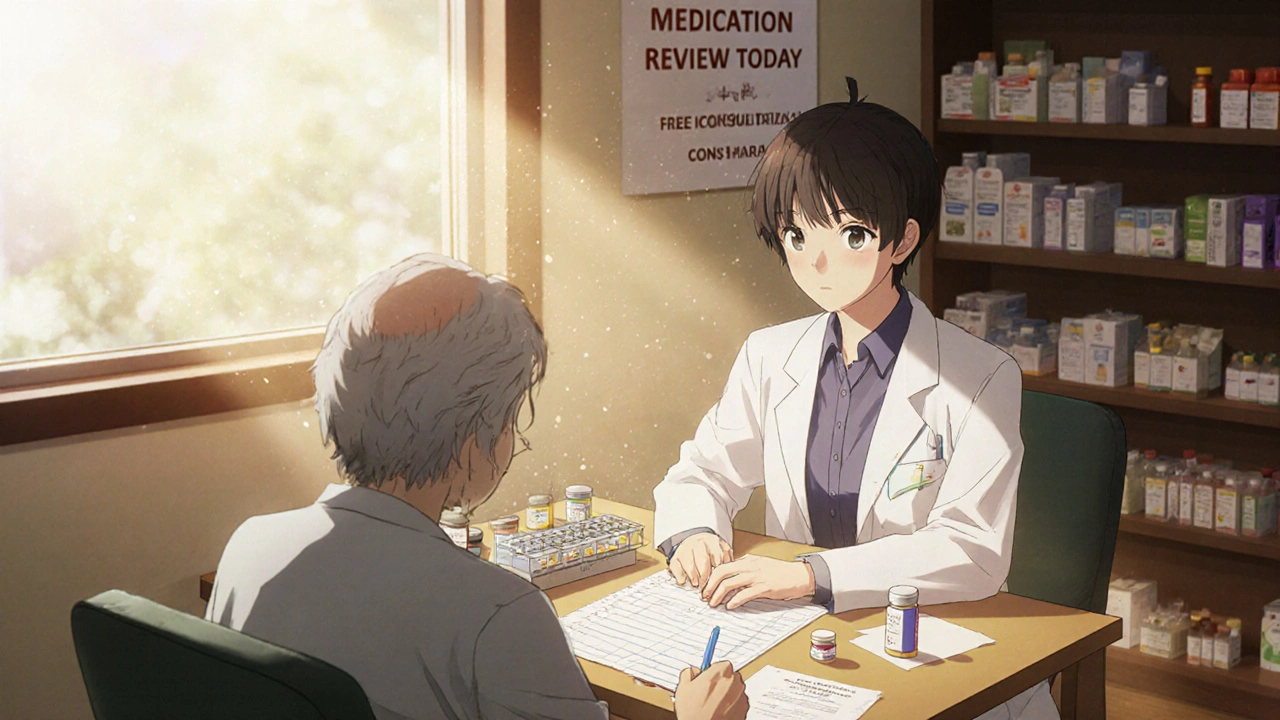
Learn how to use your pharmacy's free consultation service to prevent dangerous drug interactions, save money, and improve medication safety - with real examples and step-by-step guidance.