
Joint Pain: Causes, Relief, and Medication Safety Tips
When your joint pain, discomfort or stiffness in the areas where two bones meet, like knees, hips, or fingers. Also known as arthralgia, it’s one of the most common reasons people visit doctors—and one of the most misunderstood. It’s not just aging. Joint pain can come from overuse, injury, autoimmune conditions, or even the meds you’re taking to feel better.
Many people reach for NSAIDs, nonsteroidal anti-inflammatory drugs like ibuprofen or meloxicam that reduce swelling and pain without realizing they can cause stomach bleeding, raise blood pressure, or even worsen kidney function over time. And if you’re on other meds—say, blood thinners or antidepressants—mixing NSAIDs can trigger dangerous drug interactions, when two or more medications affect each other’s safety or effectiveness. One study found nearly 1 in 5 older adults on multiple prescriptions had at least one risky combo they didn’t know about.
But pills aren’t the only answer. Poor posture and sitting all day are silent killers for your joints. Simple fixes—like adjusting your chair height, keeping your screen at eye level, or standing up every 30 minutes—can cut ergonomics, the science of designing workspaces to fit your body and reduce strain-related pain without a single pill. You don’t need fancy gear. Just awareness.
And here’s the thing: joint pain often gets worse if you ignore the root cause. Is it inflammation? Nerve pressure? A reaction to a new med? Tracking symptoms—like when the pain flares, what you ate, or which meds you took—can turn guesswork into real answers. That’s why so many of the guides here focus on practical tracking, safe drug use, and lifestyle tweaks that actually work.
You’ll find real advice here: how to spot if your pain is drug-induced, which painkillers are safest for long-term use, how to adjust your desk setup so your knees stop screaming by 3 p.m., and how to talk to your pharmacist about hidden risks. No fluff. No hype. Just what you need to move better, feel less pain, and stay in control of your health.
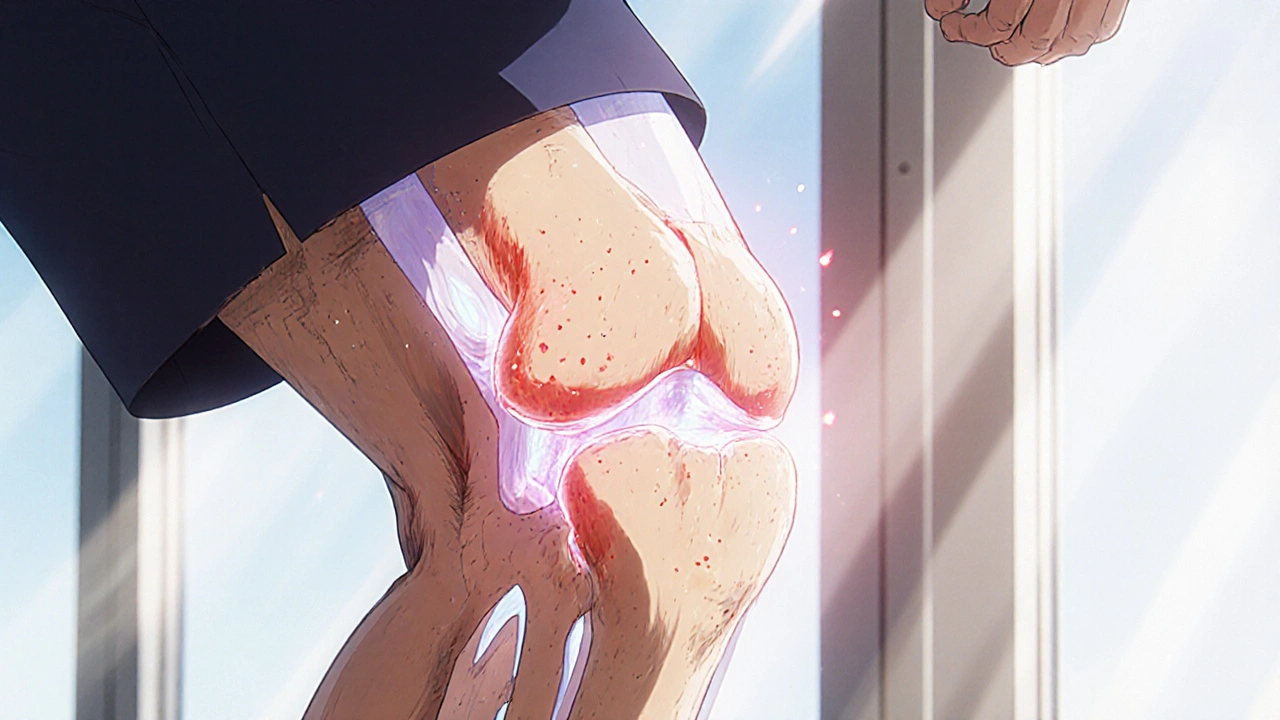
Osteoarthritis affects over 32 million Americans and is the leading cause of joint pain and disability. Learn how cartilage degeneration works, why movement is key, and what real, evidence-based strategies actually reduce pain and improve function - without relying on pills or surgery.