
Hemolysis from Drugs: What You Need to Know About Medication-Induced Red Blood Cell Damage
When hemolysis from drugs, the destruction of red blood cells caused by certain medications. Also known as drug-induced hemolytic anemia, it happens when your body breaks down red blood cells faster than it can replace them—leading to fatigue, dark urine, and sometimes life-threatening complications. This isn’t rare. Even common painkillers, antibiotics, or antimalarials can trigger it in people with hidden genetic risks.
G6PD deficiency, a genetic condition affecting how red blood cells handle oxidative stress is the biggest red flag. If you have it, taking drugs like sulfamethoxazole, dapsone, or even aspirin in high doses can cause sudden, severe hemolysis. You might never know you have it until you take one of these meds—and then you’re in the ER. Hemolytic anemia, a condition where red blood cells are destroyed faster than the bone marrow can make them from drugs doesn’t always show up right away. Symptoms like yellow skin, dark tea-colored urine, or unexplained weakness can sneak up days later. Doctors often miss it because it looks like the flu or dehydration.
It’s not just about genetics. Some drugs like penicillin or cephalosporins can cause your immune system to attack your own red blood cells—a condition called immune hemolytic anemia. Others, like quinine or methyldopa, can trigger similar reactions even in people with no prior risk. The real danger? You might be taking one of these meds for years without knowing it’s slowly eating away at your red blood cells. Routine blood tests won’t always catch it unless your doctor is specifically looking for signs of hemolysis—like low haptoglobin, high bilirubin, or elevated reticulocyte count.
What’s in your medicine cabinet matters. If you’ve ever had unexplained anemia, jaundice after starting a new drug, or a family history of reactions to sulfa drugs or malaria meds, get tested for G6PD deficiency. It’s a simple blood test. And if you’re prescribed a new medication, ask your pharmacist: "Could this cause hemolysis?" That one question could save you from a hospital trip.
Below, you’ll find real-world guides on drugs that trigger this reaction, how to spot the early signs, what to do if you’re at risk, and how to avoid dangerous combinations with other meds. These aren’t theoretical—they’re based on cases where people ignored the warning signs until it was too late. Don’t be one of them.
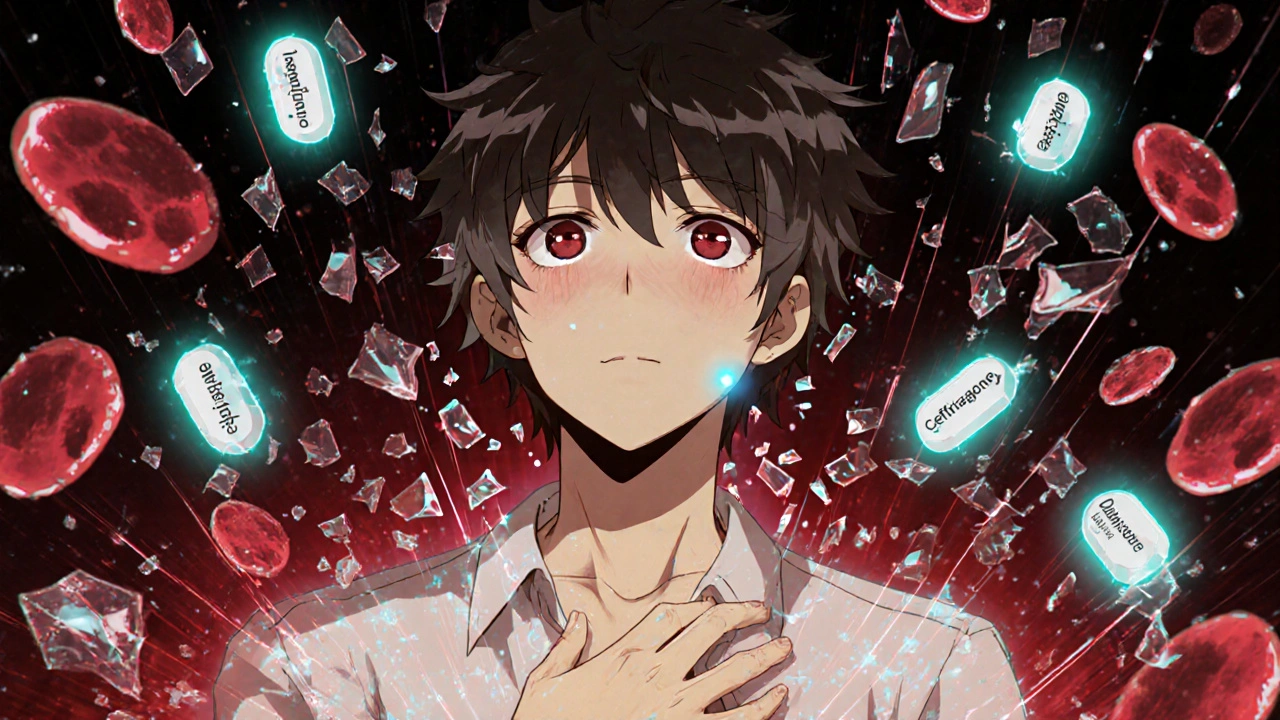
Drug-induced hemolytic anemia is a rare but dangerous condition where medications trigger the immune system to destroy red blood cells. Recognizing symptoms like jaundice, fatigue, and dark urine-and knowing which drugs are most likely to cause it-can save lives.