
Drug-Induced Hemolytic Anemia: Causes, Risks, and What You Need to Know
When a medication accidentally turns your body against your own red blood cells, that’s drug-induced hemolytic anemia, a condition where certain drugs trigger the immune system to destroy red blood cells, leading to anemia. Also known as immune-mediated hemolytic anemia from drugs, it’s not common—but when it happens, it can hit fast and hard. You might be taking a common antibiotic, an anti-seizure drug, or even a painkiller without realizing it could be quietly attacking your oxygen-carrying cells.
This isn’t just about feeling tired. hemolytic anemia, a blood disorder where red blood cells break down faster than the body can replace them from drugs can cause jaundice, dark urine, shortness of breath, and a rapid heartbeat. Some cases show up within days of starting a new medicine. Others take weeks. The tricky part? Doctors don’t always connect the dots. If you’ve recently started a new drug and suddenly feel worse—not just nauseous or dizzy, but pale, weak, or yellowish—this could be why.
drug interactions, when two or more medications combine in unexpected and harmful ways are a big part of the puzzle. Drugs like penicillin, cephalosporins, methyldopa, and even some NSAIDs have been linked to this reaction. It’s not about dosage—it’s about your body’s unique response. One person takes the same pill with no issue; another develops a dangerous drop in red blood cells. That’s why monitoring symptoms matters more than just trusting the label.
There’s no single test for this. Doctors look at your blood counts, check for signs of red cell breakdown, and rule out other causes like infections or autoimmune diseases. A positive Coombs test often confirms it. But the real fix? Stopping the drug. Once the trigger is removed, your body usually starts rebuilding red blood cells on its own. In severe cases, you might need steroids or even a transfusion.
What you’ll find in the articles below isn’t just theory—it’s real-world guidance from people who’ve dealt with this. You’ll see how drug-induced hemolytic anemia shows up in patients on antibiotics, how it’s mistaken for other conditions, and how pharmacists and doctors are learning to spot it faster. You’ll also learn which medications carry the highest risk, what symptoms to track after starting a new prescription, and how to talk to your provider before you take something new. This isn’t about scaring you off medicine. It’s about giving you the tools to use it safely.
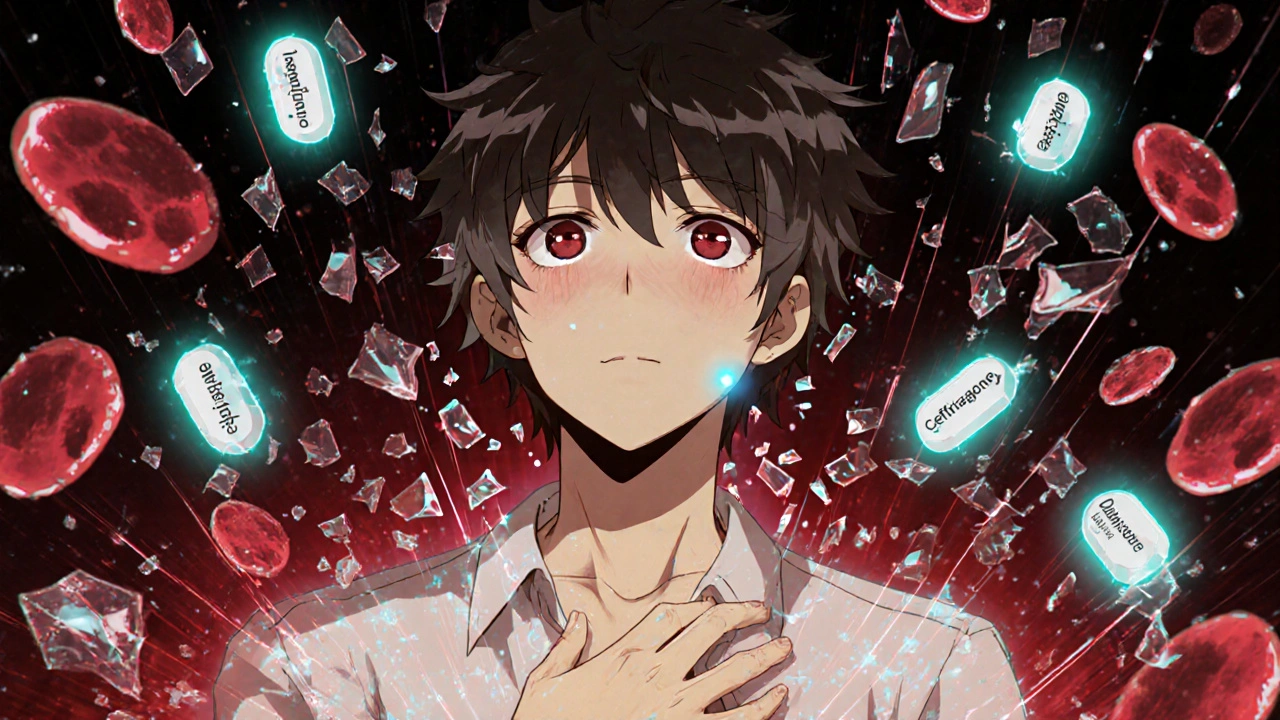
Drug-induced hemolytic anemia is a rare but dangerous condition where medications trigger the immune system to destroy red blood cells. Recognizing symptoms like jaundice, fatigue, and dark urine-and knowing which drugs are most likely to cause it-can save lives.