
Cartilage Degeneration: What It Is, How It Affects You, and What You Can Do
When you hear cartilage degeneration, the slow breakdown of the smooth tissue that cushions your joints. Also known as osteoarthritis, it's not just "wear and tear"—it's a biological process that can start quietly and worsen over years, making simple movements like climbing stairs or gripping a coffee cup painful. This isn’t something that only happens to older people. If you’ve ever had knee pain after a long walk, shoulder stiffness from typing all day, or hip discomfort after sitting too long, you’re likely seeing early signs of cartilage wear.
Joint health, how well your joints move without pain or restriction depends on more than just age. It’s shaped by your weight, posture, activity level, and even the medications you take. For example, long-term use of NSAIDs, nonsteroidal anti-inflammatory drugs like ibuprofen or meloxicam can ease pain but don’t stop cartilage from breaking down—and in some cases, may even speed it up. Meanwhile, simple changes like adjusting your workstation or losing a few pounds can reduce pressure on your knees by up to 4 pounds for every pound lost. That’s not magic—it’s physics and biology working together.
Cartilage degeneration doesn’t happen in isolation. It connects to other issues you might not realize are linked. Poor posture leads to uneven joint stress. Medication side effects, like those from statins or certain painkillers, can affect muscle strength and joint stability. Even sleep problems from vivid dreams or insomnia can reduce your body’s ability to repair tissues overnight. The posts below cover real-world connections: how ergonomics at your desk impacts joint pain, why some pain meds help short-term but hurt long-term, and how weight loss can cut CPAP pressure needs—because everything’s tied together.
You won’t find miracle cures here. But you will find clear, practical advice based on what actually works: how to track symptoms that signal worsening joint damage, how to talk to your pharmacist about drug interactions that might be making your pain worse, and which lifestyle tweaks have the biggest impact without costing a fortune. Whether you’re dealing with early stiffness or chronic discomfort, the goal isn’t to reverse cartilage loss—it’s to slow it down, manage the pain, and keep moving.
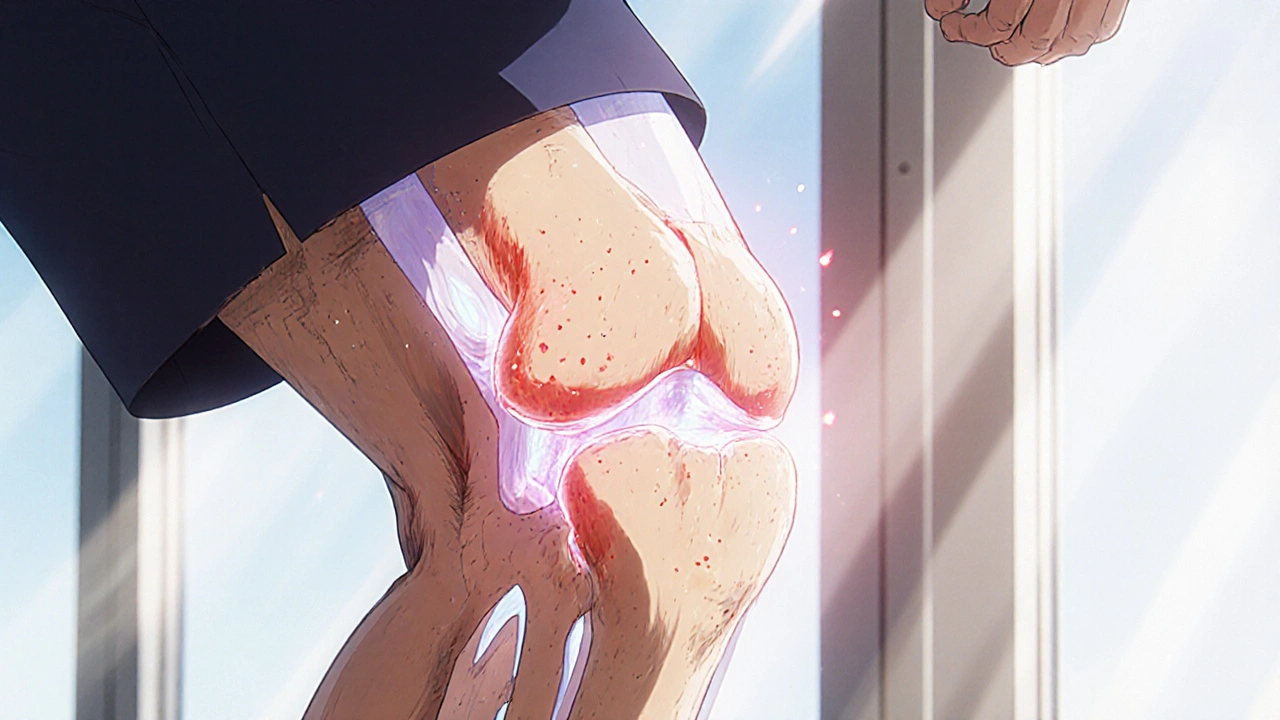
Osteoarthritis affects over 32 million Americans and is the leading cause of joint pain and disability. Learn how cartilage degeneration works, why movement is key, and what real, evidence-based strategies actually reduce pain and improve function - without relying on pills or surgery.