
ADHD Medication Side Effects: What You Need to Know Before Starting Treatment
When you start ADHD medication, prescribed drugs used to improve focus, reduce impulsivity, and manage hyperactivity in attention deficit hyperactivity disorder. Also known as ADHD treatment drugs, they can be life-changing—but they’re not without risks. Not everyone feels the same way on these meds. Some people get a boost in focus with little trouble. Others deal with headaches, loss of appetite, or trouble sleeping. The key isn’t avoiding side effects entirely—it’s knowing what to expect so you can act fast if something goes wrong.
Stimulant side effects, common reactions to medications like methylphenidate and amphetamines that increase dopamine and norepinephrine in the brain are the most frequent. Think dry mouth, reduced hunger, trouble falling asleep, or feeling jittery. These often fade after a few weeks as your body adjusts. But if your heart races, you feel chest pain, or your mood suddenly turns angry or anxious, that’s not normal. Non-stimulant ADHD drugs, like atomoxetine or guanfacine, work differently and may cause drowsiness, upset stomach, or low blood pressure instead. They’re slower to kick in, but for some, they’re the only option because stimulants don’t sit right.
What most people don’t tell you? Side effects aren’t just physical. Some notice emotional changes—feeling flat, withdrawn, or unusually tearful. Kids might seem less like themselves. Adults might lose their sense of humor. These aren’t always listed on the package, but they matter. Tracking how you feel each day helps you and your doctor spot patterns. Did the irritability start after the dose went up? Did your sleep get worse after switching brands? Small details like these make a big difference.
It’s also not just about the drug itself. What you eat, what else you take, even how much water you drink can change how your body handles it. Mixing ADHD meds with certain supplements, cold medicines, or even grapefruit juice can push side effects into dangerous territory. And if you’re on antidepressants or blood pressure pills? That’s a conversation you need to have with your pharmacist—before you take the first pill.
There’s no one-size-fits-all answer. What’s a mild headache for one person could be a red flag for another. That’s why the goal isn’t to find a drug with zero side effects—it’s to find the right balance. The right dose. The right timing. The right support system. And if something feels off, you don’t have to push through it. You’re not weak for asking for help. You’re being smart.
Below, you’ll find real-world guides from people who’ve walked this path. Some share how they managed appetite loss. Others explain how they switched from stimulants to non-stimulants after bad reactions. There are tips on talking to your doctor, spotting early warning signs, and even how to handle side effects at work or school. This isn’t theory. It’s what actually works when the meds are already in your system.
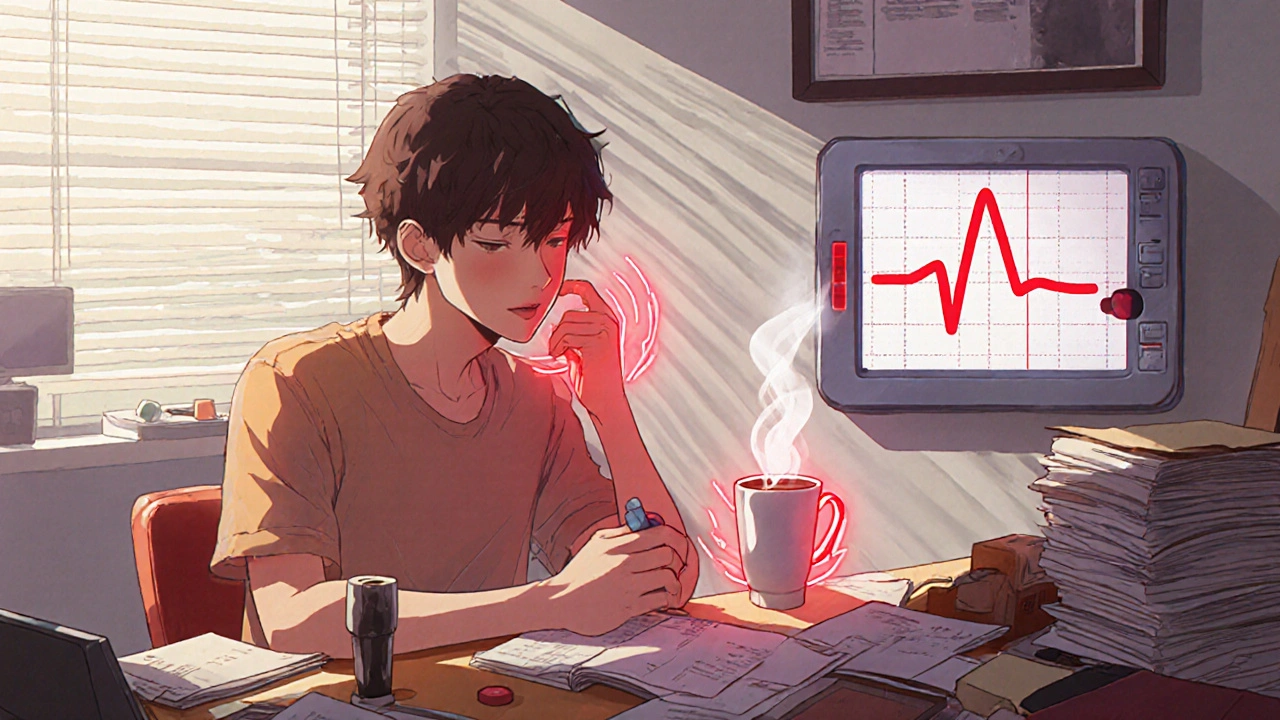
Mixing caffeine with ADHD meds like Adderall can boost focus-but it also raises heart risks and anxiety. Learn how they interact, what side effects to watch for, and safer ways to manage your routine.