
ADHD and Coffee: How Caffeine Affects Focus, Medication, and Daily Life
When you have ADHD, a neurodevelopmental condition that affects attention, impulse control, and executive function, finding the right way to stay focused can feel like trial and error. Many people turn to caffeine, a central nervous system stimulant found in coffee, tea, and energy drinks—not because it’s prescribed, but because it works. It’s not a substitute for medication, but for some, a cup of coffee is the quiet ally they didn’t know they needed. ADHD medication, typically stimulants like methylphenidate or amphetamines, help regulate brain chemicals involved in attention—and caffeine does something similar, though less precisely. That’s why people with ADHD often notice they feel calmer, more alert, or even more organized after drinking coffee. But it’s not that simple.
Here’s the catch: caffeine doesn’t work the same for everyone. Some people with ADHD report that coffee helps them start tasks, stay on track, and reduce fidgeting. Others find it makes their anxiety worse, causes jitteriness, or even makes their symptoms feel more chaotic. And if you’re already taking prescription stimulants, adding caffeine can stack effects—sometimes dangerously. For example, too much caffeine with Adderall might spike your heart rate or make insomnia unbearable. That’s why checking for drug interactions, how substances like caffeine affect the way medications work in your body matters. It’s not just about avoiding bad reactions—it’s about making sure what you’re drinking isn’t undoing the work of your treatment plan. The same way you’d ask your pharmacist about mixing Tylenol with blood thinners, you should ask about coffee and your ADHD meds.
What’s interesting is that caffeine’s effect on ADHD isn’t just about brain chemistry. It’s also about routine. People with ADHD often struggle with starting tasks, and the ritual of making coffee—boiling water, grinding beans, waiting—can act as a grounding cue. That’s why some therapists suggest using caffeine as part of a morning structure, not just as a stimulant. But timing matters. Drinking coffee after 2 p.m. can wreck sleep, and poor sleep makes ADHD symptoms worse the next day. It’s a loop: you need focus, so you drink coffee, but then you can’t sleep, so you’re more scattered tomorrow. And if you’re using coffee to replace sleep, you’re not solving the problem—you’re masking it.
There’s no one-size-fits-all answer. Some people with ADHD thrive on one cup a day. Others avoid it completely. And some switch to green tea, which has less caffeine and L-theanine, a calming amino acid that may smooth out the edges of caffeine’s jitter. What’s clear from real-world experience—and from posts on symptom tracking, drug safety, and medication effects—is that caffeine is a tool, not a cure. It can help, hurt, or do nothing at all, depending on your body, your meds, and your habits. Below, you’ll find real guides on how to track side effects, check for dangerous interactions, and understand how common drugs like acetaminophen or stimulants affect your brain. These aren’t theoretical. They’re written by people who’ve been there—trying to make coffee work without crashing their system.
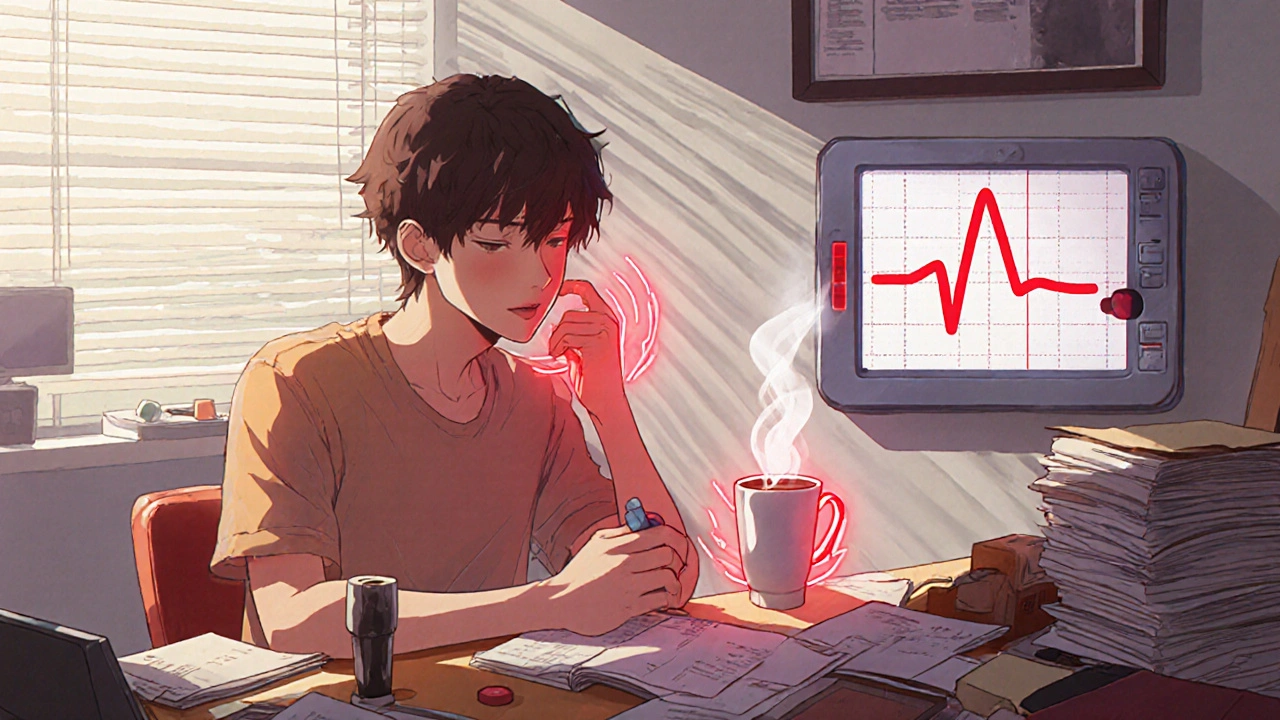
Mixing caffeine with ADHD meds like Adderall can boost focus-but it also raises heart risks and anxiety. Learn how they interact, what side effects to watch for, and safer ways to manage your routine.