
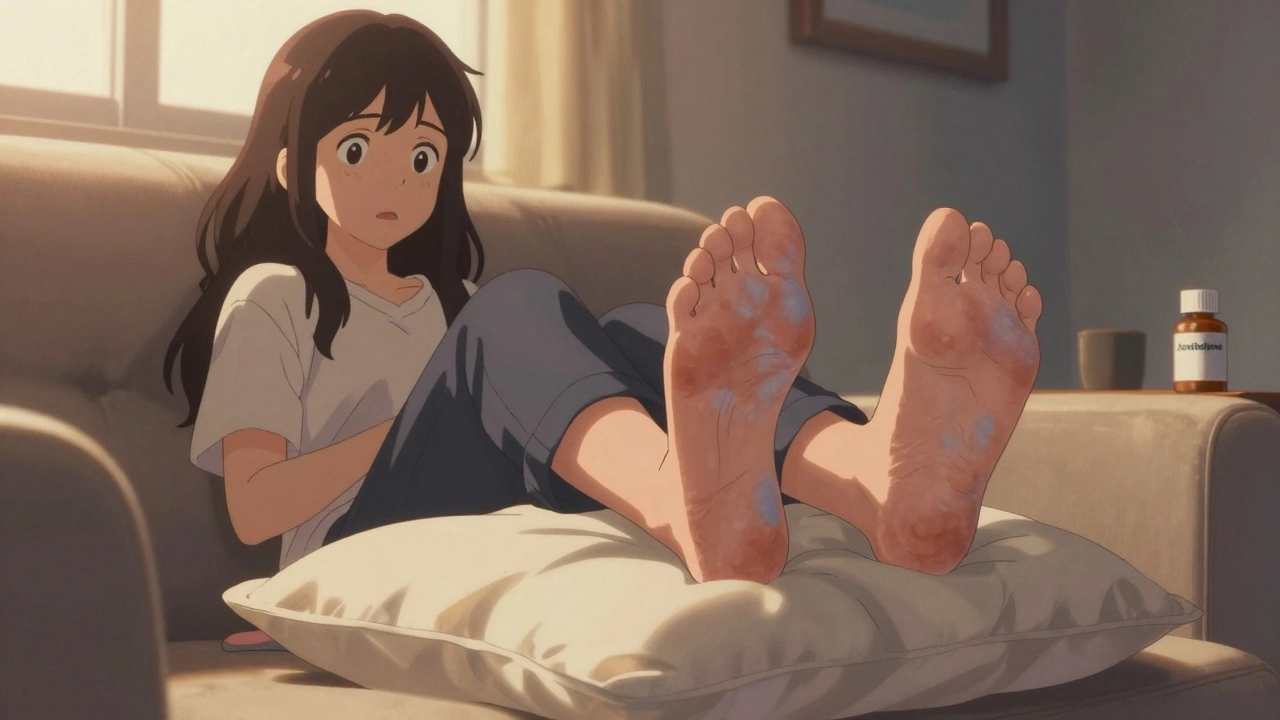
Swelling in your hands or feet might seem like a minor annoyance-maybe you wore tight shoes, or it’s just been a long day. But if it’s new, sudden, or getting worse, it could be your body telling you something serious: a medication you’re taking is causing trouble. Around 5 to 10% of people on certain drugs develop this kind of swelling, and many don’t realize it’s not normal. It’s not just about discomfort-it can be a warning sign of heart problems, kidney issues, or even dangerous reactions to chemotherapy.
What Kind of Swelling Are You Seeing?
Not all swelling is the same. There are two main types you need to tell apart, because they mean different things and need different responses.Edema from blood pressure meds-like amlodipine, nifedipine, or other calcium channel blockers-is the most common. It usually shows up as puffiness in your ankles and feet, sometimes spreading to your hands. The skin might feel tight, and if you press on it with your finger, it leaves a dent that takes a few seconds to bounce back. This is called pitting edema. It tends to get worse as the day goes on and improves when you lie down overnight. About 15% of people taking 10mg of amlodipine daily develop this, and it’s the number one reason patients stop taking these drugs.
Hand-foot syndrome (also called palmar-plantar erythrodysesthesia) is different. This is mostly linked to chemotherapy drugs like capecitabine or doxorubicin. Instead of just puffiness, you’ll notice redness, tingling, burning, or numbness in your palms and soles. Your skin might peel, crack, or even blister. It can be so painful you can’t hold a toothbrush, turn a doorknob, or walk without discomfort. Grade 2 or higher means it’s affecting your daily life-and you need to call your doctor right away.
Which Medications Cause This?
Some drugs are more likely to cause swelling than others. Here’s what the data shows:- Calcium channel blockers (amlodipine, nifedipine, diltiazem): Cause ankle swelling in 5-15% of users, especially at higher doses.
- NSAIDs (ibuprofen, naproxen, celecoxib): Lead to fluid retention in 1-3% of long-term users. Even over-the-counter painkillers can do this if taken daily for weeks.
- Corticosteroids (prednisone, dexamethasone): Commonly cause swelling in hands, feet, and face. This is one of the most recognizable side effects.
- Thiazolidinediones (pioglitazone, rosiglitazone): Used for type 2 diabetes, these cause swelling in 4-7% of users within the first few months.
- Gabapentin and pregabalin: Often prescribed for nerve pain or seizures, these can cause noticeable swelling in the legs and feet-so much so that patients on Reddit describe "sock marks that last all day."
- Chemotherapy agents (capecitabine, 5-FU, docetaxel): Up to 60% of patients on capecitabine develop hand-foot syndrome, often within the first few weeks of treatment.
It’s not just one drug. If you’re on multiple medications, the risk goes up. A 2023 review found that patients taking three or more drugs linked to fluid retention had a 40% higher chance of developing swelling than those on just one.
When to Call Your Doctor Right Away
Swelling isn’t always an emergency-but some signs mean you need help now. Don’t wait. Don’t think it’ll go away. Call your doctor or go to urgent care if you have:- Swelling on just one side (like only your right ankle). This could be a blood clot (deep vein thrombosis), which can break loose and travel to your lungs-a life-threatening condition.
- Shortness of breath or chest pain along with swelling. This could mean your heart is struggling to pump fluid properly.
- Rapid weight gain-more than 2 pounds in 24 hours or 5 pounds in a week. That’s not fat. That’s fluid building up in your body.
- Red, hot, or ulcerated skin on your hands or feet. Especially if you’re on chemo. Blisters or open sores mean Grade 3 hand-foot syndrome, which needs immediate treatment.
- Not urinating much (less than 500 mL per day). This could mean your kidneys are failing to clear excess fluid.
- Fever with swelling. Infection can sneak in through cracked skin, especially in cancer patients.
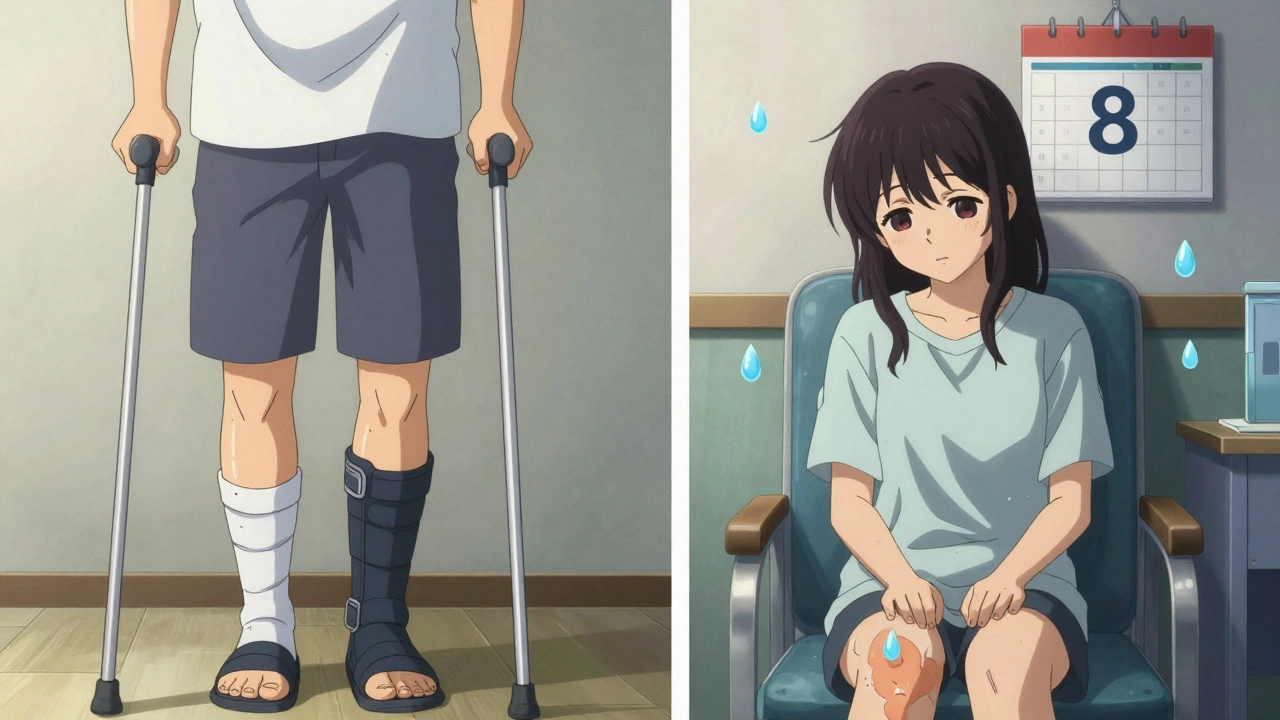
According to the CDC, only 58% of adults recognize medication-induced swelling as something that needs medical attention. Too many people wait. A 2023 FDA analysis found that 37% of serious cases happened because people delayed calling their doctor-on average, they waited 8.2 days.

What Happens When You Call?
Your doctor won’t just tell you to “elevate your feet.” They’ll need to figure out what’s causing it. That means asking about:- When the swelling started
- Which meds you started around that time
- Whether it’s symmetric or one-sided
- Any other symptoms (fatigue, dizziness, cough, weight gain)
They might order blood tests to check your kidney and liver function, or an ultrasound if they suspect a clot. If you’re on a blood pressure med and the swelling is mild, they might lower your dose or switch you to a different drug-like losartan or lisinopril-which often resolves the issue within days to weeks. In one study, switching from amlodipine to losartan eliminated swelling in 85% of patients within two weeks.
If it’s hand-foot syndrome from chemo, your oncologist may reduce your dose, delay your next cycle, or prescribe topical treatments. Compression gloves or socks can help, and some patients find relief with cool water soaks or urea-based creams. But don’t try to treat it yourself-some home remedies can make it worse.
What You Can Do at Home (Safely)
While you wait to see your doctor-or after they’ve given you the green light-here’s what actually helps:- Elevate your feet above heart level for 30 minutes, three times a day. This isn’t just advice-it’s backed by data. One study showed it reduced swelling volume by 15% in just 48 hours.
- Watch your salt. Keep sodium under 2,300 mg per day. That means no processed snacks, canned soups, or fast food. Even small reductions can cut fluid retention by 20-25%.
- Wear comfortable shoes. Look for ones with extra depth-no tight straps or narrow toes. Swollen feet need room.
- Move gently. Walking or light cycling helps circulation and prevents fluid from pooling. Avoid standing still for long periods.
- Use compression. Over-the-counter 20-30 mmHg compression socks can reduce swelling by 40% in some patients, according to a 2021 trial.
- Take diuretics at the right time. If your doctor prescribes water pills, take them in the morning so you’re not waking up every hour to pee.
Don’t rely on unproven fixes. Vitamin B6 is often suggested for hand-foot syndrome, but a major Cochrane review of eight studies found no real benefit. Arnica gel showed promise in one small study, but it’s not standard care. Stick to what’s proven.
Why People Wait-And Why That’s Dangerous
A 2023 survey by the National Edema Foundation found that 55% of people with medication-induced swelling didn’t call their doctor right away. Why? They thought it was "just normal," "not serious enough," or "something I can live with." But here’s the truth: 18% of those who delayed care ended up with preventable complications-worse swelling, skin breakdown, infections, or even hospitalization. One patient on Reddit described her Grade 3 hand-foot syndrome: "I couldn’t hold my grandchild’s hand. I cried every time I tried to open a jar." That’s not something you should wait to fix.And it’s not just cancer patients. People on blood pressure meds often think swelling is "just part of aging." But if you started amlodipine last month and your ankles are puffier than ever, that’s not aging-that’s a drug reaction. And it’s fixable.
Can It Be Prevented?
Yes-sometimes. Starting a calcium channel blocker at a lower dose (like 2.5mg instead of 5mg or 10mg) cuts swelling risk by 60%. For chemo patients, applying urea 10% cream to hands and feet twice daily can reduce hand-foot syndrome by 25%. But prevention only works if you know what to look for.Education matters. Patients who got clear instructions on swelling signs were 3.2 times more likely to call their doctor early. That’s huge. If your doctor didn’t warn you about this side effect, ask. Write it down. Know what to watch for.
What Happens If You Don’t Act?
Most cases of medication-induced swelling resolve within 4 weeks once the cause is addressed. But 11% of people develop chronic lymphedema-long-term swelling that needs lifelong management. That means special compression garments, physical therapy, and ongoing care.And if it’s hiding something worse? A blood clot that goes untreated can lead to a pulmonary embolism. Undiagnosed heart failure can cause permanent damage. Kidney problems can worsen. Swelling is often the first sign.
You don’t have to suffer through it. You don’t have to guess. If your hands or feet are swollen and you’re on medication, don’t wait. Call your doctor. Even if it turns out to be harmless, you’ll get peace of mind. And if it’s serious? You just caught it early.
Can over-the-counter painkillers cause hand and foot swelling?
Yes. NSAIDs like ibuprofen, naproxen, and celecoxib can cause fluid retention, leading to swelling in the hands and feet. This happens in 1-3% of people who take them regularly for weeks or months. Even if you’re taking them for occasional headaches or back pain, daily use increases your risk. If you notice puffiness after starting these meds, talk to your doctor about alternatives.
Is swelling from amlodipine permanent?
No. Swelling from amlodipine is usually temporary and reverses once the dose is lowered or the medication is switched. In most cases, swelling improves within 1-2 weeks after changing drugs. About 85% of patients see full resolution after switching to an alternative blood pressure medication like losartan or lisinopril. Only about 45% of patients continue to have swelling despite management-these cases may require long-term monitoring.
Can hand-foot syndrome be treated at home?
Mild symptoms (Grade 1) can be managed at home with cool compresses, moisturizing creams, and avoiding friction or heat on hands and feet. But once symptoms become moderate (Grade 2) or severe (Grade 3)-like blistering, pain that interferes with daily tasks, or skin cracking-you need medical intervention. Never ignore these signs, especially if you’re on chemotherapy. Delaying treatment can lead to infection or the need to stop your cancer therapy.
Should I stop taking my medication if my feet swell?
No. Never stop a prescribed medication without talking to your doctor. Stopping suddenly can be dangerous-especially for blood pressure or heart medications. Instead, call your provider. They may adjust your dose, switch you to another drug, or add a treatment to reduce swelling. Many side effects are manageable without stopping the medication entirely.
How long does it take for swelling to go away after stopping the medication?
It varies. For most people, swelling starts to improve within a few days after stopping or adjusting the drug. Full resolution usually happens within 2-4 weeks. In some cases, especially with long-term use or underlying conditions like heart or kidney disease, swelling may take longer. If it hasn’t improved after a month, you should be reevaluated for other possible causes.
Can swelling in hands and feet be a sign of heart failure?
Yes. Swelling in the lower limbs is one of the most common early signs of heart failure, especially when it’s accompanied by shortness of breath, fatigue, or rapid weight gain. Medications like calcium channel blockers can cause swelling, but if you have other symptoms like trouble breathing when lying flat or waking up gasping for air, it could mean your heart isn’t pumping effectively. Always report new or worsening swelling to your doctor-it could be a red flag.
Releted Post


Caspian Fothergill
Hello, my name is Caspian Fothergill. I am a pharmaceutical expert with years of experience in the industry. My passion for understanding the intricacies of medication and their effects on various diseases has led me to write extensively on the subject. I strive to help people better understand their medications and how they work to improve overall health. Sharing my knowledge and expertise through writing allows me to make a positive impact on the lives of others.
so u take amlodipine and your ankles look like overinflated balloon animals? congrats u just joined the club. everyone else just calls it 'aging' but u? u got the special edition swelling package. lol.
This is an excellent and much-needed summary. Many patients don’t realize that even common OTC NSAIDs can cause fluid retention. The key is recognizing the pattern: if swelling appeared after starting a new medication and improves with elevation or salt reduction, it’s likely drug-induced. Always document timing and severity - it helps your provider make faster decisions.
I just want to say - if you’re reading this and you’ve been ignoring swollen feet because ‘it’s just how I feel now’ - STOP. I watched my mom go from ‘oh, my shoes are tight’ to ‘I can’t walk to the bathroom’ in three weeks because she waited too long. Hand-foot syndrome isn’t a nuisance - it’s a scream. Don’t be the person who says ‘I thought it would go away.’ It won’t. Call your doctor. Today.
Hey, if you’re on meds and your socks leave marks that last all day - you’re not crazy. That’s real. I used to think it was just me being ‘puffy’ until my pharmacist said, ‘You on gabapentin?’ Yep. Switched to pregabalin at half dose - swelling cut in half in 5 days. Don’t suffer in silence. Talk to someone.
In India, we have no such luxury - we take whatever is cheap, and if swelling happens, we endure it. You Americans complain about amlodipine? We are on five drugs at once and still told to ‘drink more water.’ Your healthcare system is broken - but at least you have access to data like this. We get memes and hope.
The term 'pitting edema' is technically correct, but let’s be honest - it’s just ‘finger dent syndrome.’ And yes, the 15% statistic on amlodipine is accurate - but what’s more fascinating is the pharmacokinetic nuance: calcium channel blockers induce vasodilation in precapillary arterioles without affecting postcapillary venules, creating a hydrostatic pressure gradient that forces fluid extravasation. But you didn’t come here for that - you came because your shoes don’t fit anymore.
I appreciate the thoroughness of this post. The distinction between edema and hand-foot syndrome is critical. I have been managing hypertension for 12 years and only learned about this side effect last year. It is never too late to educate oneself. I now monitor my ankles daily and keep a log. Small habits prevent big problems.
swelling isn’t a side effect. it’s your body whispering: ‘hey, maybe this drug isn’t your soulmate.’
actually i think most swelling is just from sitting too much and eating carbs. doctors love blaming meds because it’s easier than telling you to move or eat less. also, compression socks? lol. i wear leggings and call it a day.
I was so scared when my hands started peeling after chemo - I thought I was failing. But my nurse showed me how to use urea cream and cool soaks. It didn’t disappear overnight, but it got manageable. You’re not alone. And you’re not weak for needing help. Healing isn’t loud - sometimes it’s just applying cream and breathing through the burn.
of course you're swollen. you're probably on 7 meds and eat ramen for dinner. stop blaming the drugs and start blaming your life choices. also, if you're on chemo and still using hand cream from walmart? you deserve the blisters.
I’ve been wondering - has anyone tried the old-school folk remedy of wrapping swollen feet in cabbage leaves? My Ukrainian grandma swore by it for ‘water retention.’ I know it sounds bonkers, but one small 2020 pilot study showed reduced inflammation markers. Maybe it’s placebo. Maybe it’s phytochemical magic. Either way, it’s cheaper than compression socks. Worth a shot before you call your doc? Or am I just a weirdo?