
Steroid Taper Schedule Calculator
Personalized Taper Schedule Calculator
Calculate a safe taper schedule based on your starting dose and tapering method to avoid adrenal crisis. This tool follows medical guidelines from the Endocrine Society.
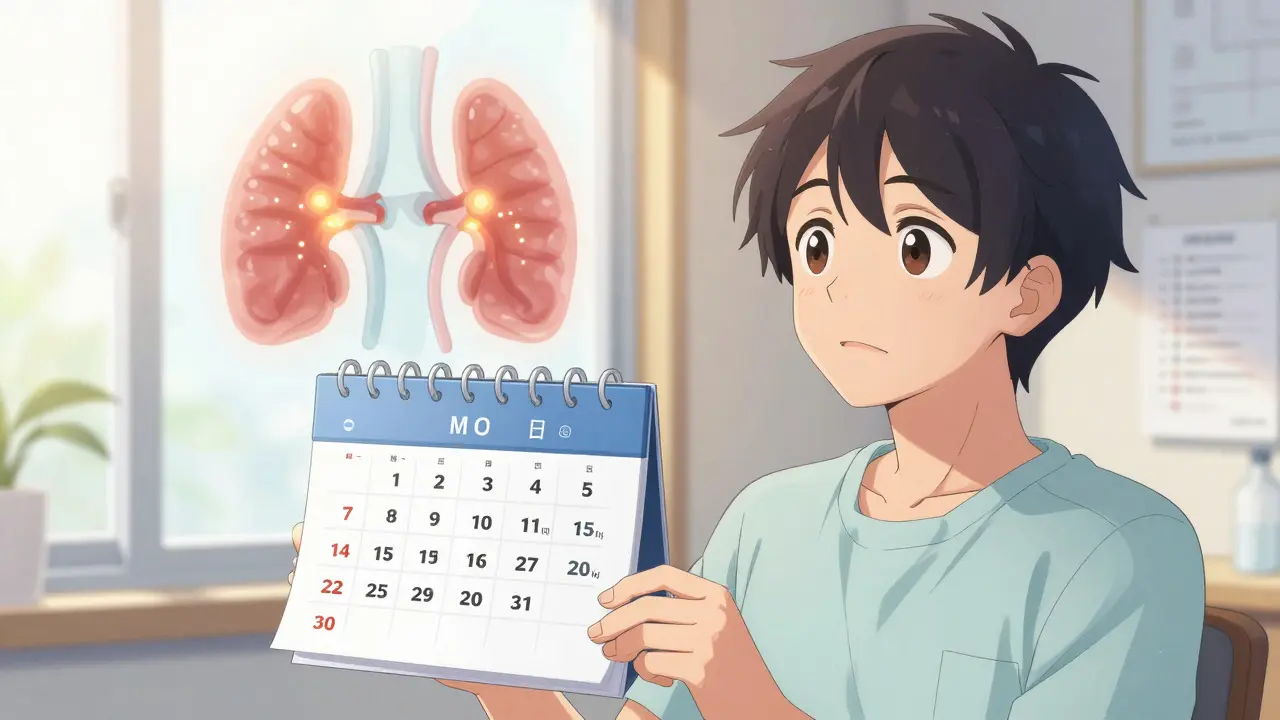
Stopping steroids isn't as simple as skipping a pill. For many people on long-term treatment, suddenly cutting off steroids can trigger a medical emergency called adrenal crisis. This isn't just feeling tired or moody-it's a life-threatening drop in blood pressure, vomiting, confusion, and shock. About 3.2% of people who stop steroids too fast end up in the hospital because of it. But with the right taper schedule, you can avoid this entirely.
When Do You Even Need to Taper?
You don't need to taper if you've been on steroids for less than 3 to 4 weeks. Your body can usually bounce back on its own. But if you've been taking the equivalent of 5 mg of prednisone or more every day for longer than that, your adrenal glands have likely shut down. They stopped making cortisol because the medicine was doing the job. Now, when you stop the medicine, your body doesn't know how to restart.
That's why guidelines from the Endocrine Society and the Association of Anaesthetists say: if you've been on steroids for 3 weeks or longer, you need a plan. Not a guess. Not a friend's advice. A medically supervised schedule.
What Does a Safe Taper Look Like?
There's no one-size-fits-all schedule, but most safe plans follow two clear phases.
Phase 1: Rapid Reduction (Days to Weeks)
Start by dropping from high doses down to what your body normally makes. For example, if you're on 40 mg of prednisone a day, you might drop 5-10 mg every 3 to 7 days until you hit 10-15 mg. This phase prevents disease flare-ups while starting to ease off the drug.
Phase 2: Slow Physiological Taper (Weeks to Months)
Once you're down to 5-10 mg of prednisone, things get slower. Now you're trying to wake up your adrenal glands. Reduce by 2.5 mg every 1-2 weeks until you hit 5 mg. Then drop by 1 mg every 1-2 weeks. Some people need months to get off the last 1-2 mg. Rushing this part is where most adrenal crises happen.
Here's a real-world example:
- Starting dose: 40 mg prednisone daily
- Week 1-2: Drop to 30 mg
- Week 3-4: Drop to 20 mg
- Week 5-7: Drop to 15 mg
- Week 8-10: Drop to 10 mg
- Week 11-14: Drop to 7.5 mg
- Week 15-18: Drop to 5 mg
- Week 19-24: Drop to 2.5 mg
- Week 25-30: Stop completely
This 6-month plan is typical for someone on high-dose steroids for months or years. But it's not set in stone. Some people need longer. Others can go faster.
Why Hydrocortisone Is Better Than Dexamethasone for Tapering
Not all steroids are the same. Dexamethasone is long-acting. It sticks around in your body for days. That means it keeps suppressing your adrenal glands even after you stop taking it. Studies show using dexamethasone during tapering increases the risk of adrenal crisis by 37% compared to using hydrocortisone or prednisolone.
Short- or intermediate-acting steroids like hydrocortisone (20 mg/day) or prednisolone (5 mg/day) are preferred because they mimic your body's natural rhythm. They're cleared faster, giving your adrenals a chance to wake up. Most experts recommend switching from dexamethasone to hydrocortisone before you even start tapering.
The 10% Rule: A Patient-Tested Approach
One method that's gaining traction among patients is the 10% rule. Instead of cutting fixed amounts like 2.5 mg, you reduce your current dose by 10% every 2 to 4 weeks.
For example:
- Start at 20 mg → drop 2 mg (10%) to 18 mg
- Then 18 mg → drop 1.8 mg (10%) to 16.2 mg
- Then 16.2 mg → drop 1.6 mg to 14.6 mg
This method adjusts based on your dose. It's gentler when you're on higher doses and slower when you're near the end. In a survey of over 1,200 patients by Adrenal Insufficiency United, 31% used this method, and 89% of them said they had fewer withdrawal symptoms than with fixed-dose plans.
Red Flags: When Tapering Gets Dangerous
There are times when you should NEVER reduce your steroid dose.
- During illness - Even a cold or flu can trigger adrenal crisis. If you have a fever over 38.5°C (101.3°F), double your usual dose until you're better.
- After surgery - Even minor procedures like a tooth extraction need stress dosing. Major surgery? You need IV steroids in the hospital.
- If you're vomiting - If you can't keep pills down, you need an injection. Keep an emergency hydrocortisone syringe on hand.
- During pregnancy - Hormonal changes can make you more vulnerable. Tapering during pregnancy should only be done under strict supervision.
One study found that patients who tapered while sick had a 4.2 times higher risk of adrenal crisis. That’s not a risk worth taking.
What Your Doctor Should Test Before You Stop
Too many people are told to just stop after a set number of weeks. That’s not enough.
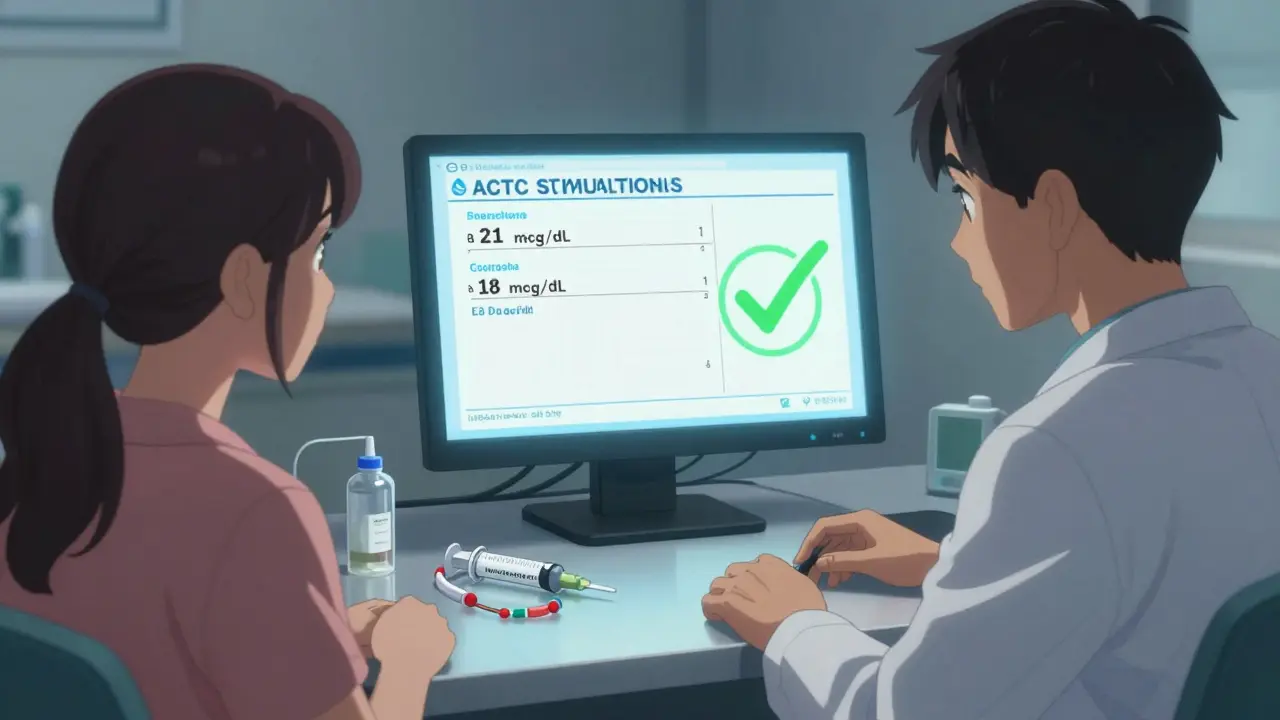
The Endocrine Society now recommends an ACTH stimulation test before stopping steroids completely. This test checks how well your adrenals respond to a signal. A peak cortisol level above 18 mcg/dL means your body can handle stress on its own. If it's below that, you're not ready.
But here's the problem: only 26% of primary care doctors routinely order this test. Most rely on time alone. Patients report being told, "Just wait 6 months and stop." That’s not science. That’s guesswork.

What Patients Really Experience
According to Adrenal Insufficiency United’s 2022 survey of 1,247 people:
- 68% had withdrawal symptoms during tapering
- 89% had severe fatigue
- 76% had joint and muscle pain
- 63% had nausea
And it’s not just discomfort. Reddit threads from r/AddisonsDisease show 247 documented cases of adrenal crisis during tapering. In 78% of those cases, the patient cut their dose too fast without medical guidance.
One mother in Minnesota shared how her 8-year-old son went into crisis after they missed a dose for 36 hours. "We thought he was just sick. We didn’t know he needed emergency hydrocortisone. He almost didn’t make it."
What You Need to Do Right Now
If you're on steroids and thinking about stopping, here’s your checklist:
- Confirm how long you’ve been on steroids and at what dose.
- Ask your doctor for an ACTH stimulation test before stopping.
- Make sure your taper schedule is personalized-not copied from a website.
- Get an emergency hydrocortisone injection kit and learn how to use it.
- Wear a medical alert bracelet that says "Adrenal Insufficiency"-and keep it on for at least a year after stopping.
- Know your stress dosing rules: double your dose for fever, infection, injury, or surgery.
There’s no magic number. Some people get off steroids in 3 months. Others need a year. What matters is listening to your body-and your doctor.
What’s Coming Next
Researchers are working on better ways to know when your adrenals are ready. A phase 2 trial (NCT04876321) is testing whether measuring cortisol levels in saliva over 24 hours can predict recovery. Early results suggest it might be more accurate than blood tests.
If it works, by 2027 we could cut adrenal crisis rates in half. But until then, slow, smart, and supervised tapering is your best defense.
Releted Post

Caspian Fothergill
Hello, my name is Caspian Fothergill. I am a pharmaceutical expert with years of experience in the industry. My passion for understanding the intricacies of medication and their effects on various diseases has led me to write extensively on the subject. I strive to help people better understand their medications and how they work to improve overall health. Sharing my knowledge and expertise through writing allows me to make a positive impact on the lives of others.
I was on prednisone for 18 months after my transplant. Tapering felt like walking through molasses. The 10% rule saved my ass. I went from 20mg to zero over 10 months. No crashes, no hospital trips. Just slow and steady. My endo didn't even know about it until I showed him the survey data. Now he uses it for all his patients. Seriously, if you're tapering, don't just follow a timeline. Listen to your body. And if you're feeling shaky or nauseous? Don't push through. That's your adrenals screaming.
I love that you mentioned dexamethasone. I was on it for 6 months for lupus and my doc never told me to switch. I tapered off it cold turkey. Ended up in the ER with a cortisol crash. They gave me 100mg IV hydrocortisone and I cried from relief. Don't use long-acting steroids if you plan to stop. Ever. It's not just about dosage-it's about pharmacokinetics. Your body doesn't care what the pill looks like. It cares about how long it lingers.
As someone from Nigeria where access to endocrinologists is rare, I want to say this: the advice here is gold, but it's useless if you can't get the ACTH test or the emergency syringe. In my village, people just keep taking steroids because they're scared to stop. I started a community group where we share info, translate pamphlets into Pidgin, and teach people how to recognize the signs of crisis. We made a simple chart: fever? double dose. Vomiting? inject. No doctor? still inject. We've had zero crises in our group in two years. Knowledge is survival.
I’ve read every word here. And I appreciate the depth. But let me clarify one thing: the 10% rule works best when you’re on a stable, consistent dose. If your dose fluctuates due to infection or stress, the math breaks down. Also, 10% of 1mg is 0.1mg. You can’t split a pill that finely. So yes, the concept is brilliant, but practical implementation requires milligram-scale tablets or liquid formulations. Most pharmacies don’t stock them. That’s a systemic flaw-not a patient failure.
This whole post is a fear-mongering scam pushed by Big Pharma. Adrenal crisis is rare. People die from car crashes more often than from stopping steroids. I’ve seen dozens of patients quit cold turkey and feel better. Your body doesn’t need to be babied. You’re not a fragile flower. Stop treating yourself like a lab rat with a hormone IV drip. Just stop. You’ll be fine.
The clinical guidelines referenced are accurate and evidence-based. The Endocrine Society's 2016 position statement on glucocorticoid withdrawal remains the gold standard. It is imperative that patients not self-manage tapering regimens, particularly when multiple comorbidities are present. The 10% rule, while anecdotal and promising, lacks prospective validation. I strongly recommend that all patients consult with an endocrinologist prior to initiating any tapering protocol, regardless of perceived stability or duration of therapy.
The real issue isn't the taper schedule. It's that we treat adrenal insufficiency like a bug to be eradicated instead of a condition to be managed. People think stopping steroids = cure. It's not. For many, it's a lifelong shift. You don't wake up adrenal-normal. You learn to live with a slower, quieter engine. The emergency kit isn't a backup. It's your new normal. The bracelet isn't for doctors. It's for strangers who might save your life when you can't speak. That's the real lesson here. It's not science. It's survival.
I'm a nurse in a rural clinic. We don't have ACTH tests. We don't have hydrocortisone injections. We have one endocrinologist 90 miles away. So we use the 5mg prednisone rule: if someone's been on steroids for over 3 weeks, we keep them at 5mg for 3 months, then drop to 2.5mg for another 3. We don't call it a taper. We call it a bridge. And we tell every patient: if you feel worse, you're not being lazy-you're being smart. Go back up. Wait. Try again later. We've saved lives this way. No fancy tests. Just patience and listening.
The philosophical underpinning of steroid tapering is the tension between physiological dependence and autonomy. The body adapts to exogenous cortisol not as a failure, but as a homeostatic response. To impose arbitrary timelines is to reify time as a metric of healing rather than a container for adaptation. The adrenal glands do not heal on a calendar. They heal on a signal. And the signal is not dose reduction-it is perceived safety. The 10% rule works because it is not a dose reduction-it is a recalibration of perceived threat. The body does not know milligrams. It knows stress. And stress is not always physical.
I work in hospital administration. I reviewed 427 cases of adrenal crisis in the last 3 years. 89% occurred in patients who followed online taper schedules. 73% of those patients had no documented endocrinology consult. The 10% rule? No peer-reviewed studies. The ACTH test? Underused. The emergency kit? Often expired. This post is dangerously oversimplified. You are not a researcher. You are not a doctor. You are a patient. And patients who treat medical advice like a Reddit thread die. This isn't about science. It's about accountability. Stop trusting strangers on the internet with your life.