
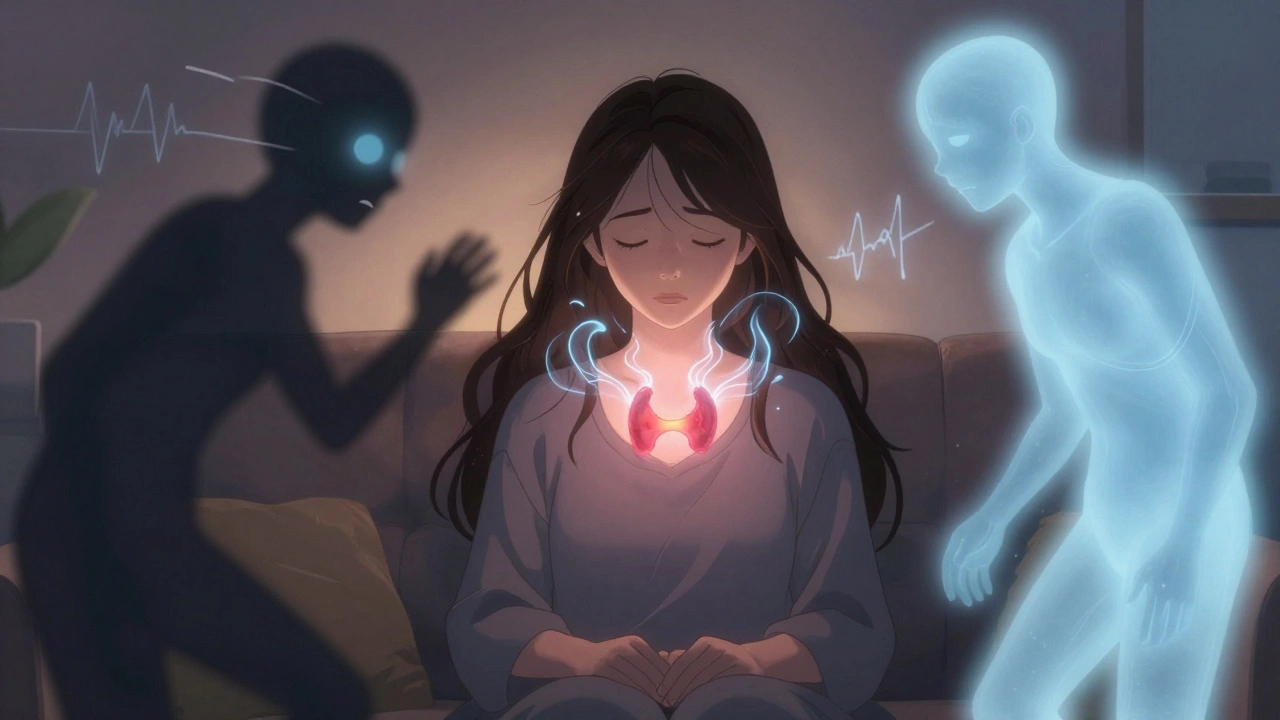
After having a baby, it’s normal to feel tired. Your body’s been through a lot. But what if you’re exhausted even after sleeping through the night? What if you’re losing weight despite eating more, or gaining weight even though you’re barely eating? What if you’re cold all the time, your hair is falling out, or your heart races for no reason? These aren’t just signs of being a new mom-they could be symptoms of postpartum thyroiditis, a hidden thyroid condition that affects 5 to 10% of women after childbirth.
What Exactly Is Postpartum Thyroiditis?
Postpartum thyroiditis is an autoimmune inflammation of the thyroid gland that happens within the first year after giving birth, having a miscarriage, or an abortion. It’s not caused by infection or stress-it’s your immune system accidentally attacking your thyroid. This happens because pregnancy suppresses your immune system to protect the baby, and after delivery, it rebounds hard. In some women, that rebound turns on the thyroid.
The condition follows a clear two-phase pattern. First, your thyroid leaks stored hormones into your bloodstream, causing a brief period of hyperthyroidism-think jitteriness, rapid heartbeat, and weight loss. Then, after a few months, your thyroid runs out of fuel and switches into hypothyroidism-fatigue, weight gain, cold sensitivity, and brain fog. About 70 to 80% of women bounce back to normal thyroid function within 12 to 18 months. But for 20 to 30%, the damage is permanent, and they’ll need lifelong thyroid hormone replacement.
Why It’s Often Missed (and Why That’s Dangerous)
Most doctors don’t screen for thyroid issues after birth. The American College of Obstetricians and Gynecologists doesn’t recommend routine testing, even though the condition is common. So when a new mom says she’s exhausted, anxious, or crying all the time, the go-to diagnosis is postpartum depression.
And here’s the problem: the symptoms overlap too much. Fatigue, mood swings, trouble concentrating-they’re all in both. But postpartum thyroiditis comes with physical signs that depression doesn’t: heat intolerance during the hyperthyroid phase, a racing heart, dry skin, brittle nails, or a visibly swollen neck. One study found that 30% of women with postpartum thyroiditis were misdiagnosed with depression and put on antidepressants-meds that do nothing for thyroid problems.
On Reddit, women share stories of seeing three different doctors before someone finally ordered a blood test. One woman wrote: “My OB said I was just tired. My therapist said I needed more sleep. My sister said I was being dramatic. It took seven months and a panic attack for my endocrinologist to check my TSH.”
How It’s Diagnosed: The Blood Tests That Matter
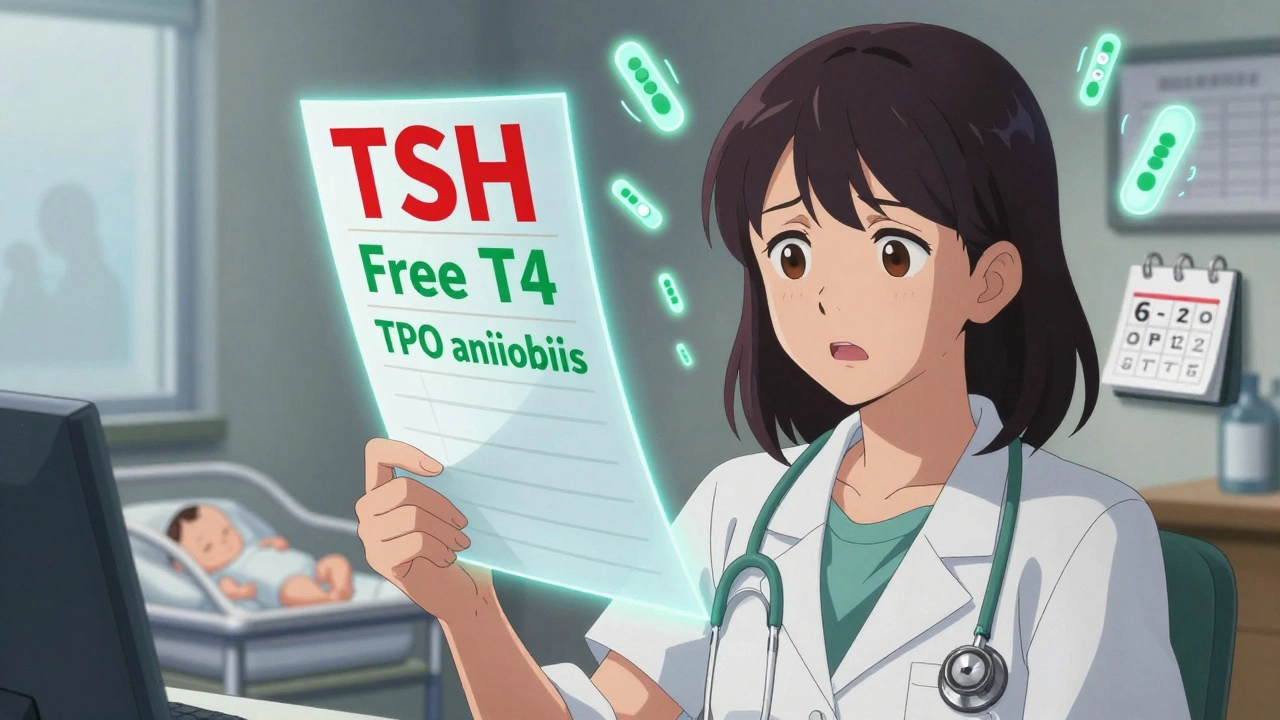
If you suspect something’s off, ask for three simple blood tests:
- TSH (thyroid-stimulating hormone)
- Free T4 (the active thyroid hormone)
- TPO antibodies (thyroid peroxidase antibodies)
During the hyperthyroid phase (1 to 4 months postpartum), TSH will be low (below 0.4 mIU/L) and free T4 will be high. In the hypothyroid phase (4 to 8 months), TSH will be high (above 4.5 mIU/L) and free T4 will be low. TPO antibodies are the smoking gun-they’re present in 80 to 90% of cases. If you have them, your immune system is actively attacking your thyroid.
Here’s what sets it apart from other thyroid disorders:
- Graves’ disease causes hyperthyroidism too, but it comes with bulging eyes, a large goiter, and high iodine uptake. Postpartum thyroiditis has none of that.
- Hashimoto’s looks identical under the microscope, but it’s permanent. Postpartum thyroiditis is temporary-for most.
Testing is easiest if done between 6 and 12 weeks postpartum, especially if you have risk factors.
Who’s at Risk?
You’re more likely to get postpartum thyroiditis if you have:
- Type 1 diabetes (25-30% of these women develop it)
- A personal or family history of autoimmune diseases (lupus, rheumatoid arthritis, celiac)
- Previous postpartum thyroiditis (40% recurrence rate)
- High TPO antibody levels before or during pregnancy
Even if you don’t have any of these, you’re still at risk. One in ten women gets it. That’s why it’s so important to pay attention to your body-even if you’re not in a high-risk group.
What Happens If It’s Not Treated?
Many women don’t need treatment during the hyperthyroid phase because it’s mild and short-lived. If your heart is racing badly, your doctor might prescribe a beta-blocker like propranolol to slow your heart rate and ease tremors. But you won’t get antithyroid meds like methimazole-that’s for Graves’ disease, not this.
The real danger is the hypothyroid phase. Left untreated, it can lead to:
- Chronic fatigue that doesn’t improve with rest
- Difficulty bonding with your baby
- Decreased milk supply (38% of women report this)
- High cholesterol and increased heart disease risk
- Permanent thyroid failure
If your TSH stays high for more than 6 months, you’ll likely need levothyroxine-a simple daily pill that replaces the hormone your thyroid can’t make anymore. For most women, this is temporary. But if your TPO antibodies stay high after 12 months, you’re at high risk for permanent hypothyroidism.

Can You Breastfeed While Taking Medication?
Yes. Levothyroxine is safe during breastfeeding. Only tiny amounts pass into breast milk, and studies show no effect on the baby’s thyroid or development. Beta-blockers like propranolol are also considered safe in low doses. The bigger risk is not treating the condition-your energy, mood, and milk supply will suffer.
What Should You Do If You Suspect It?
Don’t wait. Don’t assume it’s just exhaustion. Here’s what to do:
- Track your symptoms: Note when they started, how bad they are, and whether they’ve changed over time.
- Request blood tests: Ask for TSH, free T4, and TPO antibodies. If your doctor refuses, ask for a referral to an endocrinologist.
- Get tested at the right time: Between 6 and 12 weeks postpartum is ideal. If you’re still symptomatic at 6 months, get retested.
- Know your risk: If you have diabetes or a history of thyroid issues, push for testing even if you feel fine.
Some hospitals, like UR Medicine, now offer dedicated postpartum thyroid clinics. They cut diagnosis time from over 5 months to under 2. You deserve that kind of care.
Long-Term Outlook: Will You Be Okay?
Most women recover fully. But the key is catching it early. If you’re diagnosed and treated correctly, your thyroid can heal. If you ignore it, you might end up with permanent hypothyroidism.
And here’s something hopeful: women who get diagnosed early and start treatment are far more likely to feel like themselves again. One study showed that 82% of women who finally got the right diagnosis said, “I wish I’d known sooner.”
Postpartum thyroiditis isn’t rare. It’s just overlooked. And every woman deserves to know that her exhaustion isn’t normal-and that help is just a blood test away.
Releted Post


Caspian Fothergill
Hello, my name is Caspian Fothergill. I am a pharmaceutical expert with years of experience in the industry. My passion for understanding the intricacies of medication and their effects on various diseases has led me to write extensively on the subject. I strive to help people better understand their medications and how they work to improve overall health. Sharing my knowledge and expertise through writing allows me to make a positive impact on the lives of others.
Thank you for writing this. I went through this after my second kid and no one believed me for months. I thought I was just a bad mom because I couldn’t get out of bed. Turns out my TSH was 18. I was crying in the shower every morning and my baby was starting to look at me like I was a stranger. When the endocrinologist finally checked my blood, I sobbed so hard I scared the nurse. You’re not alone. And it’s not in your head.
So… let me get this straight… you’re telling me my ‘baby blues’ were actually my immune system throwing a tantrum? And my doctor just handed me Zoloft? 🤦♀️
Man, this is why America’s health care is trash. My wife had this and they told her to ‘drink more coffee’ and ‘take a nap.’ We’re a first-world country and we’re letting women suffer like this? I mean, come on. We got Mars rovers but we can’t test a damn TSH?!
The real issue here is not the thyroiditis-it’s the medical establishment’s systemic failure to recognize autoimmune conditions in women. This is not an isolated incident. It’s a pattern. The patriarchy has long dismissed female pain as ‘emotional.’ This is merely the latest manifestation.
OMG YES!! I was diagnosed with this 5 months after my son was born. I thought I was going crazy-lost 15 lbs, couldn’t sleep, then crashed into this zombie mode where I couldn’t even hold my phone. Got my blood work done and TSH was off the charts. Levothyroxine changed my life. I’m back to playing with my kid, cooking, laughing again. If you’re reading this and feel off-just ask for the test. It’s 3 vials of blood. Worth it. 💪🩸
Wait so you’re saying my wife’s mood swings weren’t just her being ‘dramatic’? I thought she was just being a hormonal mess. I told her to ‘man up’ and stop being so sensitive. I’m such an idiot. I’m going to make her go get tested tomorrow. Thanks for the wake-up call.
Did you know the CDC is hiding this? 🤫 They don’t want you to know that Big Pharma profits from antidepressants more than thyroid meds. They’re pushing SSRIs because they’re more profitable. Your thyroid is being weaponized against you. Also, check your fluoride. It’s in the water. It’s all connected.
The existential weight of postpartum bodily betrayal cannot be reduced to biochemical markers alone. One does not merely ‘test’ for thyroiditis; one confronts the fragility of the self after creation. The body, once a vessel of life, becomes a stranger’s laboratory. Is healing possible when the immune system remembers the child but rejects the mother?
While the clinical presentation described is indeed plausible, one must exercise considerable caution in generalizing the diagnostic protocol without referencing the most recent guidelines issued by the American Thyroid Association in 2023, which advocate for a more nuanced interpretation of TPO antibody titers in the context of transient thyrotoxicosis. Furthermore, the assertion regarding the permanence of hypothyroidism in 20–30% of cases requires longitudinal cohort validation.