

Fluoroquinolone Risk Calculator
Assess Your Delirium Risk
This tool helps you understand your risk of developing delirium when taking fluoroquinolone antibiotics like levofloxacin or ciprofloxacin. Based on your age, kidney function, and other factors.
When an older adult starts feeling confused, disoriented, or sees things that aren’t there, most people assume it’s dementia, a stroke, or just aging. But sometimes, the cause is something much simpler-and far more preventable-a common antibiotic. Fluoroquinolones, a class of drugs like levofloxacin and ciprofloxacin, are prescribed millions of times each year in the U.S. for infections like pneumonia, urinary tract infections, and sinusitis. But for people over 65, these antibiotics can trigger sudden, frightening cognitive changes known as delirium. And it happens faster than you think.
What Are Fluoroquinolones, and Why Are They So Common?
Fluoroquinolones were developed in the 1960s and became widely used because they work against a broad range of bacteria. They’re strong, convenient (often just one pill a day), and effective. That’s why doctors reach for them. In 2019, about 27 million fluoroquinolone prescriptions were filled in the U.S. alone. But their popularity doesn’t mean they’re safe for everyone.
Drugs like levofloxacin, a fluoroquinolone antibiotic commonly prescribed for respiratory and urinary infections, ciprofloxacin, used for infections like kidney infections and anthrax exposure, and moxifloxacin, often used for pneumonia and abdominal infections are all part of this class. They work by breaking bacterial DNA, stopping infections in their tracks. But that same mechanism can also interfere with brain chemistry.
How Do Fluoroquinolones Cause Delirium?
Delirium isn’t just being forgetful. It’s a sudden, severe confusion that comes on over hours or days. People may not know where they are, can’t focus on a conversation, hear voices, or become agitated. In older adults, this isn’t rare-it’s underdiagnosed.
Fluoroquinolones disrupt the brain’s natural balance of neurotransmitters. They block GABA-A receptors, which normally calm brain activity. When those receptors are inhibited, the brain gets overexcited. Think of it like removing the brakes from a car. The result? Hallucinations, memory loss, and confusion. Some studies also suggest these drugs overstimulate NMDA receptors, adding to the chaos.
The risk isn’t theoretical. A 2016 review of 391 patients with antibiotic-induced delirium found that fluoroquinolones were responsible for nearly 18% of cases-more than any other antibiotic class. That’s not a small number. It’s one of the top triggers.
Who’s Most at Risk?
Not everyone who takes a fluoroquinolone gets delirium. But certain people are far more vulnerable:
- Age 65 and older - Nearly half of hospitalized adults are over 65, and their brains are more sensitive to drug changes.
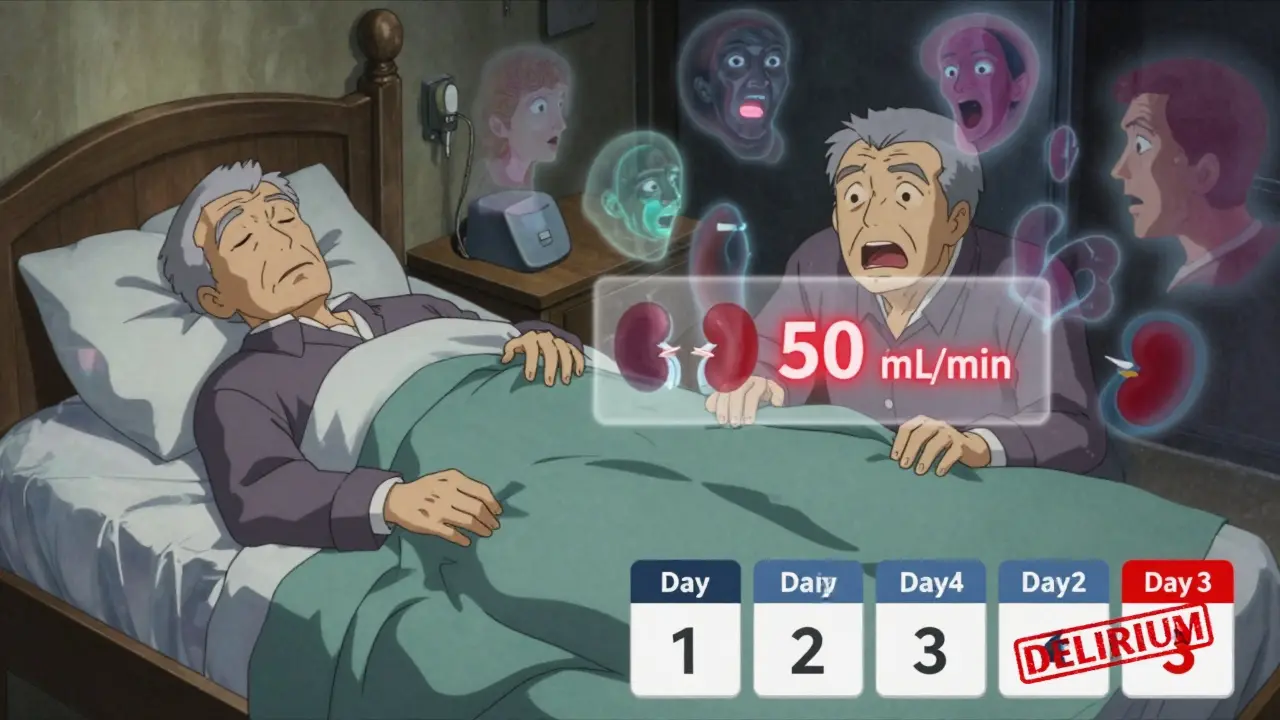
- Reduced kidney function - About 85% of levofloxacin leaves the body through the kidneys. If kidneys aren’t working well, the drug builds up. A creatinine clearance under 50 mL/min doubles the risk.
- Pre-existing brain conditions - People with dementia, Parkinson’s, or a history of stroke are at higher risk.
- High doses - Taking 750 mg of levofloxacin daily (instead of 500 mg) increases the chance of cognitive side effects.
- Multiple medications - Mixing fluoroquinolones with steroids, antidepressants, or antipsychotics can amplify the effect.
One case report in the Journal of Clinical Pharmacy and Therapeutics described an 82-year-old woman with mild kidney disease who developed vivid hallucinations and severe disorientation after just two days on 750 mg of levofloxacin. She had no prior history of mental illness. Her symptoms vanished within 48 hours after stopping the drug.
How Fast Does It Happen-and How Fast Does It Go Away?
Delirium from fluoroquinolones doesn’t creep in slowly. It hits fast. Most patients start showing signs within 1 to 3 days of starting the antibiotic. The symptoms can be dramatic: confusion, inability to follow conversations, seeing people who aren’t there, hearing whispers, or becoming aggressive.
The good news? It’s usually reversible. Once the drug is stopped, most patients return to their baseline within 48 to 96 hours. In one documented case, a 76-year-old man with normal cognition became completely disoriented on day three of ciprofloxacin. His family thought he was having a stroke. After the antibiotic was discontinued and his labs checked, everything cleared up in two days.
This reversibility is critical. It means that if you catch it early, you can prevent long-term damage. But if you don’t recognize it, the patient might end up in a psychiatric ward, get labeled with dementia, or even be placed in a nursing home.
Why Do Doctors Keep Prescribing Them?
It’s not that doctors are careless. Many simply don’t know this side effect exists-or they don’t think it applies to their patient. The American Academy of Neurology has pointed out that antibiotics are rarely the first thing doctors suspect when someone develops delirium. Blood tests, brain scans, and heart checks come first. Fluoroquinolones? Not on the radar.
And here’s the catch: these drugs are often prescribed for infections that don’t even need them. The CDC says fluoroquinolones are overused for simple urinary tract infections, bronchitis, and sinusitis-conditions that could be treated with safer antibiotics like nitrofurantoin, a first-line antibiotic for uncomplicated UTIs in older adults or amoxicillin, a beta-lactam antibiotic with low CNS penetration and minimal delirium risk.
Since the FDA’s 2018 safety warning, prescribing has dropped by about 20% in older adults. Hospitals like UCSF have cut levofloxacin use for UTIs by 35% after implementing protocols to avoid it in seniors. But many outpatient clinics still default to fluoroquinolones because they’re easy to prescribe.
What Should You Do If You or a Loved One Is Prescribed One?
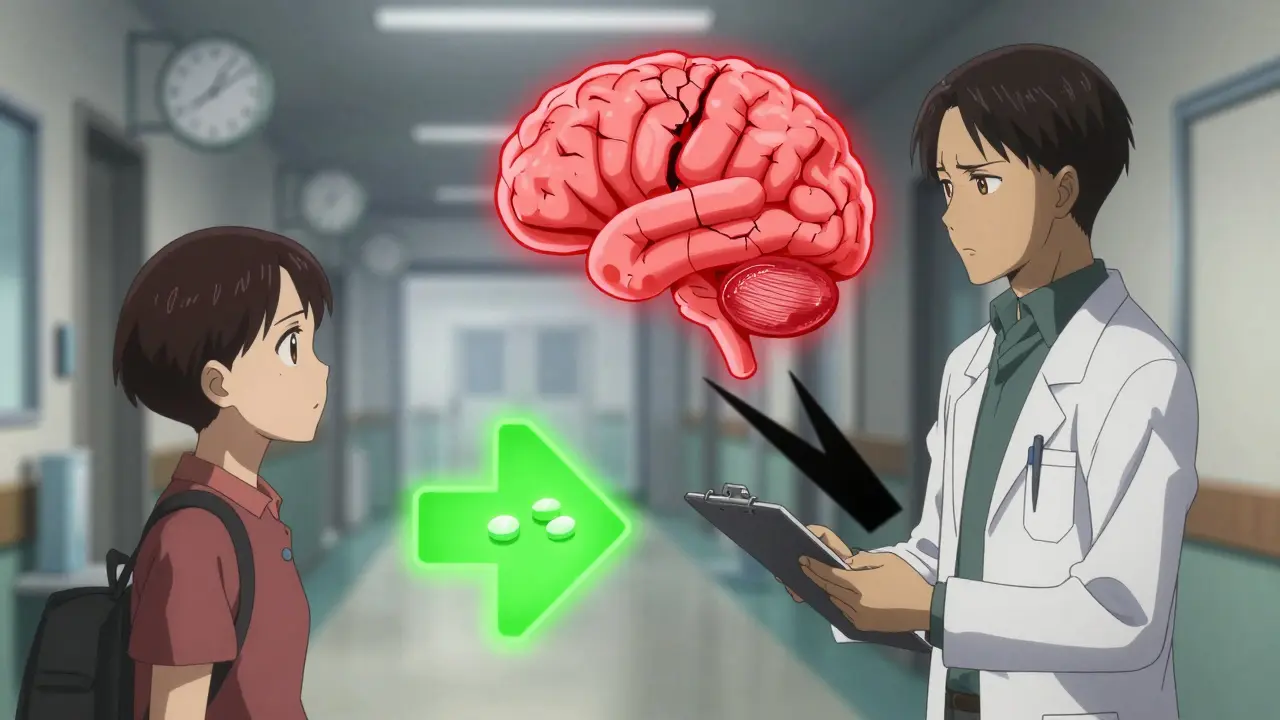
If you’re over 65-or caring for someone who is-ask these questions before filling the prescription:
- Is this infection serious enough to need a fluoroquinolone?
- Are there safer alternatives like nitrofurantoin, amoxicillin, or trimethoprim-sulfamethoxazole?
- What’s my kidney function? Can we check my creatinine clearance?
- Will you start me on the lowest effective dose?
- What signs of confusion should I watch for in the first 72 hours?
If the answer to any of these is “I don’t know” or “It’s fine,” push back. The FDA now says fluoroquinolones should be reserved for infections with no other treatment options. That’s not a suggestion-it’s a directive.
What Happens If Delirium Is Missed?
Delirium isn’t just uncomfortable-it’s dangerous. Studies show that older adults who develop delirium are more likely to:
- Stay in the hospital longer
- Need long-term care instead of going home
- Have a higher risk of death within a year
One study found that delirium increases the risk of nursing home placement by 50%. That’s not just a medical issue-it’s a life-altering one. And it’s often preventable.
When delirium is recognized early, the outcome is usually excellent. But if it’s mistaken for dementia or depression, the patient might be given antipsychotics-drugs that can make things worse. That’s why awareness matters.
What Are the Alternatives?
There are plenty of antibiotics that work just as well-with far less risk to the brain:
| Condition | Fluoroquinolone Option | Safer Alternative | Why Safer |
|---|---|---|---|
| Uncomplicated UTI | Levofloxacin, Ciprofloxacin | Nitrofurantoin, Trimethoprim-Sulfamethoxazole | Low brain penetration, no GABA interference |
| Acute Bronchitis | Moxifloxacin | Usually no antibiotics needed | Most cases are viral; antibiotics don’t help |
| Community-Acquired Pneumonia | Levofloxacin | Amoxicillin + Macrolide (e.g., azithromycin) | Lower CNS risk, proven efficacy |
| Sinusitis | Ciprofloxacin | Amoxicillin-Clavulanate | Effective, minimal brain side effects |
Even when fluoroquinolones are necessary-for example, in severe infections like pyelonephritis or complicated UTIs-doctors should start with lower doses and monitor closely.
What’s Being Done to Fix This?
Change is happening, but slowly. The American Geriatrics Society added fluoroquinolones to its 2023 Beers Criteria-a list of medications that are potentially harmful for older adults. That means hospitals and insurers are now required to justify their use.
Some institutions are using electronic alerts that pop up when a doctor tries to prescribe levofloxacin to a patient over 70 with kidney disease. Others are requiring second opinions before prescribing fluoroquinolones to seniors.
Researchers are also looking for biomarkers-blood tests or brain scans-that could predict who’s most likely to have a reaction. That’s still in early stages, but it could one day make prescribing much safer.
For now, the best tool is awareness. If you’re an older adult or caring for one, know the signs. If you notice sudden confusion after starting an antibiotic, stop the drug and call your doctor immediately. Don’t wait. Don’t assume it’s “just aging.”
Can fluoroquinolones cause permanent brain damage?
In the vast majority of cases, no. Fluoroquinolone-induced delirium is usually temporary and fully reversible once the drug is stopped. Symptoms typically clear within 2 to 4 days. However, if delirium is missed and leads to prolonged hospitalization, falls, or other complications, those consequences can have lasting effects. The drug itself doesn’t cause permanent brain injury-but the fallout from untreated delirium can.
Is it safe to take fluoroquinolones if I’m under 65?
For younger, healthier adults, fluoroquinolones are generally safe when used appropriately. But they still carry risks-including tendon rupture, nerve damage, and rare psychiatric side effects. The FDA recommends they be used only when no other options exist, regardless of age. Don’t assume you’re immune just because you’re young.
How do I know if my loved one is having a reaction?
Watch for sudden changes: confusion about time or place, trouble following conversations, hallucinations (seeing or hearing things that aren’t there), extreme agitation, or withdrawal. These signs usually appear within 1-3 days of starting the antibiotic. If you notice any of these, stop the medication and contact the prescribing doctor right away.
Can I ask my doctor to test my kidney function before prescribing a fluoroquinolone?
Absolutely. In fact, you should. A simple blood test for creatinine and estimated glomerular filtration rate (eGFR) can show if your kidneys are functioning well enough to clear the drug safely. Many doctors assume kidney function is fine in older adults-but it often isn’t. Requesting this test is a smart, proactive step.
What should I do if my doctor insists on prescribing a fluoroquinolone?
Ask why. Say: “I’ve read that fluoroquinolones can cause sudden confusion in older adults. Are there safer options for this infection?” If they say no, ask for a second opinion. The FDA and major medical societies agree these drugs should be a last resort. You have the right to push back.
Fluoroquinolones have saved lives. But they’re not harmless. For older adults, the cost of convenience can be too high. The next time you or someone you love is prescribed one, pause. Ask the questions. Demand alternatives. Because sometimes, the most dangerous thing in the medicine cabinet isn’t the infection-it’s the cure.
Releted Post


Caspian Fothergill
Hello, my name is Caspian Fothergill. I am a pharmaceutical expert with years of experience in the industry. My passion for understanding the intricacies of medication and their effects on various diseases has led me to write extensively on the subject. I strive to help people better understand their medications and how they work to improve overall health. Sharing my knowledge and expertise through writing allows me to make a positive impact on the lives of others.
Just had my grandma on cipro for a UTI last month-she started talking to the TV like it was her late husband. We thought it was dementia flaring up. Turned out? Antibiotic. Stopped it, she was back to normal in 48 hours. 🙏 Don’t let doctors gaslight you-ask about alternatives. Older folks ain’t just ‘getting forgetful.’
It’s not just fluoroquinolones-it’s the entire medical-industrial complex’s reckless abandonment of clinical judgment in favor of convenience! You think this is an isolated issue? No! It’s systemic! The FDA’s warning was a Band-Aid on a hemorrhage! And yet, doctors still prescribe these like they’re multivitamins! Where is the accountability?! Where is the ethics?! This isn’t medicine-it’s pharmaceutical roulette with our elders’ minds!
They’re definitely hiding something. Fluoroquinolones were designed by the military to mess with enemy soldiers’ heads. You think that’s a coincidence? They knew the neurological effects all along. And now they’re dumping them on seniors like it’s a public service. Big Pharma doesn’t care if you hallucinate-they care if you buy the next prescription.
Stop overreacting. Most seniors don’t get delirium. It’s rare. And if they do, it’s because they’re on ten other meds. Blame the polypharmacy, not the antibiotic.
This is one of those moments where medicine needs to remember its roots: first, do no harm. Fluoroquinolones are powerful tools-but like a chainsaw, they’re not meant for trimming hedges. We’ve forgotten that. And our elders are paying the price. Let’s not just change prescriptions-let’s change our mindset. Safer isn’t just an option. It’s a duty.
My aunt went from making cookies to screaming at the ceiling in two days. They put her on antipsychotics. Took us weeks to figure out it was the damn antibiotic. Now I carry a laminated card in my wallet with the list of safer UTI meds. If you’re over 65, print this out. Give it to your doctor. Don’t wait for a nightmare to wake you up.
Brothers and sisters, this is why we need to speak up. My uncle was in the hospital for three weeks because they thought he had Alzheimer’s. He didn’t-he had levofloxacin poisoning. We saved him by asking the right questions. You got power. Use it. Don’t let them silence you with ‘it’s just aging.’ You know better. You feel it. Trust your gut. Ask. Push. Fight. Your loved one’s mind is worth it.
fluoroquinolones are bad for old people but they are still used because they are cheap and fast and doctors are lazy also kidney function is not checked because it costs money and insurance dont pay for it so its a systemic problem not just medical
they say its reversible but what about the trauma? my mom had to relearn how to talk after she came out of it. and now she’s scared of hospitals. so yeah its ‘reversible’ but the damage lingers. they don’t tell you that part.
Why are we letting foreigners tell us how to treat our own elderly? This is America. We’ve got the best doctors. If they prescribe it, it’s because it’s needed. Stop being paranoid.
I work in geriatrics. Every month, I see someone whose family didn’t connect the dots between a new antibiotic and sudden confusion. The scariest part? They often get discharged with antipsychotics. That’s not treatment-it’s chemical containment. We need mandatory alerts in EHRs, yes-but we also need better education. This isn’t niche knowledge. It’s basic. And it’s being ignored.
PLEASE-if you’re reading this and your grandparent just got a fluoroquinolone script: call the pharmacy and ask if they have nitrofurantoin. If they don’t, call the doctor back. Say: ‘I’ve read the FDA warning. I want the safest option.’ Don’t be polite. Be relentless. I’ve seen families lose months of their parent’s life because they didn’t ask. You can prevent that. Do it now.
my cousin took cipro and started seeing demons. they thought it was schizophrenia. she was on antipsychotics for 6 months. turns out it was the antibiotic. they never apologized. now she’s on disability. this is not a side effect. this is a crime.
fluoroquinolones cause mitochondrial damage too so its not just delirium its long term energy loss and nerve damage its worse than you think
So let me get this straight… we have a drug that can turn your grandma into a hallucinating mess, but we still prescribe it like it’s a coupon for free coffee? And the FDA says ‘use only as last resort’… but everyone ignores it? I guess we’re just waiting for a viral TikTok of someone yelling at their toaster before we do anything. 🤦♀️