
Workplace Safety: Protect Your Health from Medication Risks and Ergonomic Hazards
When we talk about workplace safety, the practices and protocols that protect employees from harm on the job. Also known as occupational safety, it's not just about avoiding slips and falls—it’s about understanding how your medications, posture, and daily habits shape your risk at work. Many people don’t realize that common drugs—like opioids, statins, or even caffeine—can change how you react, think, or move during your shift. A drowsy driver, a dizzy nurse, or a worker with blurred vision from an interaction between blood pressure meds and grapefruit juice? That’s a workplace safety issue too.
Ergonomics, the science of designing workspaces to fit the human body. Also known as human factors engineering, it’s one of the quietest but most powerful parts of workplace safety. Sitting for hours at a desk? Poor posture can lead to chronic joint pain, nerve damage, and even long-term disability. Simple fixes—like raising your monitor to eye level, using a lumbar roll, or taking a 2-minute stretch break every hour—can cut down on musculoskeletal injuries faster than any safety training. And if you’re managing a condition like osteoarthritis or REM sleep behavior disorder, your work setup might be making symptoms worse without you even knowing it.
Then there’s medication safety, the practice of using drugs correctly to avoid harm. Also known as drug safety, it’s something every worker should be aware of, whether you’re on prescription meds, supplements, or over-the-counter painkillers. Mixing Adderall with too much coffee? That’s a heart risk. Taking acetaminophen daily for back pain? It can mess with your brain chemistry. Not checking for interactions before starting a new drug? You could be one pill away from serotonin syndrome or hemolytic anemia. These aren’t just medical concerns—they’re workplace hazards. A single mistake can cost you your job, your health, or worse.
Workplace safety also means knowing when to speak up. If your meds make you foggy, shaky, or overly tired, your employer needs to know—not to judge you, but to adjust your duties or schedule. Same goes for side effects like hair loss from chemo or sleep issues from statins. You’re not being dramatic—you’re protecting yourself and others. And if you’re unsure whether your generic drug works the same as the brand name, or if your CPAP pressure needs changing after weight loss, you’re not alone. These are real, everyday concerns that impact performance, safety, and quality of life.
Below, you’ll find real, practical guides from people who’ve been there: how to ask your doctor about cheaper generics, how to track strange side effects with a symptom diary, how to use secure messaging to get answers fast, and how to adjust your workstation so your joints don’t scream by 3 p.m. This isn’t theory. It’s what works for nurses, warehouse workers, office staff, and shift workers who need to stay sharp, safe, and healthy—no matter what their job is.
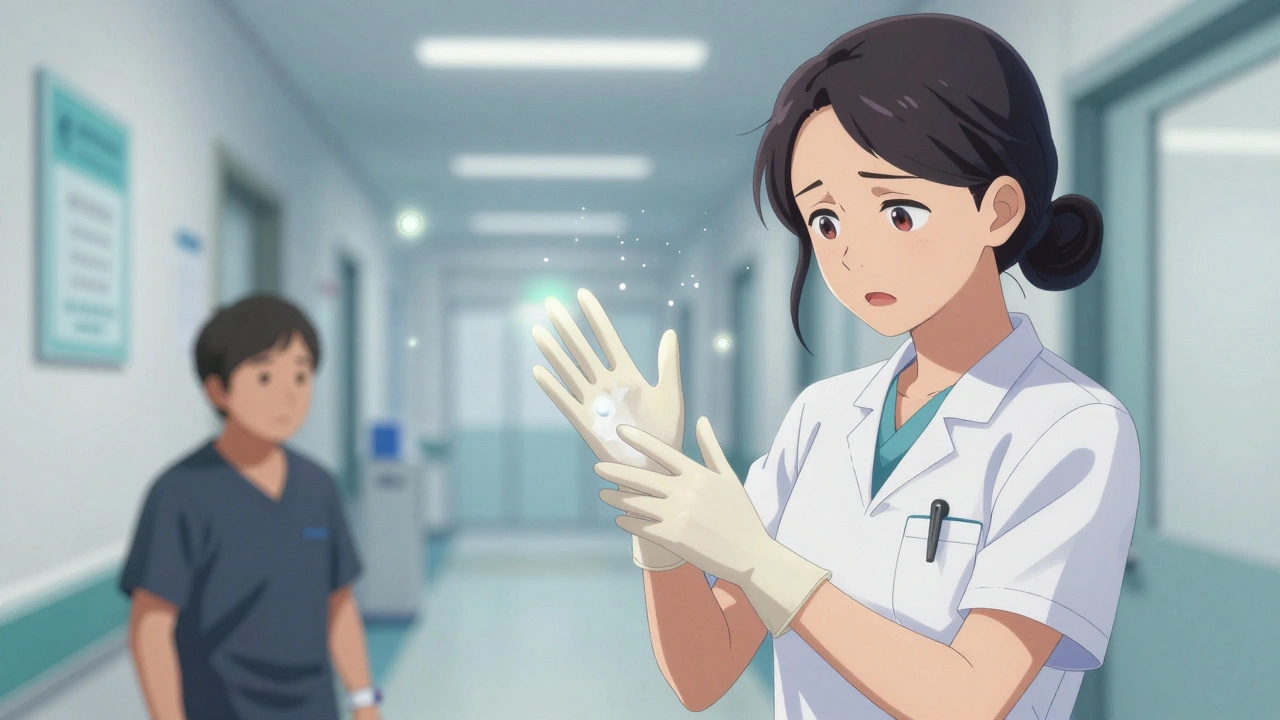
Latex allergy affects 1-2% of the general population and up to 12% of healthcare workers. Cross-reactivity with foods like bananas and avocados is common. Strict avoidance and workplace changes like switching to nitrile gloves are the only proven ways to prevent reactions.