
Allergic Reaction: Signs, Triggers, and How to Stay Safe
When your body mistakes something harmless—like penicillin, peanuts, or pollen—for a threat, it launches an allergic reaction, an overactive immune response to a normally harmless substance. Also known as hypersensitivity reaction, it can range from a sneeze to a life-threatening emergency. You might think you know what an allergic reaction looks like, but many people miss the early signs, especially when they’re caused by new medications or hidden ingredients in food.
Drug allergy, an immune response triggered by medications is one of the most common and dangerous causes. Antibiotics like penicillin, painkillers like ibuprofen, and even common drugs like sulfa pills can set off reactions. Some people don’t realize they’re allergic until they get hives after taking a new pill—or worse, their throat swells up. Anaphylaxis, a severe, whole-body allergic reaction that can shut down breathing and circulation doesn’t wait for permission. It can happen in minutes after exposure to something like shellfish, bee stings, or even a single dose of a drug you’ve taken before without issue.
It’s not just drugs and food. Food allergy, an immune reaction to specific proteins in food is on the rise, especially in kids. Eggs, milk, tree nuts, and wheat are top triggers. But even something as simple as a new supplement or herbal remedy can cause a reaction if your body hasn’t seen it before. And here’s the tricky part: symptoms don’t always show up right away. A rash might appear hours later. Swelling in your lips or tongue might come after dinner. That’s why keeping a symptom diary—tracking what you ate, took, or were exposed to—can be the difference between a misdiagnosis and saving your life.
Most allergic reactions start with itching, hives, or a runny nose. But if you feel tightness in your chest, your tongue swells, your voice gets hoarse, or you feel dizzy, you’re not just having a bad day—you’re in danger. Every second counts. If you’ve been told you’re at risk for anaphylaxis, you should carry an epinephrine auto-injector. No excuses. No "I’ll just wait and see." That’s not bravery—it’s reckless.
What you’ll find here isn’t just theory. These are real stories from people who learned the hard way: a mom who didn’t know her child was allergic to a common antibiotic, a man who thought his rash was just stress, a senior who didn’t realize his new blood pressure pill was causing swelling. You’ll see how medications like dexamethasone, tramadol, or even acetaminophen can trigger unexpected responses. You’ll learn how to spot the difference between a side effect and a true allergy. And you’ll find out how to talk to your pharmacist or doctor so you don’t get caught off guard again.
This isn’t about fear. It’s about awareness. Allergic reactions aren’t rare. They’re hiding in plain sight—in your medicine cabinet, your grocery cart, your doctor’s prescription pad. The goal isn’t to avoid everything. It’s to know what’s dangerous for you, and how to act before it’s too late.
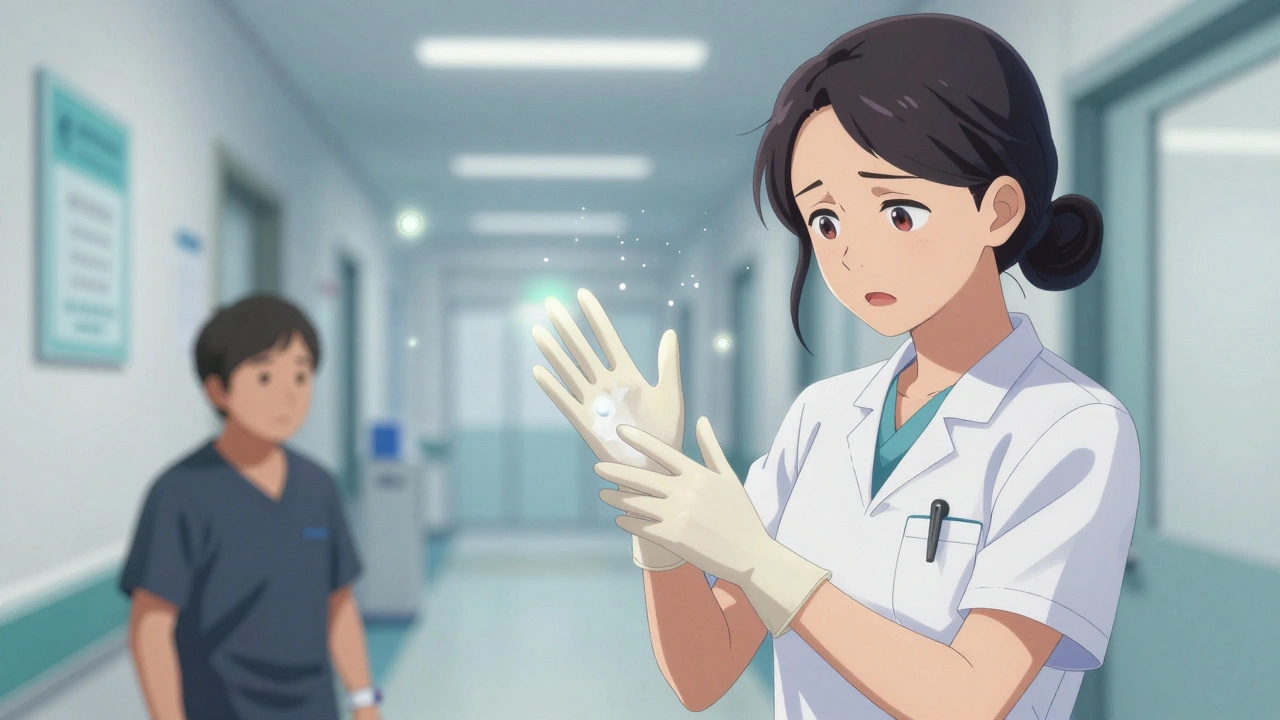
Latex allergy affects 1-2% of the general population and up to 12% of healthcare workers. Cross-reactivity with foods like bananas and avocados is common. Strict avoidance and workplace changes like switching to nitrile gloves are the only proven ways to prevent reactions.